Prayer Path Meditation: What It Is and How It Works
Prayer path meditation gives your congregation a practical way to connect movement, Scripture, outdoor space, and spiritual attention. It does not require a retreat center, a specialist, or a complicated program.
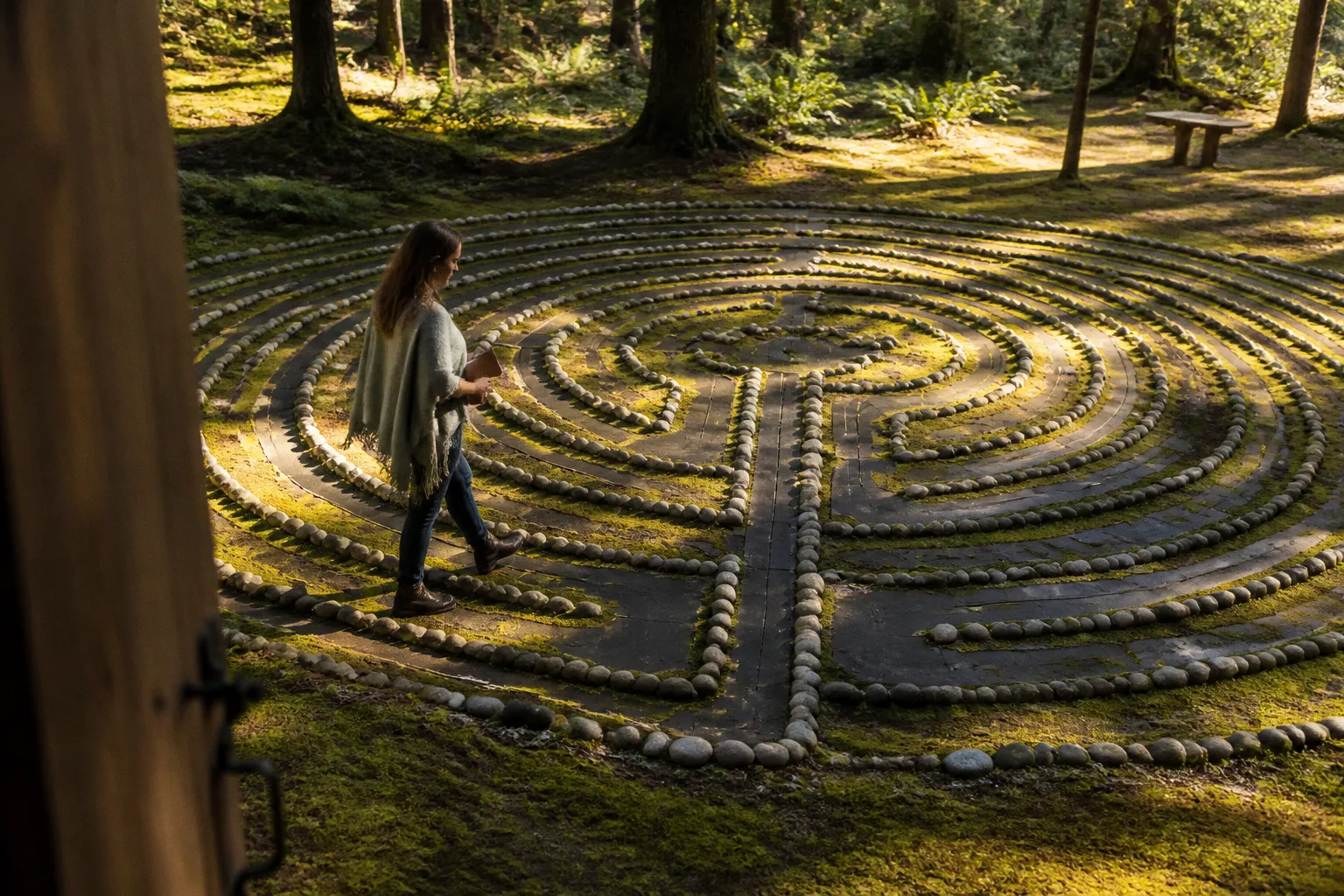
You need a walkable route, a clear purpose, and a structure that helps people pray instead of wandering without direction.
The basic practice is simple: you walk while praying, listening, reflecting on Scripture, and noticing God’s creation around you. Your body moves. Your attention settles. Your prayer gains a sequence.
That structure matters. Many people want a deeper prayer life but struggle to sit still, silence mental noise, or find words. A prayer path gives them a tangible next step. It turns prayer from an abstract intention into a repeatable practice that can happen on church grounds, through a neighborhood, in a park, or along a familiar daily route.
What is a prayer path?
A prayer path is a marked or mentally defined walking route used for prayer and Christian spiritual reflection. Some paths include Scripture stations, benches, signs, gardens, or visual prompts. Others use only the route itself and a planned sequence of prayers.
Prayer path meditation, as a Christian practice, combines four operating elements:
- Physical movement: Walking engages the body and creates a steady rhythm.
- Prayer: You bring specific people, needs, decisions, and gratitude before God.
- Scripture meditation: You reflect on a short passage rather than trying to process several chapters at once.
- Attention to place: You notice the weather, trees, sounds, terrain, and people around you without treating nature as a substitute for Christian worship.
This is not a demand to empty your mind. Christian meditation centers attention on God, Scripture, and faithful response. Distractions will appear. The goal is not perfect mental silence. The goal is to return, again and again, to the prayer or passage in front of you.
A route can be as short as a loop around the church building. It can follow a sidewalk through the neighborhood. It can include indoor corridors for winter weather or for people with limited mobility. The path does not become more spiritual because it is longer. A well-designed ten-minute route can serve your congregation better than an ambitious trail no one can use consistently.
A prayer path works when it gives people a clear next action: walk, notice, pray, return.
Prayer path, prayer walk, or labyrinth?
These terms overlap, but they are not identical. Clarifying the format will help you plan the right deployment for your congregation.
| Format | How it works | Best use |
|---|---|---|
| Prayer walk | Participants walk through a neighborhood, campus, or church property while praying for people and places they encounter | Community engagement, outreach preparation, intercession |
| Prayer path | A designated route with prompts, Scripture stations, or themed points for reflection | Individual devotion, wellness ministry, repeated congregational use |
| Prayer labyrinth | A single winding path that leads to the center and back out, with no wrong turns | Quiet reflection, retreat programming, grief support, guided spiritual practice |
| Ordinary walking route | A familiar sidewalk, park loop, or indoor route paired with a prayer plan | Daily practice, accessibility, low-cost implementation |
A labyrinth is not a maze. A maze creates wrong turns and confusion. A labyrinth has one continuous path leading inward and then outward. The walker does not solve a puzzle. The walker follows the route at a chosen pace.
That distinction affects how you brief participants. Do not tell people to find their way through a labyrinth. Tell them to follow the path, release the pressure to perform, and use the movement to support prayer.
Historical roots: from medieval labyrinths to modern practice
Christians have used structured walking and labyrinths as aids to prayer for centuries. The Christian adoption of prayer labyrinths became especially visible during the Middle Ages. Chartres Cathedral in France contains one of the best-known examples: a stone labyrinth inlaid into the floor.
Medieval labyrinths did not function as recreational attractions. They provided a controlled setting for reflection, repentance, pilgrimage symbolism, and devotional movement. The walker moved toward the center and then returned to the outside world. That physical pattern gave worshippers a way to inhabit a spiritual theme with the whole body.
Modern prayer paths expand that concept. A church may install a permanent labyrinth, mark a temporary route for Holy Week, create a Scripture trail for families, or organize a prayer walk before a neighborhood ministry launch. The format changes. The operating principle remains stable: intentional movement can support intentional prayer.
Your congregation does not need to reproduce a medieval design. A simple route can carry the same discipline if the prayer prompts are clear and the space is maintained.
Start with a neighborhood audit
Before you build or announce a prayer path, inspect the route as a ministry site. Do not begin with decorative signs. Begin with access, safety, capacity, and purpose.
Walk the proposed route at the time people will actually use it. Record:
- Surface condition, slopes, steps, and narrow points.
- Lighting and visibility for early morning or evening use.
- Seating locations for older adults and people who need rest.
- Weather exposure, shade, drainage, and seasonal hazards.
- Access for wheelchairs, walkers, and parents with strollers.
- Noise levels and areas where participants can pause without blocking traffic.
- Nearby schools, homes, shelters, clinics, or community gathering points.
- The number of people the route can hold without creating congestion.
This is capacity building. A path that looks attractive on a site map may fail during a group event because it has one bottleneck, no resting point, or nowhere to gather for a briefing.
Assign ownership before launch. One volunteer can manage signs. Another can inspect surfaces and lighting. A third can coordinate prayer prompts. If the route belongs to everyone, maintenance often belongs to no one.
The physical and cognitive case for walking prayer
Walking changes the conditions in which people think and pray. Outdoor movement can improve mood, reduce blood pressure, and support cognitive flexibility. Research has indicated that walking outdoors can increase creative thinking by up to 60 percent compared with sitting. That does not make every walking idea wise, and it does not turn prayer into a productivity hack. It does show why movement can help people approach a problem with less mental rigidity.
Outdoor time can also shift emotional intensity. Even a short period outside may improve mood. Some wellness guidance points to around 20 minutes outdoors as a useful target, while small amounts of regular walking can support cardiovascular health. Treat these figures as practical reference points, not promises or prescriptions. A church prayer path serves spiritual and communal purposes; it does not replace medical care, counseling, physical therapy, or a crisis response plan.
The benefits often come from the combination of movement and focus:
1. Walking gives anxious energy somewhere to go. A person who cannot settle into a chair may find it easier to pray while moving.
2. A repeated route reduces decision fatigue. Participants do not need to decide where to go next. The route carries part of the structure.
3. Outdoor sensory input supports attention. Wind, birds, pavement, temperature, and light can help a person notice the present moment.
4. Scripture gains a physical rhythm. A short passage repeated over several minutes may become more memorable than a long reading completed under pressure.
5. Shared walking lowers the barrier to participation. Some people will join a prayer walk before they join a small group or sit in a formal prayer meeting.
The practice also fits a broader faith-and-wellness strategy. Your church can connect prayer paths with grief support, mental health education, family recreation, pastoral care, and volunteer outreach. Keep the boundaries clear. A prayer path can support emotional well-being. It cannot diagnose depression, treat trauma, or replace professional support.
If a participant describes suicidal thoughts, abuse, severe distress, or an urgent medical concern, move from spiritual programming to your congregation’s safeguarding and referral procedures. Do not improvise counseling on the trail.
How to use a prayer path: a practical framework
A reliable prayer path needs a defined start, middle, and finish. Without that sequence, participants may enjoy the walk but miss the prayer objective.
Use this four-phase framework for an individual or group route.
1. Prepare
Before you take the first step, define the assignment.
Choose:
- A route length that matches the group’s mobility and available time.
- One central theme, such as renewal, grief, schools, healing, or neighborhood needs.
- A short Scripture passage.
- A start and end time.
- A meeting point and a weather plan.
- A process for handling late arrivals or participants who need to stop.
For a congregation-wide event, appoint a route lead and a safety lead. The route lead manages the spiritual flow. The safety lead manages crossings, pacing, first aid access, and participant needs. Do not assign both roles to one person if the group is large.
Brief participants in under five minutes. Explain the route, pace, stopping points, privacy expectations, and what to do if they need help. Tell them they may walk in silence. Tell them they may shorten the route. Make participation sustainable, not performative.
2. Ask God to reveal
Begin with observation. Pray for attention before asking for solutions.
On a neighborhood prayer walk, ask participants to notice:
- Places where people gather.
- Signs of loneliness, neglect, celebration, or need.
- Community resources already operating.
- Businesses, schools, and organizations with which the church could build trust.
- Barriers that keep residents from accessing food, transportation, health services, or fellowship.
- The emotional response the route creates in the walker.
Do not turn observation into speculation. Seeing a closed storefront does not tell you why it closed. Seeing a person alone does not authorize you to invent their story. Prayer should sharpen humility, not produce confident guesses about strangers.
The first phase creates a neighborhood audit with spiritual attention. Your team should leave with observations that can guide responsible follow-up.
3. Ask God to renew
Now bring the church’s own capacity into the prayer. Where has your congregation become reactive, fragmented, or tired? Which ministry commitments exceed your volunteer base? Where do your current programs create friction for the people you hope to serve?
Use specific prompts:
- Renew our patience with people who need repeated contact.
- Renew our volunteer systems so no single person carries the whole deployment.
- Renew our welcome for families, older adults, and people living with disability.
- Renew our partnerships with local organizations.
- Renew our willingness to change a program that no longer meets a real need.
This is where prayer becomes operational. If the route exposes a broken sidewalk, record it and assign a follow-up. If people identify a gap in grief support, schedule a listening session. If volunteers report exhaustion, redesign the rota. Do not leave every insight in the category of spiritual inspiration.
4. Ask God for revival
In this final phase, pray for transformed relationships and faithful action. Avoid treating revival as a vague emotional peak. Name the outcomes your community needs:
- People finding safety and practical support.
- Isolated neighbors receiving consistent contact.
- Young people gaining trusted adults and healthy recreation.
- Families finding worship that accommodates real schedules.
- Volunteers serving from sustainable capacity rather than guilt.
- The congregation becoming more responsive to the people already around it.
End with a clear next step. That might be a follow-up call, a food distribution shift, a pastoral referral, a conversation with a school, or a second prayer walk focused on one block. The walk should produce movement after the walking ends.
Prayer becomes community ministry when the insight from the route receives an owner, a date, and a next action.
Adding breath prayer and Scripture
Breath prayer gives participants a compact way to remain attentive when the mind begins to scatter. The method pairs a short phrase with breathing or walking rhythm.
For example, a person might silently use the first part of a prayer while inhaling and the second part while exhaling. Another person may repeat a brief Scripture phrase every few steps. The exact pattern matters less than the simplicity of the phrase and the freedom to adapt it.
Choose language that participants can remember without looking down at a card. Possible structures include:
- Inhale: Lord Jesus Christ
Exhale: give me peace.
- Inhale: Speak, Lord
Exhale: your servant is listening.
- Inhale: God of mercy
Exhale: make me attentive.
- Inhale: Lead us in love
Exhale: send us in service.
Do not force a single breathing pattern. People have different respiratory conditions, anxiety responses, and comfort levels. Breath prayer should never become a test of spiritual discipline or physical control. If someone feels dizzy, short of breath, or distressed, they should stop the exercise and return to normal breathing.
Match the Scripture to the route
A prayer path works best when the reading fits the physical setting and the congregation’s actual need. Use one short passage or a few carefully selected verses. Avoid loading every station with dense text.
You can organize a route around:
- Creation and gratitude: noticing light, weather, plants, and the life of the neighborhood.
- Lament and grief: making room for loss without rushing toward easy answers.
- Healing and care: praying for bodies, minds, families, and professional caregivers.
- Justice and mercy: naming systems and conditions that affect local residents.
- Calling and service: preparing volunteers for a specific ministry deployment.
- Rest and renewal: helping exhausted people receive permission to slow down.
At each station, use three prompts:
1. What do you notice?
2. What does this Scripture invite you to bring before God?
3. What faithful response belongs after the prayer?
That sequence keeps the practice grounded. Participants observe, pray, and respond. They do not need to produce a dramatic experience.
Designing a church prayer path that people will actually use
A permanent outdoor prayer space can become a valuable ministry asset, but only if your congregation can maintain it. Start with a pilot. Use temporary signs, weather-resistant cards, or a simple printed route. Run the path with several groups before investing in construction.
Track practical feedback:
- Could participants understand where to go without a guide?
- Did the route support silence, conversation, or both?
- Where did people slow down or bunch together?
- Which prompts created useful reflection?
- Did anyone need seating, shade, translation, large print, or an alternate route?
- Could a first-time visitor use the path without knowing church vocabulary?
- Who will inspect and refresh the route each month?
Build multiple access levels into the design:
- A short loop for people with limited stamina.
- A seated option for those who cannot walk the full route.
- Large-print and audio prompts.
- A family version with simple observation questions.
- A quiet individual version.
- A guided group version with a trained facilitator.
- An indoor alternative for extreme weather.
Do not describe the path as open to everyone if the route excludes people with mobility limitations. Accessibility is not a side feature. It determines whether the ministry communicates welcome or creates another barrier.
A labyrinth may require a more formal layout, but your congregation does not need expensive materials to begin. The research base does not establish a universal construction length or standard blueprint for outdoor prayer paths. Focus first on usability, maintenance, and spiritual clarity. A beautiful installation with unreadable signs and no responsible team is a poor deployment.
Common implementation failures
Prayer paths usually fail for logistical reasons, not because participants lack interest.
The route has no stated purpose
A sign that says pray here does not give enough direction. Name the theme and offer one concrete prompt.
The congregation launches before assigning maintenance
Faded cards, overgrown paths, broken benches, and confusing arrows communicate neglect. Put inspections on a calendar and assign a person, not a vague committee.
Leaders overload the route with information
Participants cannot read a paragraph at every station while walking, managing children, and trying to pray. Use short prompts. Offer a separate handout or QR code only as a supplement, not as the primary experience.
The facilitator talks through every silence
Silence is not a program failure. Give instructions at the start, then let the route work. Intervene for safety, accessibility, or emotional support—not because every pause feels uncomfortable.
The church treats prayer as a substitute for action
If the group identifies a need, create a follow-up process. Prayer can reveal a ministry priority. It cannot deliver food, repair a partnership, staff a support group, or make a referral by itself.
The practice becomes competitive
Do not reward the fastest walker, the longest route, or the most emotional testimony. Prayer paths serve people with different bodies, schedules, and histories. The standard is faithful participation.
Make the practice repeatable
The strongest prayer path programs operate on a rhythm. Consider a monthly congregational walk, a weekly individual route, or a seasonal path tied to the church calendar. Keep the core structure stable while changing the theme.
For a first month, use this deployment schedule:
1. Week one: Complete the neighborhood audit and select the route.
2. Week two: Draft prompts, test accessibility, and brief the volunteer team.
3. Week three: Run a small pilot with different ages and mobility needs.
4. Week four: Launch publicly and schedule the first follow-up action.
After each walk, capture only the information you can use. Record route problems, participant needs, ministry opportunities, and assigned next steps. Do not turn prayer into a reporting burden. The goal is better care and clearer action.
Prayer path meditation is a modest practice with a wide operating range. It can support personal devotion, congregational discernment, outdoor worship, mental well-being, grief ministry, and neighborhood outreach. Its strength comes from its accessibility. You can begin with a sidewalk, a Bible passage, and a team willing to pay attention.
The path is not the destination. The ministry result appears when people return more attentive to God, more honest about community needs, and more prepared to serve one another in tangible ways.