Christian Mindfulness: The Mistake of an Empty Mind
There's a quiet crisis unfolding in the prayer corners of well-intentioned Christians.
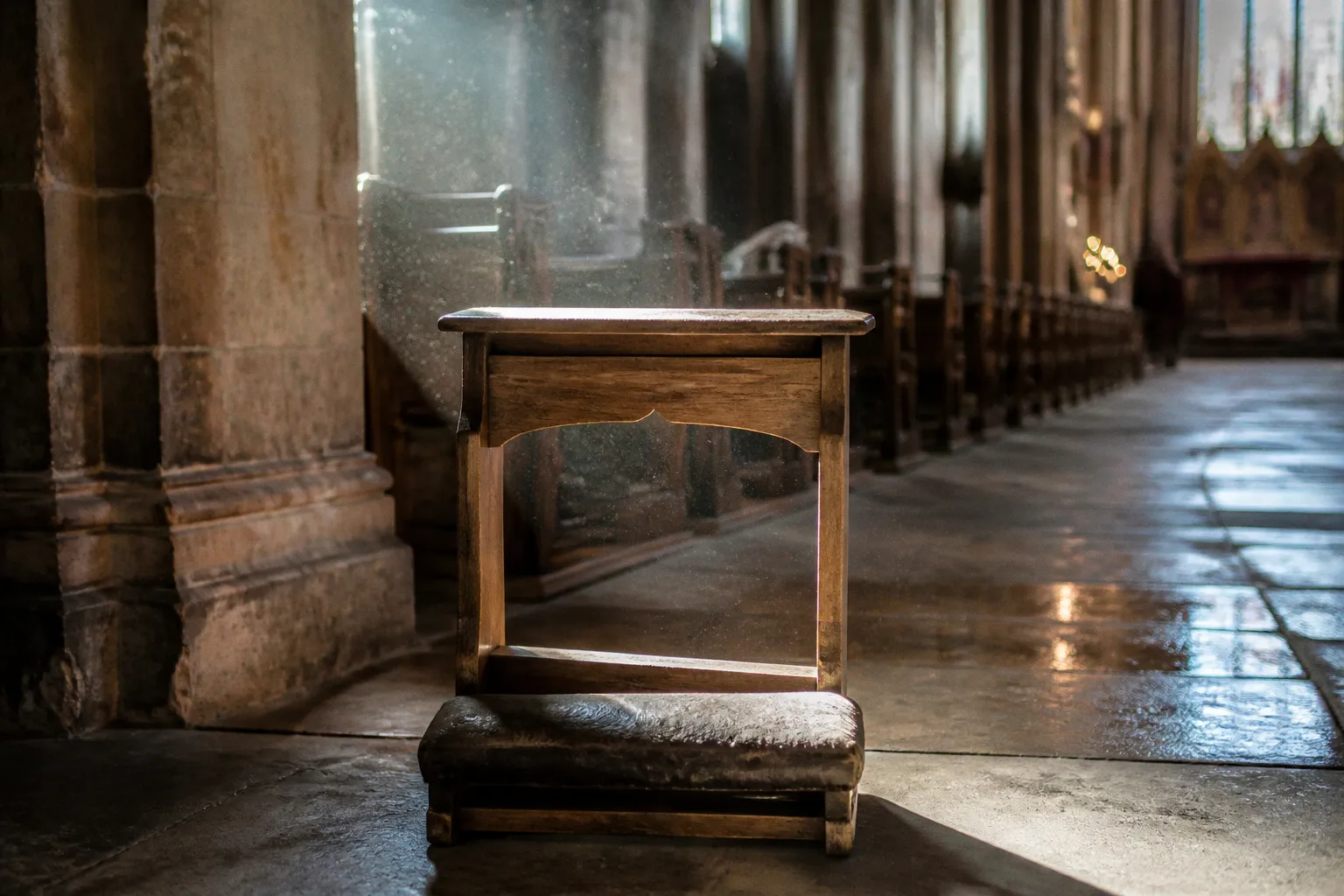
A believer sits down to meditate, hoping to settle the racing thoughts of an anxious week, and follows the instruction they read in a popular wellness book: empty your mind. Let the thoughts drift away. Create inner silence. What begins as a search for peace ends, sometimes subtly and sometimes painfully, in spiritual disorientation — the very calm they sought becomes a vulnerability rather than a refuge. We have, without meaning to, mistaken absence for holiness.
This is not a question of denominational nitpicking, and it is not a minor pastoral footnote. The difference between emptying the mind and filling it is, theologically speaking, the difference between an open door and an empty house. Jesus told a story about exactly this, and the story does not end well.
The Theological Danger of the Empty Mind: Lessons from Matthew 12
In Matthew 12:43–45, Jesus offers a brief, unsettling parable. An unclean spirit leaves a person, wanders through arid places, and eventually returns to find the house "swept and put in order" but empty. The spirit gathers seven others more wicked than itself, and the final condition of that person is worse than the first. The image is domestic and strange, but its pastoral weight is enormous: a clean, ordered, empty interior is not safety. It is invitation.
This passage has anchored Christian critiques of contemplative practices borrowed whole from secular or Eastern traditions — particularly those that aim, by design, at the emptying of mental content. When a believer sits in silence with the explicit goal of clearing every thought, they are not merely relaxing. They are, in the language of this parable, leaving the door open. The pastoral concern is not that relaxation is sinful; it is that an unguarded interior, in the long arc of spiritual formation, rarely stays unguarded.
To be clear, this does not mean every form of quiet prayer is dangerous, nor that breathing exercises are demonic. There are long Christian traditions of contemplative silence — the Desert Fathers knew them, the mystics of the Rhineland knew them, and many Lutherans who practice the daily office know them. The distinction that matters is the goal. When silence is oriented toward listening for the Word, it is one thing. When silence is oriented toward thoughtlessness, it is something quite different. Pope Francis made a version of this argument in a 2015 homily, noting that practices like Zen and Yoga, on their own, are not capable of opening hearts to God — a caution Catholic leaders have echoed when warning against adopting Eastern meditation styles without theological discernment.
An empty mind is not a defended mind. The parable in Matthew 12 was never about hygiene — it was about hospitality. Whatever we make room for, we make room for.
Active Engagement vs. Passive Disengagement: Biblical Meditation Defined
Biblical meditation is, almost in every case, the opposite of mental evacuation. The Hebrew word hagah, often translated "meditate" in the Psalms, means to murmur, to utter, to chew on a thought the way a cow chews cud. Joshua was commanded that the Book of the Law should not depart from his mouth, but that he should "meditate on it day and night" (Joshua 1:8). The Psalmist describes the righteous person whose "delight is in the law of the Lord, and on his law they meditate day and night" (Psalm 1:2). In both cases, the mind is not emptied — it is occupied. It is occupied with words, with images, with a God who has spoken.
This is the heart of the distinction that often gets lost in modern wellness literature. Secular mindfulness, and the contemplative traditions it draws from — Transcendental Meditation, Zen, certain yogic practices — typically aim at the cessation of mental content. The practitioner watches thoughts arise and pass without attachment. The goal is, in a precise sense, to become less full. Christian meditation aims at the opposite: to become more full of something. The object of meditation is not the absence of thought but the presence of a particular kind of thought — the Word of God dwelling richly in the believer (Colossians 3:16).
Practically speaking, this means a Christian sitting down to meditate does not begin by clearing the mind. They begin by taking up a text. They read it slowly. They read it again. They ask the text what it is asking them. They hold the words in the same place a friend holds a name they do not want to forget. The mind is at work, but it is not anxious work; it is the work of attention, the slow labor of letting a thing become known.
| Dimension | Empty-Mind Meditation | Biblical Meditation |
|---|---|---|
| Primary goal | Cessation of thought, inner silence | Filling the mind with Scripture and God's character |
| Mental posture | Passive observation, detachment | Active engagement, reflection, memorization |
| Object of focus | No object; awareness itself | A specific biblical text, name, or attribute of God |
| Outcome sought | Stress reduction, calm | Communion with God, transformed thinking |
| Theological frame | Often non-theistic or pantheistic | Trinitarian, rooted in the Word |
| Vulnerabilities | Spiritual emptiness, openness to other voices | Distraction, but bounded by the text |
Biblical meditation is not the absence of thought. It is the slow chewing of a specific word until that word begins to chew us.
Renewing the Mind: Applying Philippians 4:8 and Romans 12:2
Two of the most commonly cited passages in this conversation are not, strictly speaking, about meditation at all. They are about something more foundational: the orientation of thought itself. Philippians 4:8 calls the believer to think on whatever is true, whatever is noble, whatever is just, whatever is pure, whatever is lovely, whatever is commendable. Romans 12:2 urges the transformation of the mind as the very engine of discernment — that we might "prove what is the good and acceptable and perfect will of God." Neither passage counsels emptiness. Both counsel filling — and a very particular kind of filling.
This is where the practical work begins. Christian mindfulness, properly understood, is not a separate discipline bolted onto the Christian life. It is the slow, patient work of taking the scattered mind and gathering it around what is true. When anxiety rises, the believer does not aim to silence the anxious thought. They aim to replace it — not by suppression, but by attention. They hold a verse. They repeat it. They let the verse do its slow work of reshaping the interior.
A useful pastoral method here is what some have called the 5Ws and H — who, what, when, where, why, and how. Rather than emptying the mind of a passage, the believer actively interrogates it. Who is speaking, and to whom? What is being promised, or warned, or commanded? When in the biblical narrative does this sit? Where is the speaker standing? Why does this matter to the original hearers? How does this word address my situation today? The questions themselves are meditative. The mind is at work. The text is in conversation with the present moment.
A practical rhythm, drawn from long tradition, looks like this:
1. Read the passage slowly — once aloud, if possible.
2. Pause on a word or phrase that catches the eye.
3. Ask the 5Ws and H of that phrase, letting each question rest.
4. Carry one phrase into the day, repeating it through ordinary tasks.
5. Return to the passage at evening, noticing what has shifted.
Fifteen minutes is a workable daily rhythm for this kind of practice. Some seasoned practitioners extend it to twenty minutes twice a day, morning and evening. The duration matters less than the consistency; what is being built is not a skill but a habitation, a place the mind knows how to return to when it grows frightened.
Structured Reflection: Practicing Lectio Divina and Ignatian Exercises
Christianity is not short on methods for active meditation. The two most enduring Western contemplative practices — Lectio Divina and the Ignatian Spiritual Exercises — both take the emptiness of mind as the opposite of what they are after. Each is structured around a text, each moves through recognizable stages, and each assumes the believer will leave the practice more full than when they began.
Lectio Divina, often associated with Benedictine monasticism but present in earlier Christian writers, traditionally moves through four movements: lectio (reading), meditatio (meditation), oratio (prayer), and contemplatio (contemplation). The practitioner reads a short passage of Scripture, usually four to six verses. They read it a second time, listening for a word or phrase that rises to meet them. They read a third time, asking what the text is saying to them personally. The movements are not steps to be hurried through. They are pauses, each one a place the practitioner is permitted to dwell. The mind is engaged at every stage — by the reading, by the search, by the response, by the resting. Nothing is being emptied; everything is being deepened.
The Ignatian Spiritual Exercises, developed by Ignatius of Loyola in the sixteenth century, take a different shape but the same underlying posture. They use imagination, memory, and the concrete circumstances of biblical narratives to place the practitioner inside the scene. Where are you standing in this gospel story? What do you see? What do you hear? What do you feel? The imagination is enlisted, but it is enlisted around the text. There is no moment in the Exercises where the practitioner is asked to stop thinking. There is only the invitation to think more carefully, more honestly, more fully — to bring the whole interior life into the orbit of a particular moment of the life of Christ.
Both Lectio Divina and the Ignatian Exercises assume a busy mind, not a quiet one. They offer not silence but structure — a way of filling time with a Word that has something to say.
For a Lutheran practitioner, this can sound at first like something imported from a Catholic tradition. It is worth saying clearly: Luther himself treasured meditation on the Psalms and on the catechism, and the Augsburg Confession speaks of the ongoing usefulness of traditions that draw the heart toward the Word. What unites these practices is not their origin but their architecture. They are scaffolding around Scripture. They are ways of helping the distracted mind hold onto a text long enough for that text to do its work — a posture entirely congruent with embodied faith, where the body, the imagination, and the Word are held together.
Moving Beyond Stress Reduction: Cultivating Relational Communion with God
This is the deepest turn in the practice. Christian mindfulness, as it has been recovered in many evangelical and Lutheran settings, is not primarily a stress-reduction technique. It is a relational discipline. The goal is not a quieter mind in the abstract. The goal is a mind attuned to the presence of God — present in the Word, present in the sacraments, present in the gathered body, present in the ordinary texture of the day.
When we frame the practice this way, the mistake of the empty mind stops being a theological hairsplitting and becomes what it actually is: a misdirection of love. The believer who empties the mind is not, in most cases, doing so out of contempt for God. They are doing so because they want to feel calm. They have heard the gospel of self-care, and they have applied it to the wrong subject. Calm is not the aim. Communion is the aim. Calm is, sometimes, a by-product.
This is where pastoral gentleness matters. Many of us have arrived at emptying the mind out of genuine exhaustion. We are tired. We are anxious. We have carried more than we can hold. The last thing a tired believer needs is another burden laid on them, another practice they are getting wrong. The invitation is not to perform better. The invitation is to be held — by the Word, by the community, by the slow patient ministry of a God who meets us not in the absence of thought but in the truthful filling of it. There is a real finitude in our experience: we cannot carry everything, we cannot solve everything, and we cannot, by an act of will, become the masters of our own interior weather. The Gospel does not ask us to be masters. It asks us to be attentive.
The Christian tradition offers, in this respect, an astonishing array of practices. We can meditate on a single verse for fifteen minutes and find ourselves surprised by what the verse has to say. We can walk a familiar forest path and let the trees become a cathedral, an outdoor prayer space where the body helps the mind attend. We can carry a line from the Psalms through a difficult day and discover, by evening, that the line has changed us more than we changed it. None of these require an empty mind. All of them require a held one — a mind that is, in the deepest sense, being held by grace.
A simple way to begin, for those who have been practicing emptiness and want to turn toward filling:
- Choose one verse — not a chapter, just one verse. Psalm 23:1, or Philippians 4:6, or a verse from this week's lectionary.
- Read it aloud three times across the day, slowly.
- After each reading, ask one question: What is true here? What is promised? What is asked of me?
- Write one sentence, even a short one, in response. Not a journal entry. A single sentence to God.
- At the end of the week, look back over those seven sentences. Notice the thread.
This is not a comprehensive program. It is a beginning. And beginnings, in the Christian life, are not measured by productivity but by faithfulness — by the willingness to show up again at the text, day after day, holding space for whatever the Word is preparing to do.
Christian mindfulness is not the discipline of becoming less. It is the slow, patient work of becoming more present to the One who is already present to us.
The mistake of the empty mind is, in the end, a mistake about who we are and who we are with. We are not, as some contemplative traditions suggest, primarily minds that need quieting. We are embodied creatures whose minds are meant to be inhabited — by words, by presence, by the patient voice of a God who speaks. When we empty the mind, we do not become more spiritual. We become more exposed. When we fill it, slowly, with the Word that does not return void, we become what we were made to be: people who can pay attention, who can hold a thought, who can be present to the One who has been present to us all along.
The practices are old. The mistakes are old. And the grace that meets us in the middle of either is older still.