Contemplative prayer: a simple guide to silence and faith
Many people come to prayer carrying a mind that will not settle: unfinished conversations, bodily fatigue, grief that rises without warning, or the low-level vigilance of a life lived under continual pressure.
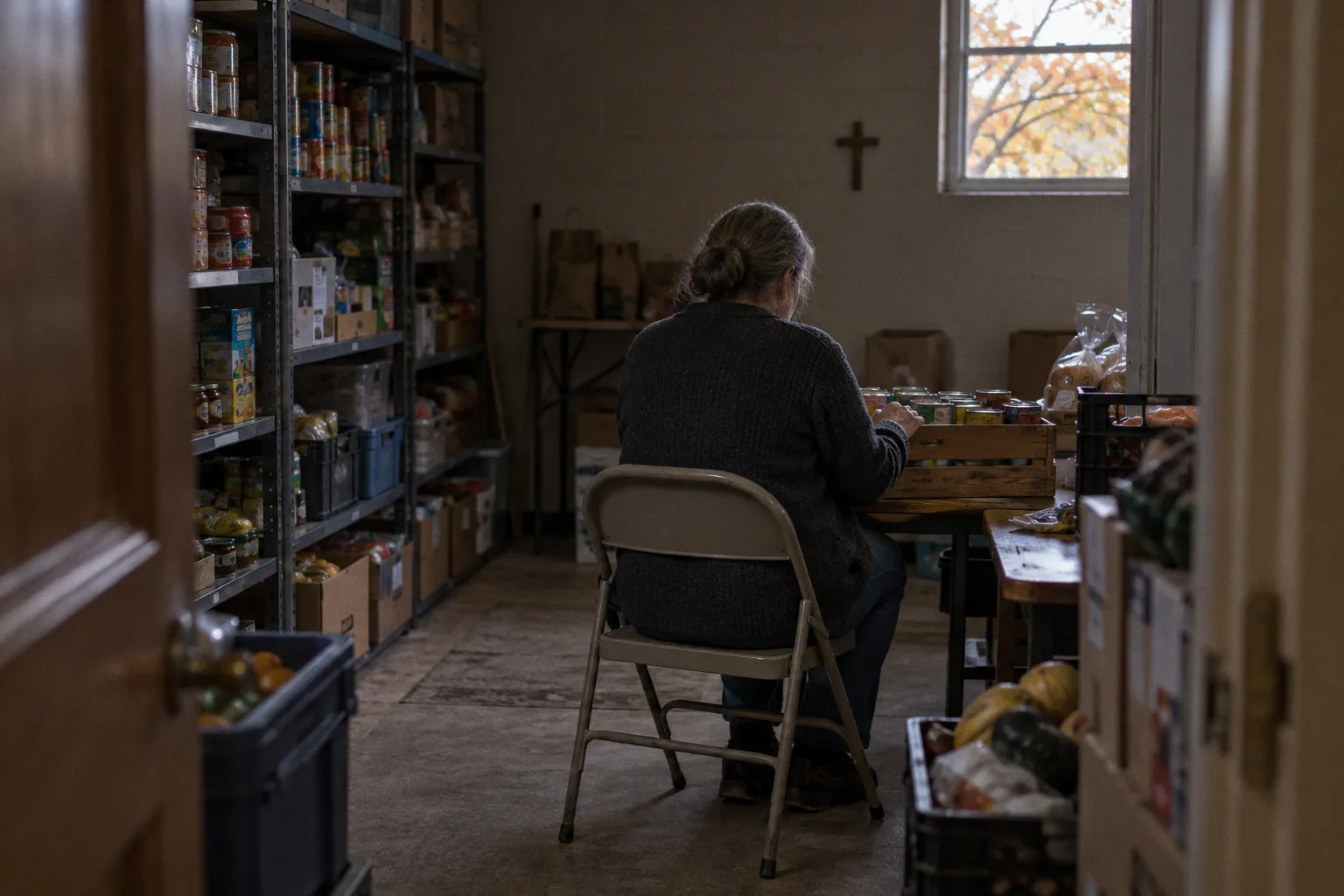
We may want to pray, yet find ourselves unable to gather the words. In that place, Christian contemplative prayer offers not a performance to master, but a way of resting attentively in God’s presence.
For beginners, the Christian contemplative prayer definition is simple but easily misunderstood: it is receptive, silent communion with God, centered on loving presence rather than on producing many thoughts, requests, or spiritual feelings. We do not empty ourselves into nothingness. We make room, gently and honestly, to be held by the God who is already near.
Defining the heart of contemplative prayer
Most familiar forms of prayer ask us to speak. We bring petitions, confess sin, give thanks, read Scripture, or intercede for another person. These forms are not lesser forms of prayer; they are part of the rich life of faith. Contemplative prayer moves in a different direction. Instead of filling the time with words, we consent to remain quietly present to God.
This does not mean that words are unwelcome. A psalm, a sentence from the Gospel, the Lord’s Prayer, or a brief sacred word may help us enter the silence. But the words are not the destination. They are more like a doorway through which we pass.
St. Teresa of Ávila described contemplative prayer as an intimate sharing between friends and as taking time to be alone with the One we know loves us. That image matters because it protects contemplation from becoming a spiritual productivity project. We are not trying to achieve a particular state of consciousness, collect mystical experiences, or prove that we are disciplined Christians. We are receiving a relationship.
In the language of the Christian tradition, contemplation is a gift of grace. The Catechism of the Catholic Church, in sections 2709–2719, describes it as communion with Jesus rather than a relaxation technique or a guaranteed path to unusual spiritual experiences. Although Lutheran Christians will approach the language and authority of that source differently, the distinction is pastorally useful: silence may calm the body, but Christian contemplation is directed toward God.
That direction is essential. A quiet room, slow breathing, and an attentive mind can support prayer, but they do not by themselves make a practice Christian. Christian contemplative prayer is shaped by the biblical witness, the life of Christ, the promise of grace, and the trust that God meets us not because we have perfected our attention, but because God is faithful.
Contemplative prayer is not the art of becoming impressive before God. It is the patient consent to be loved while we are still distracted, tired, and unfinished.
For some people, silence initially reveals how much pain has been waiting beneath the noise. This is not a sign of failure. When activity decreases, grief, anxiety, resentment, and physical restlessness may become more noticeable. We should meet these realities with compassion rather than spiritual suspicion. A practice that makes room for lament is more faithful than one that demands constant serenity.
From the Desert Fathers to modern Centering Prayer
Christian silence has deep roots. The Desert Fathers and Mothers of the early Christian centuries sought a life of prayer marked by simplicity, watchfulness, and freedom from distractions that scattered the heart. Their practices were often rigorous, and their sayings should not be turned into a beginner’s exercise manual without discernment. Still, they bear witness to an enduring Christian conviction: prayer includes not only what we say to God, but also our willingness to remain available to God.
Centuries later, the fourteenth-century work The Cloud of Unknowing described prayer as a loving movement toward God beyond the limits of intellectual understanding. The text did not suggest that reason or Scripture should be discarded. Rather, it recognized that God cannot be reduced to an idea we can fully grasp. There are moments when faithful attention becomes less about explaining and more about consenting to mystery.
In the 1970s, Trappist monks Fr. Thomas Keating, Fr. William Meninger, and Fr. Basil Pennington developed Centering Prayer at St. Joseph’s Abbey. Their method drew on early Christian monastic practices and on The Cloud of Unknowing. Centering Prayer became one contemporary way for Christians to approach silent communion with God in ordinary life.
The method usually includes a brief sacred word, often one or two syllables, such as “Lord,” “Jesus,” or “Peace.” The word is not a mantra used to force the mind into silence. It is a gentle symbol of our intention to consent to God’s presence and action. When thoughts arise, we return to the word without scolding ourselves.
This return may happen dozens of times in a short period. It may happen hundreds of times. The measure of the prayer is not how long we remained undistracted. Human attention is finite, and our finitude is not an embarrassment to God. Each return can become a small act of trust.
For Lutheran Christians, this practice can sit naturally alongside prayer shaped by Scripture, hymnody, the sacraments, and the gathered worship of the church. It should not be treated as a replacement for proclamation or communal life. The silence is not an escape from the body of Christ. At its best, it can help us listen more deeply to the grace we proclaim together.
A simple way to begin
A beginner does not need a retreat center, special clothing, or an advanced understanding of contemplative theology. We need a reasonably quiet place, a modest amount of time, and permission to begin without demanding immediate results.
A first practice of five to ten minutes is enough. Some traditions of Centering Prayer recommend twenty to thirty minutes once or twice a day, but starting more briefly can be wise when the practice is unfamiliar or when a person is already carrying significant emotional strain. Faithfulness grows through a sustainable rhythm, not through an ambitious schedule that quickly becomes another burden.
1. Choose a time and place
Select a time when interruption is less likely. Early morning may work for one person; a pause during the afternoon or a quiet period before bed may work for another. Sit in a chair that supports your body without making you so comfortable that sleep becomes inevitable.
The posture does not need to look solemn. We can sit with both feet on the floor, rest our hands loosely, and allow the shoulders to soften. This is embodied faith: not an attempt to leave the body behind, but a willingness to pray as the body we actually have.
If silence feels unsafe because of trauma, panic, or intrusive memories, begin with a trusted companion, a gentle instrumental background, or a shorter period of stillness. Spiritual practice should not require us to override the signals of our nervous system. A pastor, spiritual director, or mental health professional can help us find an approach that offers psychological safety.
2. Offer a brief intention
Before entering silence, use a simple sentence such as: “God, I consent to your presence and action in me.” This is not a demand that something dramatic happen. It is an orientation of the heart.
You may also read a short passage from Scripture first, perhaps a verse from a psalm or a saying of Jesus. Let the reading settle rather than turning immediately to analysis. The purpose is not to force an interpretation but to allow the words to accompany you into quiet.
3. Let the sacred word be gentle
Choose a word that draws you toward God without becoming emotionally complicated. “Lord,” “Jesus,” “mercy,” or “peace” may serve this purpose. There is no universally correct word, and changing it frequently can make the practice feel like a search for the perfect spiritual instrument. Choose one, hold it lightly, and allow it to point beyond itself.
The sacred word is not a test of concentration. It is a compassionate way of returning when the mind wanders.
4. Notice thoughts without entering every conversation
Thoughts will come. We may remember an email, rehearse an argument, plan dinner, worry about a medical appointment, or suddenly become aware of an ache in the knee. None of this means the prayer has gone wrong.
When you notice that attention has moved away, return gently to the sacred word. Do not argue with the thought. Do not try to push it out with force. Simply recognize that you have become absorbed and begin again.
This is where contemplative prayer differs from the demand to empty the mind completely. The goal is not blankness. The goal is a loving reorientation toward God whenever we realize that we have drifted.
5. Close with care
When the time is complete, remain still for a moment. You may offer the Lord’s Prayer, read a short collect, or simply say thank you. Let the transition back into ordinary activity be gradual when possible.
A short note afterward can help you observe the practice without judging it. Instead of writing whether you succeeded, record what you noticed: restlessness, relief, grief, resistance, gratitude, or nothing that can easily be named. These observations are not spiritual grades. They are part of learning how prayer lives in your particular body and season.
Contemplation, meditation, and vocal prayer
The word “meditation” creates confusion because Christians use it in more than one way. In Christian practice, meditation may mean reflecting prayerfully on Scripture, imagining a Gospel scene, repeating a psalm, or allowing a biblical truth to address our life. Contemplative prayer is usually less discursive. It does not ask us to examine a passage or develop a chain of ideas. It invites us to rest in God beyond the need to keep thinking our way forward.
Secular mindfulness practices may teach valuable skills of attention, bodily awareness, and emotional regulation. Christians can learn from careful approaches to the mind and body without collapsing every form of stillness into the same spiritual meaning. Christian contemplation has a particular center: the living God revealed in Christ.
Vocal prayer, meditation, and contemplation can belong together. A person might read Scripture, reflect on its meaning, speak honestly to God, and then sit quietly for several minutes. The forms are not rivals. They meet different needs within a whole life of prayer.
| Form of prayer | Primary movement | What the person does | Common purpose |
|---|---|---|---|
| Vocal prayer | Speaking toward God | Uses words of praise, confession, petition, or intercession | Naming our needs and receiving language for faith |
| Christian meditation | Reflecting with God | Considers Scripture, doctrine, or the meaning of an experience | Allowing truth to shape understanding and action |
| Contemplative prayer | Resting with God | Remains receptive in silence, returning gently when distracted | Practicing loving communion and consent to grace |
| Secular mindfulness | Attending to present experience | Notices thoughts, sensations, and emotions without immediate reaction | Developing awareness and emotional regulation |
These distinctions are not rigid compartments. A grieving person may begin with words and end in silence. Someone whose thoughts are racing may need a psalm before contemplative stillness becomes possible. Another person may find that silent prayer brings up distress that requires conversation, lament, or professional support rather than more silence.
The aim is not to manufacture inner quiet. It is to discover that God’s presence is not withdrawn when our inner life is noisy.
The mental and spiritual dimensions of silence
People often ask about the benefits of contemplative prayer for mental health. It is reasonable to hope that a regular practice may support greater awareness, patience, and resilience. Slowing down can help us notice the difference between an urgent thought and an actual emergency. It can create a small space between a feeling and our response. It may also help us recognize how exhaustion, grief, or chronic stress is affecting the body.
But we should speak carefully. Contemplative prayer is not a substitute for therapy, medication, medical care, crisis support, or practical changes in an unsafe situation. It does not guarantee emotional calm. Sometimes it makes us more aware of what needs attention. That awareness can be a gift, but it may first feel uncomfortable.
Christian faith does not ask us to turn every painful symptom into a spiritual lesson. A person with depression is not necessarily failing to trust God. A caregiver whose body is exhausted does not need a quick promise that prayer will restore energy. A survivor of trauma may need choice, grounding, companionship, and specialized care before extended silence is appropriate.
In these situations, prayer can remain part of healing without being forced to carry the whole weight of healing. We may pray with a therapist’s help, sit in silence for only a minute, walk while repeating a psalm, or ask another Christian to hold the words we cannot find.
A pastorally sound contemplative practice leaves room for lament. Scripture does not treat lament as spiritual disobedience. The psalms give us language for abandonment, anger, fear, and bewilderment, while the cross reminds us that divine love does not avoid human suffering. Silence must not become a way to silence the truth.
Bringing contemplative prayer into Lutheran life
The question “what is contemplative prayer in the Lutheran tradition?” deserves a nuanced answer. Lutheran churches do not share one single method of silent prayer, and modern Centering Prayer is not a required Lutheran discipline. Yet the Lutheran life of faith already contains spacious places for stillness: the quiet before worship, the pauses within liturgy, the singing of a sustained hymn, the repeated words of a psalm, the reverence of the sacraments, and the silence that may follow Scripture.
Lutheran theology begins not with our ability to climb toward God, but with God’s gracious movement toward us. That conviction offers an important safeguard for contemplation. We are not trying to earn intimacy by sitting correctly or concentrating successfully. We are responding to a grace we did not create.
Silence can also deepen our understanding of communal worship. When the congregation gathers, we do not come as self-sufficient spiritual individuals. We come with different bodies, histories, capacities, and wounds. Some people sing loudly; others listen. Some can kneel; others cannot. Some find words easily; others rely on the prayers of the church. Embodied faith makes space for this variety.
A congregation might incorporate contemplative practice in modest, accessible ways:
- Begin a Bible study with two minutes of quiet before discussion, allowing people to arrive in body as well as in mind.
- Offer a prayer walk around the church grounds, with brief Scripture stations and places to sit.
- Include a period of silence after the reading of the Gospel or during a service of healing.
- Create a small outdoor prayer space with a bench, weather-resistant Scripture cards, and clear guidance that visitors may remain as long as they wish.
- Pair grief support with gentle practices of breath, lament, and intercession rather than insisting on cheerful testimony.
- Teach children and teenagers that quiet prayer is not a punishment or a test, but one way of receiving God’s care.
Such practices should be introduced with invitation rather than pressure. Some members will welcome silence immediately. Others may associate it with loneliness, religious fear, or experiences in which their suffering was ignored. A healthy church holds space for both responses.
Common mistakes that make contemplation heavier
Several misunderstandings can turn a gentle practice into another source of shame.
1. Treating distraction as failure.
Attention wanders because we are human. Returning is not evidence that we have failed; it is the basic movement of the practice.
2. Expecting a spiritual experience.
Warmth, peace, tears, or insight may come, but none is required. A quiet session that feels ordinary may still be faithful.
3. Confusing silence with emotional suppression.
Contemplation does not ask us to deny anger, grief, fear, or bodily pain. We can notice what is present and seek appropriate care.
4. Using prayer to avoid necessary action.
Silence cannot replace an apology, a medical appointment, a boundary, a difficult conversation, or emergency help.
5. Making one method the measure of mature faith.
Some Christians pray through hymns, service, study, movement, or spoken intercession. Contemplative prayer is one gift within a larger life of discipleship.
6. Practicing without connection to community.
Solitary prayer can be nourishing, but Christian formation is not meant to become private spiritual self-management. Worship, friendship, pastoral care, and shared service keep contemplation turned toward love of neighbor.
A rhythm that can endure
If you want to begin, choose five to ten minutes on several days of the week. Sit, offer your intention, allow a sacred word to support your attention, and return whenever you notice that you have wandered. End without grading the experience.
After some time, you may find that twenty minutes feels possible. Or you may discover that a shorter practice is more honest for your current season. The point is not to reach a prescribed spiritual level. The point is to create a recurring place in which we remember that our worth does not depend on our efficiency, clarity, or emotional control.
Christian contemplative prayer gives us no escape from finitude. It does not make the body tireless, the mind permanently calm, or grief disappear on command. Its promise is quieter and, perhaps, more durable: in the midst of our limits, we may learn to receive God’s presence without having to manufacture it.
Silence becomes holy not because we perform it perfectly, but because grace is already meeting us there. As we return—through distraction, sorrow, and ordinary life—we may become more available to God and more compassionate toward the people whose burdens we share. That is not a quick fix. It is a slow form of resilience, rooted in communion and carried by the mercy of Christ.