Christian Breath Prayer: What It Is and How It Works
A congregation can schedule worship, recruit volunteers, and publish a prayer list. The harder task is helping people pray when the day is crowded, the body is tense, and attention keeps breaking under pressure.
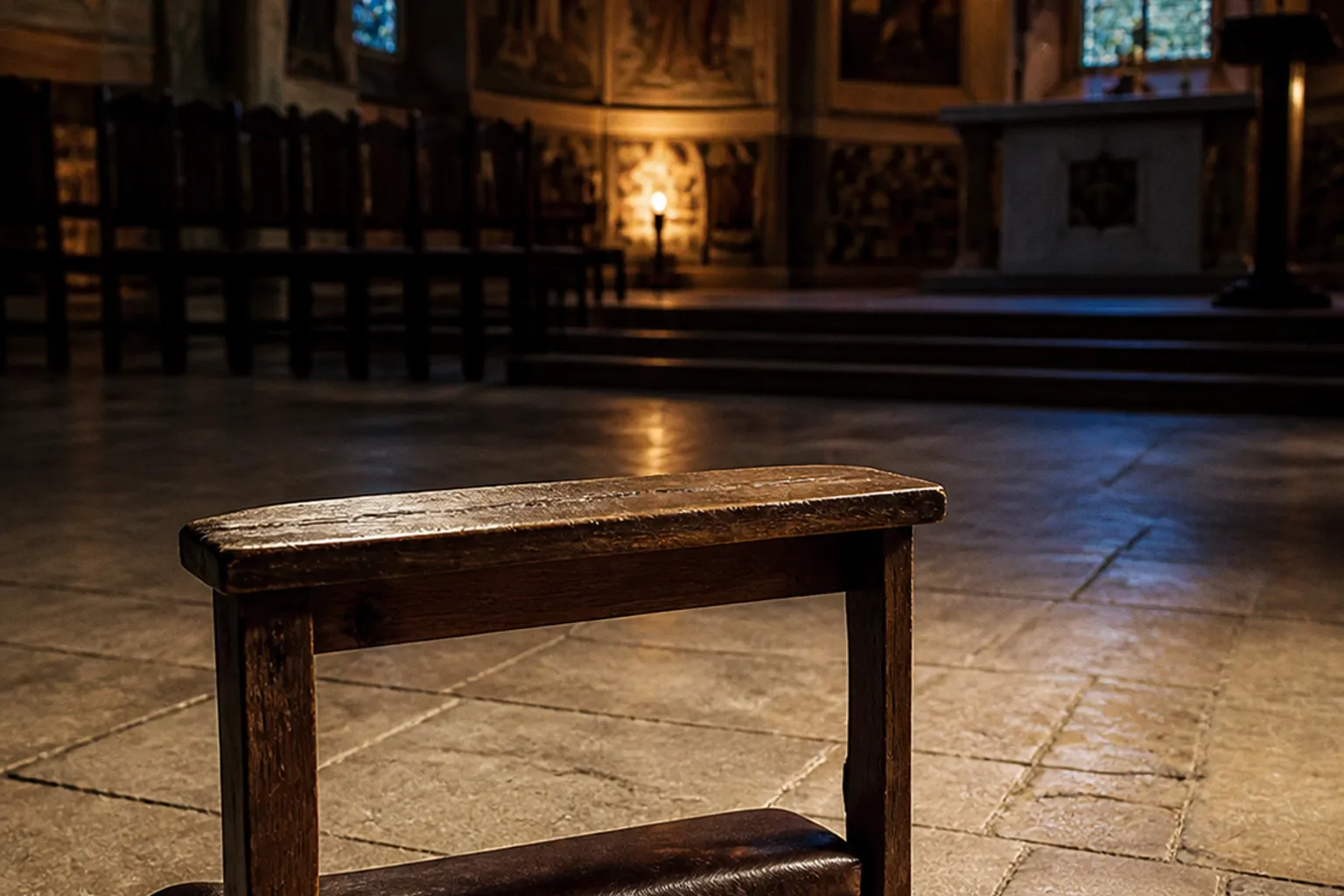
Christian breath prayer gives you a practical deployment point: a short, Scripture-shaped prayer joined to the natural rhythm of breathing.
The method is simple. You divide a brief prayer into two parts. You breathe in with the first phrase, usually an invocation of God, and breathe out with the second phrase, usually a petition, confession, or act of surrender. The words stay short. The action stays repeatable. No special equipment is required.
That simplicity is the strength of the Christian breath prayer method. It does not ask you to create a perfect spiritual environment before you begin. You can use it in a church hallway, before a difficult conversation, on a spiritual wellness walk, or at the edge of your bed before sleep.
Breath prayer does not turn breathing into a performance. It turns an ordinary bodily rhythm into a reliable place to return to God.
What is Christian breath prayer?
Christian breath prayer is a contemplative practice that combines slow, attentive breathing with a short phrase drawn from Scripture or Christian prayer. The phrase normally fits into one inhale and one exhale.
A basic pattern looks like this:
- Inhale: “Lord Jesus Christ”
- Exhale: “Have mercy on me”
The prayer does not need to be repeated loudly. In many settings, silent repetition works best. You are not trying to force a spiritual experience. You are giving your attention one clear assignment.
The practice has deep roots in early Christian monastic life. The Desert Fathers and Mothers in Egypt developed disciplined forms of short, repeated prayer as early as the third and fourth centuries. Their goal was continual attentiveness to God rather than occasional prayer limited to formal religious settings.
The most recognized example is the Jesus Prayer:
“Lord Jesus Christ, Son of God, have mercy on me, a sinner.”
Its biblical foundations include the cry for mercy in Luke 18:13 and the appeal to Jesus in Mark 10:47. Byzantine monks later integrated regulated breathing and silent repetition into the prayer discipline known as hesychasm. Centuries later, The Way of a Pilgrim, published in the nineteenth century, helped introduce the Jesus Prayer to a wider Christian readership.
That history matters, but you do not need to reproduce a monastic rule to begin. Christian breath prayer is not restricted to one tradition, one wording, or one breathing count. The operational principle is more direct:
1. Choose a short Christian prayer.
2. Divide it into an inhale phrase and an exhale phrase.
3. Repeat it with steady, unforced breathing.
4. Return to the words whenever your attention wanders.
For a Lutheran congregation, the practice can sit naturally alongside Scripture reading, hymnody, confession, intercession, and ordinary daily prayer. It should not be presented as a secret technique or a replacement for communal worship. It is a small spiritual tool that helps people carry prayer into the spaces between gathered services.
The Jesus Prayer and the mechanics of the practice
The Christian breath prayer method works because it gives your mind and body a shared rhythm. Instead of asking your attention to remain still through willpower alone, you connect the prayer to something already happening: breathing.
Start with the words, not the timing. Many people make the process unnecessarily technical by trying to control every second of the inhale, hold, and exhale. That is not required. A comfortable breath is more useful than a perfect count.
A basic two-part pattern
Use the following sequence:
1. Settle your posture. Sit, stand, or walk with your shoulders relaxed. Keep both feet supported if you are seated.
2. Breathe in gently. Say the first half of the prayer silently or aloud.
3. Breathe out slowly. Say the second half of the prayer.
4. Pause naturally. Do not force a breath hold.
5. Repeat for two to five minutes.
6. Close with a simple “Amen” or another brief prayer.
The prayer may last for only a few seconds. That is enough. A typical breath prayer contains roughly six to eight syllables, although there is no mandatory length. If the wording is too long, your breathing will become strained or hurried. Shorten it.
For example:
| Prayer focus | Inhale | Exhale |
|---|---|---|
| Jesus Prayer | “Lord Jesus Christ” | “Have mercy on me” |
| Trust | “The Lord is my shepherd” | “I shall not want” |
| Anxiety | “When I am afraid” | “I will trust in You” |
| Grief | “Blessed are those who mourn” | “You are near to the brokenhearted” |
| Guidance | “Show me Your way” | “Help me walk in it” |
| Gratitude | “Every good gift” | “Comes from You” |
Some phrases come directly from a biblical verse. Others condense a biblical theme into a form that can be repeated with one breath cycle. Be transparent about the difference. If you adapt Scripture, keep the meaning intact and avoid turning a verse into a slogan detached from its context.
Should you hold your breath?
Usually, no. A breath prayer does not depend on breath retention.
You may encounter structured patterns such as a four-count inhale, a two-count hold, and a six-count exhale. Some Christians use this kind of “Trinity Breath” pattern as a deliberate rhythm. It can help a group move at a shared pace, but it is not the essence of the practice.
Use a count only if it supports calm attention. If counting makes you tense, drop the count. If you feel lightheaded, stop the exercise and return to normal breathing. People with respiratory conditions, panic symptoms, or other health concerns should adapt the practice conservatively and seek appropriate clinical guidance when needed.
The goal is not maximum breath depth. The goal is a prayerful, sustainable rhythm.
Why Scripture changes the practice
Breathing exercises can support relaxation. Christian breath prayer adds a specific object of attention: God’s name, God’s promise, or a petition shaped by Scripture.
That distinction matters in ministry. You are not simply asking people to empty their minds. You are giving them a faithful phrase to hold when their thoughts become scattered. The prayer becomes an anchor for attention without demanding that difficult emotions disappear.
Consider the difference between these two instructions:
- “Take deep breaths and clear your mind.”
- “Breathe in, ‘When I am afraid,’ and breathe out, ‘I will trust in You.’”
The first instruction may be useful for general relaxation. The second gives the person a Christian practice with language for fear, trust, and dependence. It also leaves room for reality. The person may still feel afraid after five minutes. Breath prayer does not promise instant relief. It creates a repeatable way to bring fear before God.
This is especially useful in church-based wellness work. A prayer path, walking ministry, grief-support gathering, or pastoral care visit can include a short breath prayer without turning the event into a lecture about technique.
Christian mindfulness without empty abstraction
“Mindfulness” often means paying attention to present experience without immediately reacting to it. Christian mindfulness can include that attentiveness, but it places the person within a relationship with God. You notice your breathing, tension, grief, or fear while turning toward God in prayer.
That means you do not need to fight every distracting thought. When your mind moves to an unpaid bill, a medical appointment, a conflict at work, or a difficult family decision, notice the interruption and return to the prayer.
A practical instruction for your congregation is:
Name the distraction without debating it, then return to the phrase.
For example:
- “I am thinking about tomorrow’s meeting.”
- “I am carrying grief.”
- “My body feels tense.”
- “Lord Jesus Christ… have mercy on me.”
This is not failure. Returning is the exercise.
The physical and mental benefits of breath prayer
Slow, diaphragmatic breathing can reduce muscular tension and help calm the nervous system. When you pair that breathing with a short prayer, you also reduce the number of competing instructions your mind is trying to manage.
The benefits of breath prayer may include:
- A slower pace during moments of stress.
- More deliberate attention before speaking or acting.
- A physical cue for releasing tension in the shoulders and jaw.
- A portable prayer practice for travel, work, caregiving, or illness.
- A shared rhythm that helps a small group begin worship or reflection.
- A language of trust during grief, fear, and uncertainty.
- A bridge between formal prayer times and the rest of the day.
The phrase “pray without ceasing” in 1 Thessalonians 5:17 often guides modern Christians toward practices that keep prayer available throughout ordinary life. Breath prayer fits that objective because breathing continues during every routine task. It gives you a way to pray without requiring a separate room, a long devotional period, or a fully quiet mind.
But maintain the boundary between spiritual support and medical treatment. Breath prayer can help a person cope with stress and refocus attention. It is not a replacement for therapy, medication, emergency care, or treatment for severe anxiety or clinical depression.
In a church setting, build a clear referral pathway. If someone describes persistent panic, suicidal thoughts, serious sleep disruption, inability to function, or worsening depression, move beyond a spiritual exercise. Contact the appropriate pastoral and clinical supports. Do not ask a breath prayer to carry a crisis that requires a larger response.
The practice is small by design. Its value comes from repeatability, not from making claims it cannot support.
How to create your own Christian breath prayer
You do not need to invent new theology. Start with a verse, a line from a hymn, or a traditional Christian prayer that already speaks to the situation you are carrying.
Step 1: Identify the ministry need
Choose a real situation. Do not begin with a vague desire to “be more spiritual.” Name the operational need:
- A volunteer needs steadiness before serving at a food distribution.
- A grieving person needs a prayer that does not demand cheerful answers.
- A caregiver needs a brief practice between responsibilities.
- A youth group needs a transition from physical activity into quiet reflection.
- A worship team needs to settle before the service begins.
- A person walking a prayer path needs words for gratitude and attention.
The need determines the language.
Step 2: Select a Scripture-based phrase
Choose words that are short enough to breathe and strong enough to carry repeated use. Good starting points include:
- “Be still” / “And know that I am God.”
- “The Lord is near” / “To the brokenhearted.”
- “Into Your hands” / “I commend my spirit.”
- “My help comes” / “From the Lord.”
- “Cast your cares” / “On Him.”
- “Abide with me” / “Until the morning.”
Do not force a verse into an artificial inhale-exhale split. Read the line aloud. If you run out of breath, shorten the wording or divide it differently.
Step 3: Assign the movement of the prayer
The inhale often works well for receiving or remembering:
- God’s name.
- God’s presence.
- A biblical promise.
- The first half of the Jesus Prayer.
The exhale often works well for response:
- A request for mercy.
- A surrender.
- A confession.
- A commitment to trust.
- A need you are placing before God.
This pattern is not a rule. Some people find it more natural to inhale the need and exhale the promise. Test the phrase in your own body and keep the version that produces a calm, natural rhythm.
Step 4: Run a two-minute field test
Before introducing a prayer to a group, test it yourself.
Ask:
- Can I say each half without rushing?
- Does the wording remain faithful to Scripture?
- Does the prayer acknowledge the actual need?
- Does it avoid promising an outcome God has not promised?
- Can a person with limited breath capacity use a shorter version?
- Will this wording comfort without silencing grief, anger, or honest lament?
If the phrase fails the field test, revise it. Ministry practices need deployment testing before public use.
Step 5: Give the group precise instructions
Avoid saying, “Just relax and pray.” That instruction leaves too much uncertainty.
Instead, say:
1. “Sit or stand in a comfortable position.”
2. “Let your breathing return to its normal pace.”
3. “On the inhale, pray: ‘Lord Jesus Christ.’”
4. “On the exhale, pray: ‘Have mercy on me.’”
5. “Continue for two minutes.”
6. “If your attention wanders, return to the words without criticism.”
7. “You may stop at any time or pray silently in another way.”
This format gives people control and removes performance pressure.
Breath prayer examples for daily use
A strong breath prayer solves a specific problem. Keep several options available rather than asking one formula to serve every season.
Before a difficult conversation
Use:
- Inhale: “Make me quick to listen”
- Exhale: “And slow to speak”
This prayer gives the conversation a practical target. It does not guarantee agreement. It prepares you to enter the exchange with greater restraint.
During grief
Use:
- Inhale: “God of mercy”
- Exhale: “Stay near to me”
This wording leaves room for sorrow. It does not demand that the grieving person explain the loss or produce a positive lesson.
During a spiritual wellness walk
Use:
- Inhale: “Your creation”
- Exhale: “Awakens my praise”
Keep the walking pace easy. Let the prayer match the movement rather than turning the walk into a breath-control exercise. A church recreation program can use this format at several points along a designated prayer path.
Before serving neighbors
Use:
- Inhale: “Give me willing hands”
- Exhale: “And a listening heart”
This is useful before a meal program, clothing distribution, visitation shift, or neighborhood outreach deployment. It directs volunteers toward tangible service rather than abstract concern.
When fear interrupts the day
Use:
- Inhale: “When I am afraid”
- Exhale: “I will trust in You”
If the full phrase feels too long, shorten it:
- Inhale: “When afraid”
- Exhale: “I trust You”
The shorter version is not a magic formula. It is a way to return to a biblical posture of trust.
At the end of the day
Use:
- Inhale: “Into Your hands”
- Exhale: “I release this day”
This prayer can help mark the transition from work and caregiving into rest. If unresolved concerns return, write them down and address them through an appropriate plan. Prayer and practical follow-through work together.
Building breath prayer into congregational life
A congregation does not need a new program for every useful practice. Start by placing breath prayer at existing touchpoints.
Add it to a worship transition
Before a service begins, a worship leader can guide the congregation through three quiet cycles. Keep the instruction under one minute. Do not compete with the service’s central proclamation. The practice should prepare attention, not become a second sermon.
A simple script:
“Breathe in: ‘Lord Jesus Christ.’ Breathe out: ‘Have mercy on me.’ Continue at your own pace for three breaths. If this practice does not serve you today, remain in silent prayer.”
That last sentence matters. Christian community requires invitation, not coercion.
Use it in volunteer deployment
Volunteer teams often begin with logistics: arrival time, supplies, assignments, safety procedures. Keep that structure. Add a 60-second prayer before people move into service.
For example:
- Review the task.
- Confirm the team lead.
- Identify any access or safety concerns.
- Pray the breath prayer.
- Deploy.
This sequence keeps spiritual preparation connected to the actual work. The prayer does not replace training, safeguarding, transportation planning, or role clarity.
Include it in a prayer path or outdoor space
A faith and fitness trail can offer several short stations. Each station should have one Scripture phrase, one instruction, and one clear movement. Do not overload the signage.
A practical station might read:
- Theme: Release
- Inhale: “Cast your cares”
- Exhale: “On the Lord”
- Action: Walk slowly for one minute and repeat the prayer.
Another station might focus on gratitude, confession, courage, or rest. Build the route for different mobility levels. Provide benches. Avoid making participation dependent on speed, distance, or physical stamina. The ministry objective is access to prayer, not athletic performance.
Train leaders before inviting participants
Leaders need more than enthusiasm. Give them a short protocol:
- Explain that breath prayer is optional.
- Demonstrate normal, unforced breathing.
- Avoid commanding deep breaths.
- Never interpret a participant’s emotional response for them.
- Do not promise anxiety relief or spiritual transformation.
- Know when to refer someone to pastoral or clinical support.
- Offer a seated alternative for walking or standing activities.
- End on time.
That is capacity building. The practice becomes safer and more consistent when every leader knows the same boundaries.
Common implementation failures
Most problems do not come from the prayer itself. They come from poor deployment.
Making the practice too long
A first session of twenty or thirty minutes can feel like an assignment. Start with two minutes. Increase only when the group understands the method and wants more.
Using complicated breathing counts
Counting can help some people and distract others. Do not make a four-count inhale or six-count exhale the entry requirement. The prayer should remain usable for people with different ages, abilities, and health conditions.
Treating distraction as failure
People will lose focus. That is normal. If your instructions imply that a wandering mind means weak faith, participants will hide the problem or abandon the practice. Teach the return.
Choosing language that denies pain
Phrases about joy, victory, or peace may help in some settings. They can also sound false during bereavement, depression, or crisis. Conduct a neighborhood audit of the needs your congregation actually sees. Build a small library of prayers for fear, grief, anger, fatigue, gratitude, and service.
Turning breath prayer into a cure
Do not advertise it as a treatment for trauma, depression, panic disorder, or chronic illness. Present it accurately: a Scripture-centered spiritual practice that may support calm attention and help people respond to stress.
Requiring public participation
Some people pray more honestly in silence. Others may have respiratory limitations, trauma histories, cultural concerns, or discomfort with guided breathing. Offer alternatives: silent prayer, spoken prayer, walking without the exercise, or simply listening.
A seven-day launch plan
If your congregation wants to test Christian breath prayer, use a small pilot instead of announcing a large permanent program.
Day 1: Select the use case.
Choose one setting: worship preparation, volunteer deployment, a grief-support gathering, or an outdoor prayer path.
Day 2: Choose three prayers.
Select one prayer for trust, one for need, and one for gratitude. Keep each phrase short.
Day 3: Test the wording.
Ask two or three leaders to use the prayers for two minutes. Record where the wording feels rushed, unclear, or emotionally mismatched.
Day 4: Prepare the instructions.
Write a short spoken script. Include the opt-out and the safety guidance.
Day 5: Brief the team.
Explain the purpose, the timing, and the boundaries. Make sure leaders do not improvise medical claims or pressure participants.
Day 6: Run the pilot.
Keep the session short. Observe participation, accessibility, and the group’s actual response.
Day 7: Adjust the deployment.
Ask what worked, what created friction, and which people were unintentionally excluded. Revise before expanding.
This is how a congregation moves from a good idea to a sustainable ministry practice. Start with a defined need. Test the tool. Measure participation and usefulness. Improve the system.
Returning to prayer in ordinary life
The strongest benefit of breath prayer is its portability. You can use it before opening email, while waiting for an appointment, during a commute as a passenger, before entering a hospital room, or after receiving difficult news.
Attach the practice to existing transitions:
- When your feet touch the floor in the morning.
- Before you answer a stressful message.
- At the beginning of a walk.
- Before a volunteer shift.
- When you turn off the lights.
- After washing your hands before a meal.
- When you notice your shoulders tightening.
Use one phrase for a week before changing it. Repetition builds recognition. Over time, the words can become a prompt that helps you pause and choose your next action with greater care.
Do not measure success by how peaceful you feel. Some days the prayer will feel steady. Other days it will feel mechanical, interrupted, or difficult. The practice still gives you a place to stand. You breathe in the words. You breathe out the request. You return when attention breaks.
Christian breath prayer is not a substitute for worship, pastoral care, medical treatment, or community action. It is a practical bridge between them. It helps you carry Scripture into the body, carry prayer into the schedule, and carry faith into the next tangible responsibility.
Start with one phrase. Give it two minutes. Use it where your congregation already serves, gathers, grieves, walks, and rests. Then build from what proves useful.