Lutheran small group ministry: a step-by-step launch guide
In nearly every conversation I have with a pastor wrestling with discipleship, the same quiet worry surfaces: their people are showing up on Sunday, singing the hymns, hearing the sermon — and then drifting back into the week largely on their own.
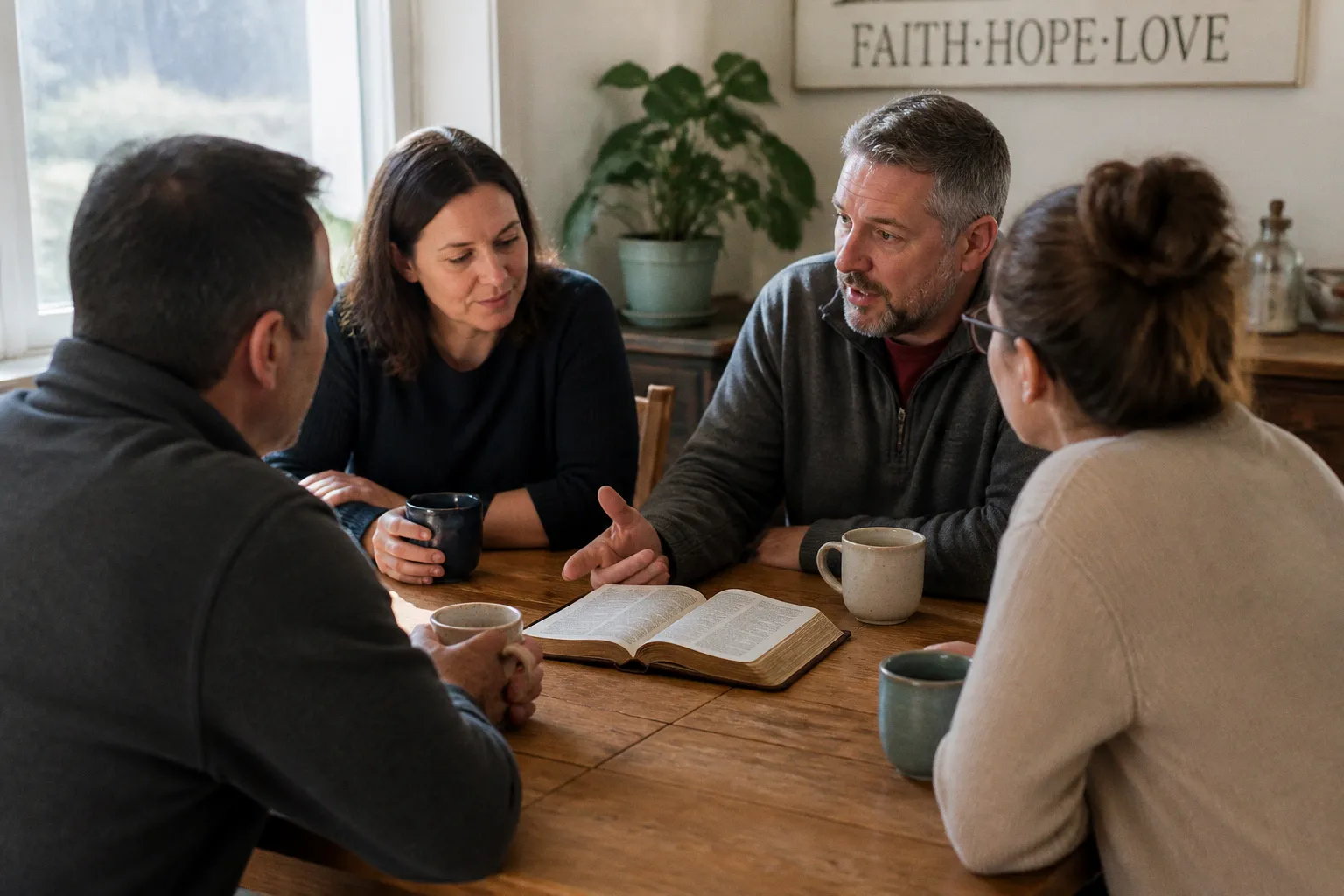
Lutheran small group ministry: a step-by-step launch guide
The instinct that something more is needed is rarely wrong. What follows is a guide for congregations who feel that nudge and want to steward it well — without inheriting the legalism that has haunted every renewal movement in the modern church. We will walk through theology, structure, leadership, curriculum, and launch logistics, treating each step with the gravity it deserves. Where small groups flourish, they do so because they become laboratories of grace — places where the baptized can speak honestly about life and death, sin and mercy, before they ever speak about program. That posture is the foundation for everything practical that follows.
Small groups are not programs. They are embodied ecclesiology — little parishes within the parish, where doctrine becomes conversation and confession becomes companionship.
The theological foundation: why Lutherans have always been wary of small groups
To launch a Lutheran small group ministry without theological friction, you first have to name the ghost in the room. That ghost is Pietism. In 1675, Philipp Jakob Spener published Pia Desideria, calling for small home gatherings he called conventicles — intimate circles for Bible study, prayer, and accountability. Spener's diagnosis was honest: the institutional church had grown cold, and ordinary believers needed space for deeper devotion. But what began as a pastoral renewal quickly calcified into something Luther had spent his life resisting: a two-tier Christianity that divided the baptized into "real" disciples and nominal pew-sitters. By 1726, Sweden went so far as to issue an Edict against Conventicles, alarmed that these gatherings were destabilizing established church order.
That history still breathes down our necks. A pastor who announces a small group push will, within a week, hear a thoughtful elder ask whether the church is drifting toward works-righteousness. The concern is legitimate. Lutheran theology insists that justification is by grace alone, through faith alone, in Christ alone — and that no spiritual exercise, however devout, can earn what Christ has already given. The moment a small group begins grading its members' prayer lives, devotional consistency, or theological sophistication, it has abandoned the gospel it claims to teach.
This is why the WELS Congregational Services discipleship resource, "D007 – Lutheran Small Groups," is structured explicitly around avoiding Pietism's pitfalls. The framework is pastoral before it is programmatic. A Lutheran small group exists not to produce more committed Christians, but to create space where the committed and the merely present can both receive the Means of Grace together. We hold space for that distinction every time we open a Bible with another person. The minute we measure spiritual maturity, we have stepped outside our confession.
Practically, this means a few non-negotiables for any Lutheran small group leader:
- The conversation centers on what Christ has done, not what we must do. Questions are welcome; performance reports are not.
- Membership in the group is pastoral, not elite. Anyone in the congregation may attend; no one is "more spiritual" for being there.
- A pastor remains accessible to the group, not as a curriculum auditor but as a steward of the Means of Grace when discussion veers into territory where confession and counsel are needed.
- The group exists within the congregation, not above it. Sunday worship remains the gathering of the whole assembly; the small group is its household, not a substitute.
Structuring the ministry: lessons from WELS D007 and historical models
Once the theological frame is set, structure follows. Most small group failures I have witnessed are not failures of doctrine — they are failures of scaffolding. Without a written purpose, defined roles, and a realistic timeline, even the most Spirit-led gathering dissolves into a coffee klatsch by month four.
The WELS D007 module and the Immanuel Lutheran Church training manual converge on a remarkably similar architecture. Three elements are essential:
A written purpose statement
Before you recruit a single leader, write a single paragraph that answers: Why does this congregation need small groups, and what specific kind of formation do we hope to facilitate? Vague statements like "foster fellowship" fail quickly. Stronger statements name the gap — "members in the 25-to-45 age range report that Sunday sermons do not equip them to discuss faith with their teenage children" — and the hope — "to provide a setting where parents and adults can wrestle honestly with Scripture applied to daily life." Keep the statement under 100 words. Read it aloud to your council. If it sounds like a brochure, rewrite it.
A realistic pilot timeline
The most common launch mistake is opening sign-ups the Sunday you announce the ministry. Instead, structure a pilot phase of 8 to 12 weeks with two to three groups. Pilot groups serve three functions: they stress-test your curriculum, they reveal leadership gaps, and they give the rest of the congregation something concrete to observe before they commit. A well-run pilot will quietly produce your second-wave leaders — the people who saw it work and now want to host.
Defined leadership roles
A Lutheran small group is not led by one charismatic facilitator. It is shepherded by at least two people — ideally a male-female pair when the group is mixed — with distinct but overlapping responsibilities. A simple role split works well:
| Role | Primary responsibility | Pastoral posture |
|---|---|---|
| Host | Welcoming space, hospitality, logistics | The one who opens the door and offers a chair |
| Discussion leader | Guides the text, asks questions, manages time | The one who holds the conversation with patience |
| Shepherd (often the pastor) | Available for pastoral care arising from discussion | The one who follows up on what the text has stirred |
When a single person carries all three roles, burnout arrives within a season. When the roles are shared, the ministry becomes resilient to one person's fatigue — and resilience here is not a productivity term. It is a stewardship term. It honors the finitude of the people doing the work.
Recruiting and training spiritually mature leaders
Here we arrive at the most pastoral portion of the process. We are not hiring employees. We are inviting the baptized to lay down their time for the sake of their brothers and sisters. That invitation matters enormously, and it must be extended with care.
The Immanual Lutheran Church manual and the WELS D007 module are aligned on what to look for in a small group leader, and the list is shorter than you might expect. Relational warmth comes first — a leader who is theologically gifted but cold will produce a study group, not a community. Spiritual maturity comes second, and the word maturity here does not mean "knows the Book of Concord by heart." It means a person whose life shows evidence of repentance, of patience under suffering, of reliance on grace rather than self-management. If you find yourself looking for the most impressive résumé in the room, you are recruiting for a Bible study, not a small group.
Extend the invitation personally, never via bulletin announcement. The most fruitful leaders I have watched step forward were approached by name after Sunday service, with a sentence like: "I have seen how you listen to people. I wonder if you would consider helping us start something new." A general appeal reaches the eager; a personal appeal reaches the faithful.
Once leaders have said yes, training should cover four areas in roughly this sequence:
1. Theology of the small group. Why this exists, what Pietism is and why we are avoiding it, how the Means of Grace remain central. Do not skip this. Leaders who skip theological formation will unconsciously recreate accountability cultures within a year.
2. Listening skills. Many Christians have been trained to answer questions; few have been trained to sit with them. Practice the discipline of asking a follow-up question that does not have a predetermined answer.
3. Confidentiality and pastoral boundaries. What stays in the room, what needs to be brought to the pastor, how to handle disclosures of abuse, marital crisis, or suicidal ideation. This is where partnership with your pastor becomes concrete.
4. Practical mechanics. How to use the curriculum, how long meetings should run, how to handle the person who dominates the conversation.
Training can be compressed into two or three two-hour sessions. The theological conversation, however, should not be compressed. This is the embodied faith formation that will keep your leaders grounded when the work becomes weary.
A small group leader is not a teacher. They are a host — someone who opens a room, opens a text, and opens themselves to the slow work of being trusted with another person's questions.
Selecting curriculum: sermon-based, book-by-book, or short-season resources
Curriculum choice is downstream of theology and leadership, not upstream of them. Yet congregations frequently start here, browsing catalogs while their purpose statement remains unwritten. Reverse the order and the curriculum question becomes much easier.
The Immanuel Lutheran Church manual identifies three viable formats for Lutheran small groups, each with its own pastoral logic:
| Format | What it does well | What it requires | Best fit |
|---|---|---|---|
| Sermon-based deepening | Reinforces Sunday proclamation; gives members a week to live with the text | Strong sermons; skilled leader who can extend rather than repeat the message | Established congregations with stable preaching |
| Book-by-book Bible study | Deep immersion in a particular text; builds biblical literacy over time | A study Bible (e.g., Concordia Self-Study Bible) and a leader willing to prepare week-by-week | Groups seeking long-form formation across 6 to 12 months |
| Short-season resource (4–10 weeks) | Low commitment threshold; easy entry for newcomers | A pre-written study guide; clear start and end date | Outreach-oriented groups or seasonal cohorts (Advent, Lent) |
A hybrid approach is also legitimate and often most sustainable. Many Lutheran congregations run sermon-based groups during the program year and shift to short-season resources during Advent and Lent, when the church calendar already organizes the community's attention.
Whatever format you choose, hold three principles gently but consistently:
- The study guide serves the text, not the other way around. If a question in the guide subtly rewards a particular emotional response (gratitude, conviction, confession), notice it. Lutheran small groups are not therapy. They are catechesis in the company of friends.
- The catechism belongs in the room. Whether explicitly studied or quietly referenced, the Small Catechism is the spine of Lutheran formation. A small group that never touches it is missing the gift Luther left us.
- Leave room for lament. Real life — grief, anxiety, estrangement, finitude — will walk into the room whether the curriculum has planned for it or not. A good leader treats those moments not as interruptions to the study but as the very text the study is meant to accompany.
For specialized ministries, a word about Lutheran Women's Missionary League (LWML) small groups is warranted. If your prospective group is affiliated with the LWML, the launch procedure is more formal: the prospective leader contacts the district president, submits a new group form, and awaits a formal letter of welcome from the LWML President. The structure exists for good reason — it keeps the local group connected to a wider Lutheran witness — and it should not be bypassed even when enthusiasm is high.
Practical launch logistics: from pilot to congregation-wide integration
Once theology, leadership, and curriculum are in place, the operational work begins. Treat this phase with the same pastoral seriousness you gave the others. Logistics are ministry when they serve the gospel; they become idolatry when they serve the program.
The pre-launch month
A useful rhythm for the four weeks before sign-ups open:
1. Council approval — present the purpose statement, leadership team, pilot timeline, and budget. Ask for honest questions, not just a vote.
2. Pastoral communication — your pastor(s) preach a brief two- or three-week series on the theology of small groups, anchoring the ministry in grace before any sign-up card appears.
3. Leader commissioning — publicly commission your pilot leaders in a Sunday service. The liturgy already has a place for this; use it. The commissioning tells the congregation that this work is the church's work, not a faction's project.
4. Visibility without pressure — print names of leaders, expected meeting rhythms, and a one-sentence description in the bulletin for several weeks. Do not run countdown clocks. Trust that the work itself will draw people.
Sign-up friction
A low-friction sign-up method matters more than its elegance. An online group finder works for congregations with digital fluency; a simple card in the narthex works for those without. The principle is the same: a person should be able to indicate interest in under ninety seconds. Anything longer loses the hesitant — and the hesitant are often the very people the ministry most needs to reach.
A few design choices worth making deliberately:
- Keep group size between six and twelve. Smaller than six and the conversation grows thin; larger than twelve and the quieter voices disappear. The Koinonia model at Concordia Lutheran High School — twelve students and an adult mentor meeting weekly for 25 minutes — demonstrates that even brief gatherings, when structured, can sustain meaningful community.
- Set a regular rhythm. Weekly or every-other-week works best. Inconsistent meetings erode trust; predictable rhythms build it.
- Plan a closing. Every group, especially short-season groups, should know when it ends. An ending is pastoral, not defeatist. It honors the finitude of any human gathering and gives the group permission to grieve and bless one another before scattering.
- Build a feedback loop. After the pilot, sit with leaders for a one-hour review. What worked? Where did the curriculum strain against the conversation? What did members say afterward? This review becomes the soil for the next season.
A small group ministry is not a small church program
This is the final pastoral reality I want to name. A small group ministry is, when it works, an extension of the congregation's own life — a way of letting the household of faith breathe outside the sanctuary walls. It will not solve every discipleship gap. It will not reach every member. It will sometimes disappoint you, and the people who show up faithfully on Tuesday nights will sometimes be the ones you least expected.
We hold space for that too. The work of forming Christians is the slow work of the Holy Spirit through ordinary means — Word, Sacrament, and the patient presence of one believer with another. A small group is simply one more ordinary means. Treat it as such, and it will become a gift the congregation did not know it needed. Treat it as a solution, and it will become a weight the congregation did not need to carry.
If your council has been circling this conversation, perhaps the next faithful step is not to recruit a leader or order a study guide. It is to gather two or three trusted people, read a section of Luther's Small Catechism together, and ask what the Spirit might be inviting your congregation into next. From that small room, the rest of the work — theological, structural, practical — will begin to make sense.