Lutheran Sunday School Curriculum: How to Avoid Common Mistakes
The selection of a Sunday school curriculum is a primary act of liturgical stewardship, yet it is frequently approached as a logistical afterthought rather than a deliberate theological decision.
Lutheran Sunday School Curriculum: A Framework for Avoiding Systemic Errors
This misalignment between method and mission results in the common failure to transmit the Lutheran confessional heritage effectively, leading to cognitive dissonance in young learners and administrative drift in parish education. The core problem is not a lack of options, but the absence of a rigorous, goal-oriented framework for selection and implementation.
The Trap of Prioritizing Activities Over Theology
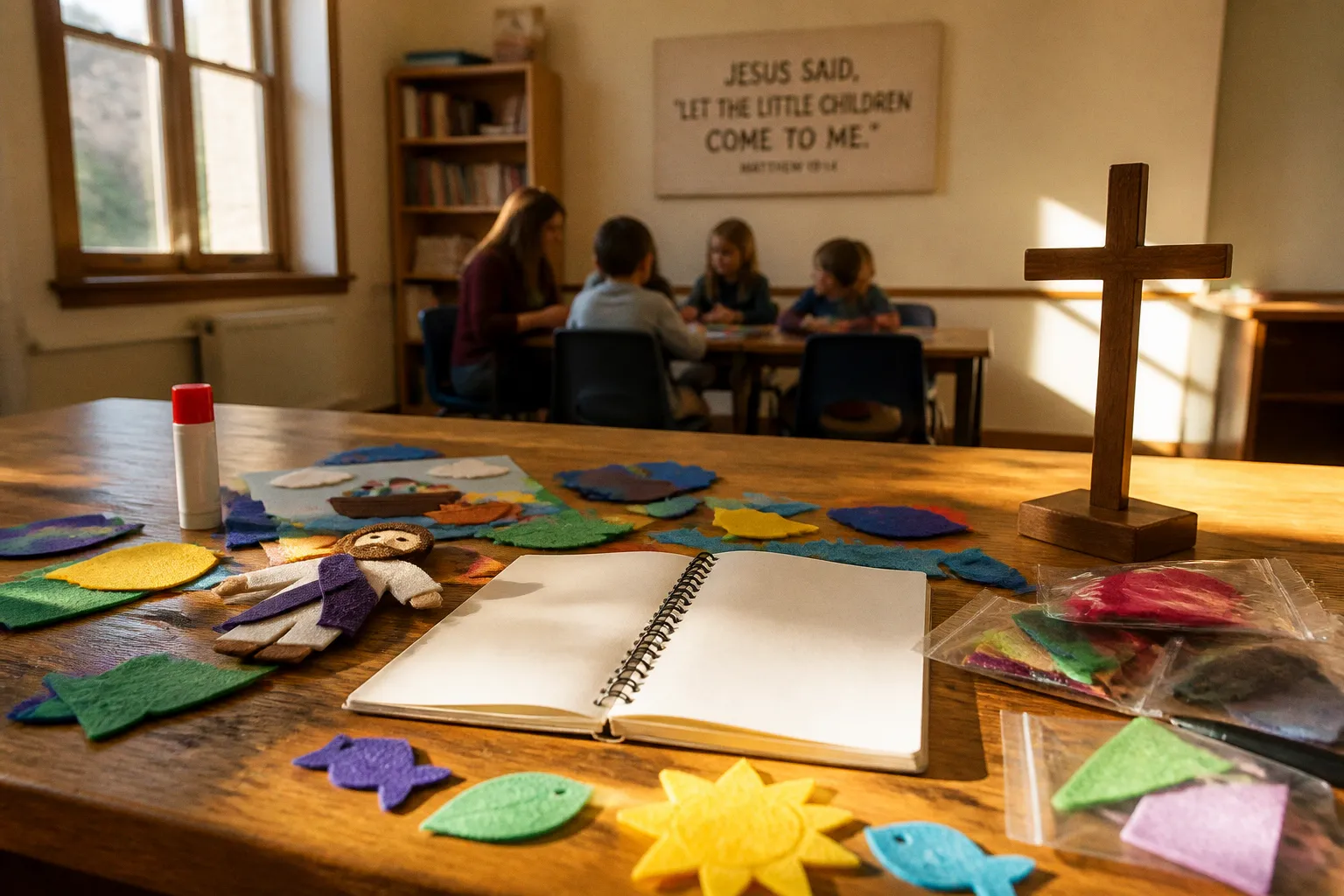
A pervasive error in curriculum evaluation is the conflation of engagement with education. Parishes often assess packages based on the volume and variety of ancillary materials—crafts, worksheets, games, and digital extras—mistaking the container for the content. This prioritization introduces a critical flaw: it subordinates the theological foundation to the logistical interface.
The efficacy of a curriculum is measured not by the complexity of its activities, but by the clarity of its confessional witness.
A curriculum rich in interactive elements but poor in doctrinal coherence disintegrates the learning objective. For instance, a lesson on David and Goliath focused primarily on creating a sling-and-stone craft may inadvertently reinforce a moralistic "be brave" narrative, divorced from its place in the redemptive history pointing to Christ. The primary filter for any resource must be its faithfulness to the Lutheran confessional writings and its capacity to articulate Law and Gospel distinctly.
| Curriculum Type | Primary Pedagogical Focus | Inherent Risk | Alignment Checkpoint |
|---|---|---|---|
| Biblical Stories (Sequential) | Narrative comprehension and chronological Bible literacy. | Can devolve into moralism if the gospel application is not explicitly drawn by the teacher. | Does each lesson's teacher guide contain a clear "Gospel Connection" section? |
| Lectionary-Based | Synchronizing classroom learning with the congregational worship cycle (RCL, NL). | Assumes a high level of parent/child worship attendance; can feel disjointed if attendance is sporadic. | Does the material explicitly link the Sunday school lesson to the sermon and sacraments for that day? |
| Topic-Based | Exploring a specific theme (e.g., prayer, sacraments) across multiple scripture passages. | May present a fragmented view of scripture if not careful; risks becoming a series of disconnected lessons. | Is the topic integrated into a broader biblical-theological framework, or is it presented in isolation? |
| One-Room/Rotational | Multiple ages learning the same story through different activity stations (art, drama, cooking). | Requires significant volunteer coordination and training; can prioritize experiential learning over content depth. | Is the core theological truth of the narrative robust enough to withstand multiple, varied expressions? |
Aligning Curriculum Choices with Congregational Discipleship Goals
Leaving the curriculum decision to individual teachers or a single volunteer creates a decentralized, often contradictory, educational strategy. This approach severs the Sunday school program from the parish's overarching discipleship goals, as articulated by the pastor and church council. The process must be centralized and intentional.
The selection committee should comprise the pastor (as chief theological officer), the director of Christian education, and a representative elder or ministry leader. Their task is to answer a single, defining question: What specific knowledge, faith practice, and confessional identity are we aiming to form in a child by the time they are confirmed? This answer becomes the benchmark against which all options are measured.
A synod-aligned resource, such as Concordia Publishing House's Enduring Faith for LCMS congregations or Northwestern Publishing House's Christ-Light for WELS parishes, provides a pre-vetted theological framework. These curricula are built on Lutheran dogmatics and are designed to integrate with catechetical instruction. However, synodical alignment is a starting point, not an automatic guarantee of fit. The parish must still evaluate its specific context: the size of the church, the age range served in a single classroom, and the spiritual maturity of the volunteer teaching corps.
Avoiding the Moralism Pitfall in Bible Storytelling
A critical failure in pedagogical execution occurs when the Bible is presented as a collection of moral exemplars. This reduces the narrative to a series of "be like David" or "don't be like Jonah" lessons, a framework that leads to either self-righteousness or despair. The Lutheran hermeneutic insists that all scripture testifies to Christ; therefore, every lesson must be a vehicle for proclaiming the Gospel.
The corrective is a structured lesson design that moves from Recognition (what the text says) to Diagnosis (how the text reveals our sin and need) to Proclamation (how the text points to Christ's redemption). A teacher presenting the story of Jonah should not conclude with "we must obey God." A Gospel-centered conclusion would be: "Jonah ran from God's call, just as we run from God's will. But God pursued Jonah with a storm and a great fish to save him, just as He pursues us with His Law and ultimately saves us through Jesus, who was in the tomb for three days for our salvation."
This requires curricula with robust teacher guides that model this interpretive framework. Resources like Sparkhouse's Whirl or Holy Moly are often praised for their narrative engagement, but they originate from an ELCA context. The parish leadership must vet them for theological substance, ensuring the Law/Gospel distinction is maintained, not blurred into a generic message of God's love without the necessary confrontation of sin.
Strategies for Preventing Lesson Overload and Cognitive Fatigue
Overloading a single lesson with multiple complex concepts is a common pedagogical error. It overwhelms the learner and guarantees shallow retention. The goal is not to cover material but to uncover truth. Effective catechesis requires a disciplined focus on one clear, simple, scriptural truth per session.
This principle of singular focus should govern the selection and implementation of any curriculum. When evaluating a package, examine the scope and sequence. Does it attempt to traverse the entire biblical narrative in 30 weeks, or does it allow for deeper dives? A lesson on the Exodus, for example, should not burden children with the geopolitical context of Egypt, the route of the wandering, and the specifics of the Tabernacle's construction. Its singular, Gospel-centered focus should be: God heard the cries of His people and delivered them from slavery, foreshadowing how Christ delivers us from slavery to sin.
This focus is reinforced through intergenerational modeling. A rigid, age-graded structure can isolate children from the broader body of Christ. Consider incorporating periodic, simplified elements of the adult Bible study topic into the children's lesson, or involving parents through take-home sheets that ask a specific question related to the single truth of the day. The resource Spirit & Truth Publishing's Living the Word explicitly attempts this by aligning with the lectionary, providing a potential bridge between worship and education, though it requires careful adaptation for a Lutheran confession.
The Imperative of Deliberate Teacher Preparation
The final, and perhaps most frequently underestimated, systemic failure is the lack of mandated teacher preparation. Presenting the lesson for the first time on Sunday morning reduces teaching to scripted reading, extinguishing the possibility for genuine, informed dialogue and spiritual reflection. This is a stewardship issue of time and talent.
The solution is not merely suggesting teachers read ahead; it is institutionalizing a preparation cycle. The framework should include:
1. Mandatory Preview: Teachers receive the lesson for the following week by the prior Sunday.
2. Personal Engagement: They are required to study the scripture passage independently before consulting the curriculum guide, allowing the Word to speak to them first.
3. Theological Review: They meet briefly (or communicate via a shared document) with the pastor or education director to clarify doctrinal points and practice the Law/Gospel application.
4. Logistical Familiarization: They gather and review all crafts, games, or media before the class begins.
This process transforms the teacher from a facilitator of activities into a steward of the Word. It acknowledges that the curriculum is a tool, and its effectiveness is contingent upon the preparedness and theological literacy of the one who wields it.
A well-chosen curriculum, therefore, is not a purchased product but a implemented system. It is the product of congregational discernment, rigorous theological vetting, and a committed infrastructure for volunteer formation. The goal is not to entertain for an hour, but to systematically root children in the confession that Jesus Christ is Lord and Savior, providing a framework for faith that will withstand the cognitive and moral trials of adulthood.