Homeless Shelter Meal Ministry: Pre-Service Checklist
A church homeless shelter meal ministry can fail before the first plate leaves the serving line. The usual cause is not a lack of goodwill.
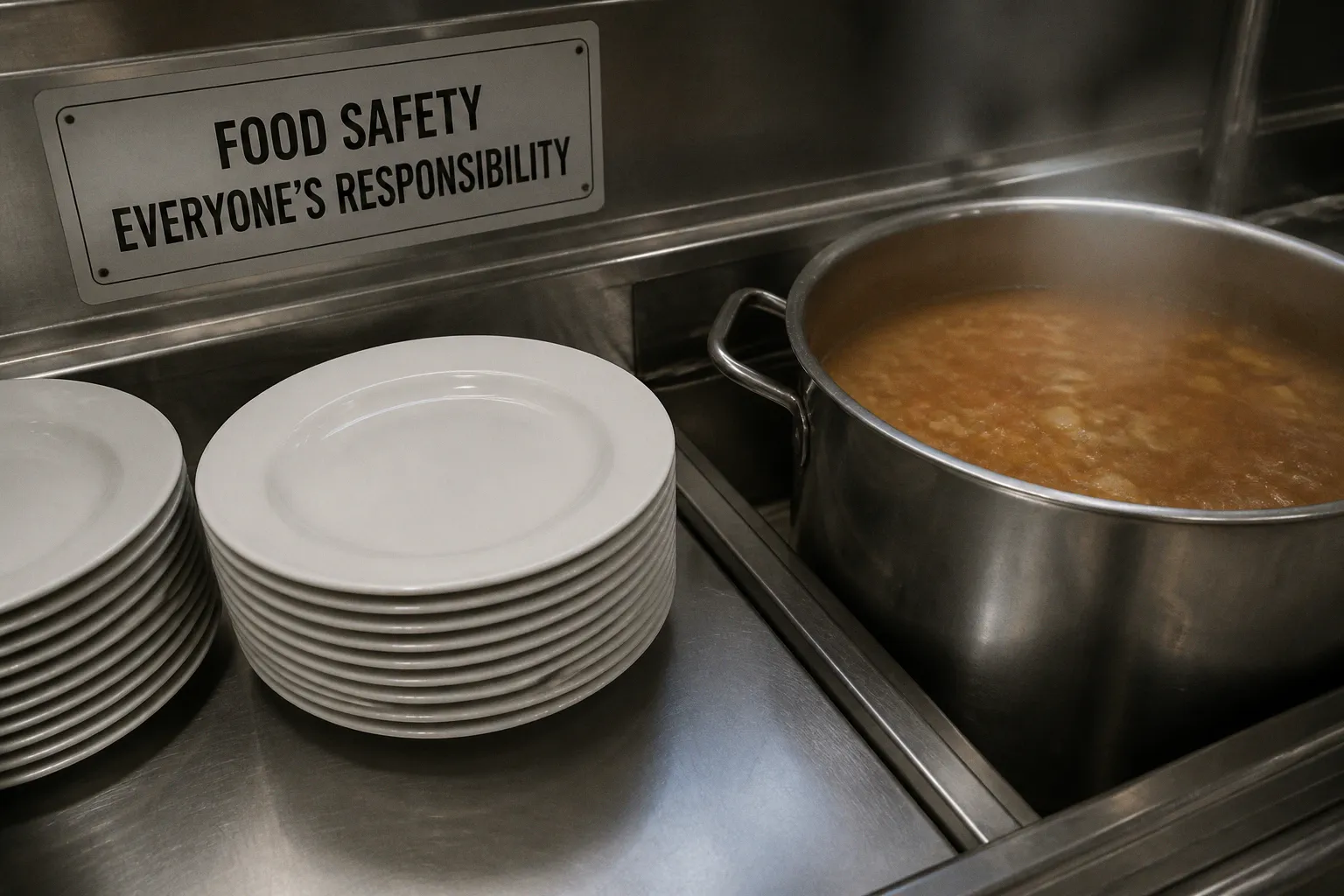
It is an unmanaged bottleneck: no confirmed handwashing station, no calibrated thermometer, volunteers arriving without assigned roles, or prepared food sitting at room temperature while the team solves problems in real time.
Your congregation needs a deployment plan, not a last-minute kitchen scramble. Food safety, volunteer hygiene, venue setup, temperature control, and service timing must operate as one system. When those pieces are assigned before the doors open, your team protects guests, reduces confusion, and delivers a meal with dignity.
A safe meal ministry starts before cooking begins. The pre-service checklist is the control panel for the entire operation.
Start with a pre-service deployment briefing
Do not begin with volunteers standing around the kitchen asking what needs to be done. Begin with a short briefing led by one designated coordinator. That person owns the timeline, assigns roles, confirms equipment, and stops service if a safety problem appears.
The briefing does not need to become a meeting. Keep it operational and direct. Cover five points:
- Who is leading the shift? Name one person with authority to make decisions.
- Who handles food preparation? Separate raw-food handling, cooked-food handling, serving, and cleanup whenever your staffing capacity allows.
- Where is the handwashing station? Everyone should know its location before touching food.
- Where will temperatures be recorded? Put the thermometer and temperature log in one visible location.
- What is the service window? Establish when food comes out, when it must be removed, and who monitors the clock.
Your volunteer roster should show more than names. It should show responsibility. A practical shift plan may include:
| Role | Primary responsibility | Handoff to confirm |
|---|---|---|
| Shift coordinator | Runs the briefing, timeline, and escalation decisions | Confirms all stations are ready before food moves |
| Food safety lead | Checks handwashing, illness screening, gloves, and temperatures | Reports unsafe conditions immediately |
| Kitchen preparation team | Handles ingredients and final preparation | Separates raw and cooked food tasks |
| Serving team | Portions and distributes ready-to-eat food | Changes gloves after contamination or non-food contact |
| Dining-area team | Manages guest flow, seating, supplies, and accessibility | Reports crowding, spills, or urgent needs |
| Cleanup team | Washes, sanitizes, removes waste, and resets the venue | Confirms food disposal and equipment shutdown |
This structure supports capacity building. It also prevents the common mistake of assigning every task to the most experienced volunteer. Your ministry should build a bench of people who can lead individual stations, not depend on one person who knows where everything is.
Run the illness and hygiene check first
Before anyone enters food preparation, ask volunteers to report symptoms of communicable illness. A volunteer with fever, vomiting, or diarrhea should not prepare or serve food. This is not a judgment about commitment. It is a basic risk-control decision.
Then require proper handwashing:
1. Wet hands with warm running water.
2. Apply soap.
3. Scrub for at least 20 seconds, including the backs of the hands, between fingers, and under fingernails.
4. Rinse thoroughly.
5. Dry with a single-use paper towel.
Handwashing must happen before handling food and again after using the restroom, sneezing, coughing, or handling trash. Hand sanitizer does not replace proper soap-and-water handwashing during kitchen setup.
Post the instruction at the station. Do not assume that experienced volunteers will automatically follow the same process. A visible standard makes the work consistent across every shift.
Action step: Assign one person to confirm that the handwashing station has warm and cold running water, soap, and single-use paper towels before food preparation starts. If the station is not ready, stop the food workflow until it is.
Build temperature control into the timeline
Temperature control is not a final inspection. It is a sequence of checks from cooking through service. Your team should know which foods require hot holding, which require cold holding, when reheating occurs, and who records the readings.
Use these operating thresholds:
- Hot foods: hold at 135°F or warmer.
- Cold foods: hold at 41°F or cooler.
- Poultry and reheated leftovers: reach at least 165°F internally.
- Ground meat: reach at least 160°F internally.
- Food thermometers: should be accurate within ±2°F.
The thermometer needs a permanent place in the workflow. Do not leave it in a drawer or inside a volunteer’s vehicle. Keep it clean, accessible, and ready for use. The person taking the reading should know where to measure and should record the result instead of relying on memory.
Check food at the right points
A practical temperature sequence looks like this:
1. Before cooking or reheating: Confirm that cold ingredients remain at 41°F or cooler when they require refrigeration.
2. At the end of cooking: Measure the thickest portion of poultry, reheated leftovers, or other high-risk food.
3. Before moving food to service: Confirm that hot food is at least 135°F or cold food is no more than 41°F.
4. During service: Assign a volunteer to monitor holding temperatures and elapsed time.
5. At close: Decide whether food can be retained safely or must be discarded.
Do not measure only the surface of a large pan. Insert the thermometer into the center or thickest portion. For multiple containers of the same dish, check more than one container when the preparation or holding conditions differ.
If a reading falls outside the required range, the coordinator must act immediately. Move the food into an approved corrective process, such as reheating or rapid chilling where appropriate and permitted by local procedures, or discard it when safety cannot be confirmed. Do not quietly return an uncertain dish to the serving line.
A temperature log is not paperwork for its own sake. It tells the next volunteer what happened to the food and what decision the team must make now.
Protect the service window
Every meal has a clock. Perishable food left at room temperature for more than two hours must be discarded. In hot weather above 90°F, the limit is one hour.
That time begins when the food leaves controlled storage or heat—not when someone remembers to start tracking it. Write the start time on the service log. If the serving area is warm, crowded, or exposed to outdoor conditions, use the shorter limit when applicable.
Your team should stage food in smaller containers instead of placing the full supply on the line at once. This limits exposure and makes temperature management easier. Keep reserve food under appropriate hot or cold control until the serving team needs it.
A simple service board should show:
- Time food entered the service area.
- Time the next container replaced it.
- Temperature reading.
- Name or initials of the volunteer who checked it.
- Disposition at the end of service.
This is a basic deployment tool. It keeps the team from guessing.
Prepare the kitchen and venue before food arrives
Food should not enter an unprepared room. Complete the venue setup before moving hot pans, refrigerated ingredients, or ready-to-eat items into position.
Your church food preparation area should have:
- A dedicated handwashing station with hot and cold running water.
- Soap.
- Single-use paper towels.
- A commercial three-compartment sink for washing, rinsing, and sanitizing.
- Food thermometers accurate within ±2°F.
- Clean work surfaces.
- Waste containers that volunteers can use without contaminating food-contact areas.
- Separate locations for raw ingredients, cooked food, clean utensils, and used equipment.
The three-compartment sink should not become a storage shelf. Keep dirty equipment from blocking the washing process. If your team cannot maintain a clear wash-rinse-sanitize sequence, pause the workflow and reorganize the area.
Use a station-by-station room sweep
A neighborhood audit looks outward. This is the same discipline applied indoors: inspect the entire service environment before guests arrive.
Walk the room in this order:
1. Entry and guest flow: Confirm that guests can enter, receive instructions, and reach the dining area without crossing the food preparation zone.
2. Food preparation: Remove clutter from work surfaces. Place only the tools needed for the current task.
3. Handwashing: Test access and supplies. Do not hide the station behind boxes or equipment.
4. Serving line: Set clean utensils, gloves, napkins, and trays where servers can reach them without leaning across food.
5. Dining area: Check seating, walkways, spills, lighting, and access for guests with mobility needs.
6. Waste and cleanup: Place waste containers where they can be used without forcing volunteers to carry trash through the serving line.
7. Emergency access: Keep doors, corridors, and exits clear.
This process creates tangible readiness. It also reduces volunteer movement, which lowers the chance of cross-contamination and prevents avoidable congestion.
Keep raw and ready-to-eat work separate
Raw ingredients and ready-to-eat foods require different handling paths. Raw poultry, raw meat, and unwashed ingredients should not share utensils, cutting boards, or work surfaces with bread, fruit, salads, or cooked food unless those items have been properly washed and sanitized between uses.
Set up the kitchen so the work moves in one direction:
- Raw preparation in one designated area.
- Cooking or reheating in the next area.
- Clean, ready-to-eat food in a protected area.
- Serving at a separate station.
If the room is small, separation may depend on timing rather than distance. Finish raw-food preparation, clean and sanitize the area, change gloves, wash hands, and only then begin ready-to-eat preparation.
Control gloves, utensils, and contact points
Gloves help protect ready-to-eat food, but they do not make unsafe handling safe. A gloved hand can still carry contamination from a trash bin, phone, door handle, face, or raw ingredient directly to a serving utensil.
Require gloves when handling ready-to-eat foods such as bread, salads, and fruit. Change them:
- After touching a non-food surface.
- After handling trash.
- Between raw and cooked ingredients.
- When torn, dirty, or visibly contaminated.
- Before returning to ready-to-eat food after another task.
Volunteers must wash their hands before putting on new gloves. Gloves do not replace handwashing.
Serving utensils should stay with the food they serve. Do not allow one volunteer to use the same spoon for multiple pans simply because the handles look clean. Assign one utensil per dish and replace it if it falls, touches an unclean surface, or becomes mixed with another food.
Create a clean-hands boundary around ready-to-eat food. Only assigned servers should reach into that zone. This is especially important when children, first-time volunteers, or guests are assisting with a church charity drive. Good intentions do not remove the need for control.
Manage allergens and special meal requests carefully
A shelter meal may serve guests with allergies, medical restrictions, or dietary preferences. Your team should not make confident claims about ingredients unless the kitchen can verify them.
Label dishes using the information your team actually has. Keep ingredient packaging or preparation notes available for the service coordinator. If a volunteer cannot confirm whether a dish contains a specific ingredient, communicate that uncertainty clearly rather than improvising an answer.
This protects guests and keeps the serving team aligned. It also gives volunteers a practical response when they face a question they cannot answer: pause, check the preparation record, and involve the coordinator.
Assign service-time controls to named people
A checklist fails when it belongs to everyone. “Someone should watch the food” usually means no one owns the task. Assign every control to a person or role.
Before opening service, the coordinator should confirm:
- The food safety lead is present.
- The thermometer is available and clean.
- Temperature records are ready.
- The handwashing station is stocked.
- Gloves are available in the correct serving areas.
- The service clock has started.
- Reserve food remains under temperature control.
- The dining area and walkways are clear.
- The cleanup team knows the closing time and disposal process.
During service, the food safety lead should make scheduled checks rather than waiting for a problem. The serving team should report an empty pan, broken utensil, spill, or temperature concern immediately. The dining-area team should report crowding and access problems before they become a safety issue.
Use short verbal handoffs:
- Food moved to service.
- Temperature confirmed.
- Reserve pan remains controlled.
- New container opened.
- Food removed from service.
- Cleanup complete.
These phrases sound simple because they are simple. The point is to make the operating status visible to the entire team.
Build a fallback plan for common failures
Your congregation does not need a complicated emergency manual. It needs decisions made before pressure rises.
If the thermometer is missing or inaccurate, do not treat visual appearance as a substitute for measurement. If the handwashing station lacks soap or paper towels, stop food handling until it is supplied. If a volunteer becomes ill during the shift, remove that person from food preparation and serving duties. If food has remained at room temperature beyond the allowed time, discard it.
Your ministry may need to adjust the menu or service model when staffing, equipment, or venue capacity changes. A smaller menu served safely is stronger than an ambitious menu that the team cannot control.
The best meal ministry is not the one with the biggest menu. It is the one your congregation can execute safely, consistently, and with respect for every guest.
Close the shift with the same discipline
Service is not complete when the last guest leaves. The closing process protects the next ministry deployment and shows whether your system worked.
The cleanup team should:
1. Remove food from service and determine its disposition based on time and temperature controls.
2. Discard perishable items that exceeded the room-temperature limit or whose safety cannot be confirmed.
3. Wash, rinse, and sanitize equipment through the three-compartment sink.
4. Clean food-contact surfaces.
5. Remove trash without carrying it across clean preparation areas.
6. Return thermometers, gloves, paper towels, and other supplies to their assigned locations.
7. Record equipment failures, shortages, spills, illness reports, and temperature concerns.
8. Brief the next coordinator on unresolved issues.
The final report should be short but useful. Record what the next shift needs to know: the refrigerator needs attention, the serving line ran out of gloves, one pan required corrective action, or the venue layout caused congestion.
That record turns one meal into capacity building. Over time, your congregation will see patterns. You may discover that the same station runs short on supplies, that one service window consistently exceeds the safe holding period, or that volunteers need additional training in raw-food separation. Fix the system instead of blaming individuals.
A church homeless shelter meal ministry carries both a service responsibility and an operational responsibility. The meal should be generous, but generosity does not excuse preventable risk. Use the pre-service checklist to establish control before cooking, maintain it during service, and document it at close.
When your team knows who leads, where food moves, how temperatures are checked, when gloves change, and when food must be discarded, volunteers can focus on the human work in front of them. That is the objective: safe meals, reliable service, and a congregation prepared to show up again next week.