Church food pantry setup: a step-by-step guide
When a family opens their front door on a Tuesday evening and finds nothing waiting in the cupboard — not even a can of soup — what follows is rarely just an empty stomach.
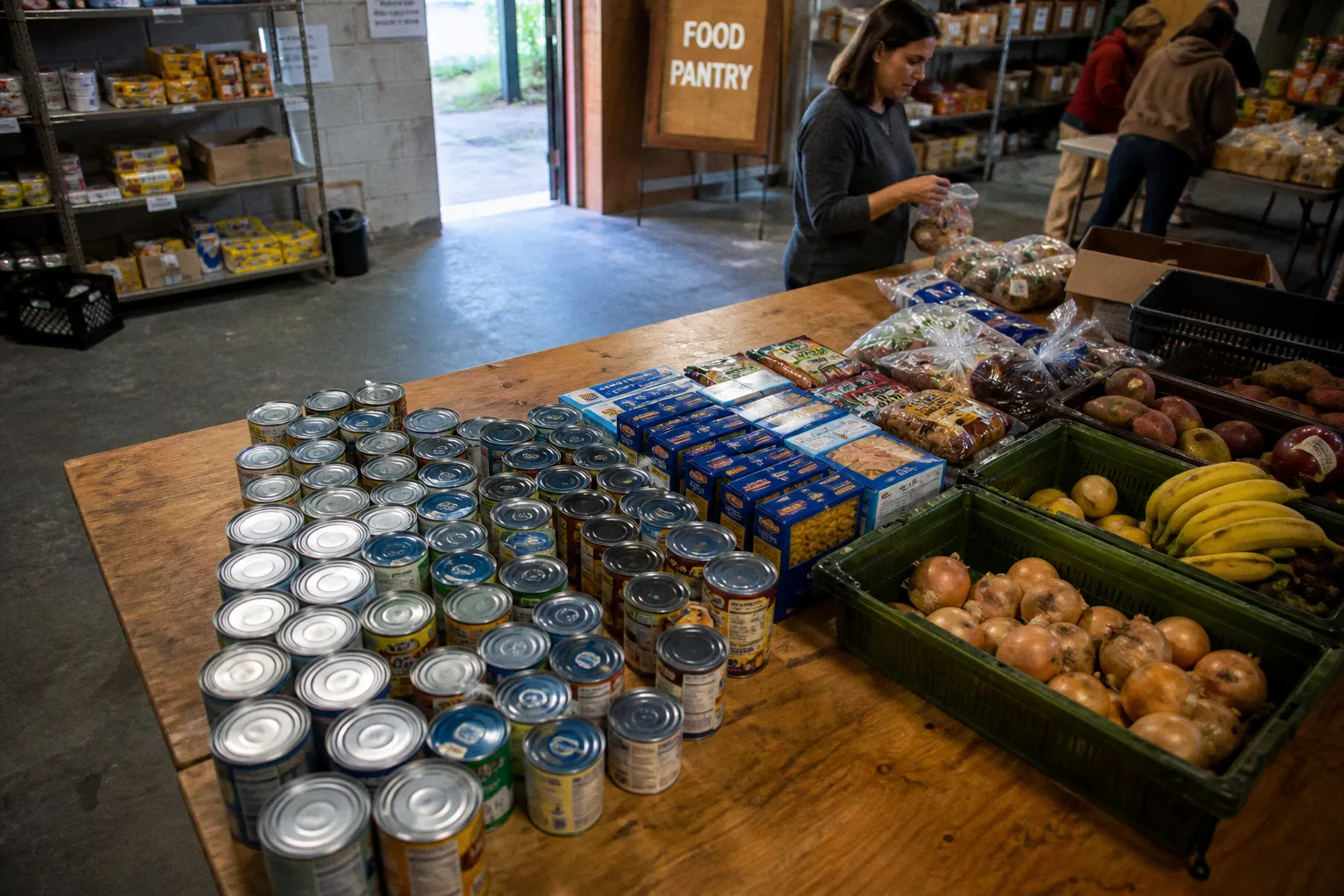
There is a quiet humiliation that settles in, a sense of being unseen, of slipping through the cracks of a world that pretends to notice. Every congregation that has ever considered opening a food pantry knows this, even if no one says it aloud in the meetings. We begin this work because we have watched someone we love stand in that doorway. And that is exactly the right place to begin.
A church food pantry is one of the most concrete expressions of embodied faith a parish can undertake. It is also, frankly, more demanding than most people anticipate. Food is perishable, regulations are exact, and the human beings who walk through your doors are carrying burdens far heavier than their grocery bags. To do this well — to do this in a way that dignifies both the guest and the volunteer — we need to slow down, pay attention to the details, and let the work itself teach us what it requires. What follows is a careful walk through the operational steps that turn a compassionate impulse into a sustainable ministry.
Recognizing the human stakes before the logistics
Before we talk about shelving units and refrigerator thermometers, we need to name what is really happening. Food insecurity is a relational wound as much as a material one. Research into caregiver fatigue and chronic stress consistently shows that prolonged uncertainty about basic needs reshapes a person's nervous system; the body learns to live in a low hum of alarm. When a parish opens a pantry, it is not merely distributing calories. It is, in a small but real way, telling a neighbor that their body matters, that their children matter, that the future does not have to feel like a closing door.
This recognition changes how we set up. A pantry run like a warehouse is a logistical achievement; a pantry run with awareness of what each visitor is carrying is a ministry. The operational details that follow — the trial period, the distribution model, the storage standards, the volunteer rhythms — are not bureaucratic hurdles to endure. They are the visible shape of our care. Get them right, and the invisible work of grace has room to breathe.
A pantry is not a transaction. It is a place where a family remembers that someone, somewhere, was willing to be inconvenienced on their behalf.
Navigating the twelve-month operational trial period
One of the first surprises that greets a new pantry is that most regional food banks will not simply fill your shelves on day one. To qualify for a partnership with an established regional distributor — and the bulk-flow discounts and reliable inventory that come with it — a new pantry typically must demonstrate that it can stand on its own feet for a full twelve months. During that year, you are generally expected to be open to the public for at least two hours per month and to serve a minimum of fifty families in at least six of those twelve months.
This trial period is a gift, not a gatekeeping exercise. It forces a congregation to answer foundational questions honestly: Do we have enough volunteers to staff recurring hours? Can we sustain the storage requirements? Is our location accessible and welcoming? A pantry that survives this first year has built something durable. A pantry that skips ahead to partnership applications without the foundation is borrowing against a future it has not yet earned.
Practical steps for the trial year:
- Establish a regular distribution schedule, even if it is modest, and publish it consistently so neighbors can plan around it.
- Track every household served with a simple intake form, so you can demonstrate the fifty-family threshold clearly when application time arrives.
- Cultivate at least one relationship with a nearby food bank early, even informally, so the eventual application is not a cold contact.
- Document your volunteer hours, donation sources, and storage conditions — a one-page monthly summary saves enormous effort when partnership paperwork begins.
Designing a client-choice distribution model
There are essentially two ways to hand food to a guest. The first is the pre-packed box: a volunteer assembles identical bags, and each family receives the same mix. The second is client-choice, where guests walk through a guided selection process and pick the items that fit their household. On the surface, pre-packing seems more efficient. In practice, the client-choice model is associated with measurably higher guest satisfaction and significantly reduced food waste — because a family of five with a toddler and a diabetic grandparent simply does not eat the same way as a household of two empty-nesters.
For a church pantry, client-choice also carries pastoral weight. It restores a measure of agency to people who have had very little of it lately. The act of choosing bread, of deciding between two vegetables, of saying no thank you to something that will sit untouched in a pantry at home — these are small dignities. They remind a person that they still know their own life. That matters more than we tend to admit.
Implementing client-choice does require more space, more signage, and more volunteers per shift. A modest setup might use a single table with labeled sections; a more developed pantry might arrange grocery-style aisles with shopping carts. Either is acceptable, but the layout should be readable to a guest who is tired, anxious, or unfamiliar with English. Pictures on signage help. A volunteer walking alongside first-time guests helps even more.
To let someone choose is to tell them, quietly, that their judgment is still trustworthy.
Meeting strict food safety and storage standards
This is the section where care becomes visible in plumbing and thermometers. Food safety regulations are not arbitrary; they exist because people have gotten sick, and because congregations that cut corners on storage have learned painful lessons. Treat these standards as a form of neighbor-love.
The core requirements are stable across most jurisdictions, though you will want to verify the specifics with your local health department:
- All stored food must be kept at least six inches off the floor. This protects against moisture, pests, and the slow damage of capillary action.
- Food should be stored away from walls; eighteen inches is a good working distance to allow air circulation and make cleaning possible.
- Refrigerators must hold below 40°F (4°C). Freezers must hold below 0°F (-18°C). A simple appliance thermometer, checked and logged weekly, is the cheapest insurance you can buy.
- Canned goods are sensitive to temperature extremes. Storage areas should stay between roughly 30°F and 100°F. Garages that face west in summer and unheated sheds in winter are common culprits — measure the space before committing to it.
- Cleaning supplies, pesticides, and any chemicals must be stored completely separate from food, ideally in a locked cabinet.
| Storage parameter | Required standard | Why it matters |
|---|---|---|
| Clearance off floor | Minimum 6 inches | Prevents moisture damage, pest access, and contamination |
| Clearance from walls | Ideally 18 inches | Allows air circulation and cleaning access |
| Refrigerator temperature | Below 40°F (4°C) | Inhibits bacterial growth in perishables |
| Freezer temperature | Below 0°F (-18°C) | Maintains safe long-term storage |
| Canned goods range | 30°F to 100°F | Protects seal integrity and food quality |
| Chemical storage | Separate, locked, clearly labeled | Prevents accidental contamination |
One more reality worth naming: a pantry that wants to handle perishable items — fresh produce, dairy, meat — will likely need commercial-grade refrigeration. Residential units struggle to hold their temperatures when opened frequently throughout a distribution. The unknown here is real; startup costs vary widely depending on whether you need to purchase equipment or whether a member of the congregation can donate a suitable unit. Budget conservatively, and assume that the cheaper option will need replacing sooner than you hope.
Implementing FIFO inventory and quality control
Once food begins arriving in volume, the temptation is to shove it onto shelves wherever it fits. Resist that. The First In, First Out method — FIFO — is the backbone of any pantry that takes food safety seriously. The principle is simple: items with the earliest expiration or "use by" dates go to the front of the shelf, so they are the first ones handed out. Newer stock goes to the back.
In practice, FIFO requires a small set of habits:
1. When stocking donations, always check the date. If something is within thirty days of expiration, mark it visibly and prioritize it for distribution.
2. Rotate stock during every volunteer shift. Five minutes at the start of each session, moving older items forward, prevents waste far better than a quarterly overhaul.
3. Separate damaged or compromised items immediately. A dented can, a swollen lid, a torn package — these go into a clearly labeled discard bin, not back onto the shelf.
4. Track what leaves the building. A simple log of distributed categories (canned vegetables, grains, protein, dairy, personal care) helps you notice when one section is moving faster than you can replenish it.
A secondary habit worth building: an honest relationship with your food sources. Donors — whether individuals, grocery partners, or regional banks — need to know when their contributions are not suitable for distribution. Asking for better sorting at the source is not ungracious; it is stewardship of a shared resource.
Building a sustainable volunteer ministry
The most common reason a church pantry quietly fades after two or three years is not funding. It is volunteer exhaustion. A handful of faithful people carry the load, the load grows, they burn out, and the ministry stalls. Breaking that cycle begins with how you recruit, train, and hold your team.
Aim for a structure that distributes weight rather than concentrating it. Most established programs recommend asking new volunteers to commit to a regular shift for at least six months. That sounds long, but it serves the volunteer as much as the pantry: it prevents the churn that happens when well-meaning helpers show up three times, get busy with life, and quietly drift away, leaving gaps the coordinator has to fill.
Practical scaffolding for the volunteer team:
- Define a small number of clear roles: intake host, shopping guide (for client-choice), stock coordinator, driver for pickups, scheduler. Resist the urge to invent more.
- Provide a written orientation, even a single page, that covers food safety basics, manual handling, and the safeguarding standards your parish has adopted. No one should be working the floor without it.
- Build in a quarterly check-in. Not a performance review — a pastoral one. How is the work landing on each person? Who needs a season off? Who is ready for more responsibility?
- Celebrate the work publicly and specifically. Named volunteers, named milestones, named impact. People will sustain effort they can see matters.
It is also worth naming that not every volunteer role needs to happen on distribution day. Some of the most faithful contributors never stand behind a table — they drive pickup routes, manage the bookkeeping, maintain the refrigerator, or simply pray. Make room for those gifts.
Where logistics and vocation meet
A food pantry is one of those rare ministries where the plumbing and the prayer are the same conversation. The thermometer that reads 38°F is, in its own quiet way, an act of mercy. The volunteer who spends twenty minutes walking a guest through a shelf of options is doing theology with their hands. The six-inch clearance under the bottom shelf is not a regulatory footnote; it is the height at which we say to a stranger, your well-being has been thought about in advance.
We do not run a pantry because we have solved hunger. We run it because, for one afternoon a week, we have decided to be a place where hungry people are not asked to feel invisible.
If your congregation is at the beginning of this road, give yourself permission to start smaller than your imagination. Two hours a month, fifty families, twelve months of faithful consistency — these are not the ceiling of the work, they are the floor. Build the floor first, well and honestly, and the rest of the structure will follow. The neighbors who need this pantry are not waiting for you to be impressive. They are waiting for you to be reliable, and to keep showing up with grace intact.
There is, in the end, something profoundly theological about a shelf of canned vegetables arranged by date. It says that time passes, that bodies need feeding, that someone was thoughtful enough to put the oldest at the front so nothing is wasted. It says that a community decided, together, to do this ordinary thing well. That is enough. That has always been enough.