Church shelter partnerships: how to choose the right facility
The decision to host a homeless shelter in a church facility is one of the most operationally demanding forms of congregational outreach. The charitable impulse is rarely the difficult part.
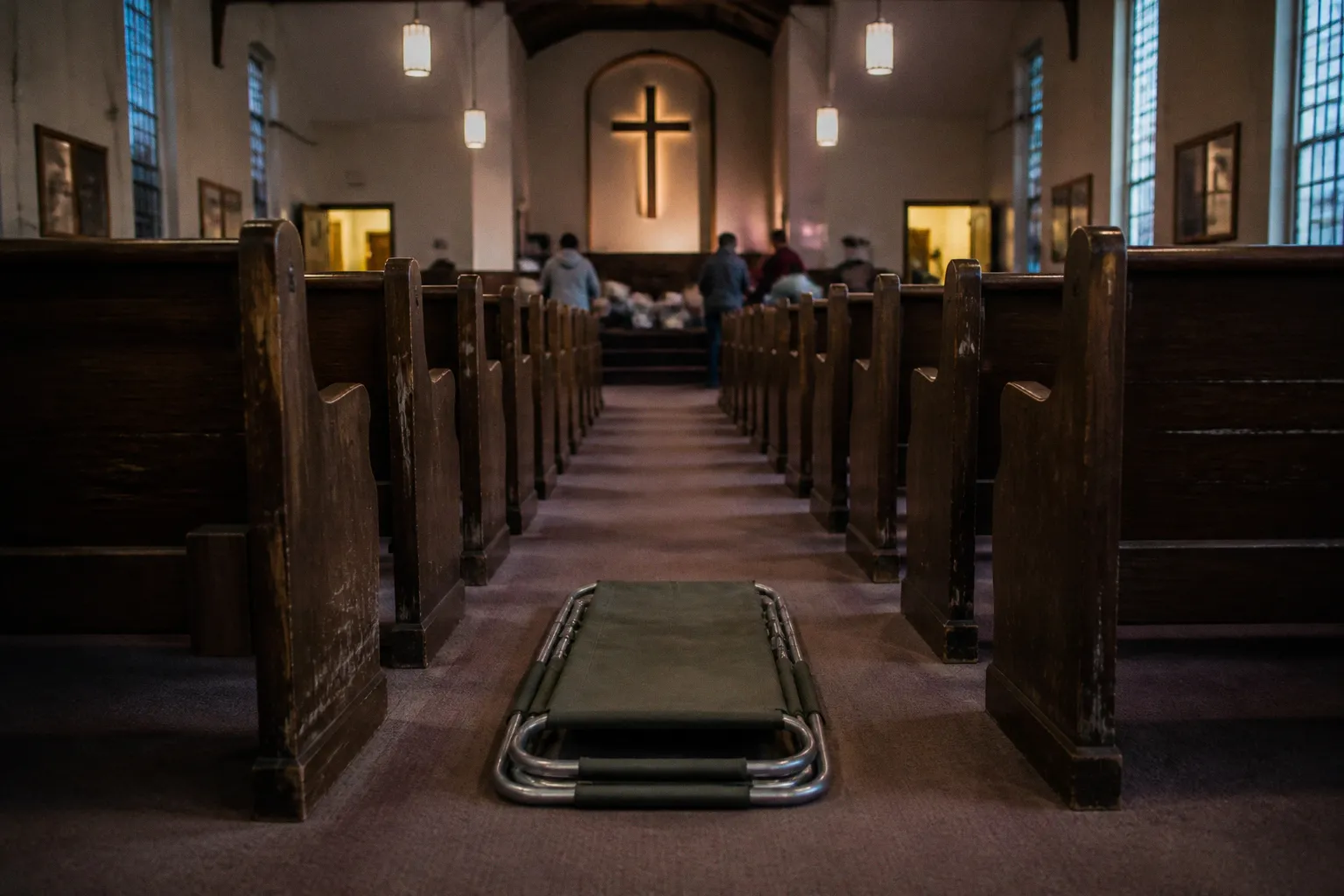
Church Shelter Partnerships: How to Choose the Right Facility
Lutheran congregations understand the call to diaconal ministry and the obligation to serve neighbors facing housing instability. The harder question is whether a building designed for worship services, fellowship gatherings, offices, and Sunday school can safely support overnight occupancy.
That question reaches well beyond the sanctuary. It involves zoning classification, conditional-use permits, fire and building requirements, insurance coverage, guest intake, staffing, sanitation, emergency response, and the congregation’s relationship with its neighbors. A facility can be welcoming and still be unsuitable. It can be legally available and still lack the infrastructure required for safe overnight operations.
Choosing a homeless shelter for church outreach therefore begins with a disciplined assessment of the site, not with a promise to open the doors on a particular date. Before signing a memorandum of understanding with a shelter organization, church leadership should be able to explain what the building can accommodate, which approvals are required, who will supervise guests overnight, and how problems will be handled when they arise.
Navigating Zoning Laws and Conditional-Use Permits
The first barrier is often municipal zoning. Many church properties are located in residential or institutional districts where overnight shelter operations are treated as a conditional use, a special exception, or, in some cases, a use that is not permitted under the existing classification. A congregation cannot assume that its status as a house of worship automatically authorizes a new residential or shelter use.
The first conversation should be with the local planning department or zoning administrator. Church leaders need to identify the property’s current zoning classification and determine how the local code defines the proposed operation. The answer may depend on details such as:
- whether guests will sleep on-site or only receive daytime services;
- the anticipated number of guests and the length of each stay;
- whether the shelter will serve families, single adults, or both;
- whether meals, case management, showers, laundry, or transportation will be provided;
- whether the program will operate year-round or only during severe-weather periods;
- whether the shelter organization, the congregation, or a separate entity will manage the premises.
A conditional-use permit is not a formality. It may establish the conditions under which the shelter is allowed to operate, including guest capacity, hours of operation, security arrangements, parking, lighting, traffic management, and procedures for responding to neighborhood complaints. The application may require a site plan, floor plans, an operational narrative, evidence of insurance, and documentation of fire or building-code compliance. A public hearing may also give nearby property owners an opportunity to raise concerns.
That public process should not be treated as an obstacle to be managed through optimistic messaging. It is an early test of whether the proposed program has been designed with enough specificity. Vague descriptions such as “temporary assistance for people in need” leave room for confusion about the number of guests, the duration of stays, and the services taking place on the property. A credible application explains the program in operational terms.
The Religious Land Use and Institutionalized Persons Act (RLUIPA) may provide important protection for houses of worship. In general terms, the statute limits land-use regulations that substantially burden religious exercise unless the government can satisfy the applicable statutory test. It also addresses certain forms of unequal treatment and discrimination in land-use decisions. That protection does not mean that a congregation is exempt from neutral, generally applicable requirements. A church may still need to comply with zoning procedures, building standards, fire regulations, and reasonable conditions attached to an approved use.
Church counsel should evaluate RLUIPA in the context of the actual local decision. It is a legal safeguard, not a substitute for a complete application or a reason to begin operations before authorization is confirmed.
A practical zoning review should answer five questions:
1. What is the proposed use under the local code? The label used by the congregation may not match the municipality’s legal classification.
2. What approval is required? The project may require a conditional-use permit, special exception, variance, site-plan review, or another local process.
3. What physical changes trigger additional review? New sleeping rooms, showers, ramps, exits, kitchens, or security systems may involve separate permits.
4. Who is responsible for compliance? The church and its shelter partner should assign responsibility for applications, inspections, records, and ongoing conditions.
5. What happens if the approval is delayed or denied? The partnership agreement should not assume that a permit will be granted simply because the ministry objective is worthy.
Zoning compliance is the threshold, not the paperwork after the decision. A shelter partnership should not move from mission planning to overnight operations until the congregation knows what the property is legally authorized to do.
The timeline and expense of the approval process should also be included in the project budget. The process may involve application fees, architectural or code consultations, legal review, public meetings, and construction changes. Those costs are part of facility selection. A building that appears inexpensive because it is already owned by the church may become the more expensive option once the required alterations and approvals are understood.
Physical Facility Assessment: Safety and Infrastructure Requirements
Once the legal pathway is clear, the congregation must evaluate the building itself. A church that functions well for daytime worship may be poorly suited to overnight shelter use. Overnight occupancy introduces sleeping arrangements, personal storage, bathing, laundry, food service, medication concerns, emergency evacuation, and supervision of people who may have mobility limitations or urgent medical or behavioral-health needs.
The assessment should be conducted with the shelter partner, the relevant local authorities, and qualified professionals where necessary. A walk-through by church leadership alone is not enough. Leaders may know the building’s ministry spaces intimately while missing problems involving egress, electrical capacity, ventilation, plumbing, accessibility, or the separation of public and private areas.
Sleeping Areas
Sleeping arrangements should be designed around safety, privacy, family relationships, and the requirements of the local authority having jurisdiction. Separate sleeping areas for unrelated men and women are commonly recommended in shelter safety guidance, but the exact legal requirement depends on the jurisdiction, the facility type, and the approved operating model. Congregations should not treat one national rule as a substitute for local confirmation.
The same caution applies to partitions. In some settings, temporary dividers may be acceptable for a limited program. Elsewhere, the code or approving authority may require hard-walled rooms, rated assemblies, individual egress, or other construction features. A fellowship hall with movable curtains may be practical for a short-term emergency response and unacceptable for a continuing congregate shelter.
Family arrangements need their own policy. Parents and children should have a sleeping area that preserves family unity while preventing children from being left unsupervised with unrelated adults. The congregation and shelter partner should establish how family rooms will be assigned, what happens when a family includes an older child or a non-parent caregiver, and how staff respond when a family member has a medical or safety concern.
Washington State’s RCW 36.01.290 offers one example of how a jurisdiction may regulate temporary or outdoor shelter units. The documented standard uses 120 square feet as a maximum per unit, not a minimum, and also addresses spacing between units. It is an instructive example rather than a universal requirement for church shelters elsewhere. Local officials must confirm which standards apply to the proposed facility.
The sleeping-area review should consider:
- clear paths to exits, including at night;
- adequate lighting without creating unnecessary glare;
- secure storage for medications and personal belongings;
- privacy for changing clothes and handling personal care;
- access for guests who use wheelchairs, walkers, or other mobility aids;
- separation between guest sleeping areas and kitchens, mechanical rooms, or public entrances;
- a practical way for staff to observe common areas without eliminating reasonable privacy.
Hygiene and Sanitation
Showers are among the most frequently overlooked facility requirements. Many churches have restrooms but no showers, or only a small number of showers intended for occasional use. Overnight guests need access to bathing, toilets, handwashing, menstrual-hygiene supplies, and laundry arrangements that are appropriate for the program’s size and duration.
The assessment should examine water pressure, hot-water capacity, drainage, ventilation, mold or moisture risks, and the ability to clean the facilities between uses. If showers or laundry machines are added, the project may require plumbing, electrical, ventilation, or accessibility upgrades. Temporary equipment is not automatically a simple solution; it still needs safe placement, reliable drainage, and a clear maintenance plan.
Cleaning responsibilities should be written into the operating agreement. The church may provide the building while the shelter partner manages guest services, but neither party should leave sanitation duties undefined. A daily cleaning schedule, a supply budget, and a process for reporting plumbing or pest problems are ordinary operational necessities, not administrative overreach.
Food Service and Storage
If meals are served on-site, the congregation must determine whether the kitchen is approved and equipped for the intended use. A kitchen used for fellowship meals may not meet the same requirements as a facility preparing or storing food for shelter guests every day. Questions may involve food-handling procedures, refrigeration, allergen communication, dishwashing, waste removal, and access control.
Food service also affects the building’s schedule. Deliveries, meal preparation, and cleanup can create activity at times when the neighborhood expects the property to be quiet. They can also affect staffing. The person supervising the overnight shelter may not be the person responsible for food safety or morning meal service.
Fire Safety and Emergency Preparedness
The local fire marshal or other authority having jurisdiction should be consulted before the facility is committed to shelter use. Depending on local practice, the project may require a fire inspection, a building inspection, or both. The review may address smoke alarms, fire extinguishers, emergency lighting, exit signage, door hardware, occupancy limits, alarm monitoring, and evacuation plans.
Older church buildings deserve particular attention. They may have beautiful and substantial construction but limited egress, narrow interior stairs, locked exterior doors, or rooms that were never designed for sleeping occupancy. Adding beds without addressing those conditions creates a serious mismatch between capacity and safe evacuation.
An emergency plan should be specific enough for a new staff member to follow. It should identify:
- primary and secondary evacuation routes;
- the outdoor assembly location;
- procedures for guests who cannot use stairs;
- responsibility for accounting for guests;
- the location of first-aid supplies, extinguishers, and emergency shutoffs;
- how staff contact emergency services;
- how the building is secured after an evacuation.
The congregation should also ask how an emergency affects people who are not able to leave the building quickly. A written plan that assumes every guest can move independently is not a complete plan.
Accessibility and Security
Accessibility is not limited to the front entrance. Sleeping areas, restrooms, showers, dining spaces, exits, and routes between them must be considered together. A ramp that reaches the building but does not provide access to the sleeping area does not solve the operational problem. The same is true of an accessible restroom located far from the overnight space.
Security should support safety without turning the church into an institution that contradicts its ministry. Controlled entry, adequate exterior lighting, and cameras at building entrances may be appropriate. Cameras should not be placed in sleeping rooms, bathrooms, or other spaces where guests have a reasonable expectation of privacy. The program should establish who monitors footage, how long it is retained, and when it may be disclosed.
| Infrastructure category | Questions the assessment should answer | Possible modification |
|---|---|---|
| Sleeping areas | Can the approved guest groups sleep separately and evacuate safely? Are family arrangements workable? | Reconfigured rooms, permanent partitions, improved lighting |
| Hygiene facilities | Are showers, restrooms, laundry, and hot water adequate for the program? | Plumbing work, shower installation, ventilation upgrades |
| Fire safety | Are exits, alarms, extinguishers, lighting, and occupancy limits compliant? | Exit changes, alarm upgrades, emergency lighting |
| Accessibility | Can guests with mobility limitations reach sleeping, bathing, dining, and exit areas? | Ramps, doorway widening, accessible fixtures |
| Security | Can staff control entry and monitor common areas while protecting privacy? | Locks, intercoms, entrance cameras, exterior lighting |
| Food service | Can meals be prepared, stored, and served safely? | Refrigeration, handwashing stations, storage changes |
A church building is not simply a container for beds. It is a regulated environment with specific responsibilities for movement, sanitation, privacy, supervision, and emergency response.
Risk Management and Guest Screening Protocols
Insurance is where a congregation’s mission decisions become financial and legal obligations. Standard church property or general liability coverage may not automatically extend to overnight shelter operations. Before guests are admitted, the church should notify its insurer, describe the proposed program in writing, and obtain written confirmation of what is covered. The insurer may require an endorsement, a separate liability policy, specific operating controls, or additional documentation.
The shelter organization’s insurance should be reviewed at the same time. The partnership agreement should identify which entity carries coverage for guest injury, volunteer activity, professional services, transportation, property damage, and incidents involving staff. It should also explain how claims are reported and who maintains the relevant records.
Insurance guidance can be useful in shaping operations, but it should be described accurately. Ecclesiastical insurers and other carriers may publish risk-control recommendations concerning intake, weapons, supervision, documentation, and behavioral incidents. Those recommendations are not automatically universal legal requirements, and they do not establish that every underwriter will impose the same conditions. The congregation should ask its own carrier which controls are required for the proposed operation and which are advisory.
Guest Screening Framework
Guest screening must balance safety, dignity, privacy, and the legal limits on collecting or using personal information. A shelter partner with established experience should usually lead the intake process, with the church understanding and approving the operational policies that affect the building.
Depending on the program and insurer, a screening framework may include:
1. Identity and contact information. The program may request identification from adult guests when feasible, while establishing a humane process for people who have lost documents or cannot immediately produce them.
2. Age and family status. The operator should define whether unaccompanied minors are admitted and how parents, guardians, and children are housed together.
3. Behavioral expectations. Rules should address violence, threats, harassment, theft, property damage, intoxication, and conduct that endangers other guests or staff.
4. Weapons policy. The program should state whether weapons are prohibited, how the rule is communicated, and what procedure applies when a weapon is discovered.
5. Relevant records checks. If the operator uses sex-offender-registry searches, warrant checks, or other screening tools, it should explain the purpose, decision rules, privacy safeguards, and appeal or review process.
6. Accommodation and support needs. Intake should identify mobility, medical, medication, communication, and behavioral-health needs that affect safe placement.
7. Consent and data handling. Guests should know what information is collected, who can access it, how long it is retained, and when it may be shared.
A sex-offender-registry search or warrant check should not be presented as a universal requirement for every faith-based shelter. Some programs use such checks as part of their risk controls; others rely on different eligibility rules or work with specialized providers. The appropriate approach depends on local law, the shelter model, the insurer, and the partner organization’s policies.
Nor should a church assume that excluding every person with a criminal record is the only responsible option. A shelter’s mission may involve people with substantial barriers to housing, including prior convictions. The key is to define which conduct creates an unacceptable safety risk in the particular facility, how decisions are made consistently, and whether another placement is available when the church site cannot safely meet a guest’s needs.
Incident Documentation and Confidentiality
Every significant departure from routine operations should be documented on the date it occurs. This includes behavioral incidents, medical emergencies, property damage, unauthorized entry attempts, missing guests, fire alarms, and requests for emergency assistance. Documentation should be factual and specific: who was present, what was observed, what action was taken, and whom staff notified.
Records should not become a second source of harm. Guest information must be stored securely and shared only with people who have a legitimate operational or legal need to receive it. The church should clarify whether the shelter partner owns the case records, whether the congregation receives incident summaries, and how privacy laws or professional confidentiality rules apply.
A written incident process also protects staff and volunteers. It gives them a way to escalate concerns rather than relying on informal conversations or personal judgment. If the program has a serious incident, the absence of a record can make it difficult to understand what happened and whether the response was reasonable.
Operational Standards for Overnight Staffing and Supervision
Overnight shelter hosting requires a staffing model that differs from the volunteer rhythm of many church ministries. A congregation may have a strong Sunday volunteer base and still lack enough people willing and able to supervise a shelter through recurring overnight shifts. The distinction matters. Shelter supervision requires alertness, training, documentation, and the ability to respond calmly when a guest is ill, distressed, aggressive, missing, or unable to evacuate independently.
Ecclesiastical Insurance guidance commonly recommends having at least two awake staff members on duty overnight. That recommendation should not be misrepresented as a uniform requirement imposed by every state or local government. The applicable staffing level may depend on the insurer, guest capacity, facility layout, population served, local approvals, and the program’s own risk assessment. In some settings, more than two people may be necessary.
The principle behind the recommendation is straightforward: a single person should not be left to supervise a shelter population while also handling an emergency, contacting responders, securing the building, or assisting a guest with mobility needs. Two-person coverage provides a basic measure of operational resilience and staff safety.
Staffing Model Components
- Shift structure. The schedule should identify arrival and handoff times, the overnight coverage period, meal and rest arrangements, and the person responsible for the final building check. The exact hours should reflect the program’s approved operating schedule rather than an assumed template.
- Awake-duty expectations. Staff assigned to overnight supervision should remain awake and actively responsible for monitoring the facility. If the program uses cameras, desk coverage, patrols, or scheduled rounds, those tasks should be documented.
- Training. At least one person on each shift should have current first-aid and CPR training when required by the operating plan or insurer. Staff also need training in de-escalation, emergency evacuation, incident reporting, boundaries, confidentiality, and the handling of suspected abuse or neglect.
- Staff composition. Screening for staff and volunteers should be appropriate to their duties and the population served. It is not automatically identical to guest screening. A person responsible for direct supervision may require a different background review, reference process, training record, and employment check than a guest seeking a bed.
- Communication chain. Staff should know whom to call for medical emergencies, behavioral crises, fire or structural hazards, safeguarding concerns, transportation problems, and law-enforcement needs.
- Shift records. Logs should record guest counts, admissions and departures, incidents, safety checks, maintenance concerns, and unresolved issues passed to the next shift.
- Relief coverage. The plan should account for illness, no-shows, weather, and other situations in which a scheduled volunteer cannot arrive. A staffing model that works only when every volunteer is punctual and healthy is not a staffing model.
A congregation should decide early whether overnight work will be performed by employees, the shelter partner’s staff, trained volunteers, or a combination. Paid coverage may be appropriate when the program requires consistent awake supervision, specialized training, or dependable relief. A partnership may also use shelter-organization funding to support the shifts while reserving volunteers for meals, transportation, welcome services, or daytime ministry.
There is no universal rule that successful church shelter partnerships compensate overnight staff. The right model depends on the congregation’s capacity, the shelter organization’s resources, the program’s scale, and the risks identified by the insurer and local authorities. What is not sustainable is treating overnight supervision as an unlimited reservoir of goodwill.
Building Community Trust Through Good Neighbor Agreements
Legal approval and physical readiness do not guarantee a workable partnership. A congregation that opens its property to overnight guests enters into a continuing relationship with nearby residents, businesses, schools, and public agencies. Those neighbors may have legitimate questions about lighting, traffic, exterior activity, litter, noise, and how complaints will be handled.
A Good Neighbor Agreement (GNA) can give that relationship a usable structure. It is typically negotiated among the church, the shelter partner, and representatives of the surrounding community or homeowners’ association. The agreement should not promise that every concern will disappear. It should establish who is responsible for responding and what the parties will do when a concern is raised.
The most useful provisions are operational rather than rhetorical:
1. Litter and grounds maintenance. The church or its designated partner commits to regular inspection and cleanup of the property perimeter, sidewalks, entrances, and nearby areas affected by program activity.
2. Noise and exterior activity. The agreement identifies quiet hours, limits unnecessary outdoor congregation, and explains how staff address repeated disturbances.
3. Smoking and substance-use boundaries. If smoking is allowed, a designated area should be placed safely and maintained with appropriate receptacles. The policy should also address alcohol and prohibited substances on the property.
4. Guest arrival and departure. The parties should understand when guests enter and leave, where transportation waits, and how to prevent sidewalk congestion or vehicle conflicts.
5. Complaint resolution. A named church or program contact should receive complaints, acknowledge them within a defined period, and document the response. A phone number that reaches nobody after business hours is not a meaningful contact system.
6. Guest behavior expectations. Rules should cover neighboring property, public sidewalks, harassment, threats, noise, and solicitation, while making clear that guests retain their basic dignity and rights.
7. Emergency communication. The church and shelter partner should identify how neighbors are notified about major disruptions without disclosing confidential guest information.
8. Periodic review. Regular meetings allow the parties to examine patterns before they become political crises or formal enforcement matters.
The congregation should avoid using the agreement as a public-relations document that promises more control than staff can actually exercise. For example, a church may be able to require guests to use a designated entrance, but it cannot guarantee that no guest will ever walk down a public sidewalk or that every neighborhood interaction will be comfortable. Credibility comes from defining realistic responsibilities and responding consistently.
Community trust also improves when neighbors understand the program before the first night of operation. A public meeting, written operating summary, or site walk-through can explain the number of guests, the schedule, security arrangements, parking plan, and contact process. The purpose is not to seek permission from every person in the neighborhood. It is to replace speculation with accurate information and to demonstrate that the congregation has planned for ordinary difficulties.
A Good Neighbor Agreement is not a concession to opposition. It is a governance instrument that turns community anxiety into a defined process, protecting both the ministry’s continuity and the neighborhood’s legitimate expectations.
Making the Partnership Operationally Durable
The facility assessment should end in more than a list of deficiencies. It should produce a decision about whether the site, the congregation, and the shelter organization can support the program together.
A memorandum of understanding should assign responsibility for the matters that most often fall between organizations:
- obtaining and maintaining zoning and other approvals;
- paying for construction, utilities, cleaning, supplies, and repairs;
- carrying insurance and reporting claims;
- recruiting, screening, training, and supervising staff;
- setting guest eligibility and conduct policies;
- maintaining incident, maintenance, and shift records;
- responding to emergencies and communicating with public agencies;
- handling complaints from neighbors;
- reviewing the program and ending operations if safety conditions cannot be maintained.
The church should also establish a process for revisiting the arrangement. A facility may be suitable for a small seasonal program and unsuitable for year-round congregate shelter. Guest needs may change. A permit may impose conditions that prove difficult to meet. A new construction project may alter egress or accessible routes. Regular review allows the partnership to adjust before a preventable failure forces an abrupt closure.
The most important question is not whether the congregation can find enough beds in an unused room. It is whether the church can operate the facility as a safe, lawful, supervised, and neighbor-conscious ministry. That requires honest limits. A church may decide to provide meals but not sleeping space, family rooms but not a general congregate shelter, or a building for the shelter partner’s daytime services rather than overnight use. Those decisions do not diminish the congregation’s commitment to service. They define the form that responsible service can take.
A sound church homeless shelter partnership criteria framework therefore moves in sequence: confirm the permitted use, assess the building, obtain written insurance guidance, design the staffing and screening model, and establish a Good Neighbor Agreement before guests arrive. Each stage tests the next. Zoning approval does not resolve fire safety. A compliant building does not create an overnight workforce. A strong ministry partner does not remove the church’s responsibility to understand what happens on its property.
For Lutheran congregations, that discipline is part of the ministry rather than a distraction from it. Hospitality is not only the act of opening a door. It is the work of making sure the room is safe, the rules are clear, the staff are prepared, the neighbors are heard, and the people seeking shelter are treated as neighbors rather than as an operational problem. A facility chosen on those terms gives the partnership a far better chance of serving people well and remaining present in the community for the long term.