Home repair ministry: volunteer training and safety standards
A home repair ministry can do tangible good—and still put a homeowner or volunteer at risk if the team starts work before it knows who is qualified, what the job includes, and who is responsible for site safety.
The most common bottleneck is not a lack of willing hands. It is deploying those hands without clear task boundaries or competent supervision.
Build your home repair ministry volunteer training around a simple operating rule: match each task to a person’s demonstrated skill, then brief the whole crew on hazards, emergency steps, and the limits of the work. That gives your congregation a practical way to serve neighbors without treating goodwill as a substitute for training.
Segment tasks by skill, not by enthusiasm
Before you recruit a crew for a home, break the request into specific tasks. “Fix the bathroom” is not a work plan. It could mean painting, replacing a loose towel bar, diagnosing a leak, or working on electrical fixtures. Those tasks carry different risks and demand different skills.
A useful first division separates general work from skilled work. Light painting or changing a light bulb may suit a trained general volunteer. Plumbing repairs and electrical troubleshooting require relevant experience and, depending on the work, professional oversight. Do not let a volunteer’s confidence decide the category.
| Task category | Examples | Who should lead it |
|---|---|---|
| General, lower-risk work | Painting, basic cleanup, changing an accessible light bulb | A trained volunteer under the site lead’s direction |
| Skilled repair | Plumbing diagnosis or repair, electrical troubleshooting | A person with relevant experience; use a licensed trade professional when the work requires one |
| Work outside the team’s scope | Complex electrical work, major structural changes, hazards the crew cannot safely assess | Stop and refer the request to an appropriately qualified professional |
These categories are a starting point, not permission to perform any task on the list regardless of conditions. A simple job can become unsafe because of its location, the condition of the building, or an unexpected hazard. If a volunteer opens a wall and finds damaged wiring, the original work plan no longer applies. Pause. Keep people clear. Get qualified advice.
For each project, write a short scope before deployment:
- Requested repair: What problem did the resident report?
- Approved tasks: What will your team actually do?
- Excluded work: What will the team not attempt?
- Task leads: Who is responsible for each work area?
- Stop-work trigger: What finding or condition requires the crew to pause and contact the coordinator?
This is the backbone of assessing home repair project scope. It also protects the relationship with the homeowner: the team makes a clear commitment instead of promising to solve every problem it encounters.
A volunteer’s willingness is valuable. It is not a skills assessment.
Put one competent person in charge of each work site
Every crew needs a named site lead with enough safety knowledge to direct the work, recognize when a task exceeds the team’s capacity, and stop the job when conditions change. OSHA’s checklist for voluntary and community-based organizations calls for work-site activities to be conducted under the direction of a competent person trained in workplace safety and health. That is a strong operating standard for a church project, even where a particular OSHA rule may not legally apply to unpaid volunteers.
Do not confuse “competent person” with “the person who has been here the longest.” Assign the role deliberately. The site lead should know the approved scope, understand the crew’s skill limits, run the safety briefing, and keep volunteers from drifting into unassigned work.
For coordinating church repair teams, keep the deployment structure simple:
1. Project coordinator: Confirms the request, sets the scope, and communicates with the resident.
2. Site lead: Directs on-site work and handles safety decisions.
3. Task leads: Supervise defined work areas when the project needs more than one crew.
4. Volunteers: Perform only assigned tasks within their training and experience.
One person may fill more than one role on a small project, but the responsibilities should remain explicit. If the site lead is busy with a repair, someone else must still be able to answer a volunteer’s question, make a stop-work call, or contact emergency services.
Keep a deployment roster with names, roles, emergency contacts, and any relevant skills the volunteer has disclosed. Do not treat a roster as proof of qualification. Use it to plan a crew and know who is on site.
Train for the hazards the team will actually face
A safety talk that says “be careful” does not prepare a crew. Training needs to connect to the day’s tasks, tools, site conditions, and emergency plan. Keep it short enough to use before work, but specific enough that every volunteer knows what to do.
At minimum, cover:
- Scope and boundaries: Review the approved tasks and identify work the crew must not take on.
- Hazards: Point out trip hazards, unstable surfaces, sharp materials, dust, tools, and any other conditions relevant to the job.
- Safe work practices: Demonstrate how the team will handle tools and keep the work area controlled.
- Emergency response: Explain how to summon help, where to meet responders, and what to do if someone is injured or the site must be evacuated.
- Communication: Identify the site lead and agree on how volunteers will report a hazard or request a pause.
Church Mutual recommends including emergency response training—such as first aid, CPR, and evacuation procedures—in volunteer programs, alongside regular workplace safety audits. You do not need to turn every repair day into a classroom. You do need a plan for an injury, a sudden hazard, or a situation that requires everyone to leave the site.
Before the crew starts, ask volunteers to repeat the stop-work procedure in their own words. If they cannot say whom to contact or what to do when they find a hazard, the briefing is not finished.
Run a neighborhood audit before committing to a series of projects. That means more than collecting a list of repair requests. Visit or otherwise assess each site, identify access and safety concerns, and determine whether the task fits your team’s capacity. A short assessment can prevent an eager crew from arriving with the wrong tools, an incomplete plan, or no safe way to manage the work area.
Set clear equipment rules, especially for power tools
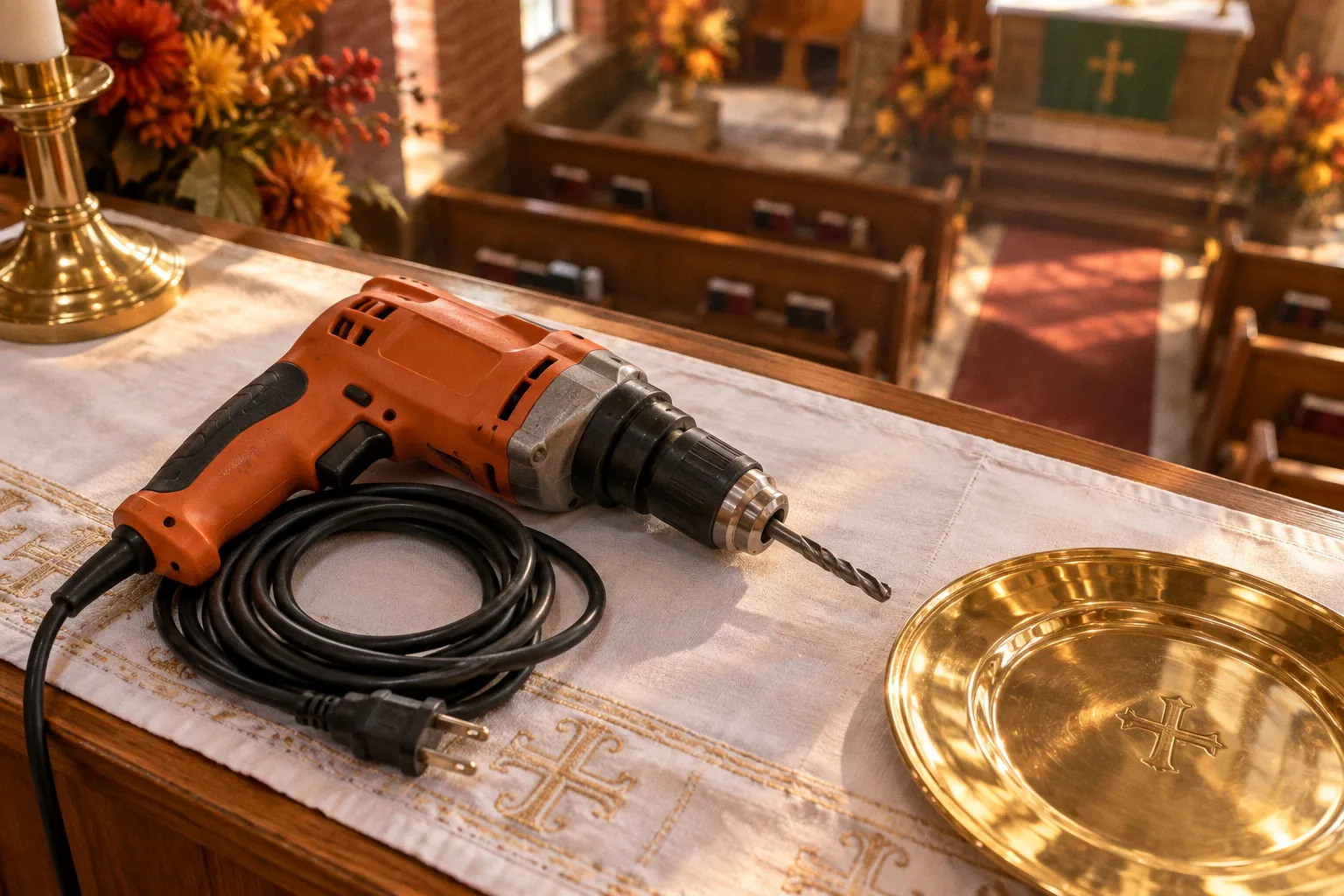
Tool rules should be direct and consistent across every deployment. Appalachia Service Project guidance says volunteer power tools must display a UL symbol, remain unplugged when not in use, and never be left unsupervised on a job site. Turn those requirements into routine, not reminders delivered after a tool is already running.
Before work begins, the site lead should confirm that:
- Power tools have the required UL symbol.
- Volunteers know who may use each tool and for which task.
- Tools are unplugged when not in use.
- No powered tool is left unattended at the site.
- The team knows where tools will be placed when work pauses or the crew leaves.
Do not issue a tool just because a volunteer has used something similar at home. Ask whether the person knows how to operate that specific tool safely and whether the planned task falls within the person’s experience. If the answer is uncertain, reassign the task or bring in someone qualified to supervise it.
Tool control also affects the household. Keep equipment, cords, and materials organized so residents and other people at the site do not walk through the work zone unaware. At the end of a shift, collect tools, clear the area, and tell the resident what remains unfinished. A safe site is part of the service.
Manage consent, records, and liability without overpromising
A homeowner’s request does not automatically define the team’s permission, scope, or responsibility. Before deployment, explain what the congregation intends to do, what it will not do, and how the resident can raise a concern. Get agreement on access to the work area and on practical arrangements such as pets, household members, and work hours.
A liability waiver for church volunteers may be part of your organization’s risk-management process, but it is not a replacement for training, supervision, insurance guidance, or safe work practices. Waiver requirements and legal effects depend on local circumstances. Do not present a signed form as permission to perform work beyond the crew’s competence.
Keep project records that help you manage the ministry:
- The request and agreed scope.
- The site assessment and identified hazards.
- The volunteer roster and assigned roles.
- The safety briefing and emergency plan.
- Any change in scope, pause, incident, or referral to a professional.
- A closeout note confirming what the team completed and what remains.
Use your insurer’s guidance when setting forms and procedures. For local permit thresholds or exceptions for volunteer work in Hartselle, do not guess. Confirm requirements with the appropriate local authority or a qualified trade professional before the team begins work that may be regulated.
Build a repeatable deployment, not a one-off workday
A dependable faith-based home maintenance outreach does not depend on one unusually capable volunteer. It depends on a process the congregation can repeat: receive a request, assess the site, define the scope, assign qualified people, brief the crew, supervise the work, and close out the project.
After each deployment, hold a short review with the site lead and volunteers. Ask what changed from the plan, where the crew lost time, whether the training matched the actual hazards, and whether the household received a clear handoff. Record one or two improvements for the next project. That is capacity building: each repair strengthens the team’s ability to serve safely again.
Start with work your congregation can supervise well. Keep the scope bounded. Bring in qualified professionals when a job moves beyond volunteer capacity. The result is not a smaller ministry. It is a more reliable one—one that offers practical help without asking neighbors or volunteers to carry risks the team has not planned to manage.