Handyman ministry: a step-by-step guide for congregations
A church handyman ministry does not fail because a congregation lacks compassion. It fails when compassion has no deployment plan.
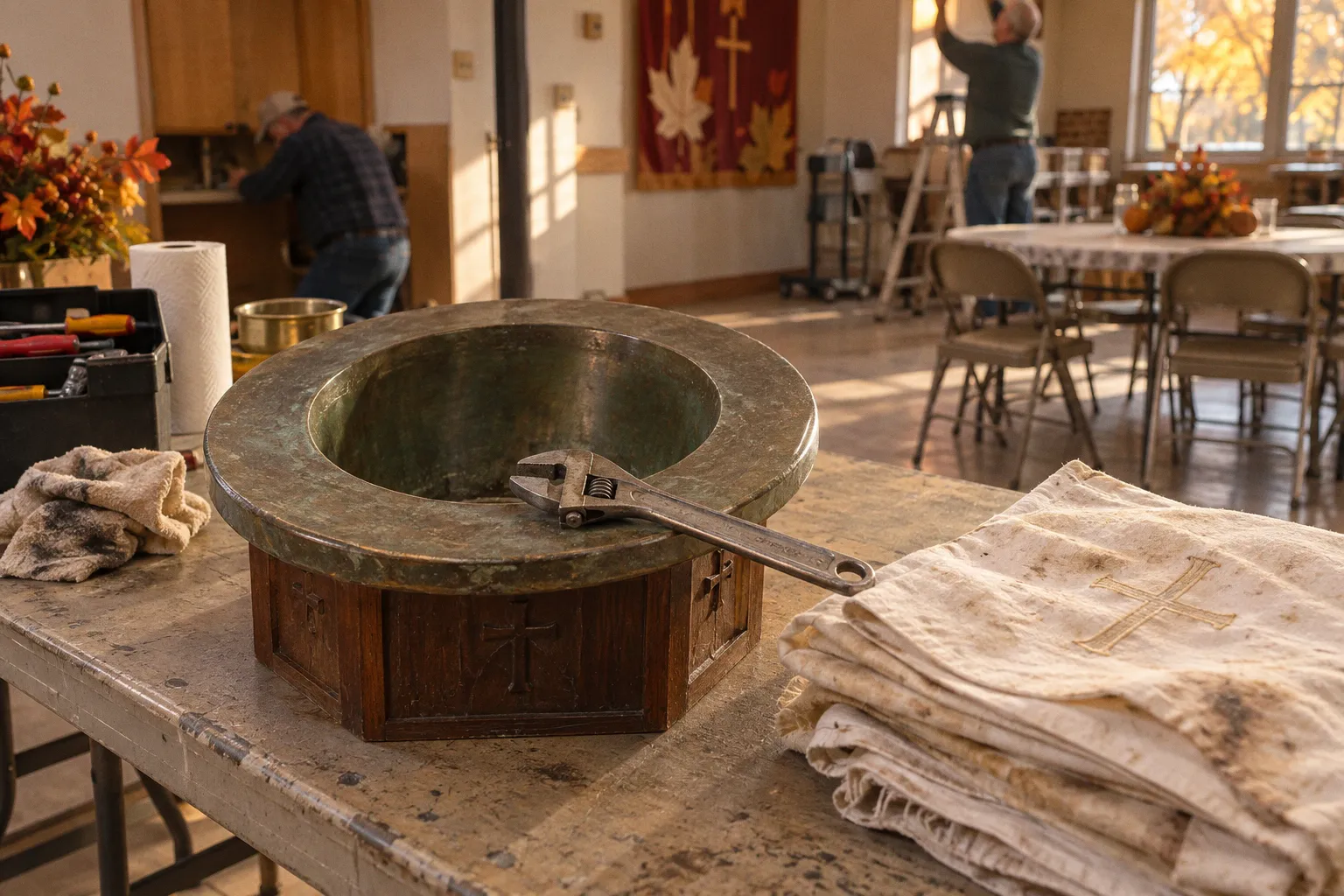
A senior cannot safely replace a ceiling light. A widow may postpone a leaking faucet because hiring help is too expensive. A person living with a disability may need a ramp adjustment, yard cleanup, or a basic home repair before the problem becomes a serious safety risk. These needs are local, tangible, and often urgent.
Your congregation can respond. But a sustainable volunteer home repair program requires more than a few skilled members and a toolbox. You need a defined service area, clear work limits, trained volunteers, safe field procedures, an intake system, and leadership that can keep assignments moving.
This is the operating plan.
A church handyman ministry is not an informal favor network. It is a service operation with people, risk, capacity, and accountability.
Defining the scope and vision of home repair outreach
Start with the ministry’s purpose. Do not begin by asking what tools your members own. Begin by identifying the community problem your congregation is prepared to address.
A church maintenance ministry for seniors may focus on small repairs that help older adults remain safely in their homes. A broader faith-based handyman service may serve widows, people with physical disabilities, low-income households, or residents referred by local agencies. Each model can work. The failure point comes when the ministry promises everything to everyone.
Your first deployment meeting should answer five questions:
1. Who will receive service?
Set a clear priority group. You might serve congregation members first, then nearby seniors, widows, people with disabilities, or residents referred by trusted community organizations.
2. What work will the ministry perform?
Define approved tasks before accepting requests. Typical projects include minor painting, light bulb replacement, air filter changes, small plumbing or electrical tasks, yard cleanup, handicap ramp installation, and gutter cleaning.
3. What work will the ministry refuse?
Exclude major structural work, major electrical rewiring, hazardous materials, roofing projects beyond the team’s competence, gas-line work, and any job that requires a licensed contractor or municipal permit unless the congregation has properly qualified and authorized personnel.
4. Where will the team serve?
Establish a practical service radius. A team that accepts requests across an entire county may spend more time driving than completing repairs. Start with a neighborhood or defined local zone. Expand only when your volunteer capacity supports it.
5. What outcome are you pursuing?
The goal is not simply to complete tasks. The goal may be safer homes, greater independence for older adults, reduced maintenance stress, or stronger relationships between the congregation and its neighbors.
Write the answers in a one-page ministry charter. Keep it operational. Avoid broad language that cannot guide a decision.
A useful charter includes:
- The ministry’s name and purpose.
- The population served.
- The geographic service area.
- Approved and prohibited work.
- The process for requesting help.
- The process for approving a job.
- The person responsible for final decisions.
- The policy for materials, donations, and expenses.
- The safety and insurance requirements.
- The method for recording completed work.
This document is not bureaucracy for its own sake. It protects the ministry from scope drift. Without it, the first urgent request will redefine the entire program.
Build a neighborhood audit before recruiting widely
Your congregation already has information that can shape the launch. Use it.
Conduct a small neighborhood audit. Speak with pastors, deacons, senior-care workers, food pantry coordinators, housing nonprofits, social workers, and local disability advocates. Ask where practical home-maintenance needs appear most often. Ask which needs are currently going unanswered. Ask which organizations can provide referrals.
Track the findings in a simple working document:
- Common repair requests.
- Typical age and mobility concerns.
- Areas with limited transportation.
- Existing service providers.
- Seasonal demand, such as gutter cleaning or storm preparation.
- Skills already available in your congregation.
- Skills your congregation must recruit externally.
This audit gives you a realistic launch profile. It also prevents duplication. If another local ministry already provides emergency plumbing support, your team may fill a different gap: minor accessibility improvements, yard cleanup, or safety repairs for seniors.
The strongest church service projects solve a defined problem. They do not compete to appear busy.
Establishing safety protocols and liability coverage
Safety must become a launch requirement, not a later improvement.
Every home visit carries risk. Volunteers may encounter unstable flooring, exposed wiring, aggressive animals, mold, unsafe ladders, poor lighting, or unfamiliar people in the home. The ministry must assume that conditions will vary and prepare accordingly.
The minimum field standard should be simple: at least two team members work together on every assigned project. This protects volunteers, supports accountability, and creates a second set of eyes when the team assesses the worksite.
Do not send one volunteer alone because the request seems easy. Small jobs can create large problems. A loose fixture may conceal water damage. A ladder task may result in an injury. A private home visit may create safeguarding concerns even when everyone involved has good intentions.
Create a written field safety protocol
Your protocol should give volunteers clear actions. It should not read like a general statement about being careful.
Include the following requirements:
- Two-person teams for every home visit.
- A pre-visit review of the request and known site conditions.
- A check-in and check-out process.
- Appropriate footwear, gloves, eye protection, and other task-specific equipment.
- No work beyond the volunteer’s demonstrated skill level.
- No work on energized electrical systems unless performed by properly qualified personnel under applicable requirements.
- No work involving gas lines, major structural changes, or hazardous materials unless handled by authorized professionals.
- No use of ladders or power tools without appropriate training.
- Immediate suspension of work when the site becomes unsafe.
- Documentation of incidents, near misses, property damage, and unresolved hazards.
- A process for escalating emergencies to qualified tradespeople or public services.
The team leader should have authority to stop a job. That authority must be explicit. Volunteers should never feel pressure to continue simply because a homeowner is waiting or materials have already been purchased.
Screen the work before approving it
The intake coordinator should collect enough information to classify risk before scheduling a visit.
Ask:
- What needs repair?
- Where is the problem located?
- Is water, electricity, gas, height, structural damage, or hazardous material involved?
- Is the issue urgent or routine?
- Who lives in the home?
- Are there mobility, communication, or access considerations?
- Has anyone already attempted a repair?
- Are pets, occupants, or environmental conditions likely to affect the visit?
- Is the homeowner requesting work outside the ministry’s scope?
Use a simple decision pattern:
1. Approve for volunteer work.
2. Request more information or an initial assessment.
3. Refer to a qualified professional or public agency.
4. Decline because the ministry cannot safely or legally perform the work.
That decision should happen before a team is dispatched.
The right answer to an unsafe request is not “we will try.” It is a clear referral, made quickly and respectfully.
Secure appropriate coverage
A church handyman ministry should review volunteer missionary insurance or liability coverage before launching. The congregation must understand how its existing church property and liability policies apply to off-site volunteer work, home visits, tools, vehicles, injuries, and accidental property damage.
Do not assume that an informal church program automatically gives every volunteer personal liability protection. It does not.
Ask the congregation’s insurer or qualified advisor about:
- Volunteer injuries.
- Damage to a homeowner’s property.
- Automobile use and transportation to job sites.
- Use of power tools and ladders.
- Off-site work performed at private residences.
- Background screening and safeguarding requirements.
- Documentation expected after an incident.
- Coverage limits and exclusions.
Keep the advice specific to your congregation and jurisdiction. Licensing, permits, and trade requirements vary. A volunteer ministry must not present itself as a substitute for licensed commercial contracting.
Building a sustainable volunteer recruitment and training system
Recruitment should begin with a capacity map, not a general announcement asking for anyone who is willing to help.
List the skills required for your approved work. Then identify which skills exist inside the congregation and which must come from community partners.
A capacity map may include:
| Ministry function | Minimum capacity to launch | Additional capacity for growth |
|---|---|---|
| Ministry coordinator | One accountable lead | Backup coordinator |
| Intake and scheduling | One organized volunteer | Two-person scheduling team |
| Field assessment | One experienced lead | Several trained assessors |
| General repair | Two-person crews | Multiple rotating crews |
| Safety oversight | One designated reviewer | Team-level safety leads |
| Materials and purchasing | One resource volunteer | Supplier and donation coordinator |
| Follow-up and records | One administrator | Shared documentation team |
Do not treat administrative roles as secondary. A gifted repair volunteer cannot also manage every phone call, supply order, risk review, and follow-up indefinitely.
Recruit for the full operation
Your volunteer message should describe actual assignments. Some people will repair faucets. Others will make intake calls, load supplies, photograph completed work, drive team members, coordinate donated materials, or follow up with homeowners.
Use direct language:
- We need a two-person crew for minor repairs.
- We need an intake volunteer for two hours each week.
- We need someone to track tools and materials.
- We need a driver for local home visits.
- We need a qualified person to review jobs that involve electrical or accessibility concerns.
- We need a coordinator who can close work orders and document outcomes.
This approach improves recruitment because people can see the commitment. It also protects the ministry from building its entire capacity around one enthusiastic member.
Set a minimum training package
Every volunteer should receive an orientation before participating in a home visit. Skilled tradespeople need it. Experienced homeowners need it. Long-serving church members need it.
Training should cover:
1. Mission and boundaries
Volunteers need to understand whom the ministry serves and which requests fall outside its scope.
2. Home-visit conduct
Review arrival procedures, introductions, privacy, respectful communication, photography rules, and handling of personal information.
3. Safety and stop-work authority
Train volunteers to identify hazards and leave when conditions are unsafe.
4. Two-person accountability
Explain that the pairing requirement applies to assessment, repair, and departure from the site.
5. Tools and protective equipment
Demonstrate safe use and storage. Do not assume competence because a volunteer owns similar equipment.
6. Incident reporting
Show exactly how to report injuries, property damage, near misses, safeguarding concerns, and incomplete work.
7. Referral procedures
Volunteers should know whom to contact when a job exceeds the approved scope.
8. Documentation
Require a brief record of work performed, materials used, unresolved issues, and next steps.
Training does not need to be elaborate. It does need to be repeatable. Use a short orientation, a supervised first assignment, and periodic refreshers.
Pair volunteers deliberately
Pairing is a safety standard, but it can also become a capacity-building system.
Match an experienced volunteer with someone who can learn. Pair a technically skilled member with someone strong in communication and documentation. Rotate assignments so the ministry does not create a single point of failure.
Avoid placing two inexperienced volunteers on a complex job. Avoid assigning the same expert to every project. A ministry that depends on one person is not yet sustainable; it is waiting for that person to become unavailable.
Implementing effective work-order and intake management
A church handyman ministry needs a work-order system from day one. It can begin with a shared spreadsheet, a paper form, or a basic digital platform. The tool matters less than the discipline.
Every request should receive a record. That record should move through defined stages:
- Request received.
- Information collected.
- Risk reviewed.
- Eligibility confirmed.
- Site assessment scheduled.
- Materials identified.
- Volunteer team assigned.
- Work completed or referred.
- Follow-up closed.
Use a unique number for each request. Keep contact information separate from sensitive notes when possible. Limit access to volunteers who need the information to perform their role.
Design an intake form that supports decisions
A weak intake form asks only for a name, phone number, and description of the repair. That is not enough for field deployment.
Capture:
- Requester’s name and preferred contact method.
- Property address and access instructions.
- Household circumstances relevant to safety or scheduling.
- Description of the repair.
- Photos, when appropriate and consented to.
- Urgency and any immediate hazard.
- Required materials or equipment, if known.
- Whether the requester expects free labor, donated materials, or a referral.
- Permission for the team to enter the property and document the work.
- Any accessibility, language, mobility, or communication needs.
Keep the form understandable. Do not bury a vulnerable resident under administrative language. The coordinator can collect missing details by phone.
Triage requests by risk and capacity
Not every request should enter the schedule in the order received. Establish a triage method.
A high-priority request may involve:
- An immediate safety hazard.
- A failed accessibility feature.
- A condition that could cause significant property damage.
- A senior or disabled resident unable to address the problem independently.
- A seasonal risk, such as a gutter or exterior issue before severe weather.
A routine request may involve cosmetic work, nonessential maintenance, or a project with no immediate safety impact.
Do not promise a completion date until the team confirms scope, materials, volunteer availability, and site conditions. False certainty creates frustration for the homeowner and pressure on volunteers.
Control materials and costs
The ministry should decide how materials will be funded before the first job. Options may include designated congregational funds, donations from members, supplier partnerships, direct purchase, or limited homeowner contributions where appropriate.
Do not let each crew invent its own purchasing policy. That creates inconsistent treatment and weakens financial control.
Set procedures for:
- Approval of purchases.
- Receipts and reimbursement.
- Donated materials.
- Storage and inventory.
- Unused supplies.
- Tool ownership.
- Emergency purchases.
- Requests that exceed the ministry’s available budget.
The purpose is not to create a commercial operation. It is to maintain trust and ensure that funds reach the service need.
Close every work order
A job is not complete when the tools go back into the truck. The coordinator needs a closing record.
Document:
- What the team found.
- What work it completed.
- What materials it used.
- Any work it could not complete.
- Any safety concern remaining at the property.
- Whether a referral was made.
- Whether follow-up is required.
- Whether the homeowner confirmed the result.
This record protects continuity. It also gives the congregation evidence of community impact without reducing ministry to a collection of anecdotes.
Coordinating home visits with dignity and clarity
Operational discipline must never become cold service. A homeowner is not a work order. The person is the reason the work order exists.
Set expectations before the visit. Tell the homeowner who will arrive, when the team expects to arrive, what the team can do, and what it cannot do. Explain that the volunteers may stop work if they find an unsafe condition or a task outside the approved scope.
On arrival, the team should:
1. Identify themselves and confirm the requested work.
2. Review the work area with the homeowner.
3. Look for hazards before unloading tools.
4. Confirm any changes in scope.
5. Explain the planned work in plain language.
6. Protect the home from avoidable dust, damage, and disruption.
7. Keep personal information private.
8. Clean the work area before leaving.
9. Review the completed work and any remaining concern.
10. Report the assignment to the coordinator.
Do not allow volunteers to make promises about future services, cash assistance, construction, transportation, or ongoing household support unless the ministry has authorized those commitments.
The same principle applies to photographs and stories. Obtain appropriate permission before collecting images or sharing a homeowner’s situation with the congregation. Community impact reporting should preserve dignity.
Maintaining ministry momentum through fellowship and evaluation
The first month often runs on enthusiasm. The third month reveals the operating model.
Schedule periodic group meetings to evaluate performance, address staffing needs, share lessons, and maintain fellowship. These meetings should not become unfocused testimony sessions or administrative marathons. Use a fixed agenda.
Review:
- Requests received.
- Requests completed.
- Requests referred.
- Average time from intake to decision.
- Common safety concerns.
- Volunteer participation and availability.
- Material shortages.
- Repeat requests or unresolved needs.
- Incidents and near misses.
- Training gaps.
- Partner organizations that need follow-up.
Do not measure success only by the number of repairs completed. A team that completes fewer jobs safely, documents them properly, and reaches residents with the greatest barriers may create more meaningful impact than a larger but poorly controlled operation.
Watch for common failure points
Most church repair outreach programs encounter the same problems.
The ministry accepts work beyond its scope.
Volunteers want to help, so they say yes before assessing the task. Correct this with a written service boundary and a referral list.
One person controls every decision.
The coordinator becomes the only intake worker, scheduler, purchaser, and field supervisor. Build backup roles before fatigue becomes a crisis.
The congregation recruits only skilled tradespeople.
This leaves administrative and relational work uncovered. Recruit for the full workflow.
Teams arrive without enough information.
A vague request produces wasted travel, missing materials, and disappointed homeowners. Require a pre-visit review.
Safety rules exist but are not enforced.
A policy that changes under time pressure is not a policy. Give team leaders stop-work authority and support their decisions.
The ministry tracks activity but not outcomes.
Count completed jobs, but also record referrals, safety improvements, accessibility gains, and unresolved needs.
Volunteers do not receive closure.
People stay engaged when they understand what happened after their assignment. Share appropriate updates, recognize contributions, and show how the system is improving.
Expand only after the first operating cycle
Do not add new service categories because a single request feels compelling. Run the initial program long enough to identify actual capacity.
Before expanding, confirm that your congregation has:
- A reliable intake process.
- More than one active field crew.
- Trained substitutes for key roles.
- A functioning safety and incident system.
- Stable material funding.
- Current insurance guidance.
- A referral network for work outside the ministry’s scope.
- A process for reviewing unresolved requests.
- Leadership willing to protect the ministry’s boundaries.
Then expand one variable at a time. Increase the service area, add a new repair category, or accept more referrals—but not all three at once.
Capacity building is part of service. A ministry that protects its volunteers can keep showing up for its neighbors.
The launch sequence for your congregation
Use this sequence to move from interest to deployment:
1. Name the community need.
Use a neighborhood audit, congregational knowledge, and local partner conversations.
2. Write the ministry charter.
Define the population served, geographic area, approved work, prohibited work, leadership, and intake process.
3. Map volunteer capacity.
Identify repair skills, administrative strengths, drivers, assessors, coordinators, and potential trainers.
4. Review insurance and legal requirements.
Confirm how the congregation’s coverage applies to off-site volunteer work. Identify tasks that require licensed professionals or permits.
5. Build the safety protocol.
Require two-person teams, pre-visit screening, protective equipment, check-ins, stop-work authority, and incident reporting.
6. Create the intake and work-order system.
Make every request trackable from first contact through completion or referral.
7. Recruit and train the first team.
Use specific role descriptions. Provide orientation and supervised assignments.
8. Run a controlled pilot.
Start with a limited service area and a narrow set of approved tasks.
9. Evaluate the deployment.
Review completed work, safety issues, volunteer load, materials, delays, and unmet needs.
10. Adjust before expanding.
Strengthen the system first. Add volume only when the current process can absorb it.
A church handyman ministry can become one of the most tangible expressions of congregational service. It can help a senior remain safe at home. It can remove a barrier for a person with a disability. It can give volunteers a disciplined way to use practical skills for the good of their neighbors.
But the ministry will not be sustained by good intentions alone. It needs boundaries, trained people, reliable logistics, and leaders who will make difficult decisions before those decisions become emergencies.
Launch narrowly. Document everything. Pair every team. Refer unsafe work. Build capacity before demand outruns your people.
That is how a congregation turns a toolbox into a dependable ministry.