Church Spiritual Wellness Walks: Step-by-Step Launch
There is a quiet epidemic unfolding in nearly every congregation, and it rarely makes the bulletin. Caregiver fatigue, unprocessed grief, the slow erosion of hope that comes from carrying too much for too long — these are not abstract spiritual problems.
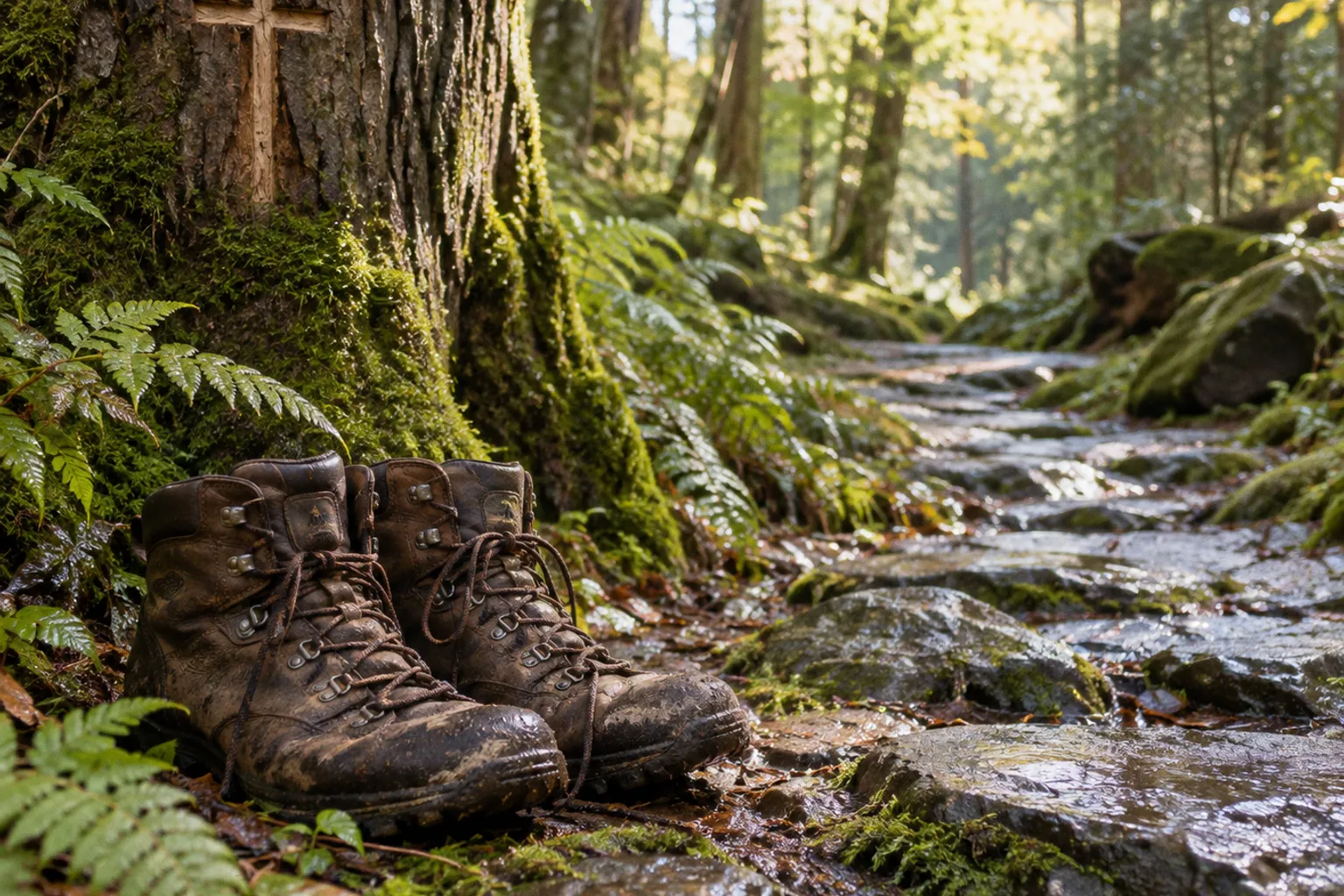
They live in our bodies: in the tight shoulders of the elder who visits the hospital every Thursday, in the restless sleep of the parent who hasn't sat through a full worship service in months, in the stiffened joints of the widow who once walked the aisles handing out hymnals with a stride that could outpace the pastor. When we talk about wellness in the church, we are talking about something profoundly embodied. And one of the most ancient, most accessible forms of embodied faith happens to be the simplest: walking together.
A church spiritual wellness walk program meets people where they already are — on their feet, in motion, breathing the same air — and invites them to carry their burdens into the open space of God's creation alongside others who are willing to hold that space with them. It is not a fitness challenge. It is not a proselytizing tactic. It is a structured, prayerful practice that integrates physical movement with scripture reflection, mental health awareness, and communal support. And launching one well requires more than good intentions; it requires administrative care, thoughtful group design, and a deep commitment to inclusion. What follows is a step-by-step guide for congregations ready to begin.
Administrative Foundations and Liability Protection
Before we lace up our shoes, we need to tend to the unglamorous but essential groundwork. A wellness walk that launches without proper administrative preparation puts both participants and the church at risk — legally, physically, and relationally. This is not bureaucracy for its own sake; it is an act of pastoral stewardship.
The first step is securing public liability insurance that explicitly covers church-led community wellness events. Many church insurance policies assume a sedentary congregation gathered indoors. Walking routes — especially those that traverse public sidewalks, parks, or municipal trails — may fall outside standard coverage. Contact your insurer early in the planning process, explain the program's scope, and confirm whether a rider or supplemental policy is needed. This conversation should happen months before the first walk, not the week of.
Next, obtain formal approval from church leadership or your diocesan body. Present the program's purpose, its structure, and the safety measures you plan to implement. Leadership buy-in does more than satisfy governance requirements; it signals to the congregation that this initiative carries the institutional weight of the church's mission, not merely one enthusiastic volunteer's idea.
A confidential medical declaration form should be part of every participant's registration. This is not about gatekeeping — it is about holding space responsibly. The form assesses physical readiness: Does the individual have cardiac concerns, joint limitations, balance issues, or other conditions that affect their ability to walk on outdoor terrain? The information stays between the participant and the program coordinator, and it shapes the accommodations we will discuss later.
Finally, if your walking route passes through public school grounds, municipal parks, or any shared civic space, contact local police and municipal administration in advance. Notify them of your group's presence, the expected number of walkers, the date and time, and the route. This is not asking permission to exist; it is building a relationship of transparency with your neighbors. It also protects the program from misunderstandings that could escalate.
Administrative care is not the enemy of spiritual spontaneity — it is the trellis that lets the vine grow without snapping in the wind.
Structuring Small Groups for Safety and Fellowship
One of the most consistent findings from congregations that have launched walking ministries is this: the size of the group shapes everything. A crowd of twenty walkers moving down a sidewalk becomes a logistical headache and a social wall — no one can speak honestly to the person beside them when they are navigating elbows and pace differences. But a small group of two to four people creates something entirely different. It creates a pocket of trust.
Teams of two to four walkers facilitate genuine conversational prayer during the route. This is the heartbeat of the program. When someone shares a burden aloud — a diagnosis, a strained relationship, a season of spiritual dryness — the small group can pause, listen, and respond in real time with prayer and presence. That kind of exchange simply does not happen in a large, strung-out procession.
Each small group should be assigned a designated route leader who carries a basic first-aid kit, a fully charged phone, and knowledge of the route's rest points and emergency exits. The leader does not need to be a medical professional, but they should be someone calm under pressure, familiar with the participants' general health declarations, and willing to make the call to shorten the walk if conditions demand it — heat, fatigue, an unexpected physical struggle.
Build your groups intentionally. Pair newer participants with seasoned walkers. Consider grouping people by pace rather than forcing a single speed on everyone. A gentle walker who needs to move slowly should not feel like a burden to a brisk strider, and the brisk strider should not feel guilty for their energy. Different paces, different groups, same mission.
The recommended structure for a single session is roughly one hour of walking followed by up to one hour of debriefing and fellowship. The walk itself is the movement; the gathering afterward is the integration. Over coffee or water in the church hall, participants can process what surfaced during the walk — emotionally, spiritually, physically. This debrief is not optional. It is where the practice becomes ministry.
Designing Interactive Prayer and Scripture Stations
A wellness walk that is simply a walk with a prayer bookend — a brief invocation at the start and a benediction at the finish — misses the richness of what this practice can offer. The most effective programs incorporate interactive stations along the route where walkers pause, engage, and reflect before moving on.
These stations generally fall into four categories:
1. Devotion and Prayer — A short scripture reading, a written prayer prompt, or a moment of guided silence. These stations anchor the walk in the tradition of the church's prayer life and give participants language for what they may be feeling but cannot yet name.
2. Interactive Scripture Engagement — Rather than simply reading a passage, participants respond to it physically or creatively. This might involve writing a word from the text on a stone and placing it at the base of a tree, tracing a verse in the dirt with a stick, or reading a psalm aloud together in unison. The body remembers what the mind forgets; engaging scripture through touch and voice deepens retention and emotional resonance.
3. Mission Service — A station where walkers perform a small act of service as part of the route: picking up litter along the trail, leaving a kind note on a neighbor's door, placing flowers at a community memorial. These acts connect the inward movement of prayer with the outward movement of love.
4. Visual Prayer — A station featuring an image, a piece of art, a photograph, or a natural focal point (a flowering tree, a body of water, a sunset view) accompanied by a prompt for contemplative prayer. Visual prayer stations work especially well for participants who find verbal or text-based prayer difficult in seasons of grief or emotional exhaustion.
Stations should be spaced naturally along the route — not so close together that the walk becomes a series of stops, and not so far apart that the theme of the station feels disconnected from the experience of walking. A good rhythm might be three to five stations over a one-mile route, giving walkers roughly fifteen to twenty minutes of movement between pauses.
Each station should include a printed or laminated guide card with the scripture, prompt, and instructions. Keep the language simple, pastoral, and invitational — not directive. "You are invited to sit with this verse for a few moments" is very different from "Read this and pray about your sins." The difference matters.
Inclusive Programming for Varying Mobility Levels
Here is a reality we must hold with tenderness: not everyone in our congregation can walk. And a wellness program that only serves the able-bodied has quietly told the most vulnerable members of the body of Christ that this ministry is not for them. That is not a small oversight. It is a failure of imagination and compassion.
Inclusive programming begins with the medical declaration forms we discussed earlier. When a participant indicates limited mobility, stamina, or balance, the program coordinator should reach out personally — not with a form letter, but with a genuine conversation. What can they do comfortably? What accommodations would help? What would make them feel included rather than accommodated?
Several low-intensity alternatives can be built into the program from the start:
- Chair exercises and stationary prayer groups held simultaneously in the church sanctuary or fellowship hall. Participants engage with the same scripture passages and prayer themes as the walking groups, but from a seated position, using gentle upper-body stretches and guided meditation. The key is that these are not lesser versions of the walk — they are parallel expressions of the same practice.
- Prayer-driving routes for those who cannot walk at all but can be transported by car. A driver and one or two passengers follow a mapped route, stopping at designated locations (a park bench, a church sign, a community garden) where the same station prompts are used. This requires a separate set of safety considerations — a reliable vehicle, a licensed driver, accessible pick-up and drop-off points — but it extends the ministry's reach to homebound members who are often the most spiritually isolated.
- Shortened route options that cover half the distance but include all the stations, with rest benches or chairs positioned at each one. A participant who cannot walk a full mile may walk a quarter mile comfortably, especially if they know a place to rest awaits them at regular intervals.
Inclusion also means language. In all printed materials, invitations, and announcements, describe the program as open to all mobility levels from the outset. Do not say "walkers welcome, accommodations available upon request" — that puts the burden on the person with the limitation to ask. Instead: "This program includes walking routes, seated prayer groups, and driving routes. Come as you are."
Community Coordination and Route Planning
A spiritual wellness walk does not happen in a vacuum. It happens on sidewalks, in parks, along trails, and sometimes through neighborhoods where your congregation's presence is unexpected. Community coordination is how you ensure that presence is a gift, not an intrusion.
Start by selecting your route. Walk it yourself, more than once, at different times of day. Note the condition of the terrain — cracked sidewalks, uneven paths, steep grades, areas without shade. Identify places where a group of four people can safely pause at a station without blocking pedestrian traffic or creating a hazard near a road. Map your rest points and your emergency exits.
If the route passes through a public park or municipal space, contact the relevant city or county office to inquire about any permit requirements or group-use policies. Some municipalities require permits for organized gatherings in public parks, even small ones. Finding this out before the first walk prevents an uncomfortable conversation with a park ranger on day one.
For routes that pass near or through public school property, contact the school administration directly. Explain that your group is walking for spiritual wellness, that it is not a proselytizing effort, and that participants will not be distributing materials or approaching students. Provide the dates and times of your walks. This courtesy protects both the school and the church from misunderstandings.
Coordinate with your local police department — not because walking is suspicious, but because a visible group moving through a neighborhood at a regular time benefits from being a known quantity. A brief phone call or email to the non-emergency line, explaining the program, the route, and the schedule, is sufficient.
Think about seasonal timing. Spring and early fall are natural windows for outdoor programming. April is National Minority Health Month, Stress Awareness Month, and Move More Month in the United States — an ideal launching point for a program that frames physical movement as a spiritual and communal practice. Mental Health Awareness Week in May offers another natural anchor for congregations that want to connect the walk explicitly to mental health support and awareness.
Finally, communicate the program to the wider congregation with warmth and specificity. Avoid generic invitations ("Join us for a wellness walk!"). Instead, name the practice honestly: "We are starting a spiritual wellness walk — a chance to move your body, open your heart, and pray alongside others in the beauty of God's creation. Walking groups, seated prayer groups, and driving routes are all available. No fitness level required. Just show up."
Launching a church spiritual wellness walk is not complicated, but it is deliberate. It asks us to do what the church does best at its most faithful: pay attention to the whole person — body, mind, and spirit — and create a structure of grace that holds them in community. We do not promise that walking will cure grief or erase anxiety. We promise something quieter and, in its own way, more powerful: that no one has to carry their burdens alone, and that the God who walked with Adam and Eve in the cool of the garden still walks with us now — sometimes on cracked sidewalks, sometimes in church sanctuaries, sometimes in the slow, sacred pace of a small group moving through the neighborhood together, one step at a time.