Spiritual wellness walk: a pre-event checklist
A spiritual wellness walk church checklist has to do more than confirm the starting time. Your congregation is combining movement, prayer, Scripture, outdoor logistics, and pastoral care in one event.
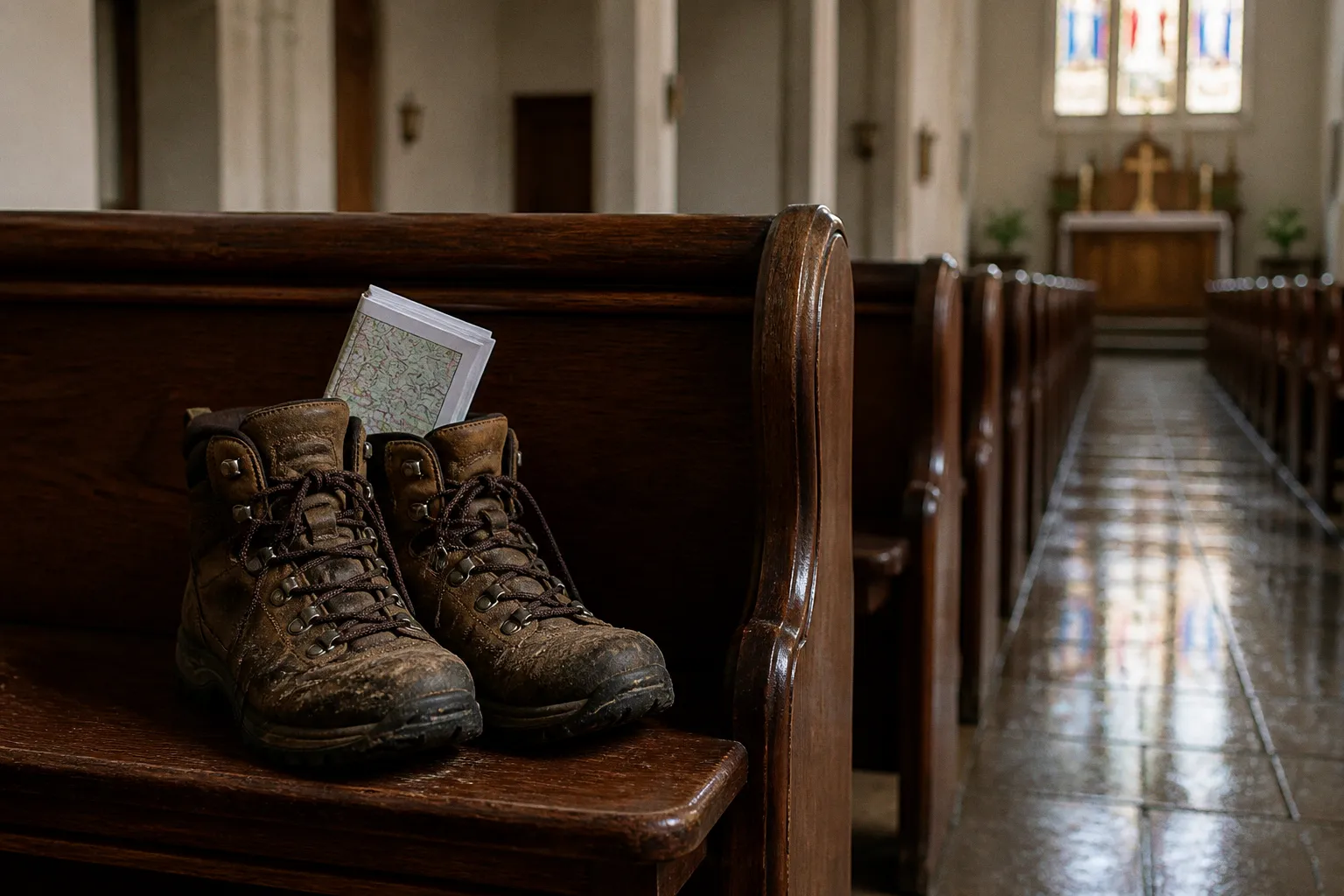
If the route is unclear, the stations are vague, or participants do not know what to bring, the ministry loses momentum before the first prayer begins.
The objective is tangible: create a safe, accessible, spiritually focused walk that people can enter at different levels of physical ability and leave with a clearer next step. That requires deployment planning. You need a route, a team structure, a prayer framework, communication protocols, and a response plan for weather or emergencies.
A successful walk does not require an expensive trail facility. A half-mile loop, a paved path, several benches, and well-designed stations can support a meaningful experience. The quality comes from preparation.
1. Map the route before you announce the event
Do not publish a meeting time and assume the route will solve itself. Walk the full course in advance. Review it from the perspective of a first-time visitor, an older adult, a parent with a stroller, a person using a mobility aid, and someone who may become tired or anxious during the event.
A spiritual wellness walk can use a church property, a neighborhood sidewalk network, a park, or a dedicated fitness trail. The location matters less than the control you have over movement, visibility, rest points, and emergency access.
Complete a route audit
Your neighborhood audit should answer these operational questions:
- Where does the group gather, and can participants find the entrance without assistance?
- Does the route have a clearly defined beginning and end?
- Are walking surfaces paved, level, and free from major cracks, loose gravel, standing water, or resurfacing hazards?
- Are there crossings, driveways, blind corners, steep grades, or areas with limited visibility?
- Can a participant who needs to stop reach a bench, shaded area, vehicle, or indoor space?
- Can emergency responders reach the route if the group leaves church property?
- Does the route offer an accessible option that does not isolate participants from the spiritual experience?
- Are bathrooms, drinking water, and parking close enough for the intended participants?
- Can volunteer leaders see the front, middle, and back of the group?
Walk the route at the same general time of day as the event. A path that feels calm in the morning may have heavier traffic later. A shaded section may become exposed as the sun moves. Lighting, heat, noise, and parking patterns can change the participant experience.
Select a route length that serves the congregation
Do not confuse distance with spiritual depth. A longer course can create fatigue, split the group, and reduce the time available for reflection. For many congregational settings, a 15-to-60-minute routine provides enough room for movement, prayer, Scripture, and silence without turning the event into an endurance test.
A half-mile loop can work well because participants can complete one circuit or continue for additional rounds. This format gives your team flexibility:
- Short option: one circuit with brief stops at each station.
- Standard option: one full circuit with guided prayer and a closing reflection.
- Extended option: additional walking time after the structured portion.
- Rest option: remain at a station, bench, or designated gathering point while the group continues.
State these options before the walk begins. Participants should not have to explain a physical limitation to the entire group in order to choose a shorter route.
A route is ready when every participant knows how to move through it, pause within it, or leave it safely.
Build an accessibility plan into the main design
Accessibility should not appear as a last-minute accommodation. It belongs in the original route map and station plan.
Create at least one continuous route with a firm, navigable surface whenever possible. Place chairs or benches at planned intervals. Keep stations close enough to the route that participants do not need to walk over grass, uneven ground, or steep slopes to take part. If the route includes a more demanding section, offer a clearly marked alternative that reconnects with the main group.
Use a simple route briefing:
1. Identify the main loop.
2. Point out the rest areas.
3. Name the shorter route.
4. Explain where the indoor fallback space is located.
5. Tell participants whom to contact if they need help.
6. Confirm that choosing the accessible route is expected and supported.
This is capacity building, not special treatment. A congregation expands its ministry reach when the event works for different bodies, schedules, and energy levels.
2. Design prayer stations that create focus
A spiritual wellness walk becomes a ministry rather than an unstructured stroll when each section has a clear purpose. Prayer stations should direct attention without overloading participants with instructions.
You can use Scripture panels, printed cards, simple signs, spoken prompts, or a leader’s short reflection. Each station needs one theme, one action, and one reasonable time expectation.
Use a station framework
For every station, prepare the following:
- Theme: What concern or spiritual practice does this station address?
- Scripture: What passage or phrase anchors the reflection?
- Prompt: What should participants consider or pray?
- Action: Will they walk silently, pray aloud, write a response, listen, or receive a blessing?
- Time: How long will the group remain?
- Leader: Who introduces the station and manages movement?
- Accessibility: Can participants engage while seated or at a slower pace?
A station should not require a mini-sermon. The walk depends on movement and participation. Keep spoken guidance concise. The leader gives direction, creates space, and moves the group forward.
Possible station themes include:
1. Gratitude: Name one tangible provision, relationship, or moment of grace.
2. Physical stewardship: Pray for wisdom in caring for the body without turning the station into a fitness lecture.
3. Mental and emotional well-being: Offer intercession for anxiety, exhaustion, loneliness, or recovery.
4. Families and caregivers: Pray for households carrying sustained responsibilities.
5. The neighborhood: Pray for schools, businesses, public workers, and residents along the route.
6. Grief and remembrance: Make room for loss without requiring anyone to share personal details.
7. Service: Identify one practical way to support a neighbor or ministry.
8. Hope: Close with a forward-looking prayer and a concrete next step.
The station sequence should feel intentional. Begin with arrival and orientation. Move into personal reflection. Widen toward the congregation and neighborhood. Close with thanksgiving, blessing, or commissioning.
Keep Christian mindfulness grounded
Christian mindfulness does not require you to import a separate spiritual system into the event. In a Lutheran congregation, you can frame attention through prayer, Scripture, gratitude, confession, intercession, and trust in God’s promises. The participant’s task is not to achieve a special emotional state. It is to become attentive: to the body, the surroundings, the needs of others, and the words being prayed.
Use direct prompts:
- “Notice your breathing. Receive it as a gift, and pray for the person or situation on your mind.”
- “Walk in silence until the next marker. Let the Scripture phrase remain with you.”
- “Name one burden you are carrying. You may hold it privately or place it in the congregation’s prayer.”
- “Look toward the neighborhood around you. Pray for the people who live and work here.”
Avoid vague language that leaves participants guessing. “Reflect on community” is too broad. “Pray for the teachers, students, and families connected to this neighborhood” gives people a clear assignment.
Match the number of stations to the route
More stations do not automatically create a better experience. A high-end faith and fitness trail might include numerous fitness or gazebo stations, but your congregation does not need to reproduce that infrastructure. A smaller number of well-prepared stations will outperform a crowded route with rushed instructions.
A practical station plan may include four to eight stops, depending on the route length and group size. If you have a large group, divide participants into smaller teams or stagger the start. Otherwise, the first group will finish a station while the last group is still arriving.
Prepare physical materials in advance:
- Weather-resistant signs or laminated cards.
- Large-print versions of Scripture and prompts.
- Clipboards or cards for written prayer, if used.
- Pens secured against wind.
- A station map for leaders.
- Extra copies for participants who arrive late.
- A collection method for prayer cards that protects privacy.
Do not collect sensitive disclosures casually. If the event invites people to write about grief, mental health, or personal crisis, decide beforehand who will see those cards and what pastoral response will follow.
3. Structure the physical and liturgical flow
The walk needs a beginning, a middle, and an end. That sounds obvious, but many church recreation programs fail at the transition points. Participants arrive at different times. Some expect a worship service. Others expect a casual group walk. Parents may need to leave early. Volunteers may not know when to move people from one station to the next.
Set the operating rhythm before event day.
Use a clear event sequence
A dependable format looks like this:
1. Arrival and check-in: Welcome participants, confirm emergency contacts if your congregation uses them, and direct people to water, bathrooms, and accessible seating.
2. Opening briefing: Explain the purpose, route, pace, stations, rest options, and weather plan.
3. Opening prayer or Scripture: Establish the spiritual frame before movement begins.
4. Guided walk: Lead the group through the planned stations.
5. Optional extension: Allow participants to continue walking, remain in conversation, or spend time in quiet prayer.
6. Closing gathering: Offer a blessing, a practical ministry invitation, and directions for departure.
Keep the opening briefing short and operational. Participants need to know what will happen, not hear a long introduction. The theological purpose should be present, but it should connect directly to the practice: we walk, we pray, we notice, and we respond.
Assign roles before the deployment
One leader cannot safely manage route navigation, pastoral care, first response, station timing, and late arrivals. Assign distinct roles:
| Role | Primary responsibility | Minimum preparation |
|---|---|---|
| Event lead | Owns the schedule, decisions, and final communication | Full run sheet and contact list |
| Route lead | Sets the pace and confirms the group follows the marked path | Route walk-through |
| Sweep leader | Remains at the back and supports slower participants | Accessibility and rest-point map |
| Station leaders | Deliver prompts and manage transitions | Station script and timing |
| Welcome lead | Handles arrival, late participants, and basic directions | Sign-in or attendance process |
| Safety contact | Carries the emergency information and coordinates response | Emergency plan and phone access |
| Pastoral support | Responds to grief, distress, prayer requests, or sensitive disclosures | Referral and follow-up protocol |
For a small event, one person may hold two roles. Do not combine roles that require the same person to be in different places at the same time. The event lead should remain available for decisions rather than becoming the only person who knows the plan.
Control group pace and separation
A walk can fragment quickly. The front group begins talking, the middle group stops at a station, and the back group loses sight of the route. Prevent this with simple controls:
- Set a moderate pace before the first station.
- Keep a route lead at the front and a sweep leader at the back.
- Use visible markers at turns.
- Establish a regroup point after every major section.
- Give station leaders a signal for “ready to move.”
- Tell participants not to leave the route alone.
- Provide a contact number for anyone separated from the group.
If children participate, define whether they must remain with a parent or assigned adult. If the event includes participants with mobility or health concerns, make sure the sweep leader knows the location of every rest option.
The goal is not military precision. It is predictable movement. Predictability lowers stress and allows people to focus on prayer.
4. Communicate expectations before participants arrive
A strong pre-event message prevents avoidable problems. Send the information early enough for participants to decide whether the route, timing, and physical requirements work for them.
Your announcement should include:
- Date, start time, and expected end time.
- Meeting location and parking instructions.
- Approximate walking duration and route length.
- Surface conditions and terrain.
- Recommended footwear and clothing.
- Water guidance.
- Rest and accessibility options.
- Weather decision deadline.
- Whether children, pets, or strollers can participate.
- Contact information for questions or accommodation requests.
- A brief description of the prayer and reflection format.
Use plain language. “Wear appropriate attire” tells people very little. “Wear comfortable walking shoes and clothing suitable for the forecast; bring water and any personal items you need during the walk” gives them a usable instruction.
Explain that the event combines physical movement with intentional prayer, Scripture meditation, and reflection. This matters because participants arrive with different expectations. Someone seeking a quiet spiritual wellness walk may feel frustrated by a highly social format. Someone expecting conversation may feel uncomfortable if silence begins without warning.
Tell participants when silence will occur and when conversation will be welcome. Include a note that people may walk at a comfortable pace, pause at a rest point, or choose the shorter route.
Send one final logistics message
The final message should arrive close enough to the event that weather and route conditions are current. Keep it focused:
- “The event is proceeding” or “The event is moved indoors.”
- The meeting point.
- The forecast-related adjustment.
- What to bring.
- The contact person.
- Any change to the route or station sequence.
Do not bury the decision in a long devotional email. The final message is an operations notice. Make it easy to scan on a phone.
5. Prepare for weather and emergencies
Outdoor ministry requires a decision system. “We will see how it looks” is not a weather plan.
Choose a weather decision deadline and assign one person to make the call. Review the forecast, route conditions, temperature, visibility, and participant profile. A mild day for a trained runner may not be a mild day for older adults, young children, or people managing health conditions.
Build two event versions
Prepare both a full outdoor plan and an indoor alternative. The indoor plan can retain the spiritual structure without pretending that it is the same physical activity.
Possible indoor adaptations include:
- A short walking loop through church corridors or a fellowship hall.
- Prayer stations in separate rooms or along a marked path.
- Seated Scripture meditation with movement breaks.
- A guided neighborhood prayer presentation using maps or photographs.
- A gentle mobility session followed by intercession.
- A grief-support or mental well-being reflection space.
Do not describe the indoor option as a failure. It is a continuity plan. Your congregation can preserve the purpose of the gathering while changing the physical format.
Prepare the emergency response packet
The safety contact should carry or have immediate access to:
- Event leader and volunteer phone numbers.
- Participant attendance information, if collected.
- Emergency contacts, where appropriate and permitted by your congregation’s process.
- Exact route map and meeting points.
- Location of first-aid supplies.
- Church address and alternate access points.
- Weather decision and evacuation location.
- Information about nearby restrooms and indoor shelter.
- A process for documenting incidents and follow-up.
Do not improvise medical guidance. Volunteers can call emergency services, assist according to their training, guide the group to shelter, and notify the designated church contact. They should not diagnose, promise confidentiality they cannot maintain, or pressure someone to continue walking.
If a participant becomes distressed, move them to a quieter location, ask what support they need, and involve the pastoral support person. A spiritual wellness walk may surface grief, anxiety, loneliness, or physical discomfort. Your response should be calm, private, and concrete.
Use a simple emergency decision sequence
When an incident occurs:
1. Stop the group and secure the immediate area.
2. Assess whether the person needs emergency services.
3. Assign one volunteer to stay with the participant.
4. Assign another volunteer to manage the rest of the group.
5. Contact emergency services or the designated church responder.
6. Record the basic facts after the situation stabilizes.
7. Arrange pastoral or practical follow-up.
The group should know where to gather if the route is interrupted. A planned regroup point prevents a minor problem from becoming a communications failure.
6. Run the final pre-event checklist
Use this checklist during the last preparation meeting. Assign each item to a named person. A task without an owner is not a task; it is a hope.
Route and access
- The full route has been walked recently.
- Pavement, crossings, slopes, lighting, and hazards have been reviewed.
- Accessible and shorter route options are clearly identified.
- Rest points, bathrooms, water, and indoor shelter are available.
- Turns and stations are marked in a way participants can see.
- The route lead and sweep leader understand their positions.
- Emergency access and the exact meeting location are documented.
Prayer and station content
- Each station has one theme and one clear prompt.
- Scripture and printed materials are ready.
- Instructions work for seated participants and slower walkers.
- Station leaders know the timing and transition signal.
- The sequence moves from personal reflection toward communal prayer and response.
- Sensitive prayer cards or written responses have a privacy plan.
- The closing prayer or blessing is prepared.
Volunteer deployment
- The event lead has a run sheet.
- Every volunteer knows their role and reporting time.
- The welcome lead can handle late arrivals.
- The pastoral support person is identified.
- The safety contact has the route and emergency information.
- Volunteers know what they should not do, including giving medical advice outside their training.
- A short volunteer briefing will happen before participants begin.
Participant communication
- The announcement includes time, location, duration, route, footwear, water, and weather details.
- Accessibility requests have a contact channel.
- Participants know when silence and conversation will occur.
- Families understand supervision expectations.
- The weather decision deadline has been communicated.
- The final status message is ready to send.
Weather and continuity
- The outdoor go/no-go decision owner is named.
- The indoor alternative is prepared.
- Materials can be moved quickly if the format changes.
- Volunteers know where the group will gather in bad weather.
- The cancellation or relocation message is drafted.
The walk should feel simple to participants because your team handled the complexity beforehand.
After the walk: convert attendance into ministry capacity
Do not end the project when the last participant leaves. Hold a short debrief while details remain fresh. Ask what created friction, where the group separated, which station generated meaningful engagement, and what participants needed but did not receive.
Capture specific observations:
- Did the route support different walking speeds?
- Did the station prompts produce prayer, silence, or confusion?
- Did volunteers have enough information?
- Did participants understand the indoor or weather plan?
- Were rest points visible and usable?
- Did anyone request pastoral, mental health, grief, or practical follow-up?
- What should change before the next event?
Follow up promptly with people who requested contact. A prayer walk can open a door to grief support ministries, small groups, congregational care, fitness programs, or individual pastoral conversation. Make the next step tangible. Do not send a generic “thank you for attending” message and assume the work is complete.
You can also use the debrief to build a repeatable ministry system. Keep the route map, station prompts, volunteer assignments, communication templates, and incident notes in one shared location. Next time, your team should improve the deployment rather than rebuild it from zero.
Final position
A church prayer walk planning checklist is not administrative overhead. It protects the purpose of the event. Route safety creates freedom to participate. Accessible design widens the congregation’s reach. Clear stations turn walking into disciplined prayer. Volunteer roles prevent confusion. Weather and emergency planning protect trust.
Start with the actual capacity of your congregation. Map a route people can use. Design fewer, stronger stations. Communicate the physical and spiritual expectations. Assign every operational responsibility. Then create a closing path from the walk into ongoing community care.
That is how a spiritual wellness walk becomes more than a scheduled activity. It becomes a reliable ministry practice: physically grounded, spiritually focused, and ready for the people your congregation is called to serve.