Spiritual Wellness Walks: What They Are and How They Work
Your congregation is sitting too much. That is the blunt reality behind the growing interest in Christian spiritual wellness walks.
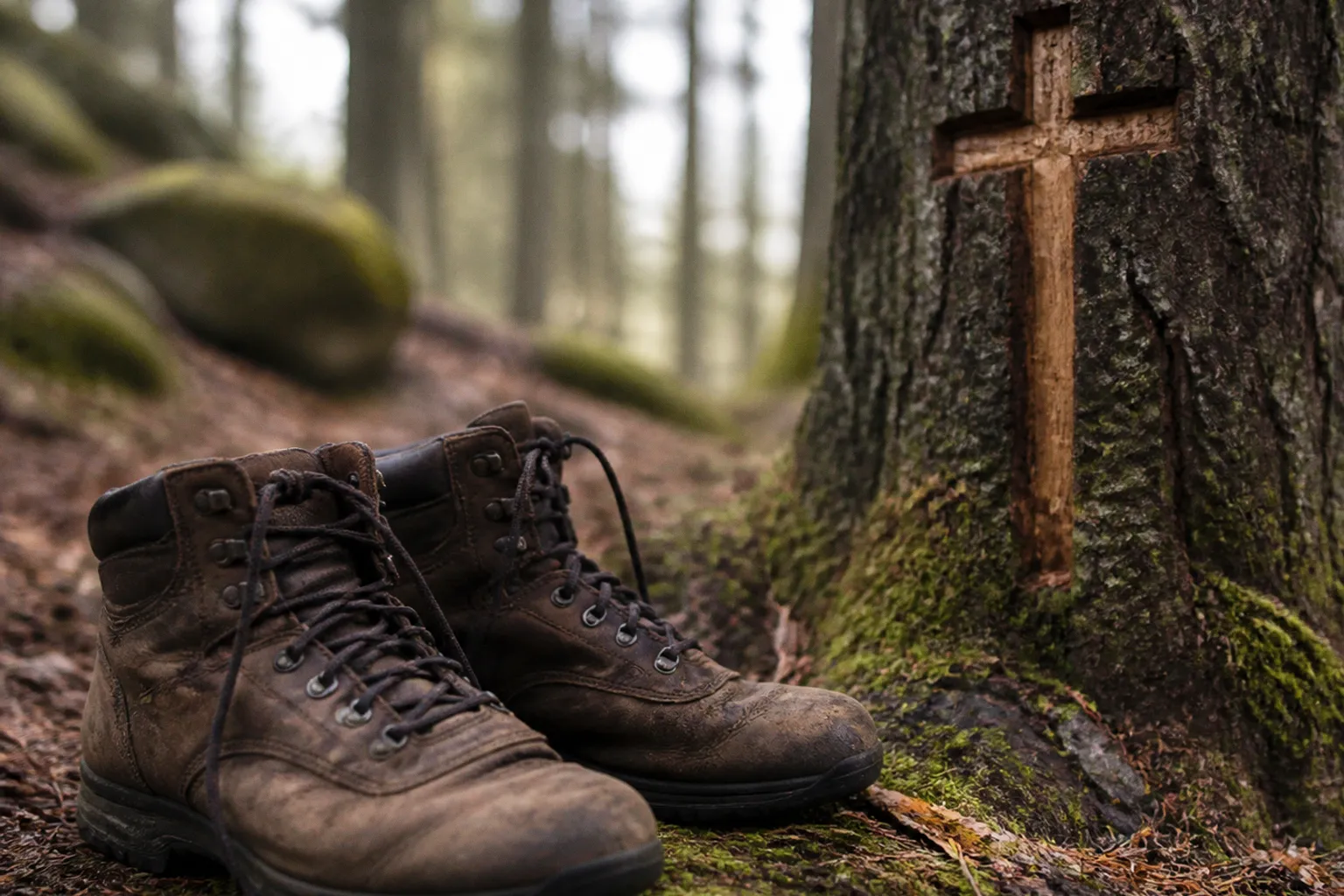
Christian Spiritual Wellness Walks: Integrating Faith, Movement, and Community
Across Lutheran communities and beyond, members show up to Bible study carrying tension in their shoulders, blood pressure readings their doctor flagged last quarter, and a quiet ache for prayer that goes beyond sitting still in a pew. A wellness walk answers all three problems at once. It gets the body moving, opens a structured space for prayer and meditation, and pulls people out of isolation into shared practice.
This is not a retreat-weekend novelty. It is a deployable ministry tool your congregation can launch in a single season with existing volunteers and zero specialized equipment. Below is the operational playbook: what these walks are, where they come from, what they actually do for the body and the spirit, and how to build one in your own neighborhood.
A spiritual wellness walk is intentional physical movement paired with Christian prayer, scripture meditation, or breath prayer. The path is the liturgy; the footsteps are the rhythm.
The Theology of Movement: Why Walking Belongs in Spiritual Formation
Diane Chandler, in Christian Spiritual Formation: An Integrated Approach for Personal and Relational Wholeness, identifies physical health and wellness as one of seven key facets of spiritual formation. That placement matters. It tells you that the body is not a distraction from the spiritual life. It is part of the curriculum.
Martin Luther made this explicit with the Latin triad Oratio, meditatio, tentatio — prayer, meditation on God's Word, and trial. Notice what is missing: sitting motionless in a designated prayer posture. Luther's pattern assumes the whole person is engaged. Walking fits that pattern cleanly because it pairs a sustained physical rhythm with cognitive focus and conversational prayer. You are not choosing between body and spirit. You are training them to work together.
For a Lutheran congregation, this is high-leverage territory. Confessional Lutheran theology already emphasizes the means of grace — Word and Sacrament — as the ground of the Christian life. Walking prayer does not replace those means. It builds the attentional capacity that lets members receive them more fully on Sunday morning. A member who has practiced focused walking meditation during the week arrives at worship with a quieter mind and a more responsive heart.
Three practical implications for ministry leaders:
- Stop framing walking as "exercise adjacent" to faith. It is formation. Put it in your discipleship pathway next to small group and devotional reading.
- Train your leaders on the distinction. A walk without scripture or prayer is a hike. A hike without physical engagement is a devotion. Your team needs to lead both layers.
- Measure outcomes that match the goal. Track attendance, repeat participation, and qualitative feedback on prayer depth. Do not track miles.
Historical Foundations: From Chartres Labyrinths to Modern Prayer Paths
Walking as a Christian discipline is not a modern invention. The Chartres Cathedral labyrinth in France has been walked by pilgrims for roughly 1,000 years. It is a winding stone path set into the nave of the cathedral, and pilgrims have used it as a focused, slow, prayerful walk toward the center and back. That is not folk religion. It is the institutional church recognizing that the body carries the soul through prayer.
The labyrinth is one formal version of a broader category. Walking prayer has taken three main shapes across Christian history:
1. Labyrinth walks — fixed stone or canvas paths, usually circular, with a single route to the center. They work well in large interior spaces and offer a predictable, meditative structure.
2. Processional or pilgrimage walks — longer outdoor routes tied to specific holy sites, seasons, or community events.
3. Personal or neighborhood prayer walks — informal routes through a local area, often done in pairs or small groups, focused on intercession for specific people, places, or needs.
The Upper Room and other devotional resources have published walking prayer guides for decades, and interest in personal prayer walking increased sharply in March 2020, when many congregations moved prayer practice out of buildings and into open air. That shift did not disappear when buildings reopened. It stuck because the format works.
Your congregation does not need a cathedral. It needs a 30- to 40-foot path or a one-mile neighborhood loop and a trained leader.
Practical Frameworks for Structured Walking Prayer
Here is the operational core. There are four tested formats your team can deploy, each with a clear use case.
1. Labyrinth Walking
Best for: indoor installation, Lenten or Advent programming, contemplative retreats.
- Path length: approximately 30 to 40 feet if you are laying out a back-and-forth walking meditation path; full circular labyrinths scale up from there.
- Recommended duration: 15 minutes or more for the full meditative cycle.
- Use a printed canvas labyrinth, painted floor pattern, or portable rope-and-stake setup.
- Pair the walk with a printed scripture or prayer focus for each "stage" of the path.
2. Neighborhood Prayer Walk
Best for: missional outreach, community audits, intercession ministry.
- Walk in pairs or groups of three through a defined neighborhood boundary.
- Each walker prays silently or aloud for specific blocks, homes, or businesses as you pass them.
- Bring a printed map with marked prayer points (schools, parks, rental complexes, shuttered storefronts).
- Close with a brief debrief at a central location. Capture observations for your outreach team.
3. Nature Prayer Walk
Best for: small groups, men's or women's ministry, grief support contexts.
- Choose a trail or green space your congregation can access without driving more than 20 minutes.
- Set a pace slow enough that conversation is possible but the focus stays external.
- Use a simple rotation: 10 minutes silent scripture meditation, 10 minutes shared reflection, 10 minutes spoken prayer.
- Bring water, weather-appropriate gear, and a printed guide so no one has to memorize the structure.
4. Breath Prayer Walk
Best for: daily personal practice, members recovering from burnout.
- Choose a short phrase anchored in scripture — for example, "Lord, have mercy" or "Jesus, Son of David, have mercy on me."
- Match one phrase per inhale, a second phrase per exhale.
- Walk at any pace that lets you sustain the rhythm without losing breath.
- Recommended duration: 15 to 30 minutes.
| Format | Setting | Group Size | Core Output |
|---|---|---|---|
| Labyrinth | Indoor / canvas | Individual or small group | Contemplative focus |
| Neighborhood | Outdoor / urban | 2–6 | Intercession + community audit |
| Nature | Outdoor / trail | 3–12 | Shared reflection + rest |
| Breath prayer | Anywhere | Solo | Daily formation habit |
Each format is a deployable ministry product, not a stylistic preference. Pick the one that fits your next 90 days.
Physical Benefits and the Rhythm of Daily Spiritual Discipline
The body-side payoff is real and measurable. A daily 30-minute walk is associated with increased cardiovascular fitness, stronger bones, improved immune function, reduced excess body fat, and supported muscle growth. None of these claims depend on brand-name wellness products or specialized gear. They depend on consistent, moderate-intensity movement.
For ministry leaders, the strategic value is the pairing. A member who commits to a daily 30-minute walk is building a habit structure that supports the entire spiritual life:
- Time container. Thirty minutes is a workable block. Members can defend it on a calendar.
- Environmental cue. The walk itself becomes the trigger that shifts the member into prayer posture.
- Cumulative effect. Forty days of daily walking prayer produces a different person than four days of intense retreat.
Do not oversell the medical side. You are not a clinic. Your job is to connect members with general wellness benefits that are well documented and to frame the walk as a formation practice. The body benefits are real. The soul benefits are the point.
One practical note: brief your members on pacing. Walking meditation that leaves someone breathless is not contemplative. Walking that is too slow becomes a shuffle and breaks the meditative rhythm. Most adults settle into a natural pace within five minutes. Tell them to let the rhythm find them rather than forcing it.
Designing Your Own Path: Intentionality in Nature and Neighborhood
You have the framework. Now the deployment plan.
Step 1: Run a Neighborhood Audit
Walk a one-mile radius around your church. Identify:
- Public green space, parks, or trails
- Sidewalks with consistent tree cover
- Notable prayer targets: schools, hospitals, apartment complexes, business corridors, places of community grief
- Hazards: heavy traffic intersections, unsafe crossings, poorly lit stretches after dark
This audit becomes your map. It is also a recruiting tool. Members who walk the neighborhood with you start to see it as their mission field.
Step 2: Pilot Two Formats in the Same Season
Do not launch everything at once. Run a labyrinth walk during Advent and a neighborhood prayer walk during Lent. That gives you two data points in one church year and lets you compare.
Step 3: Recruit and Train Walk Leaders
You need at least one trained leader per format. Training is not theological. It is logistical:
- How to set the pace
- How to open and close with prayer
- How to handle silence
- How to redirect conversation that drifts into gossip or venting
- When to end early for weather or safety
Build a one-page leader guide. Review it in a 30-minute training session. Done.
Step 4: Promote With Concrete Logistics
People do not show up for vague "prayer walk" announcements. They show up when you tell them:
- Where (meet at the south entrance of the church)
- When (Saturdays at 8:00 a.m., starting March 8)
- What to bring (water, weather-appropriate shoes, nothing else)
- How long (45 minutes)
- Who to contact (walk leader name and phone number)
Post it. Email it. Print it on a half-sheet card and hand it out after worship.
Step 5: Close the Loop
After each walk, gather for five minutes. Ask three questions:
1. What did you notice?
2. Where did you sense prayer landing?
3. What is one thing you want to bring back next time?
Capture the answers. They become testimonials, recruitment material, and proof of impact for your next grant or budget cycle.
Common Pitfalls to Avoid
- Treating it as a one-off event. A single walk is a field trip. Recurring walks build formation.
- Letting pace drift. Fast walkers pull the group out of meditative rhythm. Set the pace at the front and hold it.
- Skipping the debrief. Without a closing reflection, the walk stays purely physical. The debrief is where spiritual formation gets named.
- Over-programming. A 90-minute walk with four discussion stops is not a walk. Keep the structure light.
- Ignoring accessibility. Members with mobility limits can still join in adapted formats — seated labyrinth meditation, slower-pace neighborhood walks, or breath prayer from a stationary bench on the route.
Formation is built in the repetition, not the revelation. Schedule the walks, protect the time, and let the practice do its work.
The Bottom Line
Christian spiritual wellness walks are not a wellness trend repackaged for church marketing. They are a tested integration of physical movement and Christian prayer with a 1,000-year pedigree and a clean operational footprint. Your congregation does not need new buildings, new staff, or new theology. You need a path, a trained leader, a printed schedule, and the discipline to show up week after week.
Pick one format from the table above. Audit your neighborhood. Recruit two leaders. Launch in the next 90 days. The members who need this are already walking into your building carrying stress, isolation, and a quiet hunger for prayer that engages the whole person. Give them a path to walk and a reason to keep walking it.