Church Prayer Walks: A Pre-Event Planning Checklist
A church prayer walk can serve a neighborhood, strengthen congregational connection, and support spiritual wellness—but only if the deployment is organized before the first group leaves the parking lot.
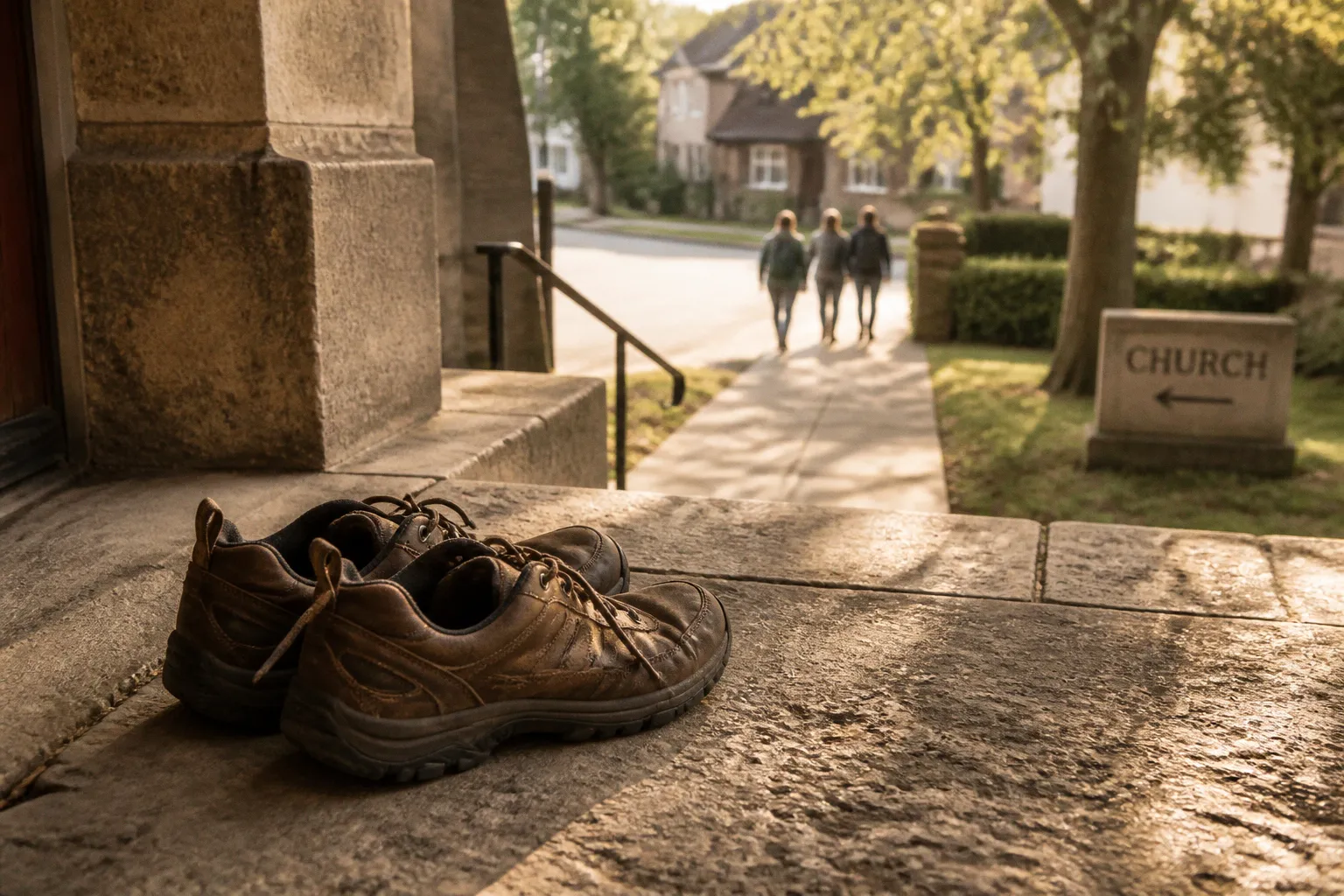
An unclear route, uneven volunteer coverage, or missing accessibility plan can turn a focused ministry event into a preventable safety problem.
Use this church prayer walk preparation checklist to build the operation in advance. Your congregation needs a defined route, trained group leaders, short prayer prompts, a communication plan, and a meaningful alternative for people who cannot walk. Keep the format simple. Execute it well.
A prayer walk succeeds when prayer, people, and logistics move in the same direction.
Start With a Neighborhood Audit, Not a Route
Do not begin by drawing a line on a map. Begin by identifying the community your congregation wants to serve.
A spiritual wellness walk should have a ministry purpose that participants can understand in one sentence. You may want to pray for local schools, families, first responders, businesses, public housing, healthcare workers, grieving neighbors, or people experiencing isolation. The purpose determines the route, the prayer prompts, the group size, and the partners you need to contact.
Complete a short neighborhood audit before planning the event:
- List the locations connected to your ministry priority. Include schools, apartment complexes, food distribution sites, parks, senior housing, shelters, clinics, and other community gathering points.
- Mark public and private boundaries. A route that looks open on a map may pass through a private complex, restricted property, or controlled-access campus.
- Identify high-traffic crossings. Note intersections, parking lot entrances, railroad crossings, construction zones, and roads without sidewalks.
- Record rest points. Look for benches, shaded areas, public buildings, or other locations where participants can regroup.
- Check the terrain. Slopes, broken pavement, stairs, loose gravel, and narrow walkways affect who can participate.
- Review weather exposure. Open fields and long stretches without shade can create a health risk even during a short event.
- Identify communication gaps. A route with poor phone coverage requires a stronger in-person regrouping plan.
You do not need the longest route. You need a route your team can supervise, explain, and complete without rushing.
Build the route around ministry zones
Divide the area into clear ministry zones instead of asking everyone to wander in the same direction. One group might cover the school perimeter. Another might walk near local businesses. A third might remain near the church and pray for households represented by the congregation.
Each zone should have:
1. A starting point.
2. A turn-by-turn route.
3. A planned stopping location.
4. A return time.
5. A group leader.
6. A backup contact.
7. A specific prayer focus.
Keep route instructions short enough to read from a phone. If a participant needs a ten-minute explanation to understand the route, the route is not ready for deployment.
Coordinate With the Places You Will Approach
A church prayer walk does not give the congregation automatic access to every location it passes. The ministry team must distinguish between walking near a place and entering or gathering on that property.
If the route goes around a school, public institution, private complex, or controlled campus, contact the appropriate administrator or municipal office before the event. Local requirements vary. Do not assume that a familiar sidewalk gives your group permission to assemble, distribute materials, photograph the area, or enter a courtyard.
Use a simple coordination record:
| Location or zone | Contact needed | Access question | Safety concern | Status |
|---|---|---|---|---|
| School boundary | School administration | May groups walk or gather nearby? | Student traffic and drop-off areas | Pending / confirmed |
| Private complex | Property manager | Are sidewalks and common areas open? | Residents, vehicles, gates | Pending / confirmed |
| Public park | Municipal office if needed | Are group gatherings restricted? | Restrooms, weather exposure | Pending / confirmed |
| Church neighborhood | No outside contact or local coordination as appropriate | Where can the group stop safely? | Road crossings and visibility | Pending / confirmed |
Do not turn coordination into a public performance. The goal is not to announce the congregation’s presence at every location. The goal is to prevent disruption, protect participants, and maintain a respectful relationship with neighbors.
If your group will pray aloud near homes, businesses, or schools, coach participants to keep voices moderate and avoid blocking walkways. Prayer should not create pressure for residents to engage. Your team can serve the neighborhood without demanding attention from it.
Design the Four-Phase Event Structure
A reliable church prayer walk uses four primary phases:
1. Gathering.
2. Opening prayer and orientation.
3. Active walking segments.
4. Post-walk debrief.
This structure gives people a clear start, a focused middle, and an intentional close. It also gives leaders multiple opportunities to identify problems before they become emergencies.
Phase 1: Gathering
Use the gathering period to complete the operational work that cannot happen while people are walking.
Assign a welcome team to:
- Record attendance if your congregation uses an event sign-in process.
- Confirm emergency contacts.
- Check that participants know their group assignment.
- Identify mobility, medical, or communication needs.
- Distribute route cards or digital route information.
- Confirm the weather plan.
- Direct participants to water, restrooms, and waiting areas.
Do not rely on verbal announcements alone. People arrive late, miss details, and interpret instructions differently. Put the essentials in writing.
Every participant should know:
- Who leads the group.
- Who remains reachable for emergencies.
- Where the group will regroup.
- When the group must return.
- What to do if someone becomes separated.
- Which route the group will follow.
- How to request assistance.
Phase 2: Opening prayer and orientation
Keep the opening prayer focused. Then move directly into the briefing.
Your orientation should cover:
- The purpose of the walk.
- The boundaries of each route.
- The expected walking pace.
- The regrouping times.
- Road-crossing procedures.
- Respect for private property.
- Photography and privacy expectations.
- How leaders will communicate changes.
- What participants should do if weather or health conditions shift.
Avoid sending people out with vague encouragement and no operating instructions. A meaningful event still requires a deployment briefing.
Phase 3: Active walking segments
Plan active walking segments for approximately 20 to 40 minutes. This range gives participants enough time to engage the neighborhood without forcing the entire event into an endurance exercise.
Build at least one planned pause into each route. A pause allows the group to:
- Recount participants.
- Offer a short prayer.
- Check water and weather conditions.
- Confirm the next route segment.
- Address fatigue or mobility concerns.
- Contact the central coordinator if the plan changes.
Do not treat the route as fixed if conditions make it unsafe. A group leader should have authority to shorten the route, return to the church, or move to an approved indoor location.
Phase 4: Post-walk debrief
The debrief is not an optional closing conversation. It is your feedback and risk-review session.
Bring the groups together and ask for specific observations:
- Which parts of the route worked?
- Where did participants feel uncertain?
- Did the route create congestion or visibility problems?
- Were the prayer prompts usable while walking?
- Did any participant need more support?
- Did the group encounter a community need that requires follow-up?
- What should change before the next deployment?
Record the answers. Assign follow-up owners. If someone reports a concern and nobody owns the next action, the debrief has not finished its job.
Optimize Group Dynamics for Focused Intercession
Keep walking teams small. Groups of 2 to 4 people allow participants to pray aloud, remain observant, and move through the neighborhood without overwhelming the surroundings.
A small group also gives the leader a realistic view of participant needs. One person can watch the route, another can maintain conversation, and the group can make decisions without creating a crowd.
Assign defined roles before departure:
- Group leader: Maintains the route, pace, and regrouping schedule.
- Safety lead: Watches crossings, traffic, terrain, and changing conditions.
- Prayer facilitator: Introduces the next prayer focus and keeps participation balanced.
- Central coordinator: Remains reachable and tracks each group’s status.
In a two-person team, one person may hold more than one role. That is acceptable. What is not acceptable is leaving every responsibility undefined.
Keep prayer prompts short and observable
A prayer prompt should help participants connect the physical environment with a clear ministry focus. It should not require a lecture.
Useful prompts can direct the group to pray for:
- Families living in the surrounding homes.
- Teachers, students, and school staff.
- Local business owners and employees.
- People who need food, shelter, healthcare, or transportation.
- First responders and public servants.
- People experiencing grief, anxiety, addiction, or loneliness.
- Churches and community organizations serving the same area.
- Opportunities for the congregation to offer tangible support.
Give each group a small set of prompts rather than a full script. Participants need enough structure to stay focused, but they also need room to respond to what they see.
Your congregation can connect the walk with its worship life by using familiar themes from prayer, Scripture, confession, thanksgiving, and service. Keep the application immediate. If a group prays for isolated older adults, identify the next ministry action: a phone call, a meal delivery, a transportation offer, or a grief-support referral.
Christian mindfulness in this setting should not become another abstract exercise. It can mean paying attention to the people, places, and needs in front of you while remaining grounded in prayer and responsible action.
Do not send volunteers out to notice needs you have no capacity to address. Build the follow-up channel before the walk begins.
Prepare a Route Safety System
Route safety depends on repeatable procedures, not the confidence of one experienced volunteer.
Before the event, walk or inspect the route at the same time of day you expect to use it. Traffic patterns change. School pickup, business deliveries, evening recreation, and weekend events can create conditions that do not appear during a weekday planning visit.
Your church prayer walk route safety review should cover the following:
- Sidewalk continuity and width.
- Crosswalk locations and signal timing.
- Vehicle entrances and blind corners.
- Lighting if the event occurs near dusk.
- Construction, roadwork, and temporary barriers.
- Restroom availability.
- Water access or planned water distribution.
- Heat, cold, rain, wind, and storm exposure.
- Emergency vehicle access.
- Safe regrouping points.
- Cell service and communication reliability.
- The shortest route back to the church or another approved location.
Do not place a prayer stop in a location where the group blocks a driveway, narrows a sidewalk, or forces pedestrians into traffic. A stop can be spiritually meaningful and operationally poor. Move it.
Establish a communication protocol
Choose one central coordinator and one backup. The central coordinator should remain reachable throughout the walk and should have:
- The final route list.
- Group leader names.
- Participant counts.
- Emergency contacts.
- The event schedule.
- Weather updates.
- A clear escalation process.
Set designated regrouping times. Groups should report their status at those points, even if everything is going well. Silence should not be treated as confirmation.
Use plain communication language:
- Green: Group is on route and on schedule.
- Yellow: Group needs assistance, has changed its route, or has a minor health or safety concern.
- Red: Immediate danger or medical emergency; contact emergency services and notify the central coordinator.
If the congregation uses a messaging platform, test it with group leaders before the event. Do not discover during the first route segment that half the team cannot receive the messages.
Plan for weather and health changes
Weather decisions need an owner and a deadline. Identify who will monitor conditions and who can postpone, relocate, or cancel the outdoor portion.
Prepare alternatives such as:
- A shorter route.
- An indoor prayer gathering.
- Prayer stations inside the church.
- Writing encouragement notes.
- A prayer-driving option for participants who can ride but cannot walk.
- A later start time.
- A smaller deployment with only trained leaders.
Make the decision early enough for participants to receive the update. A last-minute cancellation creates confusion; an unsafe continuation creates liability and damages trust.
Use a Participant Preparation Checklist
Send preparation instructions before the event, then repeat the essentials at the opening briefing.
Participants should plan to:
- Wear weather-appropriate clothing and comfortable walking shoes.
- Carry water.
- Bring any prescribed medication they normally need during the outing.
- Keep a charged phone available if they use one for communication.
- Follow the assigned route rather than splitting off independently.
- Tell the leader before leaving the group.
- Stay alert near roads, driveways, and uneven surfaces.
- Respect residents, workers, and other pedestrians.
- Avoid entering private property without permission.
- Return to the agreed regrouping point on time.
Do not frame these instructions as bureaucracy. They preserve the group’s capacity to pray, observe, and serve.
Leaders need a separate briefing. They should know how to:
- Count participants at departure and regrouping points.
- Keep the group together.
- Adjust the pace.
- Respond when someone feels unwell.
- Contact the central coordinator.
- End the route early.
- Document a safety issue.
- Refer a community need to the appropriate ministry lead.
If your church has formal emergency procedures, integrate them into the event plan. If it does not, assign responsibilities clearly before the walk. Confusion is not a safety protocol.
Build Inclusion Into the Ministry Design
A church prayer walk should not define participation only as walking. Some people cannot walk for 20 to 40 minutes. Others manage chronic pain, fatigue, balance limitations, respiratory conditions, anxiety, grief, or temporary injury. Some participants may need a quiet role rather than a moving group.
Design multiple participation tracks from the beginning:
Walking teams
Use small groups of 2 to 4 people on accessible routes. Offer a shorter loop for participants who need reduced distance. Make the route information available before the event so people can decide what their bodies can manage.
Prayer-driving teams
A high-capacity vehicle can cover a wider area and include people who cannot walk safely. Assign a driver, a prayer facilitator, and a clear route. Follow all vehicle safety rules. Do not ask the driver to read prompts, use a phone, or lead prayer while operating the vehicle.
Church-based prayer teams
Participants can remain at the church and pray for the same ministry zones using maps, neighborhood information, congregation directories, or prepared prompts. This is not a lesser assignment. It gives the event additional capacity and creates a stable base for communication.
Encouragement-note teams
People who cannot walk can write notes for teachers, caregivers, grieving families, volunteers, or local partners. Coordinate distribution carefully. Do not place materials on private property or leave notes where they may become litter.
Hospitality and operations teams
Some participants can manage water, welcome, registration, route materials, first-aid supplies, and the debrief. These roles keep the deployment functional.
Ask about access needs privately and respectfully. Do not require participants to explain a medical condition in front of the group. Give people options without forcing them to justify their choice.
Avoid the Most Common Planning Failures
Most prayer walk problems come from preventable gaps. Watch for these patterns.
The route is too ambitious
A long route creates fatigue, breaks up the group, and reduces attention. Choose coverage your congregation can supervise. You can expand the operation at a later date after reviewing the first deployment.
The team has no return process
Every group needs a return time and a check-in method. Do not assume that people will naturally return together.
Prayer prompts are too long
A page of text is not a field tool. Use short prompts that participants can remember while walking.
Leaders are chosen at the last minute
Leadership requires more than enthusiasm. Brief leaders in advance and give them route-specific information.
The congregation ignores non-walkers
If the event offers no alternative, it excludes the very people who may have valuable prayer, pastoral, administrative, or community knowledge.
The group enters spaces without permission
A prayer walk can pass near a school or private complex without entering it. Confirm access before the event and train participants to respect boundaries.
The debrief produces no action
If the walk reveals a transportation problem, a grief-support need, or a food insecurity concern, route that information to a ministry owner. Otherwise, the event ends at observation.
Convert Prayer Into Follow-Through
The strongest spiritual wellness walk creates a responsible next step. That step may be small, but it must be tangible.
Before the event, prepare a simple follow-up register:
| Observation from the walk | Ministry response | Owner | Follow-up date |
|---|---|---|---|
| Residents need transportation information | Share existing transportation resources | Outreach lead | Assigned date |
| School staff request encouragement | Coordinate an approved note or care package effort | School liaison | Assigned date |
| Participants identify grief or isolation concerns | Refer to pastoral care or grief-support ministry | Care team lead | Assigned date |
| Congregation lacks route access for some members | Develop an accessible or indoor prayer format | Event coordinator | Assigned date |
Do not promise services your congregation cannot deliver. Record the need, identify the right partner or ministry, and communicate honestly.
The prayer walk may also reveal internal capacity issues. Perhaps your congregation has strong volunteers but no central contact system. Perhaps several members want to support mental health ministry but need training. Perhaps the church recreation program could host a recurring faith and fitness trail with an accessible loop.
Treat these findings as capacity-building data. The walk is both a ministry event and a field assessment.
Final Deployment Review
Use this final review with your event team one or two days before the walk:
- Purpose: Can every leader explain the ministry focus in one sentence?
- Route: Has every group received a clear, realistic route?
- Coordination: Have schools, property managers, or municipal contacts been notified where appropriate?
- Groups: Are teams organized into pairs or groups of 2 to 4?
- Timing: Does the schedule include gathering, orientation, 20 to 40 minutes of walking, and debrief?
- Safety: Are crossings, rest points, weather risks, and emergency contacts covered?
- Communication: Is one coordinator reachable, with a backup?
- Accessibility: Can non-walkers participate through driving, church-based prayer, notes, hospitality, or another defined role?
- Prompts: Are the prayer materials brief, clear, and connected to the route?
- Follow-up: Does each likely community need have an owner or referral path?
- Weather: Who makes the call if outdoor conditions change?
- Debrief: Where will groups report observations and what happens to that information?
Run the review aloud. Spoken gaps surface faster than silent reading.
A well-organized church prayer walk does not need elaborate production. It needs disciplined preparation, small teams, accessible choices, and a follow-through system that respects the neighborhood. Start with the need. Map the route. Brief the people. Protect the participants. Listen carefully. Then convert what you learn into action.
That is how a congregation moves from a one-time outdoor prayer event to a durable ministry presence.