Church recreation programs: a safety and setup checklist
A 2024 report counted 415 hostile incidents across 383 U.S. churches. That number does not mean every recreation program faces the same threat profile.
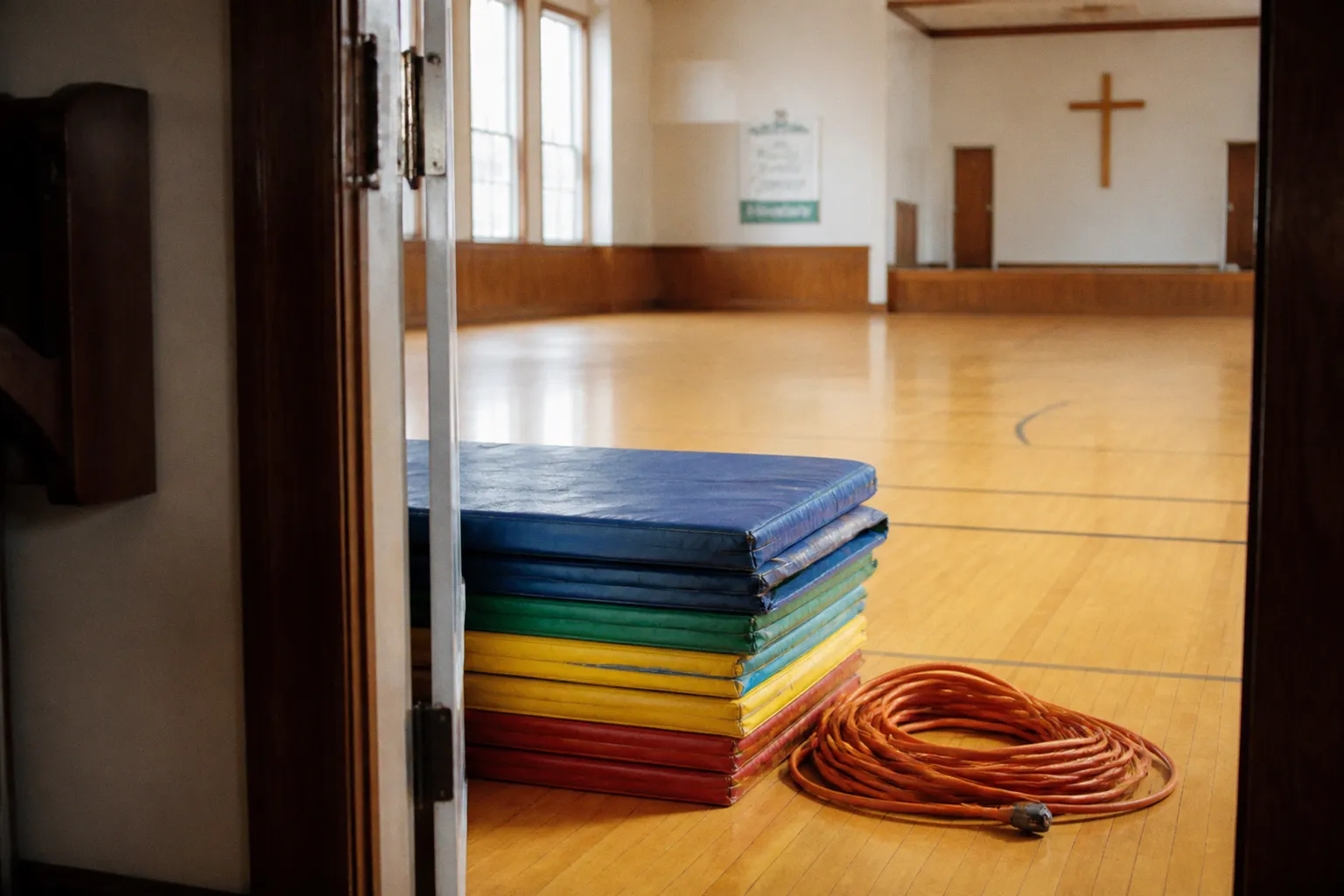
It does mean your congregation cannot treat safety as an informal add-on to Sunday worship, youth basketball, a walking group, or an outdoor prayer path.
The operating standard is simple: before you open the gym, playground, fellowship hall, trail, or fitness room, you need a documented plan for the space, the activity, the people, and the response when something goes wrong. A church recreation program should build community and support whole-person wellness. It should not depend on memory, goodwill, or one experienced volunteer who happens to know where the first-aid kit is stored.
This church recreation program safety checklist gives your team a deployment sequence. Use it for parish sports ministry planning, church fitness program setup, seasonal events, and recurring wellness activities.
Start with the program, not the equipment
The first mistake churches make is buying equipment before defining the program. A set of cones, a few exercise mats, or a portable goal does not create a safe ministry. The activity determines the risk, staffing, space, supervision, and emergency response.
Write a one-page program brief before scheduling the first session. Keep it practical. Include:
- Purpose: youth recreation, adult fitness, family activity, spiritual wellness walks, grief support movement, or another defined use.
- Participants: children, older adults, families, visitors, people with mobility limitations, or mixed groups.
- Activity level: low-impact walking, structured exercise, competitive sport, free play, or outdoor recreation.
- Location: indoor room, gym, playground, parking area, lawn, trail, or public space.
- Schedule: one-time event, weekly program, seasonal series, or open gym.
- Supervision model: staff-led, volunteer-led, shared leadership, or self-directed access.
- Capacity: the number of people the room, activity, and supervision team can handle safely.
- Emergency access: the route for responders, the location of exits, and the person responsible for meeting emergency services.
Do not use the same plan for a toddler play hour and an adult strength-training class. Do not use the same staffing model for a short prayer walk and a high-energy youth tournament. The program brief is your first control point. It prevents scope creep and forces the team to identify what will actually happen in the space.
Build an activity risk profile
For each activity, identify the most likely failure points. A church fitness program setup may involve falls, overexertion, improper equipment use, dehydration, or a participant’s undisclosed medical condition. A playground session may involve falls, unsafe surfaces, damaged hardware, inadequate supervision, or a child leaving the designated area. An outdoor prayer path may involve poor lighting, uneven ground, extreme weather, traffic, insects, or participants becoming separated from the group.
Use this working matrix during planning:
| Program type | Primary exposure | Staffing focus | Setup priority | Emergency concern |
|---|---|---|---|---|
| Youth sports | Collision, falls, dehydration, behavior incidents | Active supervision and clear boundaries | Equipment condition, floor or field inspection, water access | Injury response and parent notification |
| Church fitness class | Strain, falls, overexertion, medical events | Qualified activity leader and participant monitoring | Ventilation, clear floor, equipment spacing | Medical response and AED access |
| Playground or family play | Falls, entrapment, unsafe surfaces, child separation | High-visibility adult supervision | Protective surfacing, gates, hardware, sightlines | Injury response and controlled pickup |
| Spiritual wellness walk | Weather, uneven terrain, separation, traffic | Route leader and sweep volunteer | Route audit, signage, communication plan | Missing participant, weather, medical event |
| Open recreation | Mixed abilities, unsupervised use, equipment misuse | Door monitor and floor supervisor | Access control, storage, posted rules | Injury, conflict, unauthorized access |
This is not bureaucracy. It is capacity building. Your team cannot manage risks it has not named.
A recreation ministry becomes dependable when the safety plan works even when the most experienced volunteer is absent.
Complete the facility walk-through before every launch
A facility inspection should happen on a regular schedule and before major events. Assign the task to a named person. Record the date, findings, corrective action, and sign-off. A checklist without ownership becomes decoration.
Walk the entire route participants will use—not only the activity area. Inspect the entrance, parking area, hallways, restrooms, storage rooms, changing areas, stairs, exits, and outdoor approaches.
Interior inspection
Look for conditions that can create an immediate injury or delay an emergency response:
- Wet or slippery floors, especially near entrances, drinking fountains, kitchens, and restrooms.
- Winter moisture and tracked-in snow. Use appropriate mats and replace them when they become saturated or unstable.
- Torn flooring, loose thresholds, lifted carpet edges, broken tiles, or uneven transitions.
- Blocked corridors, stacked chairs, loose cables, and equipment left in walking paths.
- Doors that do not close, latch, or open as intended.
- Emergency exits that are locked, obstructed, poorly marked, or difficult to reach.
- Burned-out lights in entrances, stairs, hallways, parking areas, and activity rooms.
- Damaged ceiling tiles, visible leaks, roof concerns, or water staining.
- Electrical panels and breakers that are accessible, labeled, and free of stored materials.
- Extension cords and power strips that are appropriate for the load and protected from foot traffic.
- Restrooms with working lights, dry floors, accessible supplies, and clear routes.
- Storage areas where heavy items could fall or where sports equipment could roll into a path.
A roof inspection may not feel connected to a children’s recreation program. It is. A leak can create a slippery floor, damage electrical systems, close an exit route, or force a last-minute relocation into an unsuitable room.
Outdoor inspection
Complete an exterior neighborhood audit around the facility and the activity footprint. Review the space during the time of day when the program will operate. A parking lot that looks clear at noon may have poor visibility after an evening class.
Inspect:
- Parking areas, sidewalks, ramps, curbs, and transitions.
- Exterior lighting at entrances, pathways, parking areas, and gathering points.
- Trees and shrubs that obstruct visibility or create concealed areas.
- Branches that could fall, low limbs that could strike participants, and damaged fencing.
- Gates, latches, playground boundaries, and access points.
- Puddles, drainage problems, loose gravel, mud, ice, or unstable ground.
- Signage for visitor entry, restrooms, emergency exits, and restricted areas.
- Vehicle movement near play areas and walking routes.
- Trash containers, broken glass, abandoned objects, and animal waste.
- Outdoor electrical equipment, hoses, irrigation covers, and maintenance tools.
Trim trees and shrubs where they create hiding spots or block sightlines. Use vandal-resistant motion lighting at entrances where appropriate. Keep visitor-entry and emergency-exit signage visible. These actions improve both daily operations and response speed.
Do not rely on a camera to solve a visibility problem. Cameras may support an incident review, but they do not replace lighting, supervision, controlled access, or an unobstructed line of sight.
Inspect equipment by function and failure mode
Equipment inspections should go beyond asking whether an item looks clean. Ask what happens if it fails while someone is using it.
Create separate inspection categories for fixed equipment, portable equipment, fitness equipment, playground equipment, and storage systems.
Fixed and sports equipment
Check goals, nets, bleachers, basketball backboards, volleyball standards, wall fixtures, benches, and any anchored item. Confirm that:
- Anchors and fasteners remain secure.
- Padding is intact and properly attached.
- Wheels, folding mechanisms, and locking pins work correctly.
- Portable goals cannot tip during normal use.
- Nets do not create entanglement hazards.
- Bleachers open, close, and lock as designed.
- Wall-mounted equipment has no exposed sharp edges.
- Equipment is not being used for a purpose outside its design.
Remove defective equipment from service immediately. Mark it clearly. Do not place a damaged item in a storage corner with the intention of repairing it later. That creates a second hazard: someone will eventually return it to use.
Fitness equipment
For exercise classes, inspect resistance bands, mats, steps, weights, stationary bicycles, treadmills, balance tools, and storage racks. Look for cracked plastic, frayed straps, loose handles, unstable bases, damaged pedals, exposed wires, and worn nonslip surfaces.
Set clear spacing between stations. Participants need room to step away, recover balance, and move without striking another person. Keep water access available. Maintain ventilation appropriate to the room and activity level.
Your instructor should offer modifications. A wellness ministry should not pressure participants to match the strongest or fastest person in the room. The practical objective is sustained participation, not a performance standard that increases injury risk.
Playground inspection
Playground equipment requires a dedicated process. Inspect platforms, slides, swings, ladders, climbing structures, guardrails, handholds, bolts, chains, and moving parts. Look for pinch points, sharp edges, protruding hardware, broken boards, gaps, and worn surfaces.
Public playground safety guidance recommends at least 12 inches of protective loose-fill surfacing—such as wood chips, mulch, sand, or pea gravel—around play equipment. The protective surface should extend at least 6 feet in all directions around the equipment. Treat this as a baseline for inspection, not as permission to stop reviewing the surface. Loose-fill material can shift, compact, wash away, or become contaminated.
Record surface depth in several locations, especially under swings, at slide exits, and below climbing features. Check the perimeter after storms or maintenance work. If the protective surface does not meet the intended depth or coverage, close the affected equipment until the correction is complete.
Keep a written playground log with:
1. Inspection date and time.
2. Name of the inspector.
3. Equipment reviewed.
4. Surface condition.
5. Defects or hazards found.
6. Immediate controls, such as closure or added supervision.
7. Repair owner.
8. Date of resolution.
Storage is part of safety
A recreation room often becomes a storage room by accident. That is an operational failure. Store heavy items low. Secure tall shelving. Keep balls, bats, weights, and loose parts contained. Separate clean activity equipment from maintenance supplies and chemicals.
Use a sign-out process for portable equipment. It does not need to be complicated. A clipboard or shared digital log can show who removed an item, where it is being used, and whether it was returned in usable condition.
Build a volunteer deployment system
Your congregation may have enthusiastic volunteers. Enthusiasm is not a staffing plan.
Assign roles before the program begins. One person should not simultaneously lead an activity, monitor the entrance, supervise children, locate supplies, and call emergency services. That arrangement fails as soon as an incident occurs.
For a basic program, define these functions:
- Program lead: owns the schedule, activity plan, and overall decisions.
- Safety lead: completes the inspection and stops use when a hazard appears.
- Activity leader: directs the exercise, sport, walk, or recreation period.
- Participant monitor: watches behavior, boundaries, and individual needs.
- Access monitor: controls entry, pickup, restricted areas, and visitor movement.
- First-response lead: retrieves first-aid supplies, AED access information, and emergency contacts.
- Communications lead: contacts families, staff, emergency services, or congregation leadership as directed.
- Sweep or route volunteer: stays at the back of an outdoor group and confirms that no participant is left behind.
For small activities, one person may carry more than one role. Document the combination. The point is not to create unnecessary staffing layers. The point is to prevent invisible responsibility.
Screen and brief volunteers
Your volunteer vetting process should match the program. Any congregation working with children or vulnerable adults needs a consistent process that follows applicable organizational and local requirements. The safety plan should include volunteer and staff vetting protocols, not just equipment inspection.
Before deployment, every volunteer needs a short briefing covering:
- The program purpose and boundaries.
- Who may enter the space.
- Participant registration or attendance procedures.
- Child pickup and release procedures.
- How to report an injury, concern, or missing participant.
- Where the first-aid kit and AED are located.
- Which exits to use.
- Who has authority to pause or close the activity.
- How to communicate with families and emergency responders.
- What information volunteers should not promise or disclose.
Use plain language. A volunteer should be able to repeat the emergency procedure after the briefing. If the instructions require a long handbook to understand, the deployment plan is too complicated.
Create an emergency response plan that people can execute
Your emergency plan must address at least four categories: medical events, fire, severe weather, and active threats. The congregation may also need procedures for a missing child, utility failure, hazardous material, or a participant experiencing a mental health crisis.
Write each response as a short sequence of actions. Use names and locations, not vague phrases such as “handle the situation appropriately.”
Medical response
Post the emergency address and the exact room or outdoor location. Confirm that volunteers know how to call emergency services and how to direct responders from the street to the incident.
Your plan should identify:
- Who calls emergency services.
- Who stays with the participant.
- Who clears space and manages bystanders.
- Who retrieves the first-aid kit.
- Where the AED is located.
- Who meets responders at the entrance.
- Who contacts the designated family member or guardian.
- Who documents the incident afterward.
Invite the local fire department for an annual inspection. Maintain accessible, functional fire extinguishers and AEDs during church events. Do not store these items behind locked doors, crowded furniture, or equipment stacks.
Do not promise that volunteers will diagnose injuries or provide care beyond their training. The response plan should support prompt professional assistance.
Fire and evacuation
Identify every exit used by the program. Walk the route with volunteers. Confirm that doors open, pathways remain clear, and participants can move without crossing the hazard area.
For children’s programs, establish a meeting location and an accountability method. Attendance must travel with the group or remain accessible to the designated leader. Do not send volunteers back into the building to search for missing equipment or people unless emergency responders direct them to do so.
Severe weather
Outdoor programs require a weather decision point. Establish who monitors conditions, how far in advance the program will pause, and where participants will relocate. Make the decision before the situation becomes urgent.
A walking group needs a route-specific plan. Identify shelter options, transportation needs, communication coverage, and participants who may require assistance. A cancellation message should include the new plan, not merely announce that the activity is off.
Active threat and security incidents
The plan should define how the congregation will respond to a hostile person, threatening behavior, or unauthorized entry. Keep instructions direct and consistent with local emergency guidance. Volunteers need to know how to secure participants, communicate with leadership, and contact emergency services.
Outdoor visibility matters here. Trim vegetation that creates concealment. Maintain lighting at entrances. Keep visitor routes and restricted areas clearly marked. Control access during children’s activities instead of allowing unrestricted movement through the building.
The goal is not to turn the church into a fortress. The goal is to reduce confusion during a high-pressure event.
Safety is not a theological statement. It is a set of prepared actions that protect people when attention, time, and information are limited.
Design supervision around the participant, not the room
A room can be clean and still be poorly supervised. Set boundaries that participants can see and volunteers can enforce.
For children, define where they may play, where adults may stand, and how pickup works. Use a controlled release process. Do not rely on a child’s verbal claim that a different adult is allowed to take them home.
For older adults or participants with disabilities, review surfaces, lighting, seating, restroom access, and transition points. A church recreation program should offer practical modifications without making participants ask repeatedly for basic accommodation.
For outdoor groups, use a lead-and-sweep model. The lead volunteer sets the pace and confirms route changes. The sweep volunteer remains behind the group. Count participants at departure, major stops, and return.
For fitness classes, include a clear warm-up, a recovery period, hydration access, and options for different ability levels. The activity leader should watch for unusual fatigue, dizziness, distress, or unsafe technique. Participants should know that stopping is acceptable.
For grief support ministries and faith-based wellness walks, emotional safety also requires structure. Explain the pace, distance, quiet periods, conversation expectations, and how someone can step away. Do not force disclosure or group sharing. A spiritual wellness activity can support mental well-being without turning volunteers into counselors.
Use a simple opening and closing checklist
Your team needs a repeatable rhythm. The opening check confirms that the program can start. The closing check prevents hazards from being left for the next group.
Before participants arrive
- Confirm the program lead and safety lead.
- Review attendance, registration, and any relevant participant information.
- Walk the entrance, activity area, restrooms, exits, and outdoor route.
- Remove damaged equipment from service.
- Check floors, lighting, mats, cords, gates, and storage areas.
- Confirm first-aid supplies and AED access.
- Place water, signage, cones, and boundaries.
- Unlock only the areas needed for the program.
- Secure chemicals, tools, maintenance supplies, and unrelated rooms.
- Brief volunteers on roles, capacity, weather, and emergency procedures.
During the activity
- Keep the designated supervisor in an active observation position.
- Maintain clear sightlines.
- Enforce boundaries consistently.
- Watch entrances and participant movement.
- Pause the activity when equipment, weather, behavior, or medical conditions create a serious concern.
- Record injuries, near misses, damaged equipment, and repeated behavior problems.
- Keep walkways and emergency routes open.
- Reassess the space after a spill, collision, storm, or unexpected change in attendance.
After the activity
- Account for participants and confirm authorized pickup where applicable.
- Return equipment to its designated storage location.
- Remove defective items from circulation.
- Dry wet surfaces and address spills.
- Check restrooms, hallways, exits, and outdoor areas.
- Lock restricted rooms and secure access points.
- Review incidents and near misses with the program lead.
- Assign corrective actions with a person and deadline.
- Update the next session’s briefing if the conditions have changed.
A near miss belongs in the log. If a participant almost trips over a loose cable, the cable is already a program problem. Waiting for an injury creates avoidable exposure and teaches volunteers to ignore warning signs.
Make the checklist operational, not ceremonial
Many churches create a safety document once, file it, and never use it again. That is not a safety system. Build the checklist into the ministry calendar.
Use three review levels:
Every session
Review the activity space, equipment, access points, exits, first-aid supplies, and staffing assignments. This is the short operational check.
Monthly or at a defined recurring interval
Review equipment condition, storage, lighting, signage, volunteer coverage, incident patterns, and participant capacity. Look for trends. Three minor slips in the same location point to a facility issue, not three unrelated accidents.
Annually
Invite the local fire department for an inspection. Review fire extinguishers, AED access, emergency contacts, severe-weather procedures, volunteer vetting, and insurance or risk-management requirements. Confirm that the program still matches the facility and the people using it.
A basic checklist does not replace an official insurance risk assessment, legal advice, municipal codes, health requirements, or fire-department instructions. It gives your team a working control layer so those formal requirements can be implemented rather than forgotten.
Common setup failures to eliminate
The same breakdowns appear across recreation programs. Fix them at the system level.
1. The program has no capacity limit.
The team continues accepting participants after the space, equipment, or supervision model is overloaded. Set a workable capacity and define who can pause registration.
2. The emergency kit exists but nobody knows where it is.
Post its location. Include it in every volunteer briefing. Check supplies on a defined schedule.
3. A damaged item stays available.
Remove it, label it, and assign a repair owner. A verbal warning is not a control.
4. The entrance is open without an access plan.
Assign an access monitor. Define visitor movement and restricted areas.
5. The activity leader is treated as the entire safety team.
Separate coaching from observation, access control, first response, and communication whenever attendance requires it.
6. Outdoor programming ignores the route after the first audit.
Reinspect after storms, construction, landscaping, seasonal darkness, or changes in traffic.
7. Volunteers receive information but no practice.
Walk the evacuation route. Locate the AED. Practice the communication chain. Familiarity reduces hesitation.
8. The congregation tracks injuries but not near misses.
Record both. Near misses show where the next incident may occur.
9. The plan uses abstract language.
Replace “respond as needed” with a named role, a location, and the next action.
10. The ministry treats wellness as only physical exercise.
Include emotional boundaries, accessibility, rest, hydration, and referral pathways for mental health concerns. Whole-person ministry requires whole-person planning.
Put the plan into a one-page deployment packet
Your volunteers should not search through a long policy document while participants are arriving. Keep a one-page operational summary at the activity location and in the program lead’s phone or binder.
Include:
- Program name and meeting location.
- Date, time, and responsible leaders.
- Emergency address and entrance.
- First-aid kit and AED locations.
- Exit routes and meeting point.
- Attendance and pickup process.
- Weather cancellation or relocation procedure.
- Key phone numbers.
- Capacity limit.
- Equipment closure process.
- Incident reporting location.
- Authority to pause or end the activity.
Keep the detailed policy separately. The deployment packet is the field tool. It should help a new volunteer act correctly within the first few minutes.
Your congregation can also use signage to reduce repeated instructions. Post rules for equipment use, entrance points, pickup, restroom direction, restricted areas, and emergency exits. Use accessible text and high-contrast placement. Signs should support the volunteer team, not replace it.
Final position: launch only what you can operate well
Church recreation programs create tangible community impact. They give children a safe place to play, help adults build healthier routines, create low-pressure opportunities for fellowship, and connect spiritual practice with daily life. But the ministry succeeds only when the operating system is ready.
Before launch, your congregation should be able to answer five questions without hesitation:
- Who owns the program?
- Who inspects the space?
- Who supervises participants?
- Who responds to an emergency?
- Who closes the loop after a hazard or incident?
If the answer to any question is unclear, stop the deployment and fix the assignment.
Start with the program brief. Complete the indoor and outdoor walk-through. Inspect equipment by function. Vet and brief volunteers. Confirm emergency access. Set capacity. Log defects and near misses. Review the system after every event and formally each year.
That is how a church recreation program becomes safe enough to trust, organized enough to scale, and welcoming enough to serve the whole community.