Church Prayer Gardens: Practical Steps to Build One
There is a particular kind of weariness that settles into the people who walk through our doors.
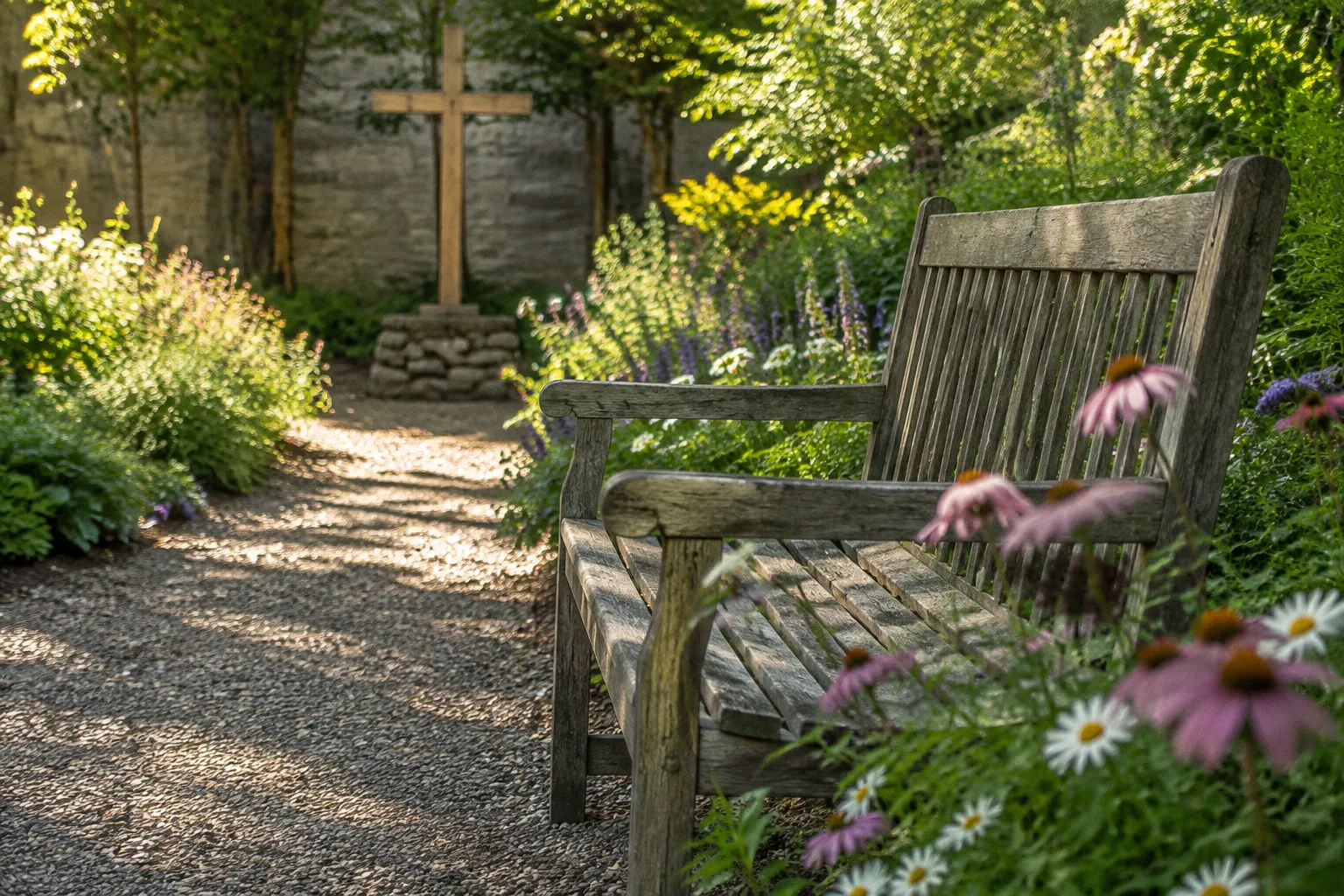
It shows up in the shoulders of a caregiver who has not slept through the night in months, in the hands of a member sitting alone after a funeral, in the quiet of a young adult who has stopped praying aloud because the words feel too thin for what they carry. Across ministry settings, this kind of spiritual fatigue is well documented among pastors, lay caregivers, and longtime church members alike. A church prayer garden, when it is planned with intention, is not a landscaping project. It is one pastoral response to that weariness — an outdoor room where the body's need for fresh air meets the soul's need for a place to set things down.
The work that follows assumes no landscape architect on retainer and no six-figure budget. It assumes a small group of people in your congregation willing to begin where most worthwhile church work begins: by paying attention. What follows is a six-month framework for moving from a felt need to a dedicated outdoor space.
Building a Foundation: Vision and Community Listening
Before anyone breaks ground, the project needs a question answered honestly: why this garden, and for whom? The temptation is to leap toward the visible — a bench, a statue, a fence. Green ministry guidelines consistently recommend the opposite, beginning projects with prayer and active community listening rather than immediately starting construction tasks. This is not sentimentality. It is the difference between a garden that serves your people for decades and one that quietly goes weedy after a dedication Sunday.
A practical starting posture looks like this:
- Convene a small core team, often three to seven people, who will hold the vision across the months it takes to see it through.
- Spend the first meetings listening rather than designing. Ask members, staff, and visitors what kind of stillness they need. Grief support, outdoor prayer, simply a shady place to sit after a hard appointment — these are different shapes of need.
- Write a one-paragraph purpose statement in plain language. "Our garden will be a place of quiet prayer for members in grief and a walking path for those who pray with their bodies." If the sentence cannot be written simply, the vision has not yet clarified itself.
The purpose statement becomes the filter for every later decision. When a donor offers a statue that does not match your purpose, you can say yes to the gift and no to the placement with grace. When the team disagrees about plant choices, the purpose brings them back to the center.
Site Selection and Environmental Stewardship
Once the purpose is clear, the land calls for attention. The choice of site quietly shapes everything else — what will grow, who can reach it, and how it feels to walk there alone.
Most flowering plants do best with six to eight hours of direct sunlight each day, so observe the candidate space across a full day before committing. Notice where the morning light falls, where afternoon shade arrives, and where water pools after rain. Equally important are the human factors: proximity to the building (close enough for elders and parents with small children to reach, set far enough away to feel apart), visibility from the street (a garden no one can see is harder to invite people into), and accessibility (paths wide enough for wheelchairs and walkers, with resting points along the way).
A short evaluation table can help the team compare sites honestly:
| Evaluation Factor | What to Look For | Notes |
|---|---|---|
| Sun exposure | 6–8 hours of direct sun for flowering areas | Plan shaded seating nearby |
| Accessibility | Level paths, firm surface, short walk from entrance | ADA compliance is a ministry, not a checkbox |
| Drainage | No standing water after rain | Raised beds can solve poor soil |
| Visibility | Aware of the space from building or street | Visibility invites use |
| Acoustic feel | Slightly removed from traffic noise | Even a hedge softens sound |
| Soil condition | Tested pH and texture | Local extension office can help |
The ground will tell you what it can hold — your task is to listen long enough to hear it.
Designing for Reflection: Labyrinths and Focal Points
A prayer garden takes shape around the kind of attention it invites. Some gardens ask the body to slow down and walk. Some ask the visitor to sit and stay. Some invite the eye to follow a particular story. Knowing which posture your congregation needs will guide the design.
Three focal point traditions have proven especially generative for church settings:
- A prayer labyrinth. A single winding path that leads to a center and back out again. For those who pray by walking, the labyrinth gives shape to the movement — there is no decision to make, only the next step.
- A Mary Garden with Stations of the Cross. A contemplative walk that follows Christ's path to crucifixion. Often planted with white flowers and herbs associated with the Virgin Mary. This tradition has deep roots in Lutheran and Catholic devotional practice and offers a structured prayer for those walking through grief.
- A Garden of Gethsemane layout. A quieter, more intimate arrangement featuring a kneeling Christ sculpture among olive-pattern plantings, designed for personal intercession and the kind of prayer that happens with one's face to the ground.
Each of these is a complete devotional language. Trying to combine all three in a small space usually produces clutter rather than depth. Choose the one that matches the purpose statement, or commit to phasing the design across several years so each element can mature into its own voice.
Around the focal point, the rest of the garden should fall into supportive quiet: low-maintenance beds, a few benches placed where the light is gentle, perhaps a small water feature whose sound softens the edge of nearby conversation.
Curating a Biblical Landscape: Plants and Symbolic Flora
For many Lutheran congregations, the chance to plant what Scripture itself names carries its own kind of meaning. A "Bible Garden" populated with plants mentioned in the text — chamomile, chicory, crocus, dill, lilies, sage, and grapevines among them — turns a casual stroll into a slow reading of the Gospels and the Psalms.
A few cautions matter here. Climate hardiness zones vary widely across the country, and soil conditions will determine what truly thrives. Native plants, chosen well, often outperform biblical imports in a given region, and they ask less of the gardeners who maintain them. The point of a Bible Garden is not botanical accuracy but the resonance between plant and story. A native wildflower that holds the same color and the same season can carry the same meaning if the dedication walk names the connection aloud.
A layered approach tends to serve the prayer garden best:
- Trees and large shrubs to anchor the space, provide shade, and soften the boundary.
- Mid-height flowering plants to give the eye something to follow through the seasons, with attention to spring and autumn bloom.
- Herbs and low ground covers to invite touch and scent, which often reach a visitor before sight does.
- Edible plants where appropriate — a small grapevine or kitchen herb bed can connect the garden to communion and table fellowship.
Hold the plants lightly — they are not the destination, only the doorway.
From Planning to Planting: A Six-Month Implementation Timeline
Most successful church prayer gardens move from first conversation to dedication in roughly six months, sometimes longer when funds must be raised or seasonal planting windows intervene. A workable rhythm looks like this:
1. Months one and two — Discernment. Gather the team, complete the listening round, write the purpose statement, and identify two or three candidate sites. Close this phase with a written brief the congregation can read.
2. Month three — Site selection and design sketch. Walk the candidate sites at different hours. Settle on the location. Sketch the layout by hand or with simple software; a detailed landscape drawing is not required at this stage.
3. Months four and five — Grounding work and preparation. Clear the site, lay paths, install seating, prepare beds, confirm hardscape needs, and order plants. Many projects find that volunteer labor at this stage becomes its own ministry — a member who never attends a committee meeting will show up with gloves on.
4. Month six — Planting and dedication. Plant in the appropriate season for your region. Schedule a small dedication service that names the garden's purpose and invites the congregation to claim it as their own. Plan a follow-up event four to six weeks later, when the garden has settled in and people are ready to use it.
A dedicated team, modest materials, and a clear purpose will carry a project further than a large budget and an unfocused vision. Volunteer-led and modest-budget models are widespread across denominations, and they often outlast the more expensive projects because they belong to the people who built them.
A church prayer garden, finished, is not a finished thing. It will be weeded and pruned and replanted across many seasons. Members will mark anniversaries there. Children will learn the names of plants there. Someone, on a Tuesday afternoon no one planned for, will sit on the bench and weep — and find that the weeping has somewhere to land.
We build these gardens not because we have solved the human need for quiet, but because we have learned to honor it. The space we make outdoors becomes a small, faithful answer to the large, faithful questions our people carry inside.