Church Prayer Garden Setup: A Step-by-Step Guide
An outdoor prayer space for a church is not simply a landscaped corner with benches and religious symbolism. It is a ministry environment whose physical arrangement either supports prayer or competes with it.
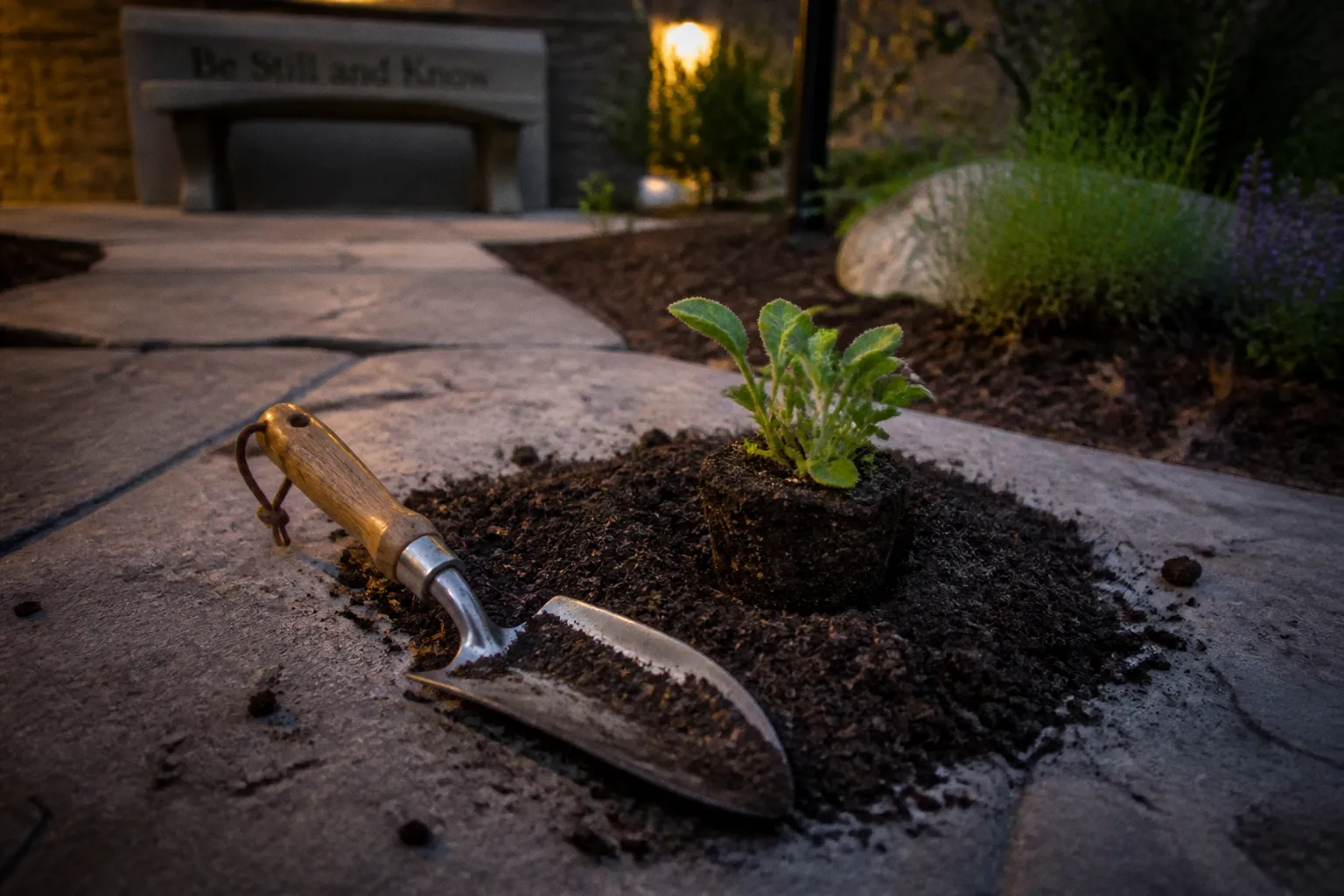
Site noise, path surfaces, seating, plant selection, signage, accessibility, maintenance, and theological framing all determine whether the garden functions as a usable extension of congregational life.
The most reliable approach is to treat the project as a coordinated framework rather than a collection of decorative decisions. A church prayer garden should provide a clear relationship between place, bodily movement, sensory attention, Scripture, and communal stewardship. The design may be modest, but its purpose must be defined before materials are purchased or planting begins.
1. Establish the Garden’s Ministry Function
The first stage in an outdoor prayer space setup for churches is not choosing plants. It is determining what the garden is expected to accomplish.
Churches commonly use outdoor prayer spaces for several overlapping purposes:
- Individual reflection before or after worship.
- Guided prayer through stations, Scripture readings, or visual prompts.
- Outdoor fellowship for small groups and congregational gatherings.
- Youth activities that connect Christian education with observation of creation.
- Pastoral care, including quiet spaces associated with grief support or mental-health ministry.
- Informal rest for members who may not participate easily in indoor programs.
- Seasonal worship or devotional activities conducted outside the sanctuary.
These purposes require different spatial arrangements. A garden intended primarily for silent prayer should not be organized like a fellowship patio. A prayer labyrinth will require a different footprint and circulation pattern from a Bible garden with multiple planting beds. A space intended for youth programming will need durable surfaces, clear boundaries, and supervision lines.
A useful planning statement should specify the principal function and the secondary functions. For example:
The garden will provide a quiet, accessible place for individual prayer and will also support small-group devotional use, youth instruction, and occasional outdoor fellowship.
That statement creates an administrative basis for later decisions. If a proposed feature does not serve the stated ministry function, it should not be included merely because it appears attractive in a catalog or in another congregation’s design.
Define the theological scope
A Lutheran prayer garden should be framed as a place that supports the hearing and meditation of God’s Word, prayer, thanksgiving, confession, vocation, and service to neighbor. It should not be presented as a sacramental replacement for the church’s worship life or as a spiritually superior alternative to congregational worship.
The garden may contain Scripture references, seasonal symbols, plants associated with biblical passages, or stations for prayer. These elements should direct attention toward Christian teaching rather than imply that the landscape possesses independent spiritual efficacy. The distinction is operationally important: the garden is a resource for ministry, not an object of devotion in itself.
A concise interpretive statement at the entrance can establish this framework. It may explain that the space is available for prayer, reflection, outdoor fellowship, and the contemplation of creation within the congregation’s Christian confession. Keep the language clear. A sign should orient visitors, not become an additional liturgical document.
2. Select a Site That Can Sustain Quiet Use
The ideal site combines relative quiet, reliable access, suitable sunlight, and manageable maintenance. These conditions rarely appear together without some compromise, so the site-selection process should rank them rather than treat them as isolated preferences.
Begin with an inventory of possible areas on church property. Record:
- Sources of noise, including traffic, mechanical equipment, parking areas, playgrounds, and frequently used entrances.
- Periods of direct sunlight and shade across the day.
- Existing drainage patterns and locations where water collects.
- The distance from accessible parking and building entrances.
- Visibility from the church, particularly if children or vulnerable adults will use the space.
- Existing trees, utility lines, irrigation systems, and underground infrastructure.
- The condition of current paths, curbs, steps, and changes in elevation.
- The relationship between the garden and neighboring property.
A location that appears quiet during Sunday morning worship may be unsuitable during weekday operations. Heating and cooling equipment, waste collection, school traffic, or neighboring commercial activity can materially alter the acoustic environment. Site observation should therefore take place at more than one time of day and, if feasible, on both worship and non-worship days.
Balance privacy with visibility
Complete seclusion is not always desirable. An outdoor prayer sanctuary design should provide enough visual separation for concentration without creating a space that cannot be observed or maintained. Dense vegetation, concealed corners, and unlit paths may reduce the garden’s practical usability even when they produce visual privacy.
The better arrangement is often a partially screened space with clear entrances, visible circulation, and seating that can be seen from an appropriate distance. Screening can be created with planting beds, trellises, low walls, or changes in orientation rather than tall barriers throughout the site.
This principle is particularly relevant when the garden will support youth activities, grief-support ministries, or pastoral conversations. The space should be peaceful without becoming operationally opaque.
Evaluate sunlight and drainage
Many standard outdoor plants require approximately six to eight hours of sunlight per day for strong growth, although individual species differ substantially. The garden’s planting plan must therefore follow the actual light conditions rather than a preferred plant list.
A site with partial shade may still be appropriate, but it will require shade-tolerant plants and a different visual structure. A site with intense afternoon sun may require seating shade, drought-tolerant planting, and materials that do not become excessively hot.
Drainage is equally consequential. Persistent standing water damages paths, weakens seating foundations, and eliminates plant options. Before construction, observe the site after rainfall and identify whether water can be redirected, absorbed, or safely conveyed. Do not assume that a visually level lawn is structurally prepared for paving or intensive planting.
3. Develop a Layout That Directs Attention
The garden’s layout should make its use understandable without requiring a staff member to explain every feature. Visitors should be able to identify where to enter, where to sit, how to move through the space, and how to engage with any prayer prompts.
A practical Christian prayer garden layout often contains four zones:
1. Arrival zone: The entrance, orientation sign, and a transition between ordinary church circulation and the prayer area.
2. Movement zone: A path, labyrinth, or sequence of stations that gives the visitor a defined physical route.
3. Reflection zone: Benches, individual seats, or small gathering areas for stationary prayer.
4. Stewardship zone: Planting areas, water access, storage, and maintenance circulation.
Not every garden requires four visibly separate areas. The distinction is functional. It prevents the common error of placing a bench, a plaque, and several plants in an undifferentiated space and then describing the result as a prayer garden.
Compare the principal layout options
| Layout | Primary use | Strengths | Operational limitations |
|---|---|---|---|
| Bible garden | Scriptural education and reflection | Connects plant life with biblical references and seasonal teaching | Requires careful labeling and continuing horticultural maintenance |
| Prayer stations | Guided individual or group prayer | Provides a clear sequence using Scripture, silence, sensory elements, or art | Signage and station content require periodic review |
| Prayer labyrinth | Slow, focused walking prayer | Uses movement to structure attention without requiring extensive written instruction | Requires sufficient space, a durable surface, and clear explanation |
| Patio seating area | Fellowship, conversation, and accessible rest | Supports small groups and informal congregational use | Can become a general social area unless prayer purposes are visibly integrated |
| Water or fire feature | Sensory focus and symbolic association | Introduces sound, reflection, or seasonal gathering potential | Adds safety, maintenance, and supervision requirements |
A church may combine these approaches, but combination should not become accumulation. Several poorly coordinated features make the space difficult to interpret and expensive to maintain. A smaller number of well-defined elements generally produces greater efficacy.
Use movement deliberately
Paths determine how the garden is read. A straight path communicates direct access and may suit a sequence of prayer stations. A circular path can support repeated walking and return. A labyrinth creates a more formal pattern in which the visitor follows a single route toward a central point and back out again.
The theological meaning should not be overstated. A labyrinth is a physical aid for attention and prayer, not a required Christian practice and not a substitute for instruction in Scripture. The same principle applies to sensory features. Fragrance, texture, water, and visual art can support meditation, but they should remain subordinate to the garden’s stated ministry purpose.
4. Select Plants With Biblical and Practical Criteria
Biblical plants can provide a coherent interpretive structure, but a plant’s scriptural association does not automatically make it suitable for the local site. Climate, light, soil, maintenance capacity, toxicity, fragrance, and seasonal performance remain decisive.
Plants commonly associated with Bible gardens or Christian traditions include lilies, sage, grapevines, chamomile, hostas, and Rose of Sharon. These references can be used in several ways:
- A plant may be linked to a direct biblical reference.
- A plant may represent a Christian tradition, season, or theological theme.
- A plant may contribute a sensory quality, such as fragrance or distinctive texture.
- A plant may support a teaching theme, such as cultivation, hospitality, harvest, or stewardship.
The interpretive label should distinguish between these categories. A plant explicitly named in Scripture is not the same as a modern species selected because its common name resembles a biblical term. Precision is preferable to decorative overstatement.
Build a plant schedule
Before purchase, create a simple plant schedule that records the reason each species is included and the conditions it requires.
| Planting record | Information to document |
|---|---|
| Plant name | Common name and, where useful, botanical identification |
| Interpretive purpose | Biblical reference, Christian association, seasonal use, or sensory function |
| Light requirement | Full sun, partial shade, or shade tolerance |
| Water requirement | Regular, moderate, or low after establishment |
| Mature size | Expected height and spread to prevent crowding |
| Maintenance profile | Pruning, division, replacement, or seasonal cleanup |
| Visitor interaction | Whether the plant is fragrant, textured, edible, thorny, or unsuitable for touching |
| Placement | Border, central bed, station, entrance, or container |
This schedule also protects the church from an avoidable administrative failure: installing plants that look appropriate during the first season but cannot be sustained by the available volunteers or grounds staff.
Treat sensory elements as controlled design components
Prayer stations frequently incorporate sensory elements such as scented oils, leaves, natural textures, or art materials. These can make a station more accessible to visitors who engage through touch, smell, or visual composition, but they require boundaries.
Scent should not be so concentrated that it affects people with sensitivities. Loose materials should be stored or replaced rather than left to deteriorate in public areas. Art supplies should be non-toxic and weather-appropriate. Any edible planting should be clearly identified and separated from plants that should not be consumed.
The garden should also accommodate visitors who prefer a low-stimulation environment. Sensory richness is not the same as sensory excess. A well-designed space provides options rather than imposing one mode of prayer on every visitor.
A prayer garden succeeds when its physical elements reduce procedural confusion and increase the availability of focused prayer; ornament without a use framework is merely additional maintenance.
5. Design Prayer Stations With Clear Prompts
Prayer stations are effective when each one has a defined purpose, a manageable amount of text, and a physical arrangement that supports the intended activity. A station may include a bench, a Scripture reference, a short prayer prompt, a tactile object, or a writing surface. It should not require visitors to decode an elaborate system.
A useful sequence may include:
1. Attention: A station that invites the visitor to notice place, breath, sound, or season without presenting mindfulness as a self-contained spiritual technique.
2. Confession: A prompt focused on recognition of sin, failure, or burdens within the congregation’s theological language.
3. Thanksgiving: Space for naming gifts, people, daily provision, and signs of God’s care.
4. Intercession: A place to pray for the sick, grieving, community, civic leaders, neighbors, and the wider church.
5. Vocation: A prompt connecting prayer with responsibilities in family, work, congregation, and public life.
6. Sending: A final station that directs the visitor back toward ordinary service and communal worship.
The sequence does not need to imitate the order of the Divine Service, and it should not be presented as a mandatory liturgical rubric unless the congregation has formally adopted one. The stations are a devotional resource. Their wording should be reviewed by the pastor or another authorized theological leader before installation.
Keep signage durable and intelligible
Outdoor signs face weather, fading, vandalism, and changing ministry priorities. Use short headings and concise instructions. A visitor should understand the action associated with a station without reading a paragraph of theological explanation.
For example, a sign may direct visitors to sit, read a selected passage, name people for whom they are praying, or leave a written intercession in a designated container. If written prayers are collected, the church must establish a process for handling, protecting, and disposing of them. Do not create a public practice that produces confidential material without assigning stewardship responsibility.
Where the garden is used by multiple age groups, wording should be understandable to children while remaining theologically responsible for adults. Visual symbols can supplement text, but symbols should not be relied upon as the sole instruction.
6. Make Accessibility Part of the Initial Design
Accessibility is not a later modification to be added after the aesthetic plan is complete. It determines the path width, surface selection, slope management, seating arrangement, signage, and access to each principal feature.
The garden should be planned so that visitors can reach more than the entrance. If the only accessible route ends at a single bench while the labyrinth and prayer stations require steps or uneven ground, the space is not functionally accessible.
Design attention should include:
- Firm, stable walking surfaces that remain usable in wet conditions.
- Routes that avoid abrupt level changes and unnecessary narrow passages.
- Seating with varied heights and back support where feasible.
- Rest points distributed along longer paths.
- Signage positioned for readable viewing without forcing visitors into planted beds.
- Sufficient maneuvering space near stations and seating.
- Clear transitions between paved areas, gravel, mulch, and lawn.
- Consideration for visitors with visual, hearing, mobility, or sensory limitations.
Crushed granite, paved paths, and other surface treatments can all be useful, but each has consequences. Loose aggregate may shift under mobility devices and can spread into planting beds. Paving may improve stability but increase heat and runoff. Lawn can appear welcoming but becomes unreliable in wet conditions and may not provide an even route.
The correct material is therefore determined by the garden’s users, climate, maintenance capacity, and route hierarchy. A local accessibility professional or qualified site designer may be appropriate when the property has significant elevation changes or when the garden will serve a large public ministry.
7. Connect the Garden to Congregational Life
A church prayer garden becomes durable when it is integrated into existing ministry rather than treated as an isolated capital project. Its uses should appear in the congregation’s calendar, educational program, pastoral-care practices, and stewardship structure.
Possible applications include:
- A seasonal prayer walk during Lent, Easter, Advent, or harvest observances.
- Confirmation or youth sessions focused on Scripture, creation, and vocation.
- A quiet outdoor area available during fellowship events.
- A place for small-group prayer with published guidelines.
- A setting for grief-support or remembrance practices that respect pastoral confidentiality.
- A congregational workday combining gardening with instruction about stewardship.
- Outdoor devotional materials that change with the church year.
- A supervised activity for children involving observation, drawing, or plant care.
The governing question is whether the garden has an assigned ministry owner. The pastor may oversee theological content, but daily administration may belong to a property committee, grounds team, wellness ministry, or designated coordinator. Without clear responsibility, signage deteriorates, paths become obstructed, and the garden gradually becomes an ornamental area with no defined congregational use.
Establish use policies without making the space bureaucratic
A few operational rules are sufficient:
- Identify whether the garden is open whenever the church grounds are open or only during specified hours.
- State whether private events require reservation.
- Prohibit unsafe fires, unauthorized planting, and disposal of materials in water features.
- Establish a process for reporting damage, hazards, or accessibility barriers.
- Clarify whether photography, food, pets, or amplified sound are permitted.
- Provide contact information for pastoral or administrative questions.
The policy should be visible enough to protect the space but not so extensive that it contradicts the garden’s purpose. A simple entrance sign can direct visitors to the principal expectations while keeping detailed procedures in the church office or website.
8. Plan Stewardship Before Installation
Outdoor prayer garden ideas often fail at the maintenance stage because the congregation plans the opening day but not the ordinary week that follows. A garden is a continuing stewardship commitment involving labor, supplies, water, repairs, and seasonal decisions.
Create a maintenance calendar that assigns recurring tasks:
1. Weekly observation: Remove litter, inspect paths, note damaged signs, and identify hazards.
2. Seasonal planting care: Weed, prune, divide, mulch, and replace plants according to local conditions.
3. Path and seating inspection: Look for erosion, loose aggregate, unstable benches, sharp edges, and slippery surfaces.
4. Water management: Confirm that irrigation, hoses, drainage channels, or water features operate safely.
5. Signage review: Replace faded, illegible, or theologically outdated material.
6. Feature-specific care: Maintain labyrinth surfaces, fire-pit boundaries, art materials, or storage containers.
7. Annual ministry review: Determine which elements are used, which are ignored, and which require redesign.
The work can be distributed among volunteers, but volunteer enthusiasm should not be mistaken for a maintenance system. Assign primary and secondary stewards, establish a modest supply process, and document tasks so that responsibility survives staff or committee changes.
Avoid features that exceed the stewardship capacity
A water feature may require cleaning, winterization, and safety controls. A fire pit may require supervision, fuel management, and compliance with local rules. A large planting program may require irrigation that the property does not currently provide. A labyrinth may be inexpensive to conceptualize but difficult to repair once its surface erodes.
The appropriate question is not whether a feature can be installed. It is whether the congregation can maintain its efficacy as a ministry resource over multiple seasons.
9. Use a Phased Implementation Framework
A phased project allows the congregation to establish the garden’s core function before adding complex elements. It also provides an opportunity to observe actual use rather than relying entirely on committee assumptions.
Phase one: minimum viable prayer space
Begin with:
- A clearly defined and accessible site.
- Stable seating.
- A maintained path or small circulation loop.
- A modest planting bed.
- One orientation sign.
- A limited number of prayer prompts.
- An assigned maintenance steward.
This phase can establish whether the selected location is sufficiently quiet, whether visitors understand the intended use, and whether the maintenance burden is realistic.
Phase two: interpretive and devotional expansion
After the first operating period, the church may add:
- Additional biblical plants.
- More prayer stations.
- Seasonal signage.
- A small labyrinth.
- Shade structures or improved seating.
- Sensory elements designed for specific age groups or ministries.
- Materials for guided outdoor prayer.
Expansion should follow observed needs. If visitors use the seating but do not follow the existing stations, the response may be clearer prompts rather than additional stations. If the area is frequently used for conversation, the church may need to distinguish the prayer zone from the fellowship zone.
Phase three: broader ministry integration
A mature garden may support scheduled programming, educational materials, youth activities, outdoor worship components, or partnerships with local ministries. At this stage, the congregation should review safety, supervision, access, insurance, and municipal requirements applicable to the specific features. Universal permit or budget assumptions are not reliable because local conditions vary.
Typical Planning Errors
Several recurring errors reduce the usefulness of church prayer gardens.
Treating appearance as function
A visually attractive space can still lack a clear entrance, usable seating, or an intelligible prayer practice. The garden should be evaluated by what visitors can do there, not only by how it appears in photographs.
Using theological labels without interpretive precision
Calling every religiously associated plant biblical weakens the credibility of the garden. Labels should distinguish direct scriptural references from later Christian symbolism, common-name associations, and general themes of creation or stewardship.
Building around an inaccessible centerpiece
A beautiful central feature does not justify forcing visitors through unstable gravel, stairs, or narrow passages. The main devotional elements should be connected by routes that a broad range of visitors can use.
Installing too many stations
A long sequence of plaques can turn prayer into an information-management task. Each station should have one principal action. Reduce text, increase clarity, and allow silence to remain part of the design.
Assigning maintenance to nobody
The garden is congregational property, but property ownership is not the same as operational responsibility. Name the steward, publish the maintenance rhythm, and review the garden as part of ordinary church administration.
Confusing private reflection with isolation
A prayer garden should support quiet without creating hidden or unsafe spaces. Visibility, lighting where appropriate, and clear boundaries are part of responsible outdoor ministry design.
The governing measure is not the number of features installed, but the consistency with which the congregation can keep the space accessible, intelligible, and useful.
Final Planning Sequence
For a church deciding how to build a prayer garden at church, the order of operations is more important than the size of the property. Proceed through the following sequence:
1. Define the garden’s principal ministry function and theological scope.
2. Survey candidate sites for noise, sunlight, drainage, access, visibility, and existing infrastructure.
3. Select a layout that matches the intended use: Bible garden, prayer stations, labyrinth, seating area, or a controlled combination.
4. Prepare a plant schedule based on biblical interpretation, local growing conditions, sensory considerations, and maintenance capacity.
5. Design paths, seating, signs, and stations as an integrated accessibility system.
6. Assign responsibility for theological review, property administration, horticultural care, and safety reporting.
7. Begin with a manageable first phase rather than installing every proposed feature.
8. Review actual use across seasons and revise the garden according to evidence.
9. Add programming only when the space can support it without compromising access or quiet.
10. Document the maintenance and stewardship framework so the garden remains viable through staff and volunteer changes.
An outdoor prayer space becomes a credible ministry resource when its theology, physical design, and administration reinforce one another. The plants establish a living setting, the paths give movement a structure, the stations clarify devotional use, and the stewardship plan preserves the whole arrangement. The result need not be elaborate. It must be deliberate, accessible, and maintained according to the purpose the congregation has assigned to it.