Church House Westminster Integrates Traditional Carol Services into Corporate Festive Packages
Church House Westminster, the Grade II listed assembly hall in central London, has added Christmas carol services to its 2026 festive events programme, according to Prestige Events Magazine.
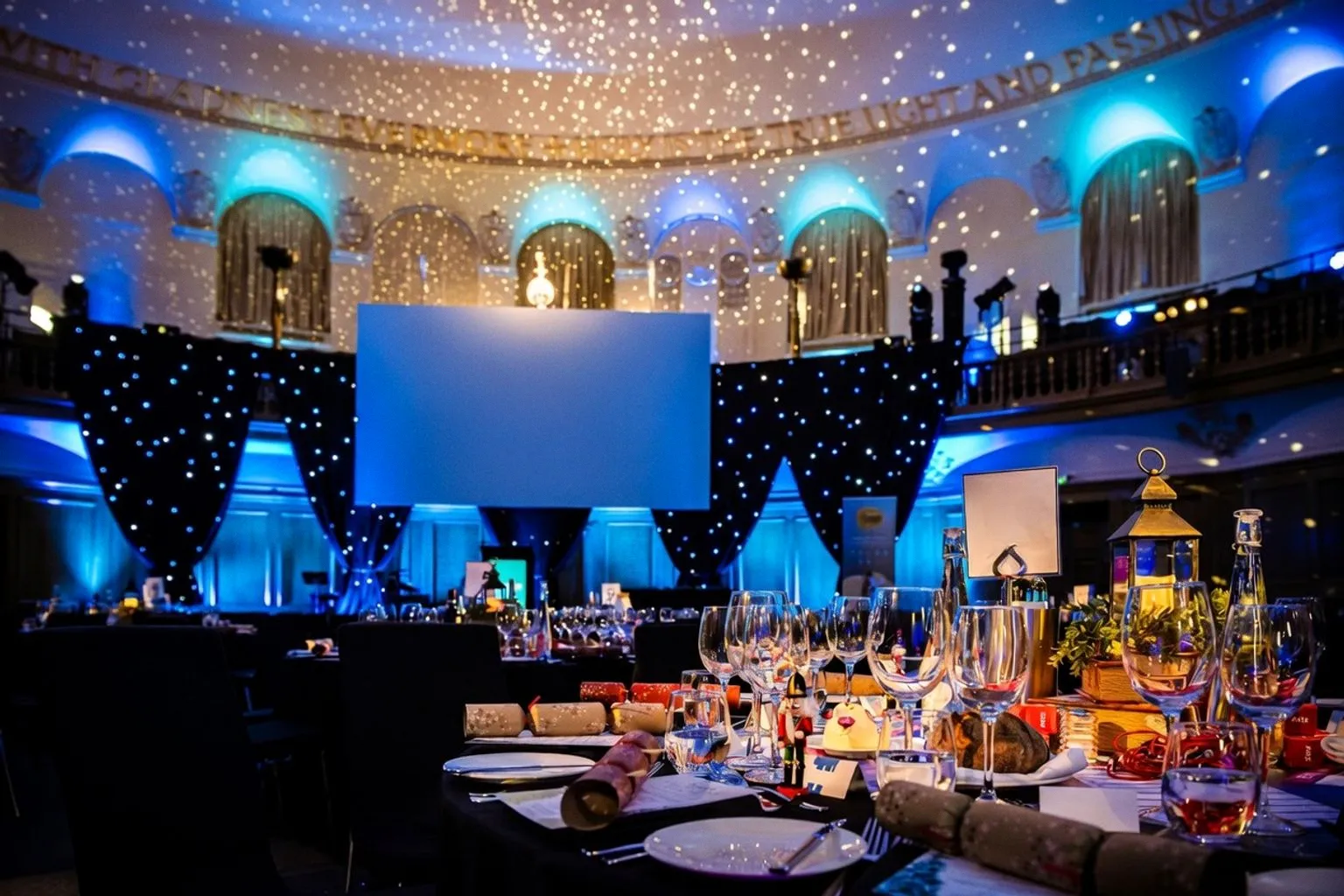
The addition reframes a familiar liturgical form — the congregational carol service — as an institutional product marketed to corporate and conference clients, a development worth examining for its structural and pastoral implications.
The Package as Rubric
The carol service sits inside a wider Christmas collection that includes festive seated dinners for up to 372 guests in the Assembly Hall and standing receptions for up to 250 in the Hoare Memorial Hall. The standard seated package comprises room hire, a Prosecco reception, a three-course menu from catering partner Searcys, two hours of unlimited house wine, Prosecco, beer and soft drinks, plus tea, coffee, mince pies and festive petit fours. Pricing begins at £110 plus VAT per person with a 100-guest minimum; the standing format starts at £89 plus VAT per person on the same minimum.
The carol element is positioned as a pre-event reception rather than a standalone evening gathering, designed to fold a moment of shared reflection into the final hours of a conference day. Optional upgrades include Champagne receptions, themed cocktails, additional canapés, and late-night food. The in-house AV setup permits organisations to impose their own branding and colour palette, while Searcys develops seasonal menus from locally sourced ingredients and accommodates dietary requirements.
Context and Operational Pattern
The report attributes the launch to a measurable shift across the venue's 2025 festive season: organisers increasingly extended business events with networking drinks or smaller dinners rather than scheduling separate December functions. Marina Papadopoulou, Head of Business Development and Marketing at Church House Westminster, was cited in the report as framing the approach as deliberately simple and adaptable, with flexibility in both budget and presentation treated as a deliberate feature.
For Lutheran communities evaluating comparable seasonal outreach, three structural considerations follow from the Church House model. First, the liturgical form is positioned as additive rather than central — a frame around a secular gathering rather than the gathering itself. Second, the service assumes a level of cultural fluency with carols as a shared vocabulary, a presumption that holds in most Anglican and Lutheran contexts but warrants testing in congregations less rooted in that musical tradition. Third, the pricing structure illustrates how sacred ritual can be packaged alongside hospitality without collapsing into a single product; the carol remains nominally free to attendees, even when the broader event carries a per-head cost.
What to Watch
If the model proves durable into 2027, the structural question becomes whether parishes and diocesan bodies will treat carol services as missionary instruments in their own right — occasions that draw outsiders into a worship space on their own terms — or whether they will continue to function primarily as a courtesy layer atop secular programming. The Church House precedent, at this stage, suggests the latter.