Bringing Worship Beyond the Sanctuary: Lessons from the Allen County Fair Gospel Tent
According to Hometown Stations, a Gospel Tent has brought Christian music and devotional programming to the Allen County Fair, integrating worship-style content into a regional civic gathering.
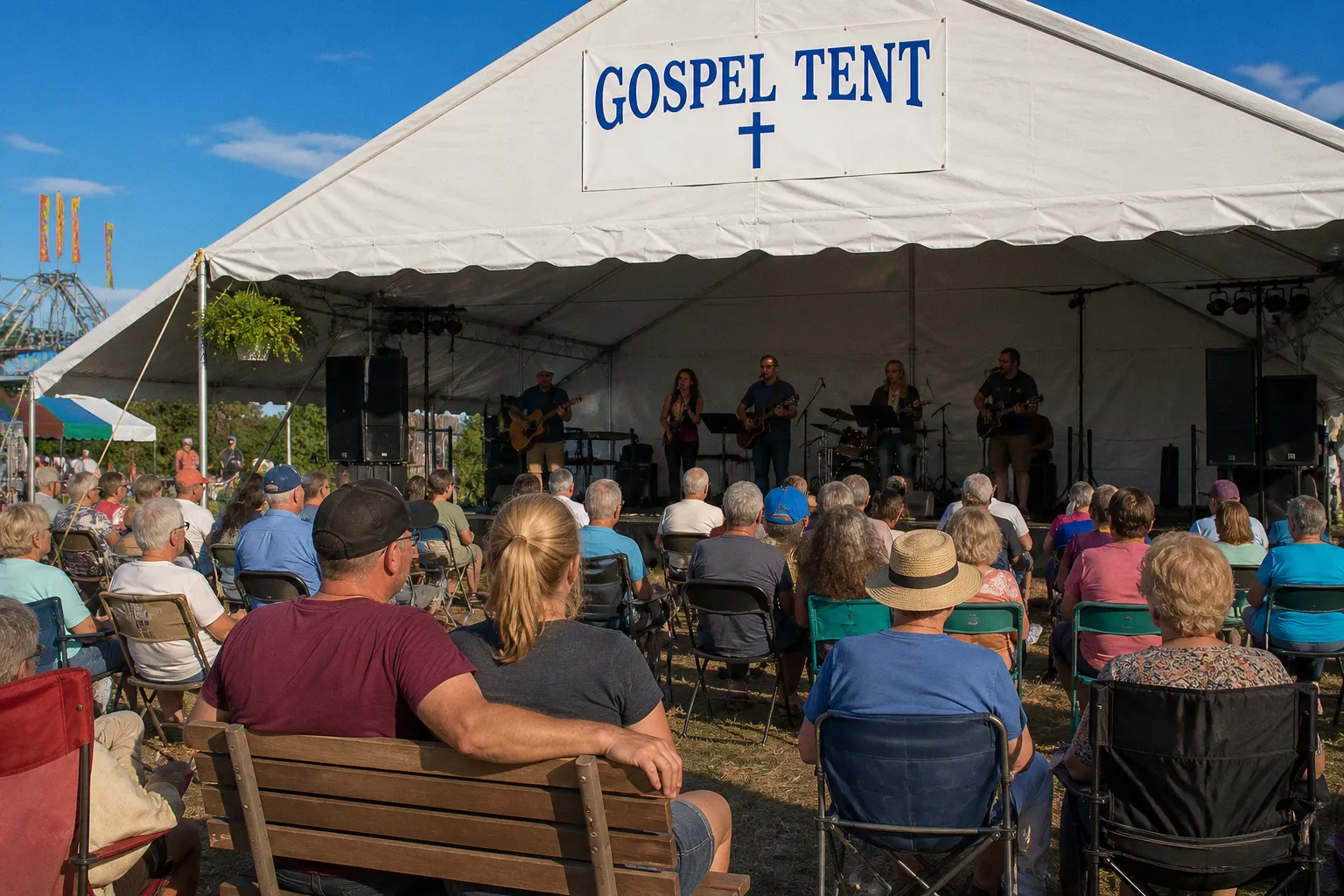
The notice, carried under that outlet's news desk on August 25, 2026, positions the event as an outreach initiative operating outside conventional sanctuary infrastructure. For Lutheran worship planners and congregational leaders, the occurrence warrants closer analytical attention rather than casual notice.
Format and Reporting Limits
The available source material is limited to a headline-level notice. Hometown Stations provides no documented details regarding performing artists, scheduled service times, denominational affiliation of the organizers, or attendance projections. Consequently, any categorical claims about liturgical structure, musical repertoire, or theological emphasis would exceed the evidentiary base. Readers monitoring similar reports should treat the notice as confirmation of occurrence and intent, not as a full program description.
A practical first step for parish administrators tracking such events is to verify the originating organization directly through the fair administration or the reporting outlet before repurposing any descriptive content for internal communication. Without that verification, the event's doctrinal posture and musical character cannot be assumed from the genre label alone.
Why a Secular Venue Matters Liturgically
Placing organized Christian music under a tent at a county fair establishes a distinct liturgical category: a public, transient worship-adjacent gathering embedded within a non-religious commercial setting. This configuration differs structurally from sanctuary worship, from outdoor revival meetings, and from parachurch concerts in established venues. Several elements warrant note:
1. The civic-fair context imposes audience heterogeneity; listeners cannot be presumed to share confessional commitments.
2. The tent framework functions as a portable sanctuary substitute rather than a permanent consecrated space, raising questions about the application of standard liturgical rubrics.
3. Music-centered programming suggests a primary reliance on affective worship modes, in contrast to the Lutheran customary emphasis on word and sacrament.
4. The event's short tenure at the fair grounds constrains sustained pastoral follow-up, shifting most catechetical responsibility back to local congregations.
These structural features do not invalidate the event but clarify its theological-administrative classification for outside observers.
Points to Track Going Forward
Three concrete items merit monitoring by Lutheran church leaders and worship committees:
- Organizational identity. The body responsible for the Gospel Tent should be identified through local fair administration or the reporting outlet, enabling assessment of doctrinal alignment with Lutheran confessional standards.
- Musical catalog. The repertoire employed will determine whether the event approximates Lutheran musical traditions or follows primarily evangelical-charismatic stylistic conventions. Published setlists, where available, offer the most direct evidence.
- Adjacent programming. Related reporting from late August 2026 — including a Christian music segment at the Corn and Apple Festival per CHVN Radio — indicates a broader pattern of seasonal festival-stage worship that Lutheran congregations and circuits should observe systematically.
Until further documentation emerges, the Allen County Fair Gospel Tent should be recorded as a confirmed but minimally detailed occurrence, with substantive liturgical evaluation deferred to the release of program specifics.