Blending Ancient Liturgy and Modern Devotion at Denver’s Wilderness Eucharist
By Episcopal News Service's reporting, St.
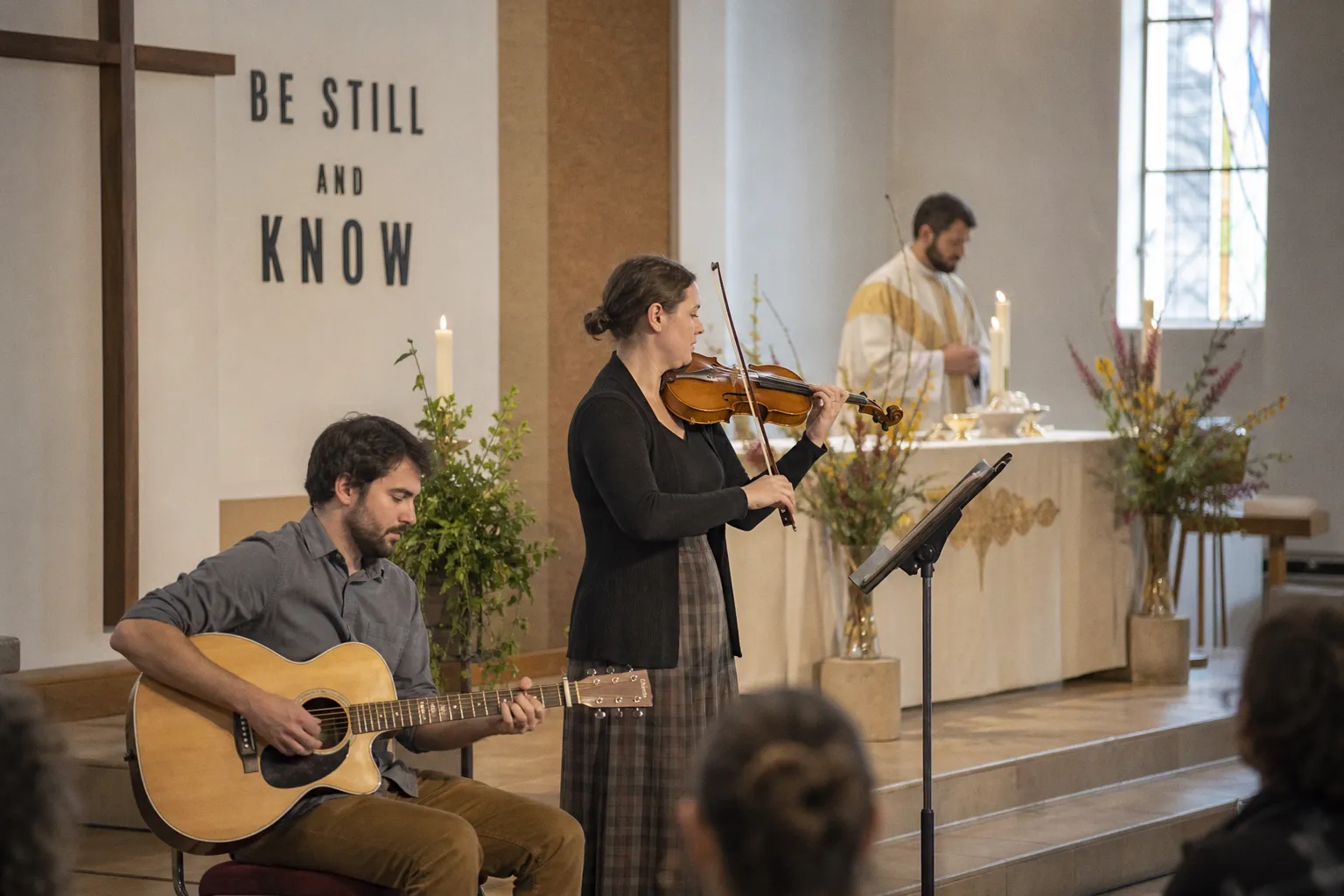
John's Cathedral in Denver has structured its evening "Wilderness" Eucharist around season-specific collects and a rotating liturgy that pairs historic prayer texts with contemporary devotional practices. The service, in continuous operation since the early 2000s, offers a documented framework for Lutheran congregations evaluating how to retain classical liturgical substance while accommodating worshippers whose schedules or sensibilities resist Sunday-morning formality.
Architecture of the Service
The Wilderness operates on three interlocking structural principles. First, the ordering of worship tracks the liturgical calendar rather than the secular calendar, with collects and readings revised each week to correspond to the assigned Gospel. Second, the nave is converted into a network of interactive prayer stations, each tied to the lectionary text and rotated weekly; one recent configuration featured an icon of St. John the Baptist, wafers, and wooden tasting spoons for honey, anchoring the experience in Mark 1:6. Third, the sermon is followed by an explicit dispersal: the preacher announces, "It is our tradition at 'The Wilderness' to wander this space," inviting the assembly to move through the stations rather than remain seated.
The service's name carries two layers of historical weight. The parish was originally constituted as St. John's Church in the Wilderness in the 1860s, when Colorado was still a territory and the nearest Episcopal church lay more than 700 miles east in Kansas. The title also carries a scriptural anchor in Isaiah 40:3, framing the gathered assembly as participants in the prophetic call to "prepare the way of the Lord."
Points of Transfer for Lutheran Practice
Three elements warrant direct evaluation by Lutheran worship committees.
1. Seasonal collects as the binding structure. The Wilderness's commitment to weekly re-set readings and prayers demonstrates that liturgical variety and structural coherence are not mutually exclusive. Lutheran parishes accustomed to the three-year lectionary can test whether expanding the propers—introit, collect, Scripture lessons—produces comparable engagement without sacrificing catholic continuity.
2. Sensory catechesis through stations. The use of icons, tactile objects, and taste elements parallels the Lutheran emphasis on physical sacramental presence. A modified station cycle keyed to a portion of the catechism could serve as both instruction and devotion, provided the materials are reviewed each week to prevent doctrinal drift.
3. Dispersal as catechetical action. The post-sermon directive to "wander this space" converts the nave into a teaching instrument. Lutheran congregations observing the liturgy of the Word in similar settings may find that assigning specific stations to specific portions of the catechism produces measurable retention, particularly among youth and visitors.
Operational Caveats and Indicators
The Wilderness depends on a named volunteer body—the Wilderness Guild, currently co-chaired by long-time parishioner Maria Dameron—to plan the stations and prepare the liturgy each week. The model assumes sustained lay leadership and consistent preparation time. Congregations attempting to replicate the structure without a comparable stewardship pipeline will likely observe rapid erosion of the prayer stations and a quiet return to passive pew-and-pulpit arrangements.
The cathedral's 2,000-plus member roster provides a demographic base that smaller Lutheran parishes cannot match. Rural and small-membership congregations may need to combine a modified station model with a simplified office, such as weekly Vespers or Compline, where the seasonal restraint of the historic hours already accommodates experimental elements.
Lutheran worship leaders tracking this development should observe three indicators over the coming months: whether the Wilderness Guild maintains its current volunteer throughput, whether the prayer-station inventory continues to rotate without duplication, and whether the cathedral formalizes any training materials that would lower the barrier for transfer to smaller parishes.