Christian Mindfulness Groups: A Step-by-Step Setup Guide
Christian mindfulness group setup steps should begin with governance and theological definition, not with meditation techniques.
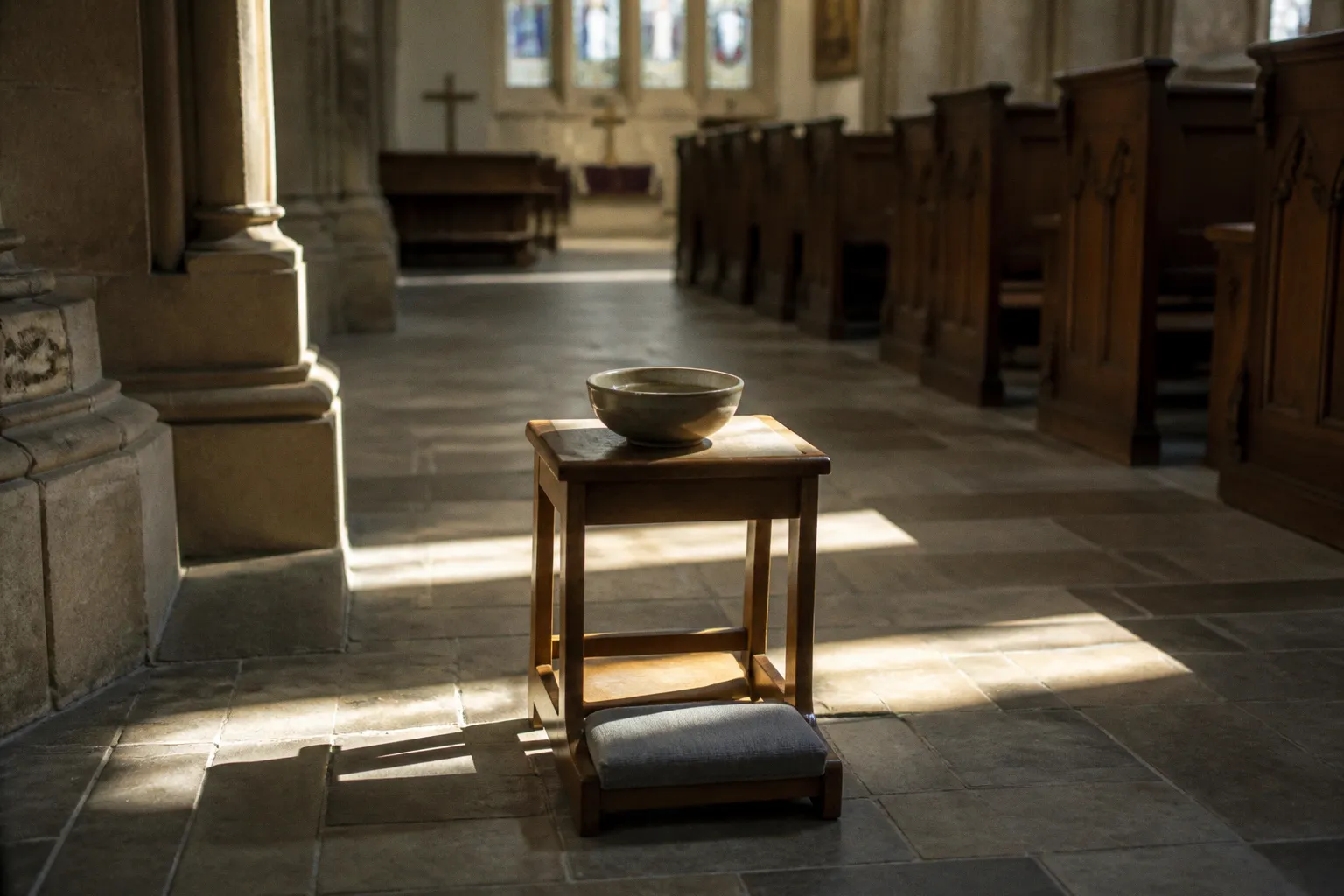
A congregation can schedule a quiet hour, distribute devotional material, and call it a ministry; that does not yet establish a coherent Christian meditation group. The ministry requires a stated purpose, pastoral alignment, defined practices, and operational rules that protect both theological clarity and participant welfare.
In a Lutheran setting, the central distinction is between a practice that directs attention toward God’s promises in Christ and a practice that treats inward calm as the primary spiritual objective. Christian meditation may involve stillness, silence, bodily awareness, and attentive breathing, but its framework remains Christ-centered and grounded in Scripture. The group is not a clinical therapy session, a generic wellness class, or an adaptation of another religious system with Christian vocabulary added afterward.
A Christian mindfulness group is soundly organized when its practices serve the ministry of the Word rather than compete with it.
1. Establish a biblically grounded vision before scheduling meetings
The first administrative task is to define what the group exists to do. A vague purpose statement creates predictable confusion: some participants will expect stress reduction, others will expect Bible study, and others will expect a confidential support group. These aims may overlap, but they are not interchangeable.
A workable purpose statement should identify four elements:
- The theological center: attention is directed toward God’s presence and promises in Christ.
- The primary resources: Scripture, prayer, Christian meditation, and the congregation’s established worship life.
- The intended benefit: greater attentiveness in prayer, more disciplined engagement with Scripture, and a structured setting for mutual support.
- The limits of the ministry: the group does not provide psychotherapy, crisis intervention, diagnosis, or individualized pastoral counseling unless those services are separately arranged.
A Lutheran congregation should also determine how the group relates to worship, catechesis, pastoral care, and existing small groups. Christian mindfulness should not be presented as a substitute for the Divine Service, preaching, the Sacraments, or ordinary pastoral oversight. It is better understood as a supplementary discipline that can assist members in making deliberate space for prayer and scriptural reflection.
Secure leadership alignment
A new ministry should receive explicit approval from the appropriate pastor, governing board, council, or ministry committee before public promotion begins. Leadership alignment is not merely a procedural requirement. It establishes accountability and clarifies who may make decisions when the group encounters theological, pastoral, or safeguarding concerns.
The approval process should answer the following questions:
1. Who is the accountable leader?
Identify the pastor, staff member, or lay ministry leader responsible for the group’s scope and conduct.
2. Who facilitates each meeting?
A facilitator may guide the schedule without functioning as a spiritual authority or mental health professional.
3. What materials are authorized?
Review meditation teachings, Scripture selections, devotional resources, and any language concerning healing, anxiety, trauma, or mental health.
4. How are pastoral concerns escalated?
Establish a procedure for referring participants to the pastor, a qualified counselor, emergency services, or another appropriate resource.
5. How will the ministry be evaluated?
Set a review point after several meetings, using attendance, participant feedback, adherence to the framework, and pastoral observations rather than vague impressions of success.
The phrase “Christian mindfulness” may be understood differently across congregations. Some members will associate mindfulness with secular wellness programs; others will assume that any use of silence is theologically suspect. The congregation should therefore publish a short description that defines the practice positively and states what it is not.
Distinguish the two principal forms of Christian meditation
Christian meditation generally operates through two broad modes:
- Active meditation: the participant slowly considers a biblical text, phrase, image, or doctrinal theme, allowing its meaning to shape prayer and reflection.
- Stillness before God: the participant releases discursive analysis for a period of silence, returning attention gently to Christ or to a sacred word that expresses consent to God’s presence.
These forms should not be treated as rivals. Scripture contemplation supplies the content and direction of the practice; stillness provides a disciplined interval in which the participant is not required to produce continuous verbal thought. The facilitator’s task is to explain the difference without implying that one mode is spiritually superior.
2. Build the 60-to-90-minute meeting framework
A Christian meditation group benefits from a fixed liturgical rubric. Predictability reduces administrative friction and permits participants to give their attention to the practice rather than to the question of what happens next.
A standard meeting may follow this sequence:
| Segment | Approximate duration | Function |
|---|---|---|
| Arrival and opening prayer | 5–10 minutes | Establish the purpose of the gathering and settle the room |
| Scripture reading or brief teaching | 10–15 minutes | Provide biblical and theological orientation |
| Silent prayer or Centering Prayer | 20 minutes | Practice attentive stillness before God |
| Guided reflection or Lectio Divina | 10–15 minutes | Return to the scriptural text through structured contemplation |
| Faith sharing or questions | 15–25 minutes | Allow participants to describe their experience without advice-giving |
| Closing prayer and practical notices | 5 minutes | End the meeting clearly and identify follow-up needs |
The total duration will normally fall between 60 and 90 minutes. A shorter meeting can be suitable for an introductory session, while a longer meeting requires a clear reason; otherwise, the sharing period tends to expand without improving the ministry’s efficacy.
The three-step framework used by many Christian meditation groups is especially serviceable:
1. Teaching: present a brief explanation of Christian meditation, a biblical text, or a practical instruction.
2. Meditation: observe 20 to 30 minutes of shared silence.
3. Sharing or questions: allow participants to speak about their experience, understanding that no one is required to disclose personal material.
This sequence should remain stable across meetings. Topics may change, but the operational architecture should not. Frequent changes in timing, facilitator expectations, or discussion format make it difficult to determine whether the group is functioning as intended.
Prepare the physical and digital setting
The physical room should support silence without implying theatrical spirituality. Chairs arranged in a circle or semicircle permit visibility during discussion; a central table with a Bible or cross may establish a clear Christian reference point without turning the meeting into a staged environment. Lighting, temperature, accessibility, and the availability of water have practical consequences for concentration.
The facilitator should state whether participants may sit, stand, or change posture during silence. No single bodily position should be treated as a measure of spiritual seriousness. The group may use a timer, but the signal should be unobtrusive.
For online meetings, the same framework requires additional controls:
- Send the meeting link and expectations in advance.
- Ask participants to use a stable connection and a private location where possible.
- Explain whether cameras remain on during silence.
- Identify a method for private communication if a participant needs technical assistance.
- Keep the target membership at approximately six to eight participants so that sharing remains manageable and technical interruptions do not consume the meeting.
Online groups should not attempt to compensate for their limitations by adding more content. The smaller format is a stewardship measure: it preserves adequate time for each participant and gives the facilitator greater visibility into group conduct.
3. Use Centering Prayer and Scripture contemplation with precise instruction
The central practice must be explained in ordinary language before the first period of silence. Instructions that are too abstract produce unnecessary self-monitoring, while instructions that are too vague leave participants uncertain whether they are performing the exercise correctly.
A practical Centering Prayer framework
Centering Prayer generally begins with a brief opening prayer or Scripture reading, followed by a period of silence. Participants may select a sacred word or short phrase that represents their consent to God’s presence and action. The word is not a mantra used to produce a particular mental state. It serves as a simple point of return when attention becomes occupied by thoughts.
The four responses to distraction can be stated as follows:
1. Resist no thought.
Do not fight the appearance of memories, plans, sensations, or internal commentary.
2. Retain no thought.
Do not deliberately continue an emerging thought merely because it appears useful or interesting.
3. React to no thought.
Do not evaluate every distraction as success or failure.
4. Gently return to Jesus or the sacred word.
Resume the practice without self-rebuke and without attempting to force the mind into blankness.
This framework prevents a common error: treating silence as the achievement of a thought-free state. Christian prayer does not require the participant to manufacture mental emptiness. The discipline consists in returning attention, with measured consistency, to the stated object of prayer.
The facilitator should also explain that participants may stop, change posture, open their eyes, or speak privately with the facilitator if silence produces substantial distress. No practice should be imposed as a test of obedience.
Integrate Lectio Divina without turning it into free association
Scripture-based mindfulness exercises require a defined method. Lectio Divina can be adapted for a congregational group through four movements:
- Reading: hear a short passage read slowly, perhaps twice.
- Reflection: identify a word, phrase, or theological claim that receives attention.
- Prayer: respond to God through petition, thanksgiving, confession, or praise.
- Rest: remain quietly before God without attempting to produce further interpretation.
The selected passage should be short enough to permit attentive reading. A large quantity of text is counterproductive because it converts contemplation into coverage. The facilitator should also resist the tendency to treat every personal association as the meaning of the text. Participants may describe what the passage brought to mind, but the group should preserve the distinction between the biblical text, a theological interpretation, and a private application.
For a Lutheran congregation, this distinction is particularly useful. Scripture is not merely a stimulus for introspection. It bears witness to God’s work, exposes human sin, conveys the promise of the Gospel, and forms the life of the church. A contemplative practice that never returns to the text’s own claims has lost its scriptural framework.
4. Establish group guidelines for confidentiality and care
The group’s ground rules should be read aloud during the first meeting and made available in written form. A verbal statement alone is insufficient because participants will remember different portions of it, particularly when a difficult disclosure occurs.
The following rules provide a functional baseline:
- Confidentiality is required. Personal disclosures remain within the group, subject to applicable safeguarding and safety obligations.
- Use first-person language. Participants describe their own experience rather than diagnosing another person or making universal claims.
- Do not interrupt. Silence after a disclosure is preferable to an immediate response that redirects attention.
- Do not offer unsolicited advice. The group is not organized around fixing participants.
- Do not cross-talk. Extended exchanges between two participants should not displace the group’s structure.
- Participation is voluntary. No person is required to meditate, disclose personal information, or remain in a particular exercise.
- The facilitator may redirect the discussion. Redirection is an administrative function, not a judgment on the participant.
- Safety concerns are escalated. Confidentiality does not require a facilitator to ignore imminent risk, abuse disclosures, or serious mental health concerns.
The prohibition on unsolicited advice deserves particular attention. Prayer groups often move rapidly from listening to correction, explanation, or reassurance. This may appear pastoral but can undermine trust and place the facilitator in an unqualified counseling role. A suitable response to personal sharing is usually acknowledgment, a brief prayerful pause, or a transition that allows the person to continue without being managed by peers.
Confidentiality is not a mood established by goodwill; it is a rule that must be stated, repeated, and administered.
Define the relationship to mental health care
A Lutheran mental health small group may provide spiritual support, social connection, prayer, and a disciplined setting for reflection. It should not present itself as group psychotherapy unless it is separately designed, staffed, and represented as a clinical service.
The distinction should appear in the registration material and opening orientation. A participant experiencing persistent depression, suicidal thinking, severe anxiety, psychosis, trauma symptoms, or an inability to function may require professional care. The facilitator should maintain a current list of pastoral, counseling, medical, and emergency resources appropriate to the congregation’s location.
This boundary protects participants and the church. It also preserves the efficacy of the spiritual practice by preventing it from carrying claims that it cannot responsibly fulfill. Silence can support prayer; it is not a universal treatment for mental illness.
5. Manage membership, facilitation, and recurring administration
The group should have a defined enrollment method, even when attendance is free and informal. A basic registration process can collect contact information, accessibility needs, emergency considerations, and acknowledgment of the group guidelines. It should not demand unnecessary disclosure about mental health history or spiritual struggle.
A recurring ministry requires more than a competent first meeting. The facilitator should maintain a simple operating record containing:
- meeting dates and attendance;
- assigned facilitators;
- Scripture selections and teaching topics;
- incidents requiring pastoral follow-up;
- participant requests or accessibility concerns;
- review dates for the ministry’s leadership oversight.
These records should be handled with restraint. The group is not a clinical program, and the congregation should avoid creating detailed case files when a brief administrative note and pastoral referral are sufficient.
Select and prepare facilitators
The facilitator needs three forms of competence:
1. Theological competence: an ability to explain the Christ-centered purpose of the group and distinguish Christian meditation from secular or non-Christian frameworks.
2. Process competence: an ability to keep time, introduce silence, manage interruptions, and enforce the group’s rules without becoming authoritarian.
3. Pastoral judgment: an ability to recognize when a disclosure requires referral rather than group discussion.
Facilitator training should include a rehearsal of the full meeting framework. The leader should practice explaining the sacred word, introducing a 20-minute silence, handling a participant who speaks at length, and responding when someone requests advice about a serious personal problem.
A facilitator should not improvise doctrinal claims in response to difficult experiences. If a participant reports that meditation produced a vision, intense fear, or a perceived divine command, the leader should avoid validating the interpretation as fact. The appropriate response is to pause the group, consult pastoral leadership, and assess whether further participation is suitable.
Decide between open and closed enrollment
An open group permits new participants to enter at any meeting. This increases accessibility but requires repeated orientation. A closed group begins with a defined cohort and maintains membership for a set period. This improves continuity and may support deeper trust, but it creates a barrier for those who discover the ministry later.
A practical arrangement is to hold periodic introductory sessions for new participants while maintaining a regular group with a stable membership. This separates basic instruction from ongoing practice and prevents every meeting from becoming an explanation of the same concepts.
For in-person groups, the appropriate size depends on room, facilitation capacity, and the amount of sharing expected. For online meetings, six to eight participants is a useful upper target because the format is more vulnerable to delays, connection failures, and uneven speaking time. A larger group can be divided into smaller circles during discussion, but that introduces additional facilitation and safeguarding requirements.
Common setup failures and their corrections
Several recurring errors weaken Christian mindfulness programs before they have time to mature.
Treating the title as the theology
The label “mindfulness” does not establish the content of the ministry. A program can use Christian language while leaving its actual purpose undefined. The correction is a written purpose statement, reviewed by church leadership, that identifies Christ, Scripture, prayer, and the limits of the group.
Beginning with technique instead of governance
A facilitator may be enthusiastic about Centering Prayer but lack authorization, referral procedures, or a plan for difficult disclosures. The correction is to complete leadership alignment and safeguarding preparation before advertising the first session.
Equating silence with spiritual success
Participants may conclude that wandering thoughts demonstrate moral or spiritual failure. The correction is to teach the four responses to distraction and to state that the practice involves a gentle return, not the production of mental blankness.
Allowing sharing to become unstructured counseling
When participants respond to one another with advice, the meeting changes function. It becomes an improvised support forum with no reliable boundary. The correction is to enforce first-person sharing, prohibit unsolicited advice, and direct complex concerns to pastoral or professional care.
Overloading the meeting with content
A 60-minute group cannot sustain a long lecture, an extended meditation, a detailed Bible study, and unrestricted fellowship. The correction is to protect the central sequence: teaching, silence, and sharing. The liturgical rubric should govern the schedule rather than being displaced by the most talkative portion of the meeting.
Presenting Christian meditation as interchangeable with every mindfulness system
Christian meditation has a specific theological orientation. It may use attention, stillness, and bodily awareness, but it is not identical to secular stress management or Buddhist meditation. The correction is not polemic; it is accurate definition. Participants should know what the group practices and why.
A final framework for launch
A congregation can move from concept to implementation through the following order:
1. Draft a concise purpose statement grounded in Scripture and the congregation’s Lutheran identity.
2. Obtain approval from pastoral and governing leadership.
3. Select a facilitator and establish referral procedures.
4. Choose the meeting format, duration, membership model, and location.
5. Prepare the 60-to-90-minute rubric with teaching, silent prayer, and sharing.
6. Write the confidentiality and participation guidelines.
7. Announce the group with a clear description of its purpose and limits.
8. Conduct an orientation before the first sustained period of silence.
9. Review the ministry after several meetings and revise only where evidence supports revision.
The resulting group will be modest in scope, which is an administrative strength. It will not attempt to solve every problem associated with stress, grief, isolation, or mental health. Instead, it will provide a repeatable setting in which Christians can attend to Scripture, practice silence before God, and speak with one another under defined conditions of care.
That framework gives the ministry its proper efficacy. Christian mindfulness is not validated by novelty, atmosphere, or the intensity of individual experience. It is sustained by theological clarity, disciplined practice, responsible stewardship, and reliable integration into the life of the church.