The Liturgical Year as a Living Encounter with Christ’s Redemptive Work
According to Catholic Connect's coverage of Pope Leo XIV's 12 August general audience in St Peter's Basilica, the pontiff framed the liturgical year not as a retrospective catalogue of past events…
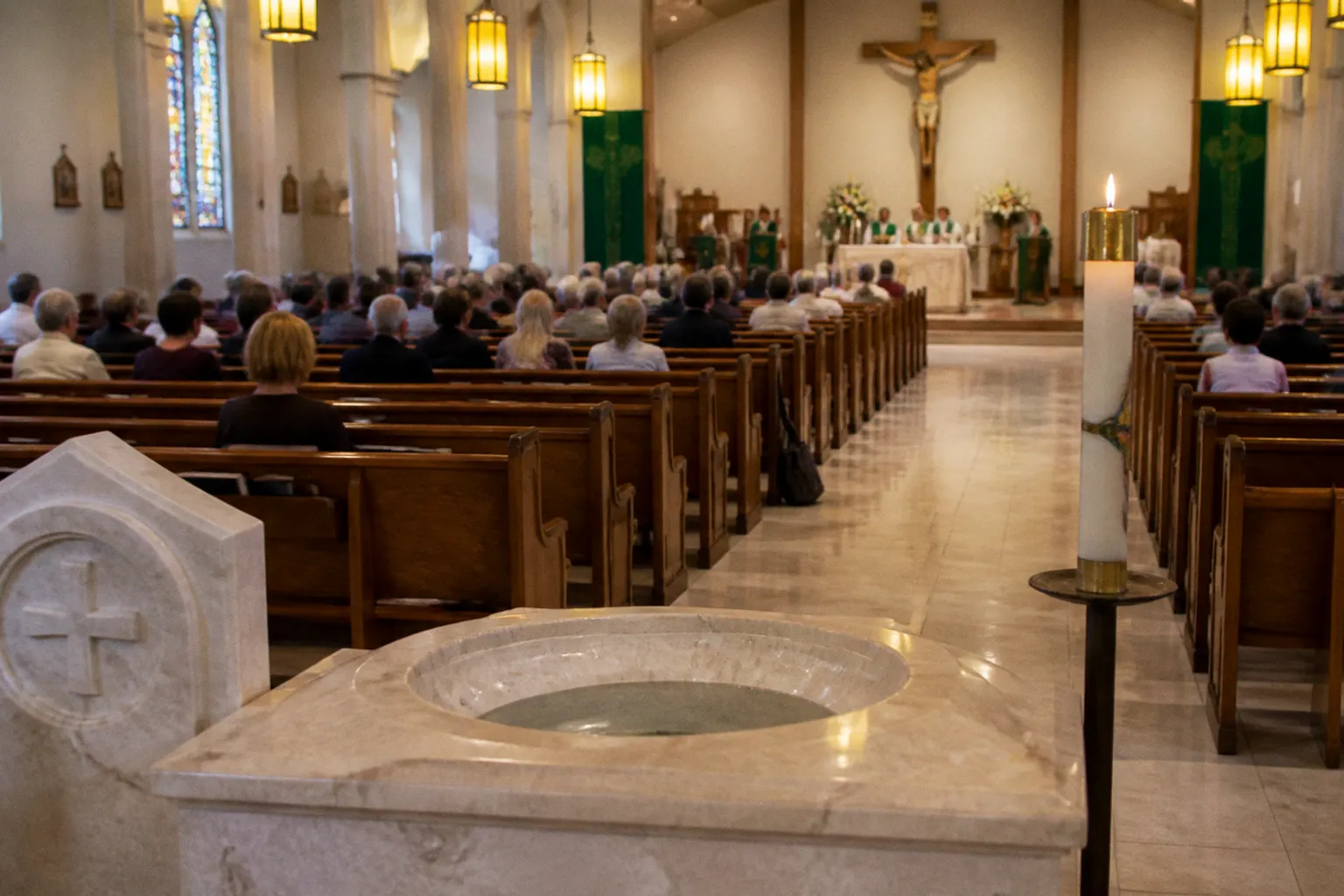
According to Catholic Connect's coverage of Pope Leo XIV's 12 August general audience in St Peter's Basilica, the pontiff framed the liturgical year not as a retrospective catalogue of past events but as an ongoing mechanism by which the saving work of Christ remains operationally present within the Church. Drawing on chapter five of Sacrosanctum Concilium as part of his continuing catechetical cycle, the Pope situated the year as a continual renewal of redemption rather than a commemorative archive, with Sunday functioning as its structural core.
The structural taxonomy of the year
The address maps a developmental lineage worth cataloguing for any tradition maintaining a sanctoral and temporal cycle. Pope Leo identifies Abbot Prosper Guéranger (1805–1875) as the figure responsible for stabilizing the term "liturgical year" in common ecclesiastical usage, then draws on Pius XII's definition of the year as the living presence of Christ in the Church. Two coordinates emerge from this baseline.
The weekly axis: Sunday, termed the dies Domini and described in conciliar language as the "foundation and kernel of the whole liturgical year" alongside "the original feast day," functions as the recurring locus of encounter. The Pope notes that even in languages whose Sunday nomenclature references the sun, Christians may discern a reference to Christ as the "sun of righteousness who enlightens every person."
The annual axis: a yearly Easter solemnity arose by the second century, framed by a fifty-day paschal season culminating in Pentecost and preceded by Lent. The Christmas cycle was subsequently organized around the Incarnation and manifestation of Christ, with later incorporation of Marian, martyr, and sanctoral commemorations.
For readers working within the Lutheran tradition, this taxonomy parallels the structural logic embedded in the historic one-year lectionary and the calendar preserved in the Book of Worship. The divergence between the two communions concerns not so much the framework itself as the theological weight assigned to particular commemorations, a distinction worth flagging when teaching the calendar to confirmands or new members.
Sunday participation and the limits of substitution
The principal pastoral directive concerns Sunday assembly. The Pope stated that sanctifying Sunday requires the celebration of the Eucharist and urged communities to seek "the best possible conditions" so that those constrained by work obligations may nonetheless participate in Mass. He cautioned that "this assembly cannot be substituted by a solely virtual presence, nor can it be reduced to a merely passive gathering," framing active participation as the fulfillment of the liturgical act itself.
Three implications warrant consideration by congregational councils and worship committees:
1. An empirical review of whether hybrid livestream formats have measurably reduced in-person attendance in the local congregation since 2020, and whether policy revisions are warranted before the next program year.
2. A structural assessment of how parish leadership can advocate for Sabbath-observant scheduling at the employer level, particularly for hourly workers in retail and healthcare sectors.
3. A theological clarification of whether passive reception of a streamed service satisfies the "active participation" that both Roman Catholic and Lutheran liturgical teaching treat as normative, a question that belongs on a council agenda rather than left to assumption.
What to monitor
The catechetical cycle on Sacrosanctum Concilium is ongoing, and subsequent audiences are expected to treat adjacent provisions on sacred music, the use the vernacular, and liturgical inculturation. Lutheran administrators should track these developments as a parallel point of reference for local catechesis on the calendar's own architecture, particularly with Advent approaching, a season in which the temporal and sanctoral cycles intersect in ways that often go unexplained from the nave.
OSV News also reported that Pope Leo addressed the 10 August earthquake affecting western Colombia during the same audience, noting that hundreds were killed and rescue efforts continue. This pastoral reference falls outside the liturgical brief but merits congregational prayer support in the coming Sundays.