Churches Confront Federal Surveillance After DHS Agents Infiltrate Worship Spaces
As A Public Witness reported this week, federal Department of Homeland Security (DHS) undercover agents have entered at least five church buildings in Minnesota's Twin Cities and one in Michigan to…
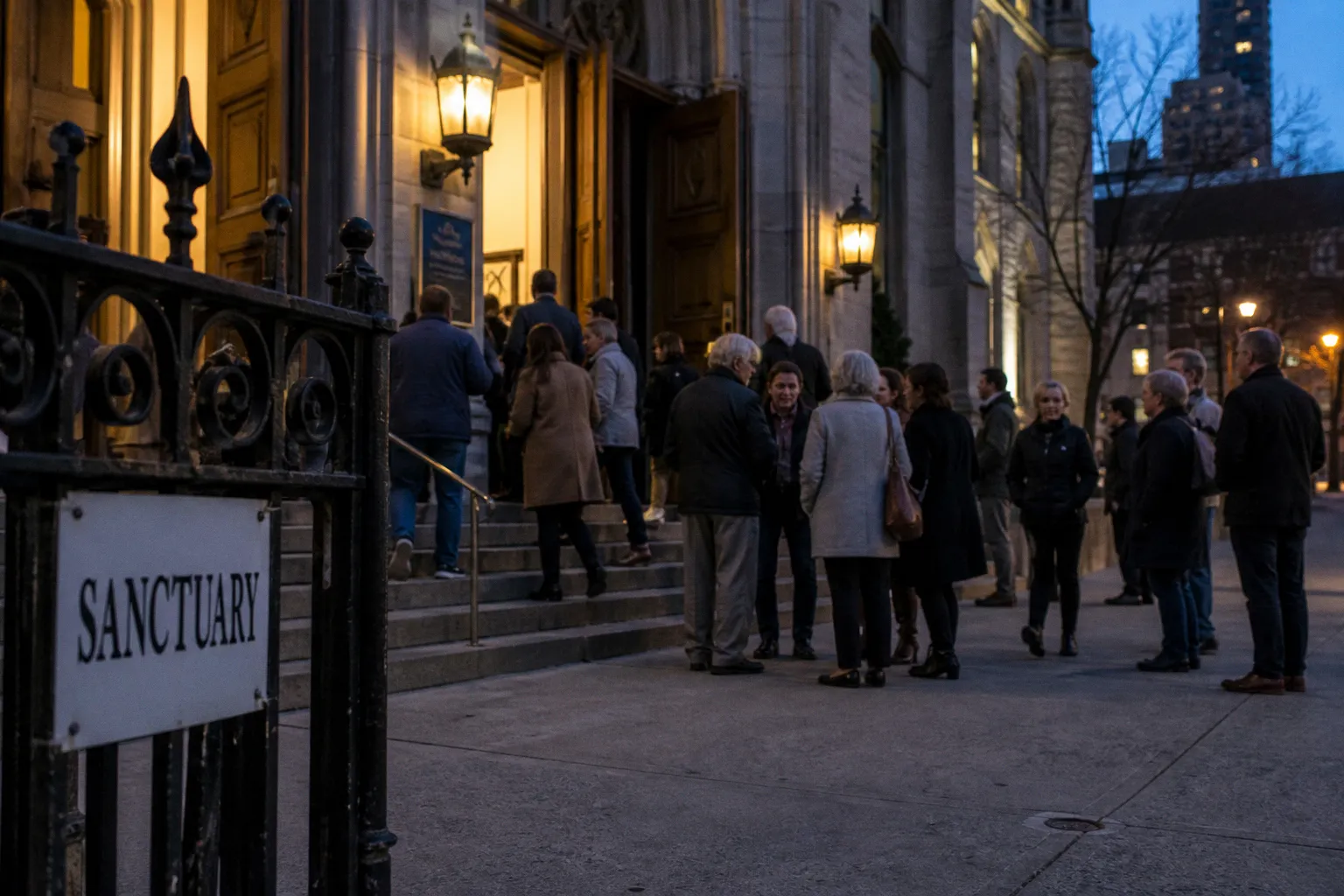
As A Public Witness reported this week, federal Department of Homeland Security (DHS) undercover agents have entered at least five church buildings in Minnesota's Twin Cities and one in Michigan to monitor activist meetings, prompting liturgical and legal responses from affected congregations, including a Lutheran parish in Roseville.
The disclosure surfaced through court filings tied to an existing federal injunction that already restricted warrantless DHS operations at one of the targeted properties, University Baptist Church in Minneapolis. Interim pastor Cody Sanders informed his congregation on Sunday, Aug. 16, that an undercover agent had entered the church in May and secretly recorded a group meeting. Subsequent filings revealed three additional DHS incidents at the same property, two of them on Sundays.
Scope and Disclosure Timeline
According to A Public Witness, the affected buildings include Baptist, Lutheran, Episcopal, and Unitarian Universalist congregations in the Twin Cities, plus a Michigan event held at a Lutheran church and attended by Minnesota activists. Several pastors stated they learned of the infiltration only when news reports appeared the previous Friday, meaning the surveillance remained undetected for weeks or months.
At Prince of Peace Lutheran Church in Roseville, interim lead pastor Steve Sylvester told the publication that his congregation's awareness came as an unanticipated development. "It's a strange time," Sylvester said. "Even with the kind of aberrations that we've been dealing with, typically people don't sit down and think, 'Well, the Stasi might know what I'm doing.'" Sylvester also addressed the matter during Sunday worship, calling it "a weird thing" he did not expect to encounter during his interim tenure, and promised ongoing updates to the congregation.
Sanders, who also serves as a professor of congregational and community care leadership at Luther Seminary, framed the announcement in theological and civic terms. "We should not become accustomed to this," Sanders said. "We should not let this become sort of the taken-for-granted, status-quo norm that we just expect, because this is wrong." He added that "many of our sibling congregations and denominations have been fighting in court for some time" and urged the congregation to recognize the moment as something to resist rather than normalize.
The Legal Framework in Place
University Baptist Church moved into court on the basis that its property falls under a federal injunction blocking warrantless DHS actions there. This distinguishes the case from mere complaint: the injunction provides a procedural mechanism, not simply a platform for public statement. The legal posture shapes both what the church can demand and what federal agents are required to disclose. It also sets a precedent that other congregations located within the injunction's coverage area may invoke without rebuilding the underlying argument from the ground up.
Administrative Steps for Congregations
For Lutheran and other mainline congregations evaluating their own exposure, the reporting points to three administrative categories worth reviewing.
1. Property status. Determine whether the church building is named in any existing injunction, court order, or written agreement that restricts federal law enforcement access. University Baptist's response was possible in part because such a document already covered its property.
2. Incident documentation. Compile any record of unusual visitors, repeated attendance by individuals not connected to the congregation's stated mission, or meeting-space requests from outside groups. These records support both internal review and any future legal filing.
3. Pastoral communication rubric. Prepare a template announcement for use during worship in the event of a disclosure. The pastors in this report spoke candidly about the difficulty of addressing surveillance from the chancel, and a pre-drafted framework reduces improvisation under duress.
The underlying court filings remain active, and additional incidents may surface as the litigation proceeds. Congregations that host outside meetings, particularly those connected to activist networks, should expect heightened scrutiny of their event calendars. The defining consideration for the moment is not whether churches will be asked to respond, but whether their existing governance documents position them to respond promptly when that request arrives.