LCMS Delegates Gather in Phoenix to Shape the Future of Church Ministry
According to The Lutheran Church—Missouri Synod, more than 1,300 voting delegates convened in Phoenix from July 18–23 for the Synod's 69th Regular Convention, conducting elections, debating…
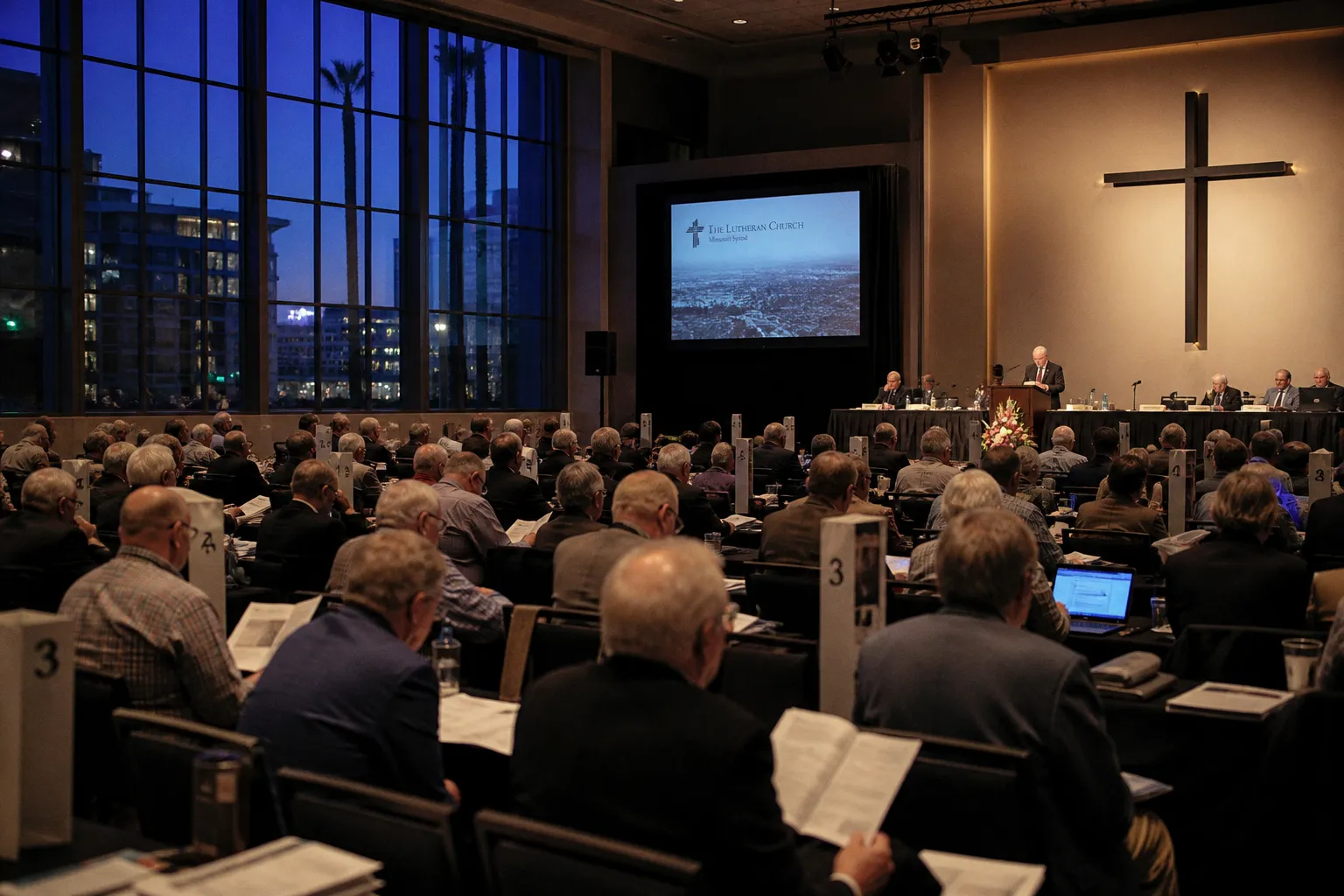
According to The Lutheran Church—Missouri Synod, more than 1,300 voting delegates convened in Phoenix from July 18–23 for the Synod's 69th Regular Convention, conducting elections, debating resolutions, and gathering around Word and Sacrament under the convention theme "Christ Is Risen Indeed." The proceedings carry weight beyond the convention floor because the triennium's directives — spanning pastoral formation, church fellowship, structure, and administration — will shape the rubrics, resources, and ecclesiastical posture every LCMS congregation inherits over the next three years.
Defining the Synod's Work
The convention fulfilled its constitutional mandate through two principal instruments. Delegates elected 78 officers, board members, and commission members, distributing leadership across the Synod's administrative framework. They likewise adopted more than 100 resolutions covering pastoral formation, church fellowship, and structural administration. As the Rev. Jared Melius, an ordained voting delegate from the Rocky Mountain District, summarized the assembly's temperament, the people present, whatever their positions on contested issues, love the Lord Jesus and particularly love the Lord's Gospel, which grants the comfort of the forgiveness of sins.
The thematic refrain — Christ's resurrection as the standing ground for all synodical labor — was articulated in the closing Matins sermon by the Rev. Dr. Alonso Espinosa, who reminded the assembly that no resolution, balanced budget, or parish peace produces new life; the mysteries of Christ alone grant that standing. Worship framed the deliberation, not the reverse: delegates received Word and Sacrament, exchanged greetings, and sang hymns such as Lutheran Service Book 497:3 before departing Phoenix.
Stewardship in the Parish: Three Points of Application
For congregations receiving these decisions, three stewardship questions translate the convention's output into local practice.
1. Audit the resolutions against current parish policy. The adopted resolutions touch pastoral formation and fellowship practices that bear directly on congregational protocols. Pastors and council presidents should review the published list against existing bylaws, identify any friction points, and schedule council deliberation within the first quarter of the new triennium.
2. Inventory liturgical continuity. The convention's heavy reliance on Matins, hymnody, and sacramental rhythm signals a Synod-wide commitment to historic liturgical form. Worship planners should evaluate whether their current service patterns sustain that rhythm — particularly the catechetical readings and Paschal hymnody that undergirded the convention's preaching — and adjust where the assembly has drifted toward substitute forms.
3. Track officer transitions at the district level. With 78 positions filled, district leadership now carries a fresh mandate. Congregations should identify which newly elected officers represent their district, request their contact information, and establish a standing communication channel for synodical reporting.
A Wider Communion Note
The LCMS convention operated within a broader Lutheran communion engaged in parallel work. According to the Grand Canyon Synod of the ELCA, the Lutheran World Federation is currently supporting a leadership-capacity workshop for the Evangelical Lutheran Church in Mozambique, alongside programs on ecumenical governance and reconciliation. For LCMS congregations whose confession differs from these ecumenical partners, the parallel activity reinforces the importance of holding fast to distinctive Lutheran doctrine while remaining attentive to the global communion's trajectory and the practical stewardship those partnerships demand.