Pastoral call committee: a pre-selection checklist
A pastoral vacancy creates pressure, but it also creates a rare opportunity for honest congregational reflection. Your pastor may have announced a retirement. A resignation letter may have arrived without much warning.
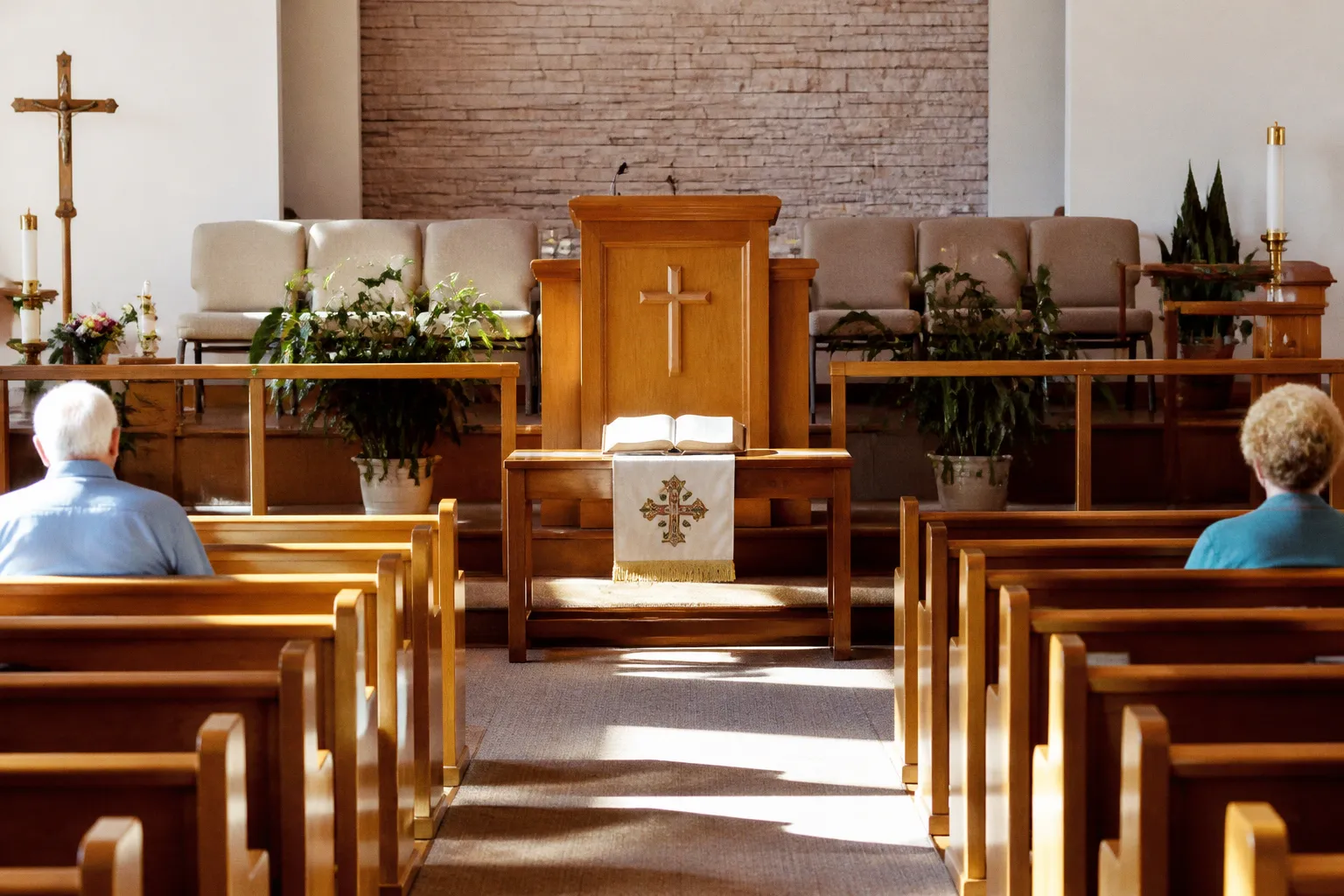
Or a pastor may have died after years of faithful service. Whatever the cause, the congregation is now between seasons — and the decisions made during this interval will shape the next one.
The pastoral call process in Lutheran congregations is structured, prayerful, and logistical. It requires more than collecting names and choosing the most familiar one. Before candidates appear on a ballot, the Call Committee must establish who will serve, what the congregation actually needs, which questions deserve to be asked, and how the final decision will be documented.
A Call Committee is not a hiring panel. It is a discernment team that works under the authority of regional leadership and the gathered congregation.
Forming the Committee: Composition and Integrity Standards
A Call Committee can lose credibility before it conducts its first interview. If the committee appears stacked for one outcome, represents only one generation, or includes people with obvious conflicts of interest, even a sound recommendation may be received with suspicion. The committee carries the responsibility of recommending a future shepherd to the entire congregation. That responsibility begins with how the committee itself is formed.
Size, representation, and public trust
Most congregations settle on five to nine members. A smaller group may struggle with the volume of reading, interviews, correspondence, and congregational communication. A much larger group can make confidentiality difficult and turn every decision into a prolonged negotiation. An odd number may help avoid tied votes on the committee's internal decisions, although the goal is not to create a miniature parliament. The goal is a group capable of listening carefully and acting responsibly.
Representation matters as much as size. The committee should reflect the congregation's actual life rather than the preferences of its most available members. Consider age, length of membership, ministry involvement, family situation, and the different ways people experience the congregation. A committee composed entirely of long-serving retirees may understand the church's history deeply, but it may miss what younger families, newer members, or people on the margins of congregational life need from pastoral leadership.
The same warning applies in the other direction. A committee made up only of newer members may bring energy but lack the institutional memory needed to understand past conflicts, unfinished commitments, or patterns of ministry that have already been tried. Healthy composition does not mean manufacturing a demographic formula. It means refusing to confuse one group within the congregation with the congregation as a whole.
Conflicts of interest and confidentiality
Eligibility rules should be discussed before nominations are made, not after the first candidate list arrives. The committee should establish a clear standard for conflicts of interest and commit to protecting candidate confidentiality.
At a minimum, take care with the following situations:
- Current employees of the congregation may have a direct economic or professional interest in the outcome. That includes staff members whose work will be supervised, reorganized, or evaluated by the incoming pastor.
- A former pastor or a former pastor's spouse may carry strong loyalties, unresolved concerns, or personal expectations that make impartial discernment difficult.
- Immediate family members serving together can compromise confidentiality, especially when private candidate information travels beyond the committee.
- Members who are actively promoting a particular candidate should disclose that interest before the committee begins its work.
- Anyone with a close personal or professional relationship with a candidate should recuse themselves from the relevant discussion rather than asking the rest of the committee to overlook the connection.
These standards are not accusations. They are safeguards. The committee is likely to discuss confidential letters, references, family circumstances, compensation, and difficult moments in a candidate's ministry. Members must understand that information shared in the room does not become congregational conversation in the hallway.
The outgoing pastor steps back
The retiring or resigning pastor should not select a successor or direct the committee's work. The pastor may offer general context about the congregation's ministries and current pastoral needs, but that information should be offered through an agreed process and not through private coaching of committee members.
The outgoing pastor does not sit on the Call Committee, review the candidate list, make informal recommendations, or use personal relationships to steer the process. This boundary protects the departing pastor as well as the congregation. A successor must be able to begin a new ministry without being treated as someone else's choice or continuation.
The congregation should also clarify how pastoral records, unfinished pastoral care, and sensitive congregational matters will be transferred. That handoff may require cooperation, but cooperation is not the same as control. The outgoing pastor can help the church leave one ministry season responsibly while allowing the Call Committee to discern the next one.
Ratification at a called congregational meeting
Once the committee has been nominated, bring the slate to a properly called voters' assembly or congregational meeting according to the congregation's constitution and governing practice. Make the names clear. Explain the committee's charge. State the expectations regarding confidentiality, prayer, attendance, and communication.
Public ratification does not mean that every member must know every private detail of the committee's work. It means that the congregation knows who has been entrusted with the responsibility and understands how that authority was granted. Transparency at the beginning makes later decisions easier to receive, even when the final recommendation is not everyone's first choice.
Navigating the Three Phases of the Pastoral Transition
A pastoral transition moves through three broad seasons: ending, preparing, and beginning. The seasons overlap, but they should not be confused. A congregation that rushes past the ending may ask the next pastor to solve grief that belongs to the previous chapter. A congregation that remains indefinitely in preparation may turn discernment into avoidance.
Phase 1: A Season of Ending
The first administrative responsibility is notification. Contact regional leadership immediately when the vacancy occurs:
- LCMS congregations: notify the District President and the Circuit Visitor.
- ELCA congregations: notify the Synod Bishop's office.
Do not wait for the committee to be formed before making this notification. District or synod leaders may provide required forms, explain the call process, identify interim resources, and clarify which steps must be completed before candidates can be considered. Early communication prevents the committee from building a process that later has to be redesigned.
Arrange interim pastoral leadership as soon as possible. A vacant pulpit still requires preaching, hospital visits, funerals, pastoral counseling, confirmation work, and attention to members who may not know whom to call in a crisis. The interim arrangement should identify who will cover ordinary pastoral care, who will handle emergencies, how worship leadership will be scheduled, and where responsibility ends for the interim pastor.
The congregation also needs room to acknowledge the change. A retirement, resignation, or death is not merely an opening on a staffing chart. It affects relationships, worship habits, volunteer responsibilities, and the congregation's sense of identity. A farewell liturgy, a public word of thanks, or a season of shared prayer can help the congregation mark what has ended without pretending that every member experiences the ending in the same way.
This is also the time to identify unresolved matters. Are there pastoral care situations that require a careful handoff? Are there ongoing congregational conflicts? Are there major building, financial, or ministry decisions that should be disclosed to regional leadership and eventually to candidates? The committee does not need to dramatize every difficulty, but it should not hide problems in the hope that a new pastor will make them disappear.
Phase 2: The Season of Preparing
This is the central work of the Call Committee. The congregation gathers information, listens to its own members, develops a pastoral profile, receives names through the district or synod process, and begins conversation with candidates.
The work is easier when the committee separates tasks that are often blurred together:
1. Understand the congregation. Complete the self-study and review the church's ministries, attendance patterns, financial realities, facilities, neighborhood, and internal relationships.
2. Name the congregation's needs. Distinguish between urgent needs, long-term hopes, and preferences that are simply familiar.
3. Describe the pastoral role honestly. A pastor cannot be expected to be an excellent preacher, administrator, counselor, fundraiser, youth director, community organizer, and conflict mediator without the congregation deciding which responsibilities are central and what support exists for the rest.
4. Receive and evaluate candidates. Use the official call list and the information provided through the district or synod rather than relying on rumor or informal recruitment.
5. Recommend finalists. Present the strongest candidates to the voters' assembly with a clear explanation of the process and the reasons for the recommendation.
The committee should create a communication rhythm for the congregation during this phase. Silence invites speculation, but excessive disclosure can compromise candidates and create unnecessary pressure. A regular update can say what stage the committee has reached, what work has been completed, and when the congregation can expect the next public step. It should not reveal confidential candidate information or turn every internal discussion into a running congregational referendum.
Phase 3: A Season of New Beginnings
The call vote is not the end of the transition. Once a candidate accepts, the congregation must move from selection to welcome.
Prepare for the installation service, but do not treat the liturgy as the entire onboarding plan. A new pastor will need introductions to staff and key volunteers, access to records and systems, information about pastoral care responsibilities, a clear calendar, and a realistic understanding of the congregation's current commitments. The first months should include intentional conversations about expectations, decision-making, communication, and the boundaries of the pastor's role.
The first eighteen months of mutual ministry deserve particular attention. The pastor is learning the congregation, and the congregation is learning the pastor. Early misunderstandings are not necessarily signs that the call was wrong. They are often evidence that assumptions were never made explicit. A first-year or mutual ministry review gives both sides a structured way to discuss what is working, where support is needed, and which expectations should be adjusted.
| Phase | Primary Actors | Critical Deliverables | Main Question |
|---|---|---|---|
| Ending | Congregation, regional leadership, outgoing pastor | Immediate notification, interim coverage, pastoral handoff, farewell | What must be completed before the previous ministry can be responsibly closed? |
| Preparing | Call Committee, district or synod office, congregation | Self-study, pastoral profile, candidate list, interviews, finalist recommendation | What kind of pastoral leadership does this congregation actually need? |
| New Beginnings | Congregation, new pastor, regional leadership | Installation, orientation, communication plan, mutual ministry review | What will help this call become a healthy ministry rather than merely a completed transaction? |
Defining Congregational Needs Through Data and Self-Study
A phrase such as “a pastor who loves people” may be sincere, but it does not provide much help in discerning a call. Every congregation hopes for a pastor who cares about people. The committee needs to identify what that care must look like in this particular place.
Conduct the Congregational Self-Study
The self-study should be an inventory of congregational life, not a document designed to make the church look attractive. Review worship attendance and participation, age demographics, financial giving trends, outreach activity, education and youth programs, volunteer capacity, building use, and participation in community life.
Look for patterns rather than isolated anecdotes. A single well-attended event does not necessarily demonstrate a strong ministry, just as one poorly attended class does not prove that the ministry has no future. Ask what has remained stable, what has changed, and what the congregation has attempted before.
The committee should examine both assets and constraints:
- Which ministries have dependable lay leadership?
- Where is the congregation relying on one or two exhausted volunteers?
- Which programs are central to the church's identity, even if they are small?
- What financial commitments will the next pastor inherit?
- Are there building or accessibility concerns that affect ministry?
- What pastoral care needs are most common?
- Where do members already see signs of growth, renewal, or fatigue?
- Which conflicts are known but rarely named in public?
The point is not to produce a list of complaints. It is to give candidates an honest picture of the ministry they may be asked to lead.
Use demographic information as context, not prophecy
Most districts and synods work with providers such as MissionInsite or an equivalent demographic resource. Request the report and study the area surrounding the congregation. Consider population movement, household composition, age distribution, languages used in local schools and neighborhoods, economic pressures, and the presence of other churches or community organizations.
Demographic information cannot tell a congregation exactly what its ministry should become. It can, however, challenge assumptions. A congregation may describe itself as serving a rural community that has changed significantly. Another may be located in a growing area while continuing to organize its ministry around an older population. The report becomes useful when the committee compares it with what members actually see beyond the church doors.
A demographic report should lead to questions:
- Who lives near the church but does not currently participate?
- What barriers make participation difficult?
- Which ministries already connect with the surrounding community?
- Does the congregation need a pastor with experience in outreach, bilingual ministry, community partnerships, or care for an aging membership?
- What local realities will shape the pastor's first years of ministry?
Distribute the Pastoral Profile Survey carefully
A pastoral profile survey gives the congregation a formal way to speak. It should ask about preaching, worship, pastoral care, teaching, leadership, community engagement, administration, and the qualities members believe are necessary for the next season.
The committee should explain how the responses will be used. Members are more likely to answer honestly when they know whether the survey is advisory, how responses will be summarized, and how disagreements will be handled. Avoid presenting the results as if the congregation has discovered one unanimous answer. A survey usually reveals priorities and tensions, not a single perfect job description.
Separate what the congregation needs from what individual members prefer. “Must be a certain personality type” is usually a preference. “Must be able to provide consistent hospital and home visits” may be a ministry need. “Must preserve every existing program” may express anxiety about change rather than a realistic pastoral responsibility.
Build the pastoral profile around three areas
A useful profile connects the congregation's present reality with the work it believes God is calling it to do. Three areas provide a practical framework:
1. Gifts and skills. Identify the abilities the congregation genuinely needs, such as preaching clarity, youth ministry, crisis counseling, adult education, visitation, administrative capacity, or experience working with volunteers.
2. Cultural and missional context. Describe the surrounding community and the congregation's relationships within it. Depending on the setting, relevant experience may include bilingual ministry, urban outreach, rural resilience, ecumenical cooperation, community service, or ministry with families under financial pressure.
3. Theological and confessional alignment. State the congregation's Lutheran identity plainly. A candidate should understand its worship life, teaching responsibilities, sacramental practice, and relationship to the wider church body.
The profile should be specific enough to guide the matching process but open enough not to exclude a candidate simply because the candidate's ministry experience is different from the congregation's history. A profile is a tool for discernment, not a wish list for a pastor who already exists in the committee's imagination.
Once approved through the congregation's process, submit the profile to the district or synod office. That office uses the information to help develop the official call list. The more candid and precise the profile is, the more useful the resulting list will be.
The best pastoral profile does not describe an imaginary super-pastor. It tells the truth about the congregation, the work in front of it, and the support available to the person being called.
Best Practices for Initial Candidate Interviews and Behavioral Inquiry
When the call list arrives, the committee's task changes. It is no longer describing itself; it is learning whether a particular candidate's experience, theology, temperament, and pastoral practice fit the ministry described in the profile.
Complete required checks before interviews
Background checks should be completed according to the requirements of the relevant church body and district or synod process. For ELCA rostered ministers, background-check requirements apply to the call process, and LCMS districts may also require checks before a call is finalized. Follow the current instructions provided by regional leadership rather than relying on an old congregational practice.
The purpose is not to treat every candidate as suspect. It is to protect the congregation, its children and vulnerable adults, the candidate, and the integrity of the call process. A committee should not postpone a necessary check until after members have formed strong personal impressions.
Establish a consistent interview format
Initial interviews usually take place by phone or video. Keep the first conversation focused and reasonably limited in length. One designated questioner can provide a consistent rhythm, while other members listen and take notes. If every candidate receives a different interview from a different collection of personalities, comparison becomes difficult and the most talkative committee member may shape the process.
Before the first interview, agree on:
- The questions every candidate will be asked.
- Which committee member will ask each question.
- How follow-up questions will be handled.
- What information will be shared about the congregation.
- How notes will be stored and who may read them.
- How soon after the interview members will submit independent assessments.
The candidate should have time to ask questions as well. A call is mutual discernment. The congregation is evaluating the candidate, but the candidate is also deciding whether the congregation's theology, expectations, culture, and circumstances are a responsible setting for ministry.
Ask for evidence, not performance
Hypothetical questions invite polished answers. Behavioral questions ask candidates to describe what they have actually done. The purpose is not to force a candidate into a courtroom-style examination. It is to learn how the candidate thinks, acts, reflects, and accepts responsibility.
| Hypothetical Question | Behavioral Question |
|---|---|
| “How would you handle a grieving family?” | “Tell us about a time you walked with a family through loss. What did you say, what did you avoid saying, and what did you learn?” |
| “What would you do if attendance dropped?” | “Describe a ministry where participation declined under your leadership. How did you respond, and what changed?” |
| “How do you handle conflict?” | “Tell us about a disagreement in a previous call. What part did you play in resolving it, and what was the outcome?” |
| “How would you involve lay members?” | “Give us an example of a ministry that depended on lay leadership. How did you recruit, equip, and support the people involved?” |
| “How do you balance administration and pastoral care?” | “Describe a season when administrative demands affected your pastoral availability. What did you change?” |
Listen for more than the story's ending. Does the candidate name other people's contributions? Can the candidate describe a mistake without blaming someone else? Does the answer include reflection, or only a claim of success? Does the candidate understand the difference between offering pastoral care and trying to control another person's grief?
Behavioral questions do not produce certainty. They produce evidence. The committee should still check references and listen for consistency across interviews, written materials, and conversations with regional leadership.
Take independent notes before discussing impressions
After each interview, ask every committee member to write an assessment independently. Notes should distinguish between what the candidate said and what the listener felt. “The candidate avoided answering the question about conflict” is more useful than “I did not like the candidate's personality.” “The candidate described a concrete process for training volunteers” is more useful than “The candidate seemed energetic.”
Then compare notes. This sequence reduces groupthink and prevents the first strong reaction from becoming the committee's unofficial conclusion. It also makes it easier to revisit a candidate later when memory has blurred several interviews together.
Prayer belongs between interviews, not only at the beginning and end of the process. Discernment is not decision-making with religious language added to it. The committee should make room to ask whether its fears, preferences, and loyalties are distorting what it hears.
Finalizing the Call: Voting Protocols and Documentation Timelines
The committee's recommendation must eventually return to the congregation. The final stage requires procedural clarity because a congregation can make a spiritually serious decision and still create confusion through poor documentation.
Prepare the voters' assembly
Schedule the congregational meeting according to the congregation's governing documents and the requirements of the relevant church body. Members should receive proper notice, know the purpose of the meeting, and understand which decisions will be made.
Before the meeting, confirm the status of the candidate, the call documents, the compensation proposal, and any required approvals. Do not wait until the meeting begins to discover that a form is missing or that the proposed vote does not match the congregation's constitution.
A single call meeting may present one to three candidates, depending on the process and the guidance of regional leadership. The committee should be able to explain why the finalist or finalists were recommended without disclosing confidential information or turning the meeting into a public critique of candidates who were not selected.
Separate the call vote from compensation
The call and the compensation package are related but distinct matters. At a properly called congregational meeting, the congregation generally votes first on whether to extend the call. In the process described here:
1. Extend the call: requires a two-thirds majority of voting members present.
2. Approve the compensation package: requires a simple majority of voting members present.
Both votes must pass. If the call does not receive the required majority, the compensation vote has no practical effect. If the call passes but the compensation package does not, the congregation must follow its governing procedure and regional guidance before proceeding.
The committee should present compensation as part of a sustainable ministry arrangement, not as a reward for winning a vote. Salary, housing or housing allowance, benefits, vacation, continuing education, moving expenses, and other terms should be clear. A candidate should not have to reconstruct the actual offer from several informal conversations.
Complete the paperwork promptly
Once the call is extended, mail the original call documents within two to three days of the vote. Prompt handling communicates seriousness and prevents avoidable delay. The documents should be checked for accuracy before they are sent, and the appropriate district, circuit, or synod office should receive whatever copies or notifications the process requires.
The candidate may need time to consult family, consider housing, review the compensation package, or transition from an existing call. A response window of three to six weeks is common in the process described here, but the committee should follow the timeline set by the relevant church body and the call documents rather than treating a general range as an absolute rule.
During this period, avoid creating pressure through repeated informal contact. Designate one person to communicate with the candidate, answer logistical questions, and keep the congregation informed at an appropriate level. The congregation can pray and prepare without speculating publicly about whether the candidate will accept.
When the signed documents are returned, notify the circuit visitor or bishop's office as required. Confirm the installation date, introduce the new pastor to staff and key leaders, and begin the onboarding plan. The call is now moving from a decision on paper to a shared ministry.
If the candidate declines
A declined call is disappointing, but it is not proof that the committee failed or that the congregation must abandon its process. Return to the official call list and consult regional leadership. The committee may need to revisit its pastoral profile, interview another candidate, or continue discernment with the same discipline it used before.
Do not panic and do not select a candidate simply to end the vacancy. A congregation that rushes because it is tired of waiting may create a longer and more painful transition later. The process has room for a declined call. Use that room honestly.
The committee's work is not to produce the fastest possible answer. It is to help the congregation make a responsible call with clear eyes, open communication, and prayerful attention to the ministry ahead. Notify regional leadership immediately, establish the committee carefully, study the congregation truthfully, interview candidates consistently, and complete the final documents without delay. Move with urgency, but do not confuse urgency with haste.