How Lutheran Congregations Can Leverage Local Newspaper Religion Briefs
The Bennington Banner, The Daily Gazette, TheDailyNewsOnline.com, and the Norwalk Reflector each released aggregated "Religion Briefs" or "Church briefs" columns for the weekend of August 29-30, 2026.
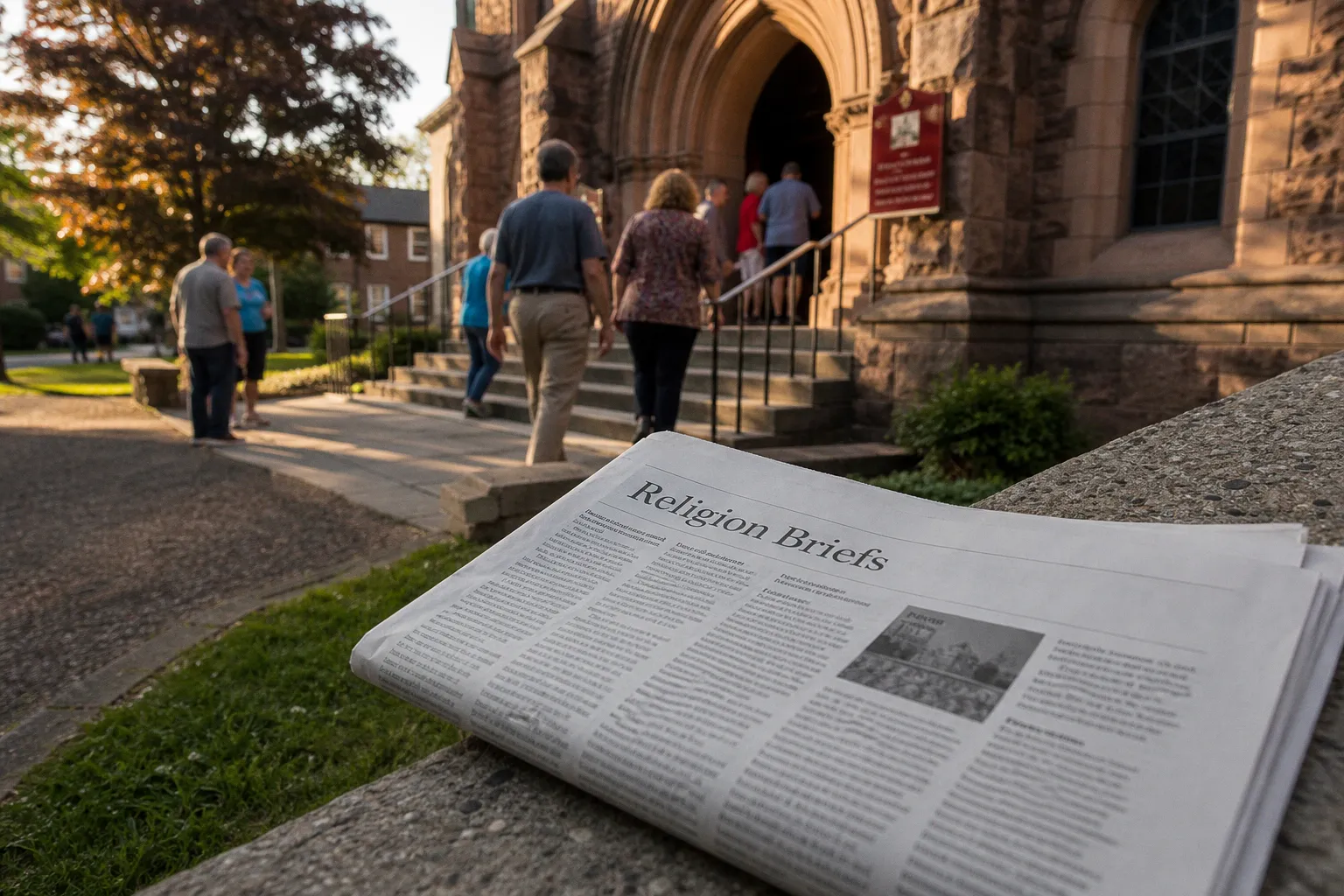
These weekly digests consolidate service times, special events, and congregational announcements into a single reader-facing entry submitted by area faith communities. For Lutheran congregational stewards monitoring how weekend worship information circulates beyond the parish roster, the publication pattern itself, rather than any individual item within it, offers a usable framework for evaluating that channel.
The Editorial Pattern Across Four Outlets
The four outlets span geographically distinct U.S. regional markets, yet their editorial rhythms converged within a narrow 36-hour window. The Bennington Banner posted its column on August 28; The Daily Gazette followed the same evening; the Norwalk Reflector and TheDailyNewsOnline.com released theirs on August 29. Headlines vary ("Religion Briefs," "Religion briefs," "Church briefs," "Church briefs for Aug. 29"), but the structural rubric is uniform: a submission-based digest placed adjacent to the weekend community calendar. Available source snippets confirm only the column titles, not internal content, a methodological observation worth flagging for any reader attempting comparative analysis.
Implications for Congregational Communication
Liturgical planning operates on a lectionary cadence that predates and outlasts any newspaper's editorial calendar. The parallel rhythm of weekly briefs, however, governs whether special services, installations, anniversaries, or outreach events reach seekers and non-members in a given market. From a stewardship standpoint, the column functions as an external amplification layer that congregations must actively populate; absence from the listing is not equivalent to absence in the parish. The efficacy of any given weekend's brief depends less on its intrinsic detail than on whether the submitting congregation treated the editorial deadline as part of its liturgical preparation workflow.
Verification Points and Forward Monitoring
For pastors, council members, and communications volunteers using these briefs either as a reference or as an outreach channel, four checks apply:
1. Confirm submission deadlines for each target outlet, since release timing varies even within a single publication cycle.
2. Cross-reference any third-party listing of service times against the congregation's own published calendar before forwarding or quoting it.
3. Audit whether special liturgical markers, including approaching Reformation commemorations, cantata rehearsals, and catechism milestones, were submitted in time for inclusion.
4. Maintain direct contact with the editor handling religious submissions; these columns typically accept material by email or web form rather than through self-service portals.
The August 29-30 cycle marks the transition from late summer into the fall liturgical calendar. The September weekends, particularly those adjacent to Labor Day, constitute the next observable data point for whether regional briefs hold steady in volume and format. Congregations preparing a September launch of new programming should confirm in advance that their announcements will clear editorial review before the next published digest.