Optimizing Church Calendar Listings for Local Community Engagement
Comparable columns persist in the Charleston Gazette-Mail, the Brainerd Dispatch, and the Rockdale Reporter, where "Church Calendar" and "Church News" appear as recurring sections.
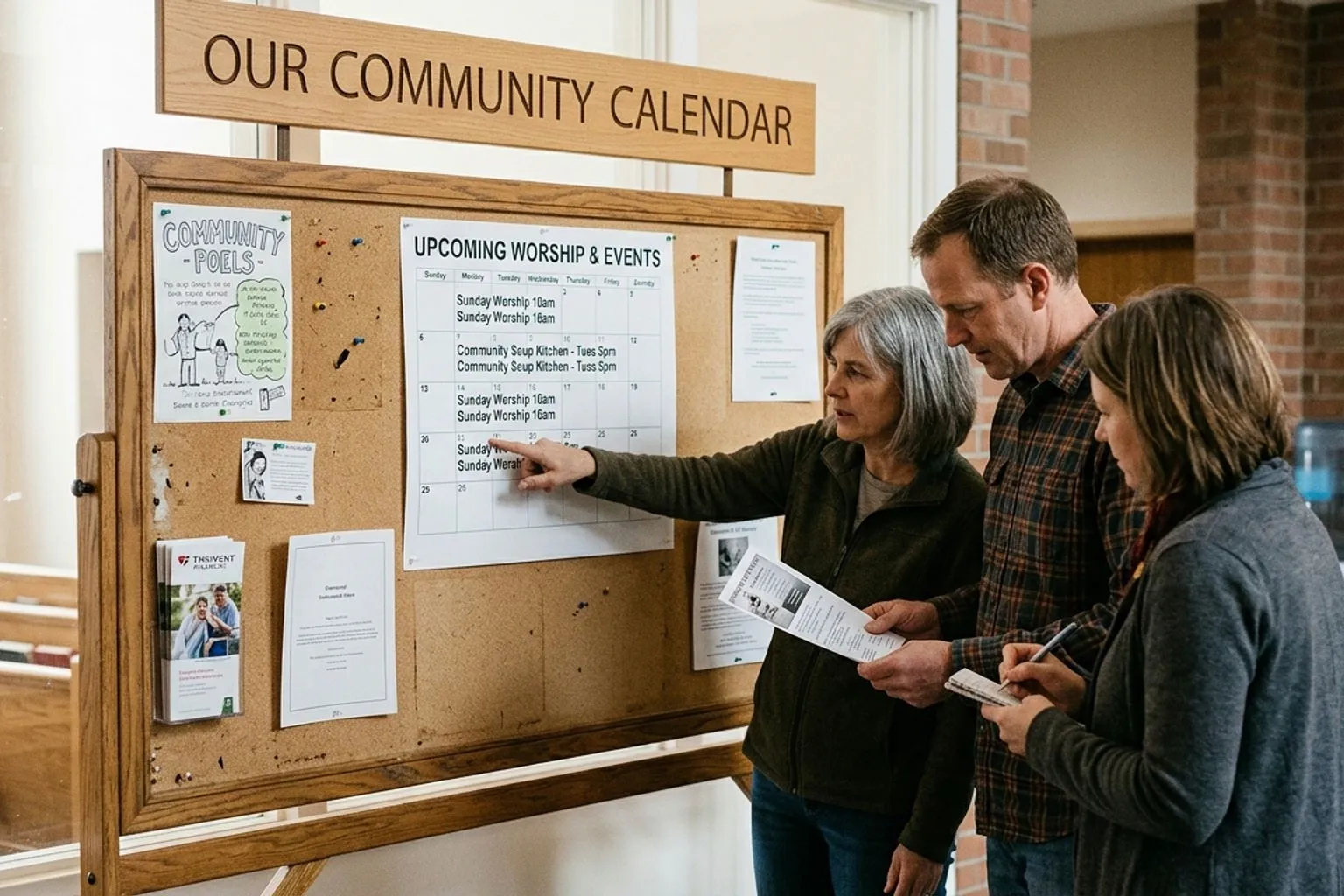
According to the West Central Tribune's Aug. 8, 2026 edition, community newspapers continue to run standing "Church Calendar" sections that anchor congregational coordination across rural regions. The Tribune's listings for Sunday, Aug. 9, illustrate how a single calendar entry can combine time, location, menu, and musical program into one navigable framework — a structure that Lutheran parishes elsewhere can replicate in their own submissions.
A Standing Framework Across Regional Press
The pattern is institutional rather than incidental: these listings predate digital bulletins and continue to reach readers who rely on print or local-news aggregators rather than a parish's own channels. For Lutheran communities operating under tight stewardship expectations, the printed calendar represents a low-cost but high-coverage mechanism for ongoing community formation.
Five Components of a Functional Calendar Notice
The Tribune's Aug. 9 listings provide a working sample. Two events were published, and each entry contains the structural elements a parish should verify before submission:
1. Sequenced time blocks. The Historic Salem Church notice specifies a 12:30 p.m. potluck followed by a 2 p.m. program — two distinct slots requiring separate phrasing within one entry, rather than a single ambiguous "Sunday afternoon" notation.
2. Rural-route addresses. Locations are printed in full, such as 28547 220th Street for Salem and 18510 180th Ave. N.E. for Nordland Lutheran Church, making the calendar a navigational document as much as a schedule.
3. Named musical contributors. The Bonse Aba Quartet appears alongside the Salem program; Josie Sanken and Custom Made Band are credited for the Nordland event. These names signal the character of the gathering to prospective attendees and to former members scanning for familiar faces.
4. Menu specificity. The Nordland entry enumerates burgers, sweet corn, chips, and chicken, allowing readers to plan attendance around the fellowship meal rather than arrive uncertain of what will be served.
5. Institutional continuity. The Nordland event is identified as the "sixth annual barbecue bash," a phrase that anchors the gathering in the parish's longer memory and signals to the community that the event is established rather than ad hoc.
Stewardship Questions Before Press Deadline
A notice published in a regional paper reaches lapsed members, visiting relatives, and ecumenical neighbors who may not consult a parish website or social feed. Congregations reviewing their own submissions should address three points before submitting:
- Whether the notice identifies the assembly's liturgical or fellowship purpose, not only its logistics and menu.
- Whether the location conforms to the rural-route standard the paper uses, rather than a postal-only abbreviation that confuses drivers.
- Whether the timing avoids conflict with school calendars, county fairs, or neighboring parish events scheduled the same weekend.
The continuation of these columns across multiple regional outlets, even where only headline-level listings are indexed online, indicates an infrastructure that Lutheran communities can and should continue to employ — provided each submission meets the structural requirements outlined above and treats the calendar as a document of communal stewardship rather than a bulletin afterthought.