Disaster Relief Volunteering: A Church Team Readiness Checklist
The Sutherland Institute reported that faith-based organizations represent nearly 75% of groups involved in post-disaster community rebuilding.
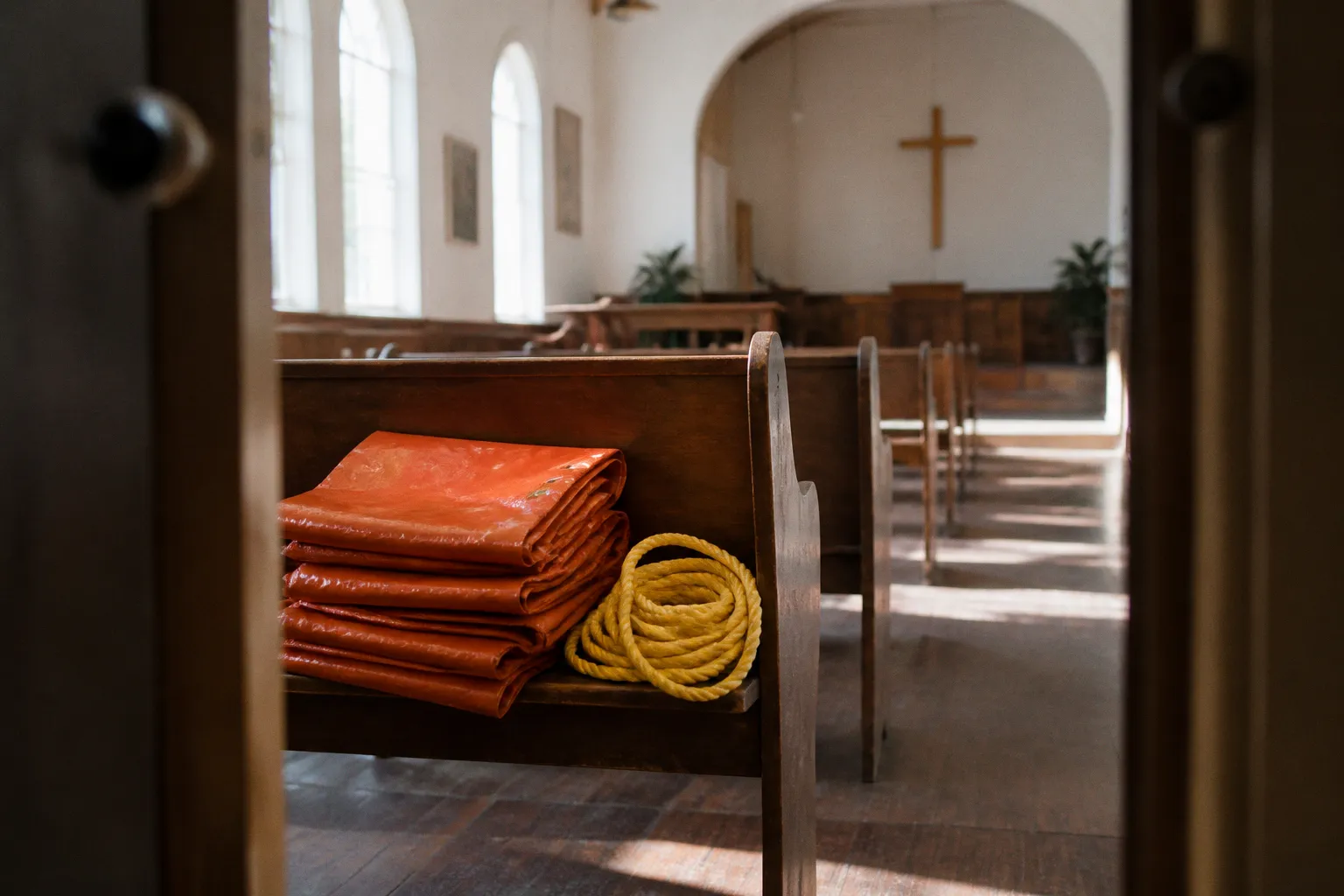
That level of participation creates a clear operational responsibility for your congregation: good intentions are not enough. A church disaster relief volunteer team needs people, supplies, documentation, communication, and safety controls ready before the emergency call arrives.
The most common failure is not lack of compassion. It is lack of deployment readiness. Volunteers arrive without defined roles. Supplies sit in an unlocked room. No one knows who can authorize field work. A team enters a hazardous area without official coordination, proper training, or a reliable way to account for every person.
Your congregation can prevent these failures. Build the system now. Test it before the storm, flood, wildfire, or structural emergency exposes the gaps.
Start with an operational readiness audit
Church disaster relief begins with a neighborhood audit, not a sign-up sheet. Your congregation needs a practical picture of the risks, assets, and constraints surrounding the church.
Begin by documenting the emergencies most likely to affect your area. These may include severe storms, flooding, tornadoes, extended power outages, winter weather, fire, or damage to local housing. The response model will differ by hazard. Flood cleanup may require protective equipment and strict contamination controls. A power outage may create a food distribution and wellness-check operation. A storm may require debris removal, temporary shelter support, or delivery of essential supplies.
Your first readiness meeting should produce five working documents:
- A local risk map: Identify nearby low-lying areas, senior housing, apartment complexes, schools, shelters, hospitals, food pantries, and transportation barriers.
- A congregation asset list: Record available vehicles, trailers, generators, tools, first-aid kits, commercial kitchen capacity, licensed drivers, skilled tradespeople, bilingual volunteers, and people trained in emergency response.
- A contact directory: Include pastors, staff, team leaders, congregational officers, insurance contacts, local emergency management, partner nonprofits, and relevant Lutheran disaster-response networks.
- A facilities emergency map: Mark gas and water shutoff valves, electrical panels, fire extinguishers, first-aid supplies, storage areas, exits, and accessible entrances.
- A decision authority chart: State who can activate the team, approve expenses, authorize use of church property, communicate with the public, and suspend operations.
Do not leave these records only on a church office computer. Maintain secure off-site digital and hardcopy backups. During a disaster, the building may be inaccessible, the internet may be down, or the person who normally manages the files may be unavailable.
Define the mission before recruiting volunteers
A church disaster relief volunteer team should not promise every service. Set a defined operating scope. A congregation may be equipped to provide food distribution, cleanup support, transportation, shelter assistance, supply sorting, welfare calls, or case-management referrals. It may not be equipped to perform electrical repairs, remove contaminated materials, provide professional mental-health care, or enter an active disaster zone.
Write a one-page mission statement that answers:
- What services will your church provide?
- What services will you refer to qualified agencies?
- Which tasks require specific certifications or professional licenses?
- Who coordinates with local authorities or Voluntary Organizations Active in Disaster networks?
- What conditions trigger a pause or shutdown?
- How will your church protect children, older adults, and medically vulnerable people?
That document keeps outreach tangible. It also protects your team from improvising beyond its capacity.
A disaster response ministry is ready when the right person can make the right decision without waiting for one overworked leader to answer the phone.
Build a real deployment structure
A list of volunteers is not a response team. A response team has defined roles, reporting lines, shift limits, and a method for tracking people in the field.
For disaster cleanup and similar operations, effective management models assign a designated team leader to a small operational group of approximately 2 to 20 volunteers. The range is broad because tasks vary, but the principle is fixed: one leader must be able to see the work, communicate instructions, monitor fatigue, and account for every person.
Use a structure that can scale:
| Operational role | Primary responsibility | Deployment requirement |
|---|---|---|
| Church response coordinator | Activates the ministry, sets priorities, approves movement of resources | Must have decision authority and an alternate |
| Safety lead | Reviews hazards, confirms protective equipment, stops unsafe work | Should not be buried under supply or pastoral duties |
| Team leader | Directs a small field crew and completes check-ins | Assign one leader for each 2–20 volunteers |
| Logistics lead | Manages food, water, tools, transport, fuel, and resupply | Maintains a live inventory |
| Communications lead | Operates the phone tree, sends updates, and records changes | Uses at least two communication methods |
| Pastoral or care lead | Coordinates prayer, congregational care, and referrals | Does not act as a substitute for a trauma clinician |
| Documentation lead | Maintains sign-in logs, waivers, training records, and incident reports | Keeps records accessible to authorized leaders |
Do not assign every function to the pastor. That arrangement may feel efficient during normal ministry operations, but it creates a single point of failure during a crisis. A pastor may lead worship, coordinate pastoral care, and communicate with the congregation. That does not mean the pastor should also track vehicle keys, manage field safety, and approve every volunteer shift.
Use a deployment roster, not a general mailing list
Create separate volunteer pools. This lets you match people to work instead of sending every request to everyone.
A practical roster may include:
1. Field cleanup volunteers: People able to perform supervised manual work and follow protective-equipment requirements.
2. Skilled trades volunteers: Electricians, plumbers, builders, equipment operators, and other qualified workers.
3. Drivers and transport support: Volunteers with appropriate licenses, vehicle access, and willingness to move supplies or people.
4. Food and hospitality teams: People who can prepare, package, distribute, and document meals or essential goods.
5. Administrative support: Volunteers who can manage calls, scheduling, records, purchasing, and referrals.
6. Care and listening teams: People trained to provide basic supportive presence and connect survivors with qualified services.
7. Youth and family support volunteers: Adults assigned to safe, age-appropriate activities, with separate safeguards for work involving minors.
For each person, record availability, skills, language capacity, transportation access, emergency contact information, relevant training, and limitations they want the church to respect. A volunteer who cannot lift debris may still be an excellent dispatcher, meal coordinator, or phone-line operator.
Set a check-in rhythm
Every deployment needs a communication cadence. Establish it before volunteers leave the church property.
At minimum, team leaders should report:
- When the crew departs.
- When the crew arrives.
- The current task and location.
- Any injury, exposure, conflict, or supply shortage.
- When the crew pauses.
- When the crew returns.
- Whether every volunteer is accounted for.
Use a phone tree for routine updates, but do not rely on a single channel. Add text messaging, email, a shared status document, or an agreed check-in line. If cellular service fails, the plan must identify an alternative point of contact and a meeting location.
Lock down the administrative controls
Administrative work often looks slow until the first injury, missing volunteer, disputed expense, or unclear assignment appears. Then the records become the response infrastructure.
Before deployment, require every volunteer to complete the same basic process:
- Read a written position description.
- Sign the church's liability waiver and any required activity-specific forms.
- Complete documented safety orientation.
- Provide emergency contact information.
- Sign in at the beginning of every shift.
- Sign out at the end of every shift.
- Report injuries, near misses, property damage, and hazardous conditions.
- Confirm whether they have the equipment and physical capacity required for the assignment.
Written position descriptions should use plain language. State what the volunteer will do, where the work will occur, what hazards may exist, what equipment the church will provide, and what the volunteer must not do.
Do not treat a waiver as a safety plan. A signed form does not make hazardous work safe, and it does not automatically guarantee insurance coverage. Church leadership should review the congregation's policy, exclusions, and any required riders with the insurer before activating disaster operations. Requirements vary by jurisdiction, denomination, activity, and policy language.
The same discipline applies to background checks. There is no single universal national protocol for every church disaster team. Requirements may change when volunteers work around minors, vulnerable adults, shelters, transportation, or overnight housing. Establish your congregation's standard with denominational guidance, local law, and insurance requirements.
Keep a live incident record
Assign one person to maintain an incident log. The record should capture:
- Date, time, and location.
- Names of people involved.
- Description of the event.
- Immediate action taken.
- Whether medical attention was needed.
- Whether the task was paused.
- Who received the report.
- Follow-up responsibility.
A near miss matters. If a volunteer almost fell through a damaged floor, encountered exposed wiring, or experienced a respiratory reaction, record it. The purpose is not punishment. The purpose is capacity building. Repeated near misses show that the operating plan needs correction before someone is seriously hurt.
Documentation is not bureaucracy added to ministry. It is how your congregation proves who was trained, who was present, what happened, and what must change next time.
Prepare people for trauma without overclaiming competence
Disaster relief volunteering involves more than physical damage. Survivors may have lost housing, income, medication, documents, pets, transportation, or contact with family members. Volunteers may also face distressing scenes and carry the emotional impact home.
Your team needs trauma awareness, but it must stay within a clear boundary. Lay volunteers can offer calm presence, practical assistance, respectful listening, and referrals. They should not present themselves as trauma counselors unless they hold the relevant professional training and authorization.
Barna research published in 2020 found that 73% of Protestant pastors felt somewhat equipped to help congregants deal with significant trauma, while 15% felt very well-equipped and 12% did not feel equipped at all. Those figures point to a direct training need. Pastoral concern does not replace crisis-care preparation.
Include these topics in orientation
A basic faith-based disaster relief training session should cover:
- How acute stress may affect speech, memory, decision-making, and behavior.
- How to introduce yourself and explain your role.
- How to ask permission before entering a home or discussing personal circumstances.
- How to listen without forcing a survivor to retell the event.
- How to avoid promises about housing, financial aid, insurance, or recovery timelines.
- How to identify urgent medical, safety, domestic violence, child-protection, and mental-health concerns.
- How to make a referral to qualified professionals.
- How to protect confidential information.
- How to recognize when a volunteer needs to step away.
Use practical language. A volunteer does not need a theological explanation when a survivor needs a ride to a shelter, help replacing medication, or a safe referral. Prayer may be appropriate when welcomed, but it should never replace practical care or professional assistance.
Protect the volunteers
Your care protocol must include the team. Build short debriefs into every shift. Ask what volunteers saw, what concerns remain, and whether anyone needs to leave the next assignment. Do not assume the most capable worker is unaffected.
Set clear limits:
- No volunteer works alone in a hazardous location.
- No one continues after reporting dizziness, panic, confusion, or injury.
- No one transports a survivor without following the church's transportation policy.
- No one photographs survivors, homes, documents, or damage for personal social media.
- No volunteer shares private stories outside the authorized response team.
- No one makes a public statement on behalf of the church without approval.
This is not an attempt to eliminate every difficult emotion. It is a control system that keeps emotional strain from becoming a hidden operational risk.
Stage supplies and facility capacity
A disaster response team cannot operate on enthusiasm. It needs a supply cache that someone can locate, inspect, replenish, and issue.
Maintain basic emergency provisions sufficient to support people for up to three days, including food, water, and first-aid supplies. The exact inventory should reflect your facility, local hazards, household size, storage capacity, and expected mission. Keep a written inventory with expiration dates and replacement responsibility.
A useful starting inventory may include:
- Potable water and shelf-stable food.
- First-aid supplies and commonly needed protective items.
- Gloves, masks, eye protection, hard hats, and sturdy work equipment appropriate to approved tasks.
- Flashlights, batteries, chargers, and power banks.
- Hand sanitizer, soap, disinfectant, and waste bags.
- Blankets, tarps, basic hygiene supplies, and accessible items for older adults or people with disabilities.
- Clipboards, printed forms, pens, identification tags, and waterproof storage.
- Fuel and transportation supplies managed under safe storage rules.
- Tools that volunteers are trained and authorized to use.
Do not buy equipment simply because it looks useful. Match every tool to a task, a trained operator, a maintenance plan, and a storage location. A chainsaw, generator, ladder, or pressure washer creates obligations. If your church cannot train people, inspect the equipment, manage the hazards, and confirm insurance coverage, do not place it in the deployment plan.
Create a supply issue process
Assign one logistics lead to release equipment. Record what leaves the building, who receives it, and when it returns. Label kits by function so that volunteers can move quickly without emptying the entire storage room.
For example:
- Field safety kit
- Food distribution kit
- Communications kit
- Documentation kit
- Shelter support kit
- Sanitation kit
Review the inventory after every exercise and deployment. Replace consumed supplies immediately. A cache that looks complete but contains expired batteries, empty first-aid compartments, or missing chargers is not ready.
Harden the facility and the communication plan
Your church building may become a distribution point, coordination center, warming site, donation warehouse, or staging area during a disaster. Plan for that possibility now, before someone calls asking if the doors can open at midnight.
Run a facility walk-through
Walk the property with a maintenance-minded volunteer, an insurance-aware trustee, and a person who knows the building's mechanical systems. Look for the issues that turn a usable building into a closed one:
- Loose roofing materials, clogged gutters, and compromised flashing.
- Trees or limbs that could fall on power lines, parking areas, or entrances.
- Doors that do not open fully during a power outage or that block accessible routes.
- Storage rooms where chemicals, fuel, or cleaning supplies sit next to food or children's items.
- Heating and cooling equipment that has not been serviced within the last year.
- Backup power sources that have never been tested under load.
Correct the cheap items immediately. Schedule the larger repairs. If a piece of equipment is unsafe to operate, label it, remove it from circulation, and replace it before the next training cycle.
Plan for occupancy changes
If your church will host a warming center, cooling center, or overnight shelter, the operational demands change. Sleeping arrangements, restroom capacity, food handling, child supervision, accessibility, and security all expand. Coordinate with local emergency management, the American Red Cross, or another recognized agency before advertising the building as open. Insurance coverage, fire inspections, and liability protections all depend on that coordination.
Write a short facility-use checklist that confirms:
- The activity is covered by the church's insurance.
- The local authority has approved the use, or the activity falls within permitted zoning.
- Adequate supervision, sanitation, and security are in place.
- A documented sign-in and sign-out process is operating.
- A clear exit plan is posted in every occupied room.
Build redundant communication paths
Cellular networks, internet service, and power grids fail during disasters. Plan for that. Maintain:
- A printed phone tree with current numbers for team leaders, congregational officers, and partner agencies.
- A battery-powered or hand-crank radio capable of receiving local emergency broadcasts.
- A documented offline meeting location in case the church is closed and members cannot reach the building.
- A group text or messaging thread for rapid deployment updates, with the rule that voice calls are made when a text is not enough.
- A shared status document that team leaders can read and update from any device.
Test these channels twice a year. A phone tree that has not been used in eighteen months will fail on the day it matters.
Practice with an exercise, not just a meeting
Reading a plan is not the same as running one. Schedule at least one annual exercise. A tabletop walk-through with the leadership team costs nothing and reveals gaps. A short field exercise with a mock deployment teaches volunteers what the equipment actually feels like in motion.
After every exercise, capture three things: what worked, what failed, and what must change before the next event. Write that down. The next disaster will not wait for the meeting after the failure.
Close the loop with debrief and renewal
A volunteer team that deploys once and never revisits the plan will repeat the same mistakes. Build a debrief into the end of every activation. Within two weeks of stand-down, gather the team leaders and review the incident log, the supply consumption, the volunteer hours, the financial expenditures, and the concerns that surfaced.
Use that review to update the readiness audit, the deployment roster, the administrative forms, and the training list. Disaster preparedness is not a binder on a shelf. It is a working document that grows stronger after each use, or weaker after each ignored gap.
The congregation that does this work now will be the one that answers the phone calmly when the next call comes. Preparation is the form that Christian service takes when the stakes are real.