Clothing closets for local families: a church ministry guide
A church clothing closet often begins with a familiar scene: bags of donated clothing arriving at the back door, volunteers carrying them into a basement or spare classroom, and everyone assuming the system will take shape later.
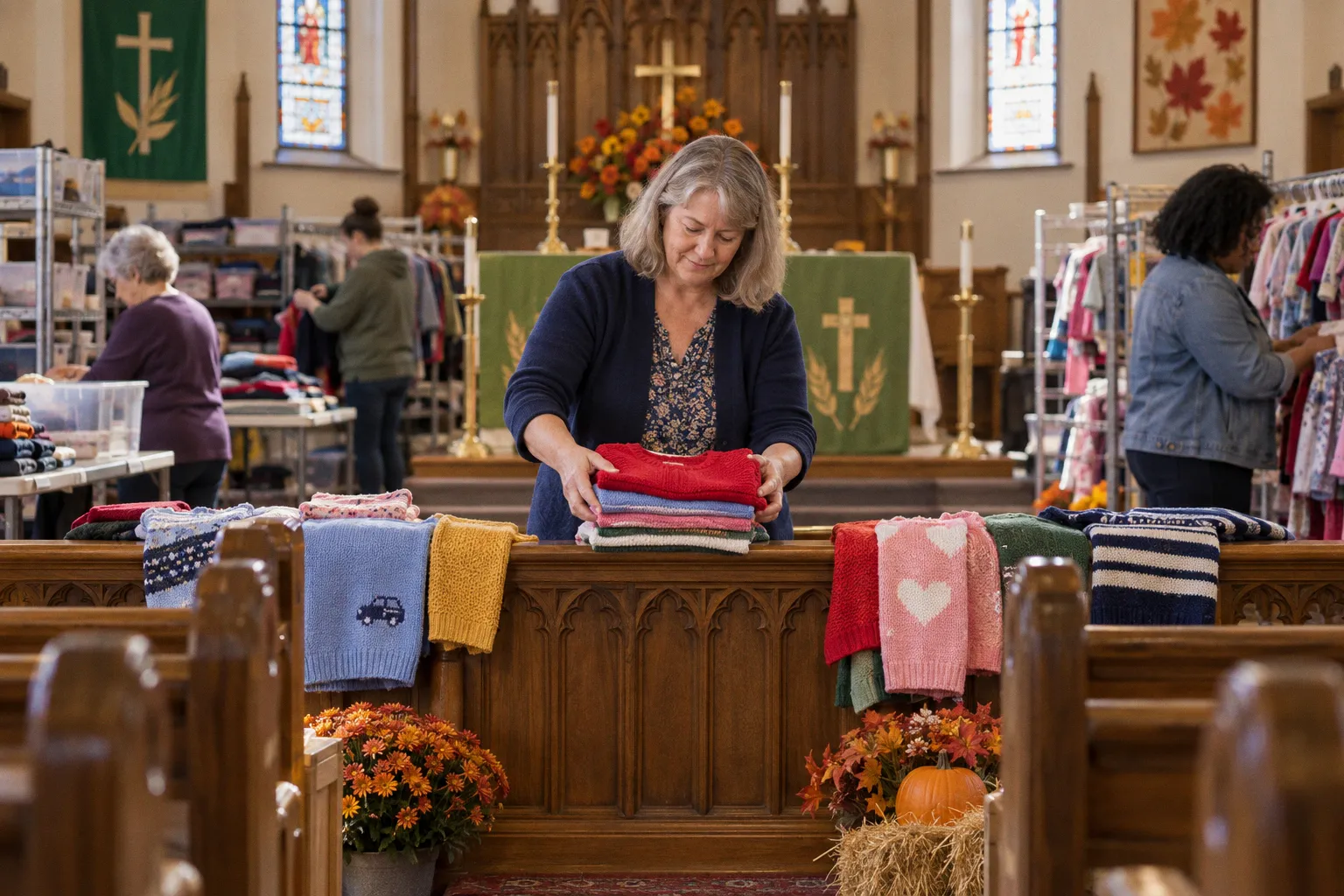
Without structured intake, organized storage, and clear distribution rules, that generosity quickly becomes a bottleneck. Piles grow, useful items disappear into overfilled bins, volunteers burn out, and families leave without finding what they need.
The challenge is not simply collecting more clothing. It is building a ministry that can receive, evaluate, store, present, and distribute clothing with consistency and respect. A sustainable closet needs a physical layout, defined volunteer roles, reliable donation channels, a fair distribution method, and intake standards that protect the quality of what reaches the floor.
This is a practical framework for church clothing closet setup for local families. Use it as a sequence for building the ministry: establish the room, assign responsibility, balance the inventory, create a predictable distribution process, and train volunteers to protect the standard.
A clothing closet is not a storage room with a door propped open. It is a ministry built around hospitality, logistics, and trust.
Designing a Dignified Shopping Experience: Storage and Layout
The first decision is layout, because layout shapes the way families experience the ministry. A visitor walking into a cluttered basement with overturned bins does not feel served; they feel as if they have been given access to whatever nobody else wanted. A clean, navigable room communicates something different: your church prepared this space for people to use.
The goal is not to imitate a department store or spend heavily on fixtures. The goal is to make the next step obvious. Visitors should be able to tell where to begin, volunteers should be able to restock without disrupting the room, and incoming donations should have a clear destination before they ever reach the display area.
Build the room around four zones
A workable clothing closet can use one room or several connected spaces. The right arrangement depends on the building, the congregation’s resources, accessibility requirements, and the expected flow of donations. A congregation working with a compact room may use movable racks, wall-mounted shelving, and scheduled processing sessions. A church with more space can separate intake and storage more fully.
The important principle is not a particular room size. It is separation of functions. Even a modest space becomes easier to operate when volunteers know which activities belong in each area.
1. Intake zone — The place where donations arrive. Keep it near the entrance when possible, with a table or cart for initial sorting. Do not allow unprocessed bags to spill directly into the shopping area.
2. Processing zone — The work area for inspecting, laundering when necessary, folding, sizing, tagging, and routing items. This zone needs good lighting and enough table space for more than one volunteer to work at a time.
3. Display zone — The shopping floor, arranged so families can browse without stepping around boxes or moving piles of clothing.
4. Storage zone — Backstock for seasonal items, extra sizes, and overflow inventory. Storage should be labeled clearly enough that a new volunteer can find a box without asking the shift captain.
| Zone | Purpose | Useful equipment |
|---|---|---|
| Intake | Receive and pre-sort donations | Drop-off table, labeled sorting bins, inspection supplies |
| Processing | Inspect, fold, size, and prepare items | Folding tables, laundry access, size markers, rolling carts |
| Display | Offer clothing in a browsable format | Garment racks, hangers, shelves, signs, mirrors |
| Storage | Hold seasonal and overflow inventory | Shelving, lidded bins, labels, inventory map |
Make the display area easy to read
Clothing should be grouped first by broad category and then by size. A family should not have to search through every rack to locate children’s pants or adult winter coats. Use large, readable signs at eye level. If the ministry serves families who speak different languages, simple icons and color coding can supplement written labels, but they should not replace clear words.
A practical arrangement might place:
- Children’s clothing near the front if it represents the largest part of the inventory
- Adult clothing on separate racks rather than mixed into children’s sections
- Shoes on low shelving, grouped by approximate size and type
- Coats and other bulky outerwear on a dedicated rack
- Accessories in labeled baskets or small bins rather than loose piles
- New or limited-quantity items in a clearly marked section so volunteers can explain any restrictions
Leave enough room for people to move through the space without brushing against racks or blocking another visitor. This is especially important for parents shopping with children, older adults, and anyone using a mobility aid. A ministry can have excellent inventory and still feel unwelcoming if the physical arrangement makes browsing difficult.
Mirrors are useful, particularly for coats, formal clothing, and shoes. A small seating area can help visitors try on footwear or organize items while they make selections. These details do not need to be expensive. They need to be intentional.
Treat storage as active inventory
Storage is not the place where clothing goes to disappear. Every shelf and bin should have a purpose. Label containers by category, size range, and season rather than using labels such as “miscellaneous” or “donations.” Those labels may save a few minutes during intake and cost hours later.
Keep frequently requested items where volunteers can reach them easily. Reserve higher shelves and less accessible corners for seasonal backstock that will not be needed immediately. Store clothing clean and dry, with lids or covers where appropriate. Never place donation bags directly on a damp floor or against a wall with a history of moisture problems.
A simple inventory map posted inside the storage area can prevent repeated searching. It might identify which shelving unit holds children’s shoes, where winter coats are stored during warmer months, and where new donations wait for processing. The map should be updated when the layout changes.
Structuring Volunteer Roles for Sustainable Operations
Volunteer enthusiasm is valuable, but enthusiasm is not an operating model. Clothing ministries become difficult to sustain when every volunteer is expected to do everything: unload donations, inspect garments, answer questions, restock racks, explain distribution rules, and clean the room before leaving.
Named roles reduce confusion. They also make training easier because volunteers can learn a defined set of tasks instead of trying to memorize the entire operation on their first day.
Five core volunteer positions
A small church may combine some of these roles during a quiet shift. The responsibilities should still be named, even when one person holds more than one position.
- Sorters inspect each garment, check for stains or damage, identify the size and category, and route unsuitable items away from the display floor.
- Laundry volunteers wash and dry garments that need cleaning before distribution. They should know which items require special handling and where clean items wait for final inspection.
- Floor volunteers hang clothing, fold shelves, restock sections, straighten displays, and report shortages or repeated quality problems.
- Greeters and shopping assistants welcome families, explain the process, help locate sizes, and offer assistance without taking control of the visitor’s choices.
- Intake and distribution volunteers record donations, explain visit limits or point rules, track basic inventory information, and close out the shift.
A volunteer coordinator or ministry lead should oversee the system as a whole. This person does not need to perform every task, but someone must be able to answer operational questions, update the schedule, resolve unclear cases, and review whether the rules are still serving the congregation’s purpose.
Use defined shifts, not open-ended availability
“Come whenever you can” sounds flexible, but it makes coverage unpredictable. Volunteers do better with clear time blocks and a clear expectation for what each block includes. A church might use morning and afternoon shifts, a processing session separate from public hours, or a monthly Saturday workday combined with shorter weekday intake periods.
The exact schedule should reflect the people available and the building’s access rules. A small ministry may need fewer public hours but more deliberate processing time. A larger program may divide volunteers into intake, floor, and distribution teams.
Every shift should have a captain. The captain arrives early enough to open the room, checks that the required stations are staffed, handles questions that fall outside a volunteer’s authority, and confirms that donations and personal information are secured before the building is closed.
Create the schedule far enough in advance for volunteers to plan around it. Post it on a church bulletin board and share it through the congregation’s normal digital communication channel. If cancellations are common, establish a backup list rather than relying on last-minute group messages.
If a volunteer schedule does not have a name beside every shift, the ministry is still depending on hope instead of coordination.
Train for hospitality as well as sorting
Clothing closet volunteer training should cover more than stain detection and rack organization. Volunteers are often the first representatives of the church whom a visiting family encounters. Their manner matters.
Training should include:
- How to greet visitors without making assumptions about their circumstances
- How to explain the distribution process in plain language
- How to help someone find an item without hovering or pressuring them
- How to handle a request that falls outside the ministry’s rules
- How to protect private information shared during intake
- How to respond when a visitor is frustrated or embarrassed
- When to involve the shift captain or ministry leader
The ministry should also decide in advance what volunteers may and may not promise. A volunteer should not guarantee that a particular size, brand, or item will be available later. It is better to state the limits honestly than to create expectations the closet cannot meet.
Balancing Inventory Through Permanent and Seasonal Donation Channels
A clothing closet rarely has a uniform inventory. Some categories arrive constantly while others remain scarce. One season may bring an excess of adult shirts and little children’s outerwear; another may produce more coats than the storage area can reasonably hold.
The answer is not to accept every donation without distinction. It is to use more than one donation channel and communicate specific needs clearly.
Permanent drop-off
A permanent or recurring drop-off option gives members and community partners a predictable way to donate. It might be an indoor intake desk during church office hours, a designated collection area during worship services, or scheduled donation appointments when the building cannot remain open.
The most important feature is control. Donations should arrive at a place where someone can assess them, not at an unattended corner that turns into an overflow pile. If the church uses an outdoor bin, a designated volunteer must inspect it regularly, move items into a dry processing area, and remove trash or unusable clothing promptly. A full or wet bin quickly becomes a public signal that the ministry is not keeping up.
Permanent drop-off works best when the church publishes a short list of current needs and current limits. Supporters should know whether the closet is accepting children’s shoes, adult workwear, bedding, or winter coats. They should also know which items cannot be accepted.
Seasonal campaigns
Seasonal campaigns let the congregation focus attention on a defined gap. They are most effective when the request is specific, the collection period is manageable, and donors understand how the items will be used.
Useful campaign themes may include:
- Back-to-school clothing and shoes for children and teenagers
- Cold-weather outerwear such as coats, hats, gloves, scarves, and warm boots
- Workwear and interview clothing for adults preparing for employment
- Spring clothing and dress items for families who need lighter layers or special-occasion options
- Baby and toddler essentials when those sizes are consistently underrepresented
A campaign announcement should state the preferred categories, sizes if there is a clear shortage, condition requirements, collection dates, and the drop-off location. “Donate clothing” creates a broad response. “Please bring clean children’s pants, shirts, and shoes in usable condition during the posted collection period” gives people a better chance of donating what the closet can actually distribute.
Seasonal drives should supplement the permanent channel rather than replace it. A permanent process catches needs between campaigns and gives the ministry a way to manage donations that do not fit the current appeal.
Work with community partners deliberately
Schools, shelters, employers, neighborhood associations, and other churches may become useful partners. Partnership is most effective when the church explains its intake policy before accepting a large collection. Otherwise, a well-meaning organization may deliver a mixed load of clothing that requires more labor than the ministry can provide.
Give partners a short written guide covering:
- Acceptable condition
- Needed categories and sizes
- Items the ministry cannot use
- Packaging and labeling preferences
- Delivery hours and contact information
- Whether the church can provide a donation receipt or acknowledgment
This is part of managing church donation sorting centers responsibly. The ministry is not rejecting generosity; it is protecting the time of volunteers and the dignity of families who use the closet.
Managing Distribution with Point Systems and Tiered Categorization
A free-for-all distribution model may appear welcoming at first, but it creates problems quickly. Visitors may not know what they are allowed to take, volunteers may enforce inconsistent limits, and a small number of visits can consume the most visible or desirable items.
A distribution system should be easy to explain, flexible enough to respond to urgent needs, and transparent enough that visitors understand what will happen before they begin selecting clothing.
Organize by category and size
The broad categories should match the community the closet serves. Many programs use groupings such as:
- Infant
- Toddler
- Youth girls
- Youth boys
- Adult women
- Adult men
These categories are only a starting point. The ministry may need separate sections for school uniforms, workwear, formal clothing, maternity clothing, adaptive garments, or seasonal outerwear. The point is to make the search faster and reduce the amount of handling required.
Within each category, group garments by size as consistently as possible. Do not rely on volunteers to remember where a particular size belongs. Use dividers, shelf labels, and signage that remains in place after the room is restocked.
Choose a distribution method the team can administer
A point system can help a church set reasonable limits without assigning a dollar value to donated clothing. For example, the ministry might provide a base number of points per family visit, assign a lower cost to everyday garments, and assign a higher cost to bulky or high-demand items such as coats and shoes.
The numbers are not universal rules. They should be set according to available inventory, household size, visit frequency, and the ministry’s purpose. A family with several children may need an adjustment that a single visitor does not. A household affected by a fire, flood, or other emergency may require a different response altogether.
If the church uses points, the rules should answer basic questions:
- How many points does each visiting household receive?
- Are children and adults counted together or separately?
- How are coats, shoes, uniforms, and accessories counted?
- Can unused points carry over?
- Who may authorize an exception?
- How often may a household return?
- What happens when a needed item is unavailable?
Post the rules where visitors can read them, and train greeters to explain them without sounding punitive. The purpose is to share inventory fairly, not to make a family prove that it deserves clothing.
Some churches may prefer item limits instead of points. For example, the ministry might set a limit on outerwear, shoes, or formal outfits during periods of high demand. This can be easier for a small team to administer. The choice matters less than consistency and the ability to make compassionate exceptions through a clearly designated leader.
| Distribution tool | Purpose | Planning consideration |
|---|---|---|
| Size and category sections | Speed up selection | Match categories to the families served |
| Point system | Set a flexible per-visit limit | Keep the explanation short and consistent |
| Item limits | Protect scarce or bulky inventory | Review limits when seasonal demand changes |
| Appointment or opening schedule | Create predictable access | Publish hours and keep them dependable |
| Exception process | Respond to urgent needs | Give one trained leader authority to approve exceptions |
Keep public hours predictable
A clothing closet does not need to be open every day to be useful. It does need to be dependable. Choose public hours that the volunteer team can cover and that families can remember. Depending on capacity, this may mean a weekly opening, a twice-monthly distribution day, or a recurring monthly schedule supported by appointment-based intake.
Post the schedule in the church bulletin, on the ministry page, and at the building entrance. If hours change because of holidays or weather, communicate the change as early as possible. A family who travels to a closed building may not return, especially if the original visit required arranging transportation or time away from work.
Quality Control and Intake Policies for Community Outreach
Quality control is where a clothing ministry demonstrates whether it understands its responsibility. A donated item is not automatically a useful item. Clothing that is stained, badly damaged, unsafe, or unsuitable for distribution consumes volunteer time and can make the entire room feel neglected.
The ministry should establish a written intake policy before the first large donation arrives. Volunteers need permission to decline items without feeling that they are being ungrateful.
Set a clear condition standard
As a general rule, accepted clothing should be clean, dry, wearable, and appropriate for the intended recipient. Depending on the category, volunteers should inspect for:
- Permanent stains, heavy discoloration, or visible food residue
- Tears, holes, stretched seams, and damaged elastic
- Broken zippers, missing buttons, and unsafe fasteners
- Strong smoke, mildew, chemical, or pet odors
- Mold, insects, or evidence of water damage
- Excessive wear that makes the garment unlikely to survive further use
- Items that are not appropriate for the ministry’s stated purpose
Underclothing should generally be accepted only when it is new and packaged or tagged as new. Shoes need particular attention: check soles, fasteners, interior condition, and whether the pair is complete. Children’s items should not contain loose parts or damaged features that could create a safety concern.
Rejected items should not be quietly returned to the display floor. Route them to an appropriate textile recycling option when one is available, or dispose of them according to local requirements. Volunteers should record recurring problems so the ministry can improve donor communication.
Keep inspection upstream
The intake table is the right place for the first decision. Donors should not be expected to sort every item perfectly, but the church should prevent unprocessed bags from entering the shopping area.
A basic intake sequence looks like this:
1. Move donations to a dry, designated intake surface.
2. Separate obvious trash, wet items, and non-clothing materials.
3. Inspect garments for condition and safety.
4. Identify category and size.
5. Launder or set aside items that require cleaning.
6. Place approved items in the processing queue.
7. Label and store overflow or seasonal inventory.
The sequence can be adapted to the building, but the principle remains: every garment passes through a trained volunteer before it is displayed.
Be cautious with unattended donation bins
Outdoor bins can be convenient, but they create risks when they are not monitored. Rain, snow, pests, and unauthorized dumping can turn a donation point into a waste-management problem. If the church uses a bin, it should have a posted schedule, a responsible volunteer or team, and a clear plan for overflow.
Many congregations find that an indoor intake desk or scheduled drop-off window is easier to control. It gives volunteers the opportunity to thank donors, explain current needs, and prevent unsuitable items from entering the system. It also gives the ministry a better record of where donations are coming from and which appeals are producing useful inventory.
Review the policy with outside partners
When schools, businesses, shelters, or other churches organize collections, provide the intake standard before the drive begins. A one-page guide can prevent the “dump and run” pattern in which a partner drops off unsorted bags and leaves the entire burden to the receiving ministry.
The guide should say what the church currently needs, what condition is acceptable, how donations should be packaged, and when deliveries can be received. If a partner wants to collect a category the ministry does not distribute, discuss alternatives before the campaign begins.
A clothing closet should offer what a family can use, not simply what another household no longer wanted.
Closing the Loop
A clothing closet that runs well does not depend on an endless supply of volunteers improvising around piles of bags. It depends on systems that make good decisions repeatable: a room divided by function, named volunteer roles, permanent and seasonal donation channels, a distribution method people can understand, and quality standards that protect both the ministry and the families it serves.
Start with the physical space. Decide where donations will arrive, where they will be inspected, where families will browse, and where backstock will remain. Then build the volunteer schedule around that arrangement. Recruiting more people before the room and process are ready usually creates congestion rather than capacity.
Next, publish the intake policy and donation needs. Supporters are more likely to give useful clothing when the church explains what is wanted and why. Train volunteers to apply the standard consistently, while giving a ministry leader authority to respond compassionately when a family’s circumstances require an exception.
The strongest faith-based clothing outreach programs are not the ones with the most bags in storage. They are the ones where visitors can find suitable clothing without embarrassment, volunteers know what to do when they arrive, and donors understand how their contributions will be used.
That is the real purpose of organizing a church clothing ministry: turning generosity into dependable service. A well-run closet does more than move clothing from one household to another. It gives local families a place where practical help is offered with order, welcome, and respect.