Church food pantry sorting: a step-by-step guide
Across our communities, the line between a full pantry and an empty one runs through a folding table at the back of a fellowship hall.
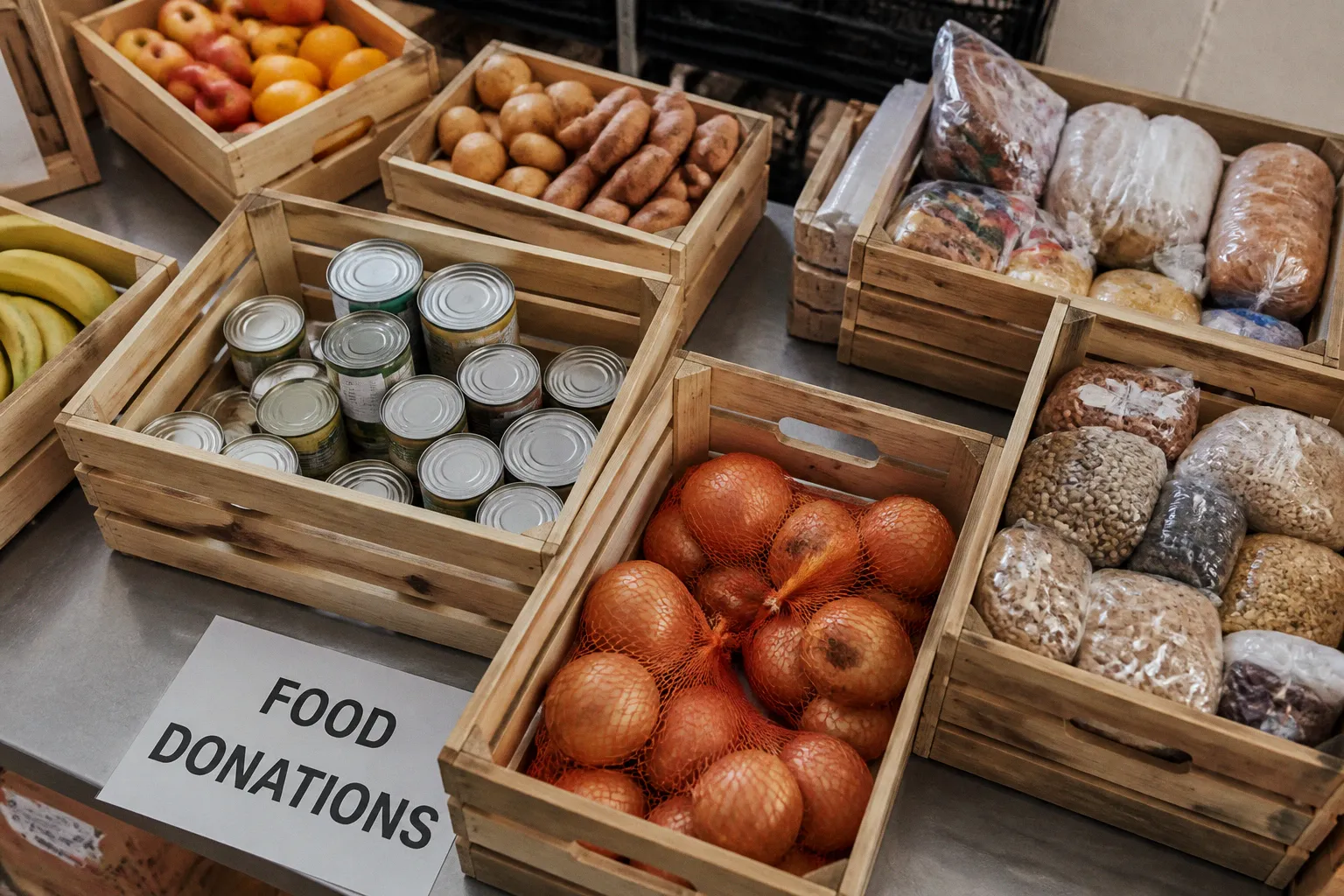
Every week, donations arrive in mixed condition — some lovingly gathered, some clearly the overflow of a family's refrigerator clean-out. The work of sorting is the work of protecting dignity: someone we will never meet will receive each can, each box, each jar. How we handle what comes through the door determines whether our ministry of provision is trustworthy or merely well-intentioned.
Sorting food is not glamorous work. It is repetitive, sometimes tiring, and it asks the same question of every volunteer: would I put this in my own pantry, on my own shelf, for someone I love? The answer requires not only attention but a shared set of practices that any volunteer can follow and any supervisor can teach. Good church food pantry donation sorting guidelines should make sound judgment easier, not turn every volunteer into a specialist before the first box is opened.
The aim is not perfection. It is consistency: a process that protects food safety, respects the people who donated, and ensures that the people receiving food are offered something useful and worthy. What follows is a working guide for church food pantry coordinators, volunteer captains, and the curious newcomer who wants to understand the why behind the workflow before joining the line.
Establishing an efficient intake workflow
A pantry that runs well is rarely the one with the most volunteers or the largest donations. It is the one with a clear workflow that volunteers can step into without a long orientation. The most reliable approach for pantries of any size is a four-step intake sequence: Accept–Group–Count–Deliver.
The sequence is simple enough to remember, but it works because each stage has a distinct purpose. Donations should not move directly from a donor's hands to a shelf simply because the room is busy. A short pause at each station catches problems early and gives the pantry a more accurate picture of what it can distribute.
Accept: receive and screen
Accept is the receiving station. Volunteers here greet the donor, record the donation on whatever tally sheet, clipboard, or spreadsheet the pantry already uses, and perform a first-pass visual check for anything that should not enter the food storage area.
That first check is not a full inspection. It is a quick decision about obvious concerns: open packages, leaking containers, severely damaged boxes, or broken glass. If a donation includes pet food, household chemicals, toiletries, or other non-food items, those should be separated immediately if the pantry cannot distribute them through the same program.
The receiving area should have a few practical supplies within reach:
- a marker for labeling boxes or shelves;
- a clipboard or tablet for recording donations;
- a clean table for inspection;
- a separate container for damaged or questionable goods;
- disposable gloves and cleaning supplies for spills;
- clearly marked space for items that require a coordinator's decision.
That last category matters. Volunteers should not feel pressured to make an uncertain call while a line of donations is waiting behind them. A clearly identified review area keeps questionable items from entering inventory without requiring a volunteer to discard something they do not know how to assess.
Group: sort by kind and handling needs
Group is the sorting station. Before donations pile up, mark the room with broad zones such as canned goods, dry goods, breakfast items, baby and personal care, fresh produce, and refrigerated items. The exact categories will depend on the pantry's program, but they should be visible and easy to understand.
Designated sorting zones make the difference between a calm afternoon and an afternoon spent stopping to ask where each item belongs. They also prevent a common failure in the church food drive sorting process: placing food in a convenient empty box even though that box later ends up in the wrong part of the pantry.
Grouping should account for more than the product name. It should also account for:
- whether the item is shelf-stable, refrigerated, or frozen;
- whether the package is fragile;
- whether the item contains a common allergen;
- whether it belongs in a special distribution group, such as infant supplies;
- whether it is heavy enough to require lower shelving;
- whether its date or condition requires a second look.
If volunteers are working in a small fellowship hall, the zones do not need to be elaborate. A few folding tables, labeled carts, or clean floor pallets can create a workable layout. The important thing is that the path from receiving to sorting does not cross unnecessarily with the path from sorting to storage.
Count: turn donations into usable information
Count is the inventory station. Once items are grouped, someone tallies them: cans of vegetables, boxes of cereal, jars of peanut butter, bags of rice, and other categories the pantry regularly tracks. This is the point at which a pile of donations becomes useful information for the next distribution day.
Counting does not need to become a complicated accounting exercise. A pantry may track individual units, cases, or broad categories depending on its size. What matters is that the system is consistent from one sorting day to the next. If one volunteer records a case as one item and another records it as twelve, the resulting inventory will not help anyone plan.
A count also reveals patterns. The pantry may have plenty of canned vegetables but very little protein, or an abundance of pasta but not enough sauce. It may discover that certain donations arrive more quickly than they can be distributed, while other staples disappear almost immediately. Those observations can guide future church announcements and food drives without turning the ministry into a shopping list detached from local need.
Deliver: stock for the next person, not just the next hour
Deliver is the stocking station. Items are placed on shelves, in bins, or on pallets in a way that makes distribution day smooth. Older items should be rotated to the front, heavier goods should go on lower shelves, and allergens or specialty items should be labeled clearly.
The person stocking should not have to undo the work of the person counting. If a box has a date that needs attention, or if a product belongs in a separate category, that information should travel with the item. A simple shelf label or note on the inventory sheet is often enough.
The four steps can happen quickly once the room is set up, but speed should come from reducing confusion rather than skipping judgment.
We do not sort food simply to move boxes more quickly. We sort food so that what reaches the shelf can be trusted, and so that the act of giving is not quietly undone by the act of receiving.
Reading dates with care: what expiration labels actually mean
Few things cause more confusion at a sorting table than the date stamped on a package. Volunteers often assume that any past date means the food must be discarded, while others treat every date as meaningless. Both reactions create problems. Understanding what food date labels communicate is one of the most useful food pantry expiration date guidelines a volunteer can learn.
In the United States, infant formula is the principal food product for which a federally required use-by date functions as a safety requirement. For many other foods, the date printed on the package is primarily a quality indicator set by the manufacturer rather than an automatic safety deadline. That does not mean every item is safe indefinitely. It means the date should be read alongside the type of food, the condition of the package, and the way the item has been stored.
The labels volunteers see most often include:
| Label | What it generally means | What it does not automatically mean |
|---|---|---|
| “Best if Used By” | Quality, including taste, texture, or freshness, may begin to decline after the date. | It is not automatically a safety cutoff. |
| “Use By” | The manufacturer's recommended date for peak quality or intended use. | For most foods, it is not by itself a federal safety deadline. |
| “Sell By” | A retail guide indicating how long a store should display the product. | It does not necessarily mean the food must be discarded that day. |
| “Expires On” | A date that may carry a more specific meaning depending on the product and manufacturer. | It should not be interpreted without considering the product category and condition. |
A date review should begin with the package, not end with the date. Look for swelling, leaking, torn seals, mold, insect activity, moisture damage, unusual odors, or evidence that the food was stored in extreme heat. A product with a recent date but compromised packaging is not a good donation. A sound, shelf-stable product beyond a quality date may warrant a different decision, subject to the pantry's policy and local requirements.
Dairy, eggs, meat, and other refrigerated foods require particular care because their safety depends heavily on temperature control. A volunteer should not rely on a printed date to compensate for an uncertain cold chain. If milk, yogurt, cheese, eggs, or meat arrived warm, sat in a vehicle, or cannot be shown to have remained properly chilled, it should be set aside for a coordinator's decision. The same principle applies to frozen food that has thawed and may have been refrozen.
For refrigerated foods that have remained continuously cold and are in intact packaging, the pantry should follow its written policy and applicable local food-safety guidance. Some foods may remain usable beyond a retail date, while others should be distributed promptly. The important point is that dairy and meat do require refrigeration; a pantry cannot treat them as ordinary shelf-stable donations simply because the package looks clean.
Infant formula deserves a separate rule. Formula past its required date, opened formula, or formula with damaged packaging should not be distributed. This is one area where a volunteer should not improvise or apply the same judgment used for canned vegetables or dry pasta.
When a pantry is uncertain, the answer should be documented rather than guessed. A coordinator can contact the local health department, food bank, or partner agency for guidance and then add the decision to the volunteer training notes. Over time, those decisions create a practical policy that new volunteers can use without having to start from zero.
Inspecting cans and packages: signs we never pass along
Canned goods are the backbone of many church pantries: shelf-stable, transportable, and dense with nutrition. But cans also carry risks that may not be visible until the container is opened. The sorting station must treat every can as a small promise about what is inside, and there are visual signs that break that promise immediately.
Always set aside for disposal or coordinator review any can that shows:
- Swelling or bulging at the top, bottom, or seams, which can indicate gas produced by bacterial activity inside;
- Severe dents, particularly along the seams or around the rim where the seal is formed;
- Rusting that has compromised the metal, especially deep rust or rust that has eaten through toward the contents;
- Leaking at the seam, around the lid, or from punctures;
- Broken seals, including a lid that moves when pressed or a pull-tab can with a damaged closure;
- Evidence of contamination, such as sticky residue, foul odor, or signs that the can was exposed to chemicals.
A dent in the middle of a can is not the same as damage to a seam. Volunteers do not need to make technical judgments about every mark, however. If a can's condition is difficult to interpret, putting it in the review area is safer than forcing a quick decision.
Do not open a questionable can to see whether the food inside looks acceptable. A damaged container may already have lost its protective seal, and opening it can spread contamination or create an avoidable mess. The pantry should have a clear method for disposing of rejected cans rather than placing them back in the donation stream.
Canned goods also benefit from sensible rotation. Low-acid foods such as vegetables, meats, beans, soups, and fish generally retain quality for a different period than high-acid foods such as fruits, tomatoes, pickles, sauerkraut, and juices. Manufacturers' dates, package condition, and storage history still matter, so broad category guidance should not replace inspection. The practical rule is to keep older sound stock visible and moving first, while removing any item whose package condition raises a safety concern.
For dry goods such as rice, pasta, beans, cereal, and boxed meals, the inspection is more straightforward:
1. Check that the package is sealed and intact.
2. Look for moisture damage, staining, or a collapsed box that may have been exposed to water.
3. Watch for insect activity, webbing, holes, or small grains escaping from a bag.
4. Check for mold or an unusual odor where the package can be inspected safely.
5. Set torn or partially opened bags aside for evaluation rather than simply repackaging them and placing them on the shelf.
Repackaging is not a way to erase uncertainty. If a bag has been opened, the pantry may not know how long it was open, whether it was exposed to pests, or whether the contents were mixed with another product. Some pantries can safely repackage certain foods under an established procedure; others should discard them. The decision should come from the pantry's policy, not from the pressure to make every donation count.
Creating a stable home: storage conditions that protect what we receive
Donated food has already traveled. It may have sat in a car trunk, a church foyer, or a donation bin in weather that was not kind. The pantry's storage room is the last chance to give it a stable home before it travels again. Even a small room, organized with intention, will outperform a large room left to chance.
The first important variable is temperature. Dry storage — the room where canned and boxed goods live — should be cool, dry, and protected from large temperature swings. A wall thermometer helps the coordinator notice problems that a brief visit might miss. If the pantry shares space with a boiler, kitchen, or exterior wall that receives afternoon sun, the room may need a different layout, ventilation, or seasonal plan.
Heat accelerates the breakdown of fats, vitamins, and packaging integrity. It can also create conditions in which certain foods spoil more quickly than volunteers expect. The goal is not merely to keep the room comfortable for people; it is to maintain a stable environment for the food.
Dry storage should be:
- Dry, with no plumbing overhead, no history of leaks, and no persistent condensation;
- Easy to clean, with sealed flooring and shelving that can be wiped down;
- Off the floor, using pallets or shelving so that the lowest shelf is raised above spills and minor flooding;
- Away from chemicals, since cleaning supplies, pesticides, fuels, and food should not share storage space;
- Protected from pests, with doors, windows, and wall openings maintained as well as the building allows;
- Accessible, so volunteers can inspect labels, clean behind shelves, and rotate stock without moving an entire stack.
Shelving should be stable and arranged so that food is not crushed. Heavy cans, jars, and large bags belong on lower shelves. Glass jars should not be stacked where they can fall onto a volunteer or a person selecting food. Boxes should not be packed so tightly that their labels disappear from view.
Refrigerated and frozen items need a separate plan. Dairy and meat require refrigeration, and that refrigeration must be available from receipt through distribution. Fresh produce and bread do not all have the same storage needs: some produce is best kept refrigerated, some is better held in a cool, dry place, and bread may be stored at room temperature for short-term distribution unless the product label or local food-safety practice indicates otherwise. The pantry should identify storage needs item by item rather than placing every fresh donation under one universal rule.
For example, leafy greens, cut fruit, soft berries, and other highly perishable produce generally need prompt chilling. Whole onions, potatoes, winter squash, and some other produce may require cool, dry storage instead. Bread can be kept in a clean, dry area when it is intended for prompt distribution, while mold, crushing, moisture, or pest exposure are reasons to reject it. The exact handling plan should match the food and the time before distribution.
A pantry that accepts perishables without a reliable way to handle them will eventually have to apologize. If refrigeration is not available, the honest and pastoral choice is to partner with a nearby agency that can receive those donations rather than accept them into the church and hope for the best. A generous donation is not helpful if the pantry cannot preserve it safely.
Making inspection part of the storage routine
Sorting is not finished when the last donation reaches a shelf. Storage requires periodic attention because food can become damaged after intake, and a crowded shelf can hide the earliest signs of a problem.
A volunteer or coordinator should periodically walk the storage room with a simple purpose: look, rotate, clean, and record. The walk-through can include:
- checking the floor and lower shelves for leaks or spills;
- looking behind and beneath shelving for pests;
- bringing older sound products forward;
- removing crushed boxes and compromised packages;
- checking that refrigerated items remain cold and appropriately organized;
- updating the inventory when large quantities have been distributed;
- making sure allergens and special-diet items remain identifiable.
This is also the moment to notice whether the room's organization still matches the pantry's actual work. A category that made sense during a holiday food drive may not be useful during ordinary weekly intake. A shelf label that was obvious to the coordinator may be confusing to a new volunteer. Good systems are revised when the people using them discover friction.
The pantry should keep rejected items physically separate from accepted inventory until the decision is complete. A damaged can left beside good cans invites accidental distribution. The same is true of an item waiting for a coordinator's decision. Separation is a small act, but it prevents a great many mistakes.
Sustaining the workers: rhythms for productive shifts
A pantry run entirely by exhausted volunteers is a pantry that will lose its volunteers. The work of sorting — bending, lifting, reading small print, and making judgment calls — is physically and emotionally taxing in ways that are easy to underestimate. Holding space for volunteers is not separate from the work; it is part of the work.
The most concrete practice is scheduling shifts in manageable blocks, often around two to three hours depending on the task, the room, and the volunteer group. Shorter shifts may leave too little time for orientation, while longer shifts can reduce attention as fatigue sets in. The right length is the one that allows volunteers to work carefully without treating exhaustion as a measure of commitment.
Within a shift, a few rhythms help:
- Begin with a brief check-in: explain what has arrived, which zone needs the most help, and who is new or returning.
- Review the decision rules: remind volunteers which items belong in the review area and who has authority to make the final call.
- Rotate stations when possible. Sorting, counting, and shelving use different muscles and different kinds of attention.
- Use safe lifting habits: ask for help with heavy boxes, keep aisles clear, and avoid stacking items where they can fall.
- Pause in the middle for water, a snack, and a moment to sit. The ministry does not become more faithful when volunteers are pushed past their limits.
- Close with specific thanks. Appreciation is more meaningful when it names the work completed and explains how that work supports the next distribution.
A volunteer who leaves a shift feeling unseen may not return. A volunteer who leaves knowing that their careful inspection, counting, labeling, or cleaning made the pantry easier to use is more likely to come back. The atmosphere matters because the quality of sorting depends on attention, and attention is difficult to sustain in a room where people feel rushed or disposable.
Training should be equally practical. New volunteers do not need a lecture on every possible food-safety question before they begin. They need to know the layout, the four intake steps, the obvious rejection signs, the location of the review area, and the name of the person to ask when something is uncertain. A short demonstration followed by supervised practice is often more useful than a long list of rules.
Experienced volunteers can also be given defined responsibilities: receiving, date review, cold-food handling, inventory, or storage rotation. That does not mean one person must carry the entire ministry. It means the pantry has visible points of accountability, so a new volunteer knows where to take a question.
A ministry built on ordinary attention
Sorting food is a small, repeated, mostly invisible ministry. It rarely makes the church bulletin and almost never makes the sermon illustration. But it is the place where a theology of hospitality meets a theology of stewardship — where the goods we have been given are handled in a way that honors both the giver and the receiver.
The process is not complicated, but it does ask for discipline. Accept donations deliberately. Group them according to what they are and how they must be handled. Count them in a consistent way. Deliver them to shelves or distribution tables where another volunteer can understand the system. Read dates with context, inspect packages honestly, and give refrigerated, frozen, fresh, and shelf-stable foods the storage conditions each one requires.
We do not sort quickly at the expense of care, and we do not treat caution as an excuse for waste. We sort with attention, with rhythm, and with one another. Every pantry will adapt these practices to its own space, volunteers, equipment, and neighborhood. The non-negotiable part is the posture: care that treats every can as someone's dinner and every shift as a form of shared service.
When that posture is joined to a dependable workflow, the pantry becomes more than a room full of donations. It becomes a ministry people can trust.