Church nature retreat: five steps to plan a spiritual event
A church nature retreat fails when outdoor activity becomes the program and spiritual practice becomes a decorative addition.
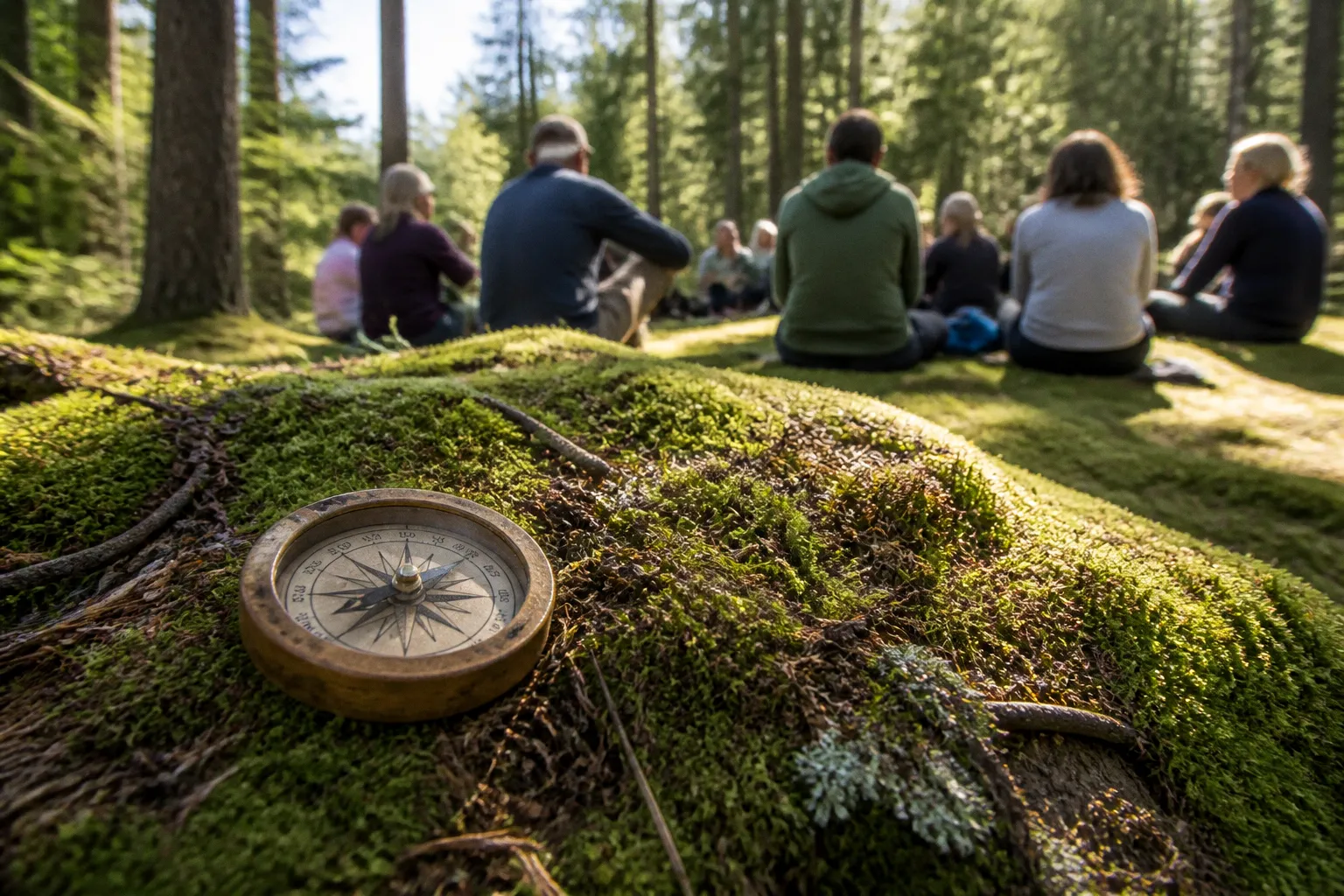
The structural problem is usually visible in the schedule: extended travel, meals, recreation, and unplanned conversation occupy the day, while prayer, Scripture, silence, and communal worship are assigned whatever time remains.
A sound church nature retreat planning guide begins with the opposite arrangement. The spiritual purpose determines the site, the site determines the schedule, and the schedule determines the required staffing, accessibility provisions, and safety procedures. The retreat is not merely a church outing conducted outdoors; it is a temporary liturgical and pastoral framework in which place, bodily activity, and Christian attention are coordinated.
The following five steps provide a practical method for planning a retreat in nature without confusing physical movement with spiritual formation.
1. Define the Spiritual Purpose Before Choosing the Site
The first planning error is selecting a scenic location and attempting to assign theological meaning to it afterward. A retreat site cannot supply a purpose that the congregation has not defined. It may provide quiet, shade, elevation, water, or adequate facilities, but these are environmental conditions rather than spiritual objectives.
The planning team should state the intended outcome in one precise sentence. For example:
- “The retreat will give participants a structured opportunity to practice daily prayer and silence.”
- “The retreat will support grief ministry through communal lament, remembrance, and pastoral conversation.”
- “The retreat will connect physical activity with Christian stewardship of the body and the created order.”
- “The retreat will provide intergenerational fellowship organized around worship, service, and attentive presence.”
- “The retreat will give ministry leaders a controlled setting for rest, theological reflection, and vocational discernment.”
Each purpose produces a different operational framework. A retreat centered on silence requires a different site and staffing pattern from a family recreation day. A grief support retreat requires trained pastoral leadership, private conversation areas, and a clear process for responding to acute distress. A faith and fitness trail event requires route assessment, hydration planning, pacing options, and a theological rationale for bodily movement that does not reduce Christian practice to wellness language.
Establish one primary objective
A retreat may include several legitimate activities, but it should have one governing objective. Without that hierarchy, the event becomes a collection of unrelated features: a hike, a picnic, a Bible study, a campfire, and perhaps a worship service. Participants may enjoy each component, but the event will lack internal coherence.
Use the following hierarchy:
1. Primary spiritual objective
The central form of formation, pastoral care, or communal worship.
2. Secondary practices
Prayer, Scripture reading, silence, conversation, singing, service, or physical activity that support the primary objective.
3. Recreational provisions
Activities included for fellowship, energy management, and age-appropriate participation.
4. Administrative requirements
Transportation, registration, meals, insurance, permissions, staffing, and emergency procedures.
This order matters because administrative decisions should serve the purpose rather than displace it. If the stated objective is contemplative prayer, a schedule dominated by competitive games is not balanced; it is misaligned.
Distinguish spiritual formation from general wellness
Christian mindfulness, spiritual wellness walks, and outdoor prayer spaces can be useful concepts, but they require theological definition. A Lutheran retreat should not treat prayer as a technique for producing a preferred mental state. Prayer is an address to God, shaped by the Word, the promises of Christ, and the life of the Church. Silence may assist attention, but silence is not itself a sacrament or a guarantee of spiritual efficacy.
The same distinction applies to physical activity. Walking can create a stable rhythm for prayer and conversation, while exercise can support bodily stewardship. Neither activity becomes Christian merely because it takes place in a forest. The Christian character of the retreat is established through its proclamation, prayer, pastoral care, and communal practices.
The location may support attention, but the church’s spiritual purpose must be established before the landscape enters the plan.
Write a purpose statement that controls later decisions
A useful purpose statement should answer four questions:
- What form of Christian practice will be emphasized?
- Who is the retreat designed to serve?
- What will participants be asked to do?
- What will the planning team deliberately exclude?
An example might read:
This retreat will help adults and older adolescents establish a daily pattern of prayer through Scripture, silent walking, and communal worship; it will include moderate physical activity and exclude competitive programming that would fragment the contemplative structure.
The final clause is operationally significant. A purpose statement that does not limit the program is only a description of good intentions.
2. Select a Site That Supports Contemplation and Connection
The appropriate site is not necessarily the most remote, scenic, or secluded location. A church nature retreat requires a place that can support worship, movement, conversation, silence, food service, sanitation, and emergency access within one coherent environment.
Site selection should therefore be treated as a categorical assessment rather than a visual preference.
Evaluate the site across five dimensions
1. Environmental suitability
Examine the physical characteristics that will shape the retreat:
- Trail surfaces, grades, distances, and exposure to weather.
- Availability of shaded and sheltered areas.
- Noise from roads, nearby recreation, machinery, or other groups.
- Water access and the reliability of potable water.
- Conditions that may affect participants with allergies, respiratory limitations, mobility restrictions, or sensory sensitivities.
- Seasonal hazards such as heat, flooding, ice, insects, unstable ground, or rapidly changing weather.
A site that appears quiet during an initial visit may become unsuitable during a scheduled event if it is adjacent to a sports field, a public gathering area, or a road with regular traffic. The planning team should inspect the site during the same day and general season in which the retreat will occur.
2. Liturgical suitability
The site should accommodate the intended worship without forcing the congregation into an improvised arrangement that weakens participation. Determine whether there is a stable location for the altar or communion table, a clear position for the reader or preacher, seating or standing space, protection for worship materials, and sufficient visibility for the assembly.
Outdoor worship does not require architectural replication. It does require liturgical intelligibility. Participants should know where to gather, when worship begins, where the readings originate, and how the service proceeds. The liturgical rubric remains a framework for common prayer even when the building is absent.
If Holy Communion is planned, the pastor and planning team should resolve in advance the ecclesial, pastoral, and practical requirements for administration of the Sacrament. Wind, insects, uneven surfaces, transportation, and storage of vessels are not merely logistical inconveniences; they affect the order and reverence of the service. In some settings, Morning Prayer, Evening Prayer, or a Service of the Word will provide a more suitable structure.
3. Social suitability
A retreat should create both connection and appropriate separation. Participants need a common gathering area, but they also need locations for quiet prayer, private pastoral conversation, and small-group discussion.
Map the site according to function:
| Site function | Required condition | Common failure |
|---|---|---|
| Communal worship | Stable, visible, sheltered gathering area | Worship is conducted wherever space happens to be available |
| Silent prayer | Low-noise area with clear boundaries | Participants are told to “find a quiet place” without direction |
| Small-group conversation | Separated zones with reasonable privacy | Every group remains within hearing distance of the others |
| Meals | Sanitary, weather-protected food area | Food service consumes the central worship space |
| Recreation | Defined area with supervision and route limits | Recreational activity spreads across the retreat site |
| Emergency response | Vehicle access or a documented extraction route | Staff discover access limitations during an incident |
4. Accessibility
Accessibility is part of the retreat’s theological integrity, not an optional accommodation added after the program is designed. If the event is intended for the congregation, the physical and sensory demands must be assessed before registration opens.
Consider:
- Step-free access to the principal gathering area.
- Firm surfaces for wheelchairs, walkers, and participants with balance limitations.
- Seating at regular intervals along walking routes.
- Restroom access and distance from the main gathering point.
- Shade, water, and temperature management.
- Written schedules and verbal instructions.
- Alternatives for participants who cannot complete the planned route.
- Quiet options for participants affected by sensory overload.
- Transportation arrangements that do not assume every participant can drive.
A retreat can retain an outdoor character without requiring every person to hike. One group may walk a defined prayer path, another may remain at a central outdoor prayer space, and a third may participate through Scripture, music, or service preparation. Equivalent participation is more important than identical movement.
5. Administrative suitability
Confirm the site’s reservation terms, opening hours, permit requirements, insurance conditions, fire restrictions, cancellation policies, and emergency procedures. If the retreat uses church property, the same discipline applies: establish who has authority over the grounds, which facilities are available, and what limitations govern their use.
The site should be visited by at least two members of the planning team, including the person responsible for safety. A single visual inspection is insufficient. Walk the proposed routes, measure approximate travel times, identify dead zones for mobile communication, and note where staff can position themselves to maintain oversight without disrupting silence.
3. Structure the Daily Rhythm Between Activity and Silence
The schedule is the retreat’s primary instrument of formation. It communicates what the church considers worthy of attention. If worship is placed between hurried transitions, it will be experienced as another appointment. If silence is introduced without preparation or duration, it will become an ambiguous pause rather than a practice.
A workable schedule alternates four modes:
1. Gathering — communal prayer, instruction, worship, or shared meals.
2. Movement — walking, service, exercise, or supervised recreation.
3. Attention — silence, Scripture meditation, journaling, or individual prayer.
4. Integration — small-group conversation, teaching, and reporting.
The sequence should be visible in the program so that participants understand the reason for each transition.
Use a stable daily pattern
A retreat does not require every hour to be filled. In fact, over-programming is one of the most persistent causes of spiritual shallowness. Participants need enough structure to avoid uncertainty, and enough unassigned time to practice attention without constant direction.
A sample rhythm may include:
- Morning prayer and a brief orientation to the day.
- Breakfast with a clear time boundary.
- A guided Scripture walk or moderate physical activity.
- A period of silence with specific instructions.
- Midday worship or a theological teaching session.
- Lunch and unstructured rest.
- Small-group discussion or a service activity.
- Evening prayer, testimony, or a supervised communal gathering.
- A defined quiet period before overnight rest.
The exact timing should be adjusted to weather, age range, route difficulty, and transportation. The principle remains consistent: activity should not follow activity without a deliberate interval for interpretation.
Design silence as an instructed practice
Silence should not be announced as an empty block. Give participants a clear framework:
- Where the period begins and ends.
- Whether walking, sitting, or journaling is permitted.
- Which Scripture passage will guide attention.
- Whether phones remain stored, silenced, or available for safety.
- How participants should respond if they need assistance.
- Where they should report at the conclusion.
For a Christian mindfulness exercise, direct participants toward a biblical text, a portion of the Small Catechism, a psalm, or a repeated prayer. The objective is not to achieve mental blankness. It is to reduce competing speech and attend to God’s Word within a defined communal discipline.
The instruction may be concise:
Walk slowly for the assigned period, repeat the appointed verse when attention wanders, and remain attentive to the physical environment without treating the environment as the object of worship.
This preserves both contemplative value and theological clarity.
Match physical activity to the group
Physical activity must be prescribed with the same care as any other program element. A route that is moderate for a trained adult may be inaccessible to a child, an older participant, or someone managing chronic pain. Do not conceal difficulty behind broad terms such as “easy trail” or “short walk.” Describe the actual demands: approximate distance, surface, elevation, rest points, shade, and expected pace.
Offer graduated participation:
- A central prayer station for those who prefer minimal walking.
- A short route with frequent rest points.
- A longer route for participants seeking more sustained movement.
- A stationary option involving Scripture reading, music, art, or intercessory prayer.
- A supervised recreation period separate from the contemplative program.
The purpose is not to produce equal exertion. It is to create a common spiritual structure in which different bodies can participate without embarrassment or unnecessary risk.
Protect transition time
Every movement between activities consumes more time than the printed schedule suggests. Gathering people from dispersed trails, distributing water, locating restrooms, and responding to weather changes all require operational margin. A schedule that allows no transition time will force the team to shorten prayer or delay meals.
As a planning rule, the schedule should identify:
- The time at which participants must begin returning.
- The person responsible for confirming that groups have returned.
- The location for late arrivals.
- The alternative activity if weather interrupts the route.
- The point at which the program shifts from outdoor activity to sheltered activity.
The retreat leader should not improvise these decisions while participants are already dispersed.
4. Integrate Liturgical Elements Into the Wilderness Setting
Outdoor worship becomes coherent when the environment is used as a setting for the church’s practices, not as a substitute for them. The planning team should decide which liturgical elements will be retained, adapted, or omitted, and should document those decisions before the event.
Select the appropriate form of worship
The central service may be:
- Matins or Morning Prayer.
- Vespers or Evening Prayer.
- A Service of the Word.
- A brief prayer office before a walk.
- Holy Communion, where pastoral and practical conditions support it.
- A service of thanksgiving connected to stewardship of creation.
- A prayer service for grief, healing, or vocational discernment.
The service should have a clear beginning and conclusion. Outdoor settings create distractions: passing visitors, weather, uneven seating, birds, traffic, and the movement of participants. A defined liturgical order gives the assembly a stable point of reference.
For Lutheran congregations, the Word should remain central. Select readings that support the retreat’s purpose rather than using nature texts as decorative proof that every outdoor experience is automatically spiritual. Psalms, creation accounts, baptismal texts, teachings on prayer, and passages concerning bodily life can all serve effectively when interpreted within the broader witness of Scripture.
Keep the sacramental framework explicit
If the retreat includes Holy Communion, the planning team must address matters that are sometimes treated as secondary:
- Who presides and who assists.
- How the elements are transported and protected.
- Where the altar or communion table will be placed.
- How participants will approach and depart.
- What happens if weather interrupts the service.
- How remaining elements will be handled.
- What alternative service will be used if Communion becomes impracticable.
The physical informality of an outdoor site should not produce theological informality. The Eucharist is not a symbolic picnic conclusion. Its administration requires the same pastoral and liturgical care applied in the church building.
Use place without romanticizing nature
Nature can provide sensory conditions that support attentiveness: changing light, ordinary sounds, a walking rhythm, and a visible dependence on weather. These conditions may help participants receive Scripture and notice the limits of their bodies. They do not make the landscape morally pure or spiritually self-interpreting.
A well-designed outdoor prayer space should therefore include modest, explicit instruction. A prayer path may contain stations with psalms, petitions, or portions of the Creed. A faith and fitness trail may combine walking intervals with brief readings and rest points. A station near water may focus on Baptism, provided the teaching does not suggest that the water itself confers what belongs to the sacrament.
The distinction is important:
- Creation is received as gift.
- The church interprets creation through Scripture.
- Prayer is directed to God rather than to the landscape.
- Physical activity serves participation but does not establish spiritual merit.
- Silence creates space for attention but does not replace proclamation.
Prepare leaders and readers
A retreat often depends on several volunteers who are competent in their assigned duties but unfamiliar with liturgical coordination. Provide a written service plan containing:
- The order of worship.
- Assigned readings and prayers.
- Directions for movement.
- Instructions for handling materials.
- Weather contingencies.
- The location of leaders during the service.
- Procedures for late arrivals and participant questions.
Readers should be able to project their voices without shouting, and musicians should not be assigned repertoire that depends on acoustics unavailable outdoors. If amplification is used, test it at the actual gathering point. Wind, battery limitations, and background noise can alter the service substantially.
5. Manage Logistics So Accessibility and Safety Support the Ministry
A retreat’s spiritual integrity is affected by its administrative execution. Poor transportation, unclear registration, insufficient water, or weak supervision will not be corrected by adding another prayer session. Stewardship includes the responsible management of bodies, time, funds, equipment, and risk.
Assign roles before registration opens
A small planning team may perform several functions, but no essential function should remain unassigned. At minimum, identify responsibility for:
- Overall coordination.
- Worship and theological content.
- Registration and participant communication.
- Transportation.
- Food and water.
- Route supervision.
- First aid and emergency response.
- Accessibility coordination.
- Child and vulnerable-adult safeguarding.
- Weather monitoring.
- Documentation and follow-up.
The retreat director should maintain one master schedule and one current participant list. Each route leader should have the names and emergency contacts for the participants in that group, subject to the congregation’s privacy practices.
Build a safety plan that participants can understand
A safety plan is not effective if it exists only in a folder held by the coordinator. Participants should receive concise instructions covering:
- Meeting points.
- Route boundaries.
- Clothing and footwear.
- Water requirements.
- Weather thresholds for modifying or canceling activities.
- Lost-participant procedures.
- Medical disclosure and medication practices.
- Emergency communication.
- Expectations concerning alcohol, swimming, fires, and unsupervised movement.
The plan should distinguish ordinary discomfort from conditions requiring intervention. Heat exhaustion, allergic reactions, falls, dehydration, panic symptoms, and acute grief responses require different forms of care. Volunteers should know when to provide basic assistance, when to contact the retreat director, and when to call emergency services.
Account for mental health and pastoral care
A retreat in nature may create conditions in which participants disclose grief, anxiety, marital conflict, spiritual doubt, or other serious concerns. The planning team should not advertise the event as treatment unless qualified clinical services are actually provided. It should, however, establish a pastoral response.
That response may include:
- A designated pastor or trained pastoral care leader.
- A private location for conversation.
- A referral process for clinical or crisis support.
- A clear boundary concerning confidentiality and mandatory reporting.
- A procedure for responding to participants who become disoriented, overwhelmed, or unsafe.
- A follow-up contact after the retreat when significant concerns arise.
Mental health in the church requires both spiritual competence and institutional restraint. Prayer and pastoral presence are necessary forms of care, but they do not eliminate the need for medical or psychological support when that support is indicated.
Plan food, hydration, and bodily needs
Meals are not an interruption to spiritual practice. They are part of the retreat’s common life and must be planned with the same precision as worship. Record allergies and dietary restrictions during registration. Provide reliable water access, especially for walking programs, and avoid making participants depend on a single refill point far from the main gathering area.
Food service should not create unnecessary exclusion. If participants are expected to carry food along a route, state that requirement clearly and provide an alternative for those who cannot do so. Schedule meals at a pace that allows people to eat without rushing into the next activity.
Prepare contingencies rather than optimistic assumptions
Every outdoor retreat needs at least four alternate plans:
1. Weather alternative
A sheltered location or an indoor program with equivalent spiritual content.
2. Route alternative
A shorter or more accessible route if trail conditions change.
3. Staffing alternative
A plan for illness, absence, or reassignment of a key leader.
4. Program alternative
A structured activity that preserves the retreat’s objective if recreation or walking is suspended.
The substitute program should not be a collection of filler activities. If the primary purpose is prayer and Scripture, the indoor alternative might include Morning Prayer, guided biblical meditation, small-group intercession, hymn study, and a teaching session on Christian vocation in daily bodily life.
Common Planning Errors That Weaken the Retreat
The following errors recur because they arise from structural confusion rather than individual negligence.
Treating scenery as spiritual content
A scenic site may improve attention, but beauty does not replace theological direction. When the landscape carries too much of the program, participants are left to construct meaning privately. The retreat should provide language, Scripture, prayer, and communal interpretation.
Scheduling recreation without theological integration
Recreation is legitimate, especially in a church recreation program, but it should be identified honestly. A competitive game does not become contemplative because it is played outside. Place recreation in a defined period, supervise it appropriately, and connect it to the broader purpose only where the connection is real.
Making silence compulsory without preparation
Compulsory silence can become a test of compliance rather than a practice of prayer. Explain its purpose, establish its duration, provide a text or prayer, and offer a suitable alternative for participants who cannot tolerate the prescribed setting.
Assuming every participant has the same physical capacity
Uniform routes and mandatory exertion create avoidable exclusion. Provide multiple forms of participation and describe physical demands accurately. The common life of the church depends on shared worship, not identical performance.
Allowing the schedule to become too dense
A retreat packed with workshops and activities may appear productive while leaving no room for absorption. Each major element should answer a clear purpose statement. If an activity does not support worship, formation, fellowship, care, or necessary administration, it should be reconsidered.
Omitting follow-up
The retreat concludes at the site, but its effects should be carried into congregational life. Send participants the readings used, provide a short prayer framework for continued practice, invite feedback, and identify any pastoral or administrative matters requiring action. A spiritual wellness walk has greater value when it becomes part of a sustainable pattern rather than an isolated event.
A Practical Planning Sequence
For teams that need a concise operating order, the planning process can be arranged as follows:
1. Approve the purpose statement.
Identify the primary spiritual objective, intended participants, and exclusions.
2. Form the planning team.
Assign worship, safety, accessibility, transport, food, registration, and pastoral-care responsibilities.
3. Inspect and compare sites.
Evaluate environmental, liturgical, social, accessibility, and administrative conditions.
4. Draft the liturgical and activity framework.
Place worship, Scripture, silence, movement, meals, and conversation into a coherent rhythm.
5. Write the risk and contingency plan.
Establish thresholds for weather, route changes, medical response, staffing loss, and cancellation.
6. Open registration with accurate information.
State the physical demands, schedule, accommodations, costs, transportation arrangements, and equipment requirements.
7. Conduct a leader briefing.
Review the service order, participant list, route maps, communication procedures, and emergency roles.
8. Run the event according to the framework.
Allow minor adjustments while protecting the primary objective and the safety plan.
9. Evaluate and follow up.
Collect specific feedback on worship, accessibility, schedule, safety, and pastoral usefulness.
The sequence prevents a common administrative reversal in which registration begins before the site, program, and safety provisions have been adequately defined.
Conclusion
A church nature retreat is effective when its parts operate within a clear theological and administrative framework. The site should support the purpose, the schedule should support attention, the liturgical order should remain intelligible, and the logistics should protect participation rather than restrict it.
The five steps are therefore interdependent:
1. Define the spiritual purpose.
2. Select a site that can sustain worship, movement, silence, and access.
3. Structure the daily rhythm with deliberate alternation between activity and attention.
4. Integrate liturgical elements without treating nature as a substitute for the church’s proclamation.
5. Manage safety, accessibility, pastoral care, and administration as forms of stewardship.
The result is not simply an outdoor event with religious content. It is a temporary congregation-shaped environment in which Christian worship, bodily life, communal responsibility, and attentiveness to creation are ordered toward a stated purpose. That order is the basis of the retreat’s efficacy.