Church Grief Support Group: Step-by-Step Setup
There is a particular kind of silence that settles over a room when someone speaks the unspeakable aloud — when a mother says her child's name for the first time since the funeral, or a widower admits he still sets two places at the table.
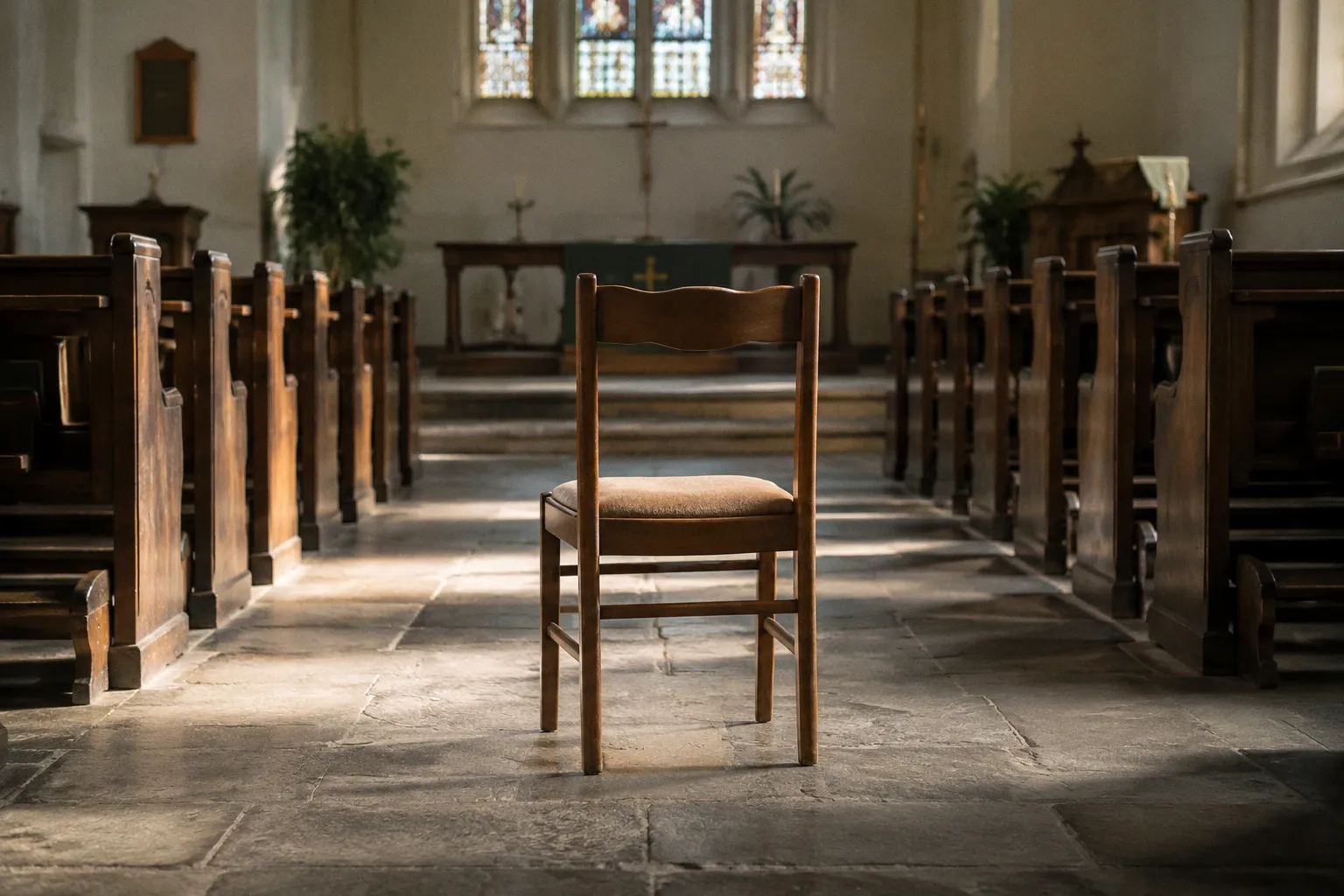
We have all felt it: that holy, fragile pause where nothing in our toolkit of comfort words quite fits, and we are left simply being present with another human in the full weight of their loss. This is the space where grief ministry begins — not with answers, but with the willingness to stay. And yet willingness alone, however essential, is not a ministry structure. If our congregations are going to offer sustained, safe, and genuinely healing spaces for the bereaved, we need more than good intentions. We need a framework — one built with both pastoral sensitivity and practical clarity.
Starting a church grief support group is not complicated work, but it is careful work. It requires us to move slowly enough to honor the vulnerability of those we serve, and deliberately enough to protect them from well-meaning but unprepared spaces that can cause real harm. What follows is a step-by-step path for building this ministry from the ground up — rooted in grace, structured with wisdom, and honest about what we can and cannot hold.
Step One: Aligning Vision and Assessing Congregational Needs
Every meaningful ministry begins with a question that is harder than it sounds: What is God calling this particular community to do, right now, for the grieving among us?
Before we order curriculum kits or recruit facilitators, we need to listen. A needs assessment survey — simple, short, and distributed with genuine care — can reveal realities we might otherwise assume. How many in our congregation have experienced significant loss in the past year? Where do people feel the absence of support most acutely? Are there specific populations — young widows, parents who have lost children, those navigating complicated family estrangements alongside death — whose grief goes largely unspoken?
This listening phase is not bureaucratic busywork. It is the beginning of holding space for lament. When we ask these questions, we communicate something profound: your sorrow matters to this body of Christ, and we are willing to organize ourselves around it.
Once we have a sense of the landscape, the next step is developing a clear purpose statement that aligns with the broader vision of the church. A grief support group does not exist in a vacuum — it connects to the congregation's theology of suffering, its pastoral care infrastructure, and its understanding of community. In a Lutheran context especially, we hold together the reality of honest lament with the promise of resurrection hope, and our purpose statement should reflect that tension. Something as straightforward as: To provide a safe, structured, and grace-filled space where those who grieve can share their pain, receive pastoral care, and slowly discover hope within Christian community — this becomes the ministry's compass.
Finally, secure pastoral and staff alignment. The senior pastor, the care team, and any existing ministries that touch bereavement (Stephen Ministry, hospital visitation, funeral coordination) should all understand how this new group fits into the larger tapestry. A grief support group that operates in isolation from the congregation's pastoral rhythms will struggle to find referrals and will miss opportunities for sustained follow-up.
Step Two: Structuring Leadership Teams and Pastoral Oversight
Here is where we must resist the temptation to let enthusiasm outrun wisdom. Grief is not a surface-level problem, and the people who facilitate these groups carry a real emotional and spiritual weight. The leadership structure we build is not just organizational — it is a form of care for the caregivers themselves.
When lay volunteers lead peer-support grief groups in congregational settings, it is strongly recommended that leadership be shared among two or three people rather than falling on a single facilitator. This is not a luxury; it is a safeguard. Two facilitators can debrief with each other after difficult sessions. They can notice when one of them is becoming overwhelmed. They can share the logistical load of welcoming new participants, managing group dynamics, and maintaining contact between meetings. The ministry of presence in grief is profoundly rewarding, but it is also profoundly draining — and resilience in this work requires companionship.
These facilitators do not need to be licensed mental health professionals. What they need is emotional maturity, genuine empathy, the ability to listen without rushing to fix, and the willingness to sit with mystery when answers do not come. The church has always had room for this kind of faithful companionship — it is, in many ways, the ancient ministry of bearing one another's burdens made visible.
But lay leadership without pastoral oversight is incomplete. The supervising pastor or a designated pastoral care specialist should serve as a consistent point of contact for the facilitation team — available for consultation when a participant's grief raises concerns beyond the group's scope, present for periodic check-ins, and willing to step in when the weight of someone's story is simply too heavy for peer support alone. This is not micromanagement; it is the church being the church, with shepherds watching over the flock and those who tend it.
Grief ministry is not about fixing the unfixable — it is about building a structure sturdy enough to hold what cannot be carried alone.
Step Three: Selecting Curriculum and Defining Group Formats
The question of curriculum can feel daunting, but it is actually one of the most practical decisions in this process. A structured curriculum gives facilitators a roadmap, gives participants a sense of progression, and prevents the group from becoming an unbounded space where people share pain without ever moving toward integration and hope.
Turnkey faith-based curricula like GriefShare operate on a thirteen-week cycle of video sessions, leader guides, and participant workbooks, covering specific dimensions of grief — anger, fear, loneliness, regret, and the slow, uneven work of rebuilding. For many congregations, this kind of ready-made resource is an ideal starting point. It provides theological grounding without requiring facilitators to develop their own teaching content, and it gives participants a clear arc: there is a beginning, a middle, and an ending, which matters enormously for people whose sense of time and narrative has been shattered by loss.
Other congregations may choose to develop their own curriculum or adapt resources from denominational bodies. The key is that whatever material you select should be reviewed for theological alignment with your congregation's confession, tested for emotional sensitivity, and designed with a clear session-by-session structure that facilitators can follow confidently.
Equally important is defining the group's format. Two fundamental distinctions shape the experience:
| Consideration | Open Group | Closed Group |
|---|---|---|
| New members | May join at any point during the cycle | Accepted only before the series begins |
| Relationship depth | Varies; intimacy can be harder to build | Deepens over time as trust accumulates |
| Ideal for | Ongoing availability ministry in larger congregations | Cohort-based healing where participants journey together |
| Facilitator demands | Higher; must continually orient newcomers | Lower after the first session; momentum carries forward |
| Theological fit | Reflects the church's open-door hospitality | Reflects covenant community and committed companionship |
For most congregations beginning this ministry for the first time, a closed group running on a defined cycle — meeting bi-weekly or weekly for the duration of the curriculum — offers the clearest path to building trust and providing genuine pastoral care. The rhythm matters: grief does not heal on demand, and a predictable meeting schedule gives participants something to hold onto when everything else feels unstable.
Step Four: Implementing Participant Screening and Safety Protocols
This is the step that separates a well-intentioned gathering from a genuinely safe ministry space. And it requires us to be honest about a difficult truth: not every person who is grieving is in a place where a peer support group will serve them well at this particular moment.
Support group planning typically involves conducting a pre-entry conversation or screening with the facilitator before someone joins the group. This is not about gatekeeping or exclusivity — it is about pastoral discernment. A brief, confidential conversation allows the facilitator to understand the person's loss, their current emotional state, and whether the group's structure and focus align with their needs. Someone in acute psychiatric crisis, for example, needs clinical care that a lay-led peer group cannot provide. Someone grieving a suicide loss may need the specialized training discussed below. A person who lost a spouse decades ago and is now processing a very different kind of grief may benefit more from one-on-one pastoral counsel than from a group focused on recent loss.
The pre-entry conversation also serves the prospective participant. It demystifies the group experience, sets expectations, and communicates something vital: we take your pain seriously enough to be thoughtful about how we care for you. In a world that often offers platitudes to the grieving, this kind of intentionality is itself a form of grace.
Practical safety protocols should include:
1. Confidentiality agreements — spoken or written, renewed at the beginning of each cycle, holding the group as a sacred trust.
2. Clear referral pathways — facilitators should have a written list of local licensed counselors, crisis hotlines, and emergency resources, with pastoral oversight to help make referrals when a participant's needs exceed the group's capacity.
3. Boundaries around sharing — gentle group norms that protect participants from being pressured to share more than they are ready for, and that prevent any single person's story from dominating the space.
4. Facilitator debriefing sessions — regular, scheduled time for the leadership team to process what they are hearing and carrying, with pastoral support available.
5. Follow-up protocols for absence — if a participant stops attending, a simple check-in call or message communicates continued care without pressure.
These structures may sound clinical on paper, but in practice they create the psychological safety that makes genuine vulnerability possible. When people know that boundaries exist, they are free to grieve honestly within them.
Step Five: Managing Specialized Training for Complex Bereavement
Not all grief is the same, and the church's ministry must be honest enough to acknowledge this. When someone we love dies after a long illness, there is a particular kind of sorrow — but there is often also a narrative of care, of presence, of being able to say what needed saying. When death comes by suicide, by violence, or by sudden accident, the landscape of grief changes dramatically. Questions of guilt, rage, theological confusion, and traumatic memory enter the room with a ferocity that general grief support may not be equipped to hold.
For specialized losses such as death by suicide, it is recommended that facilitators undertake specialized training. Programs like ASIST (Applied Suicide Intervention Skills Training) or SafeTalk equip lay leaders with the vocabulary, the listening skills, and the crisis-response awareness needed to create a safe container for survivors of suicide loss. This is not about turning pastoral caregivers into therapists — it is about ensuring they have enough understanding of the unique dynamics of traumatic grief to avoid well-meaning harm and to recognize when a participant needs more than a peer group can offer.
Similarly, grief that is entangled with addiction, domestic violence, or complicated family dynamics requires facilitators who understand these intersections and who are prepared to hold space without inadvertently retraumatizing participants. The church does not need to be all things to all people — but it does need to know its own limits and love its people enough to connect them with the right care when the weight exceeds what a support group can bear.
This is where the supervising pastor's role becomes especially critical. Clergy oversight is not simply administrative; it is a theological commitment to ensuring that the ministry of care remains faithful, safe, and grounded. When a facilitator comes to the pastor and says, I am not sure how to help this person, that is not a failure — it is the beginning of the kind of honest collaboration that protects both the caregiver and the one being cared for.
The church at its best does not pretend to have all the answers — it builds structures sturdy enough to hold the questions.
The Ministry We Are Building
We return, finally, to that silence — the one that falls when someone speaks their grief aloud in a room full of people who choose to stay. Building a grief support group ministry is, at its core, an act of faith in that silence. It is the church saying: we believe that presence matters, that structure can serve love, and that the body of Christ is strong enough to carry what no individual should bear alone.
The steps outlined here — assessing need, building leadership, choosing curriculum, screening with care, training for complexity — are not bureaucratic hurdles. They are the scaffolding that allows grace to do its slow, sacred work. When we take the time to build this framework thoughtfully, we create something rare in a culture that wants grief to be brief and tidy: a place where the full weight of human sorrow is met with the full depth of divine compassion.
This is not quick work. It is not glamorous work. There will be no dramatic testimonies of instant healing, no tidy before-and-after narratives. What there will be is something quieter and far more powerful: a room where broken people gather week after week, held by a structure built with care and sustained by a grace that does not run out. That is what grief ministry looks like when it is done with both love and wisdom — and it is one of the most profound things a congregation can offer to its community and to the world watching it.