Church Food Pantry Ministry: Structure and Operations
A church food pantry ministry rarely fails because the congregation lacks compassion.
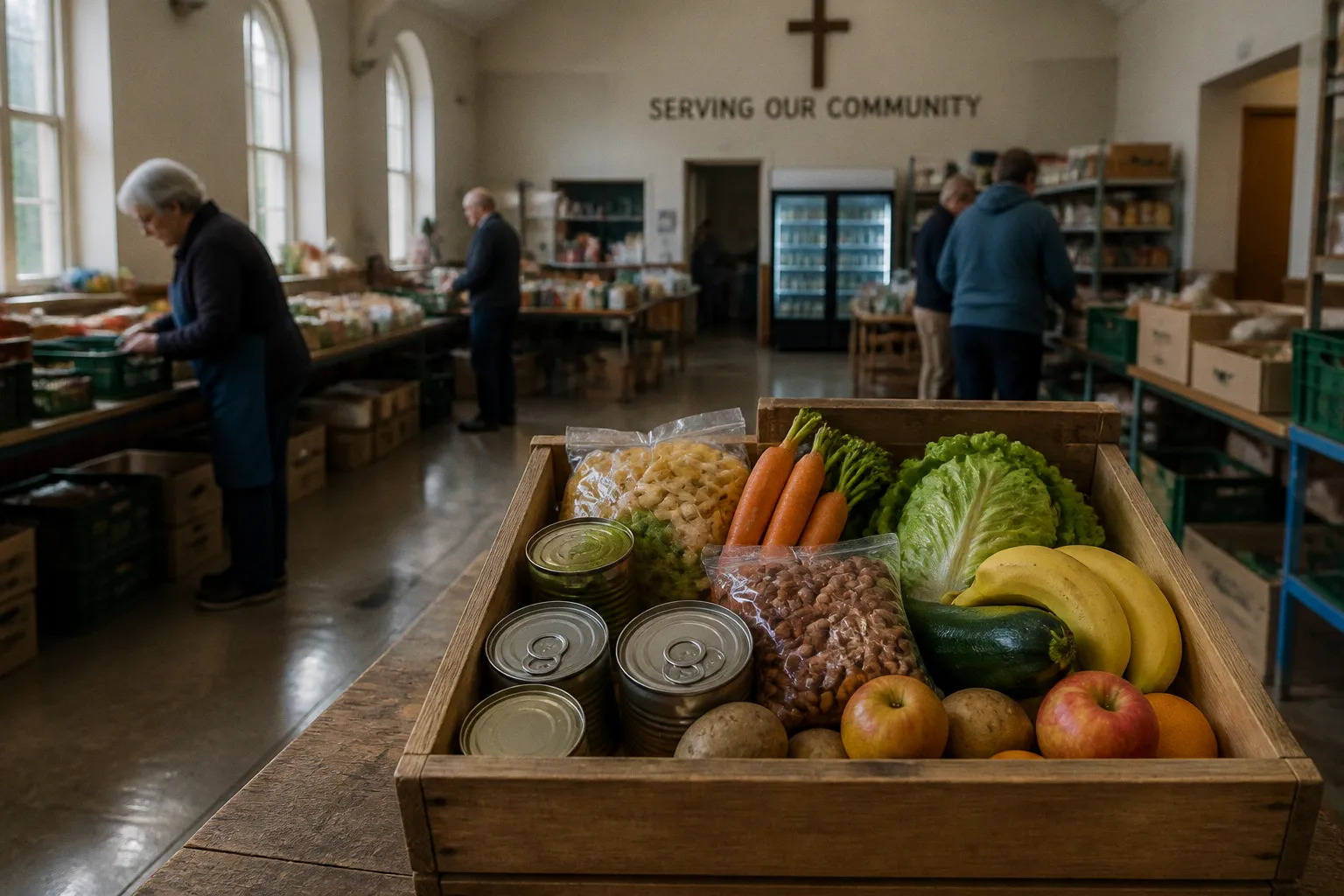
It fails because the operation depends on three people who know where everything is, who has the keys, who can answer client questions, and what to do when the refrigerator alarm sounds.
That is not a sustainable ministry structure. It is a single point of failure.
A reliable church food pantry needs defined leadership, clear volunteer assignments, safe storage, a repeatable distribution model, and enough documentation that the operation can continue when the founding team is unavailable. The goal is not to build a complicated bureaucracy. The goal is to create a tangible system that protects dignity, uses food responsibly, and gives volunteers a clear deployment plan.
Your congregation does not need to begin with a large facility or a full-time staff. It does need to begin with ownership. Someone must direct the pantry. Someone must control inventory. Someone must coordinate client intake. Someone must lead distribution on site.
That is the foundation of an effective church food pantry ministry structure.
Start with the operating mission, not the shelves
Before ordering food, recruiting volunteers, or advertising distribution dates, write down what the pantry will actually do.
A vague mission produces vague operations. If your congregation says, “We want to help people in need,” the next questions remain unanswered:
- Who can receive food?
- How often can a household visit?
- What types of food will the pantry distribute?
- Will clients receive prepared bags or select their own groceries?
- How many households can the team serve in one distribution session?
- Which services will the church provide directly, and which needs will you refer elsewhere?
- What happens when demand exceeds available inventory?
These are not cold administrative questions. They determine whether your team can serve people consistently.
A local church food pantry setup should define its service area, distribution schedule, household intake process, and capacity limit before public promotion begins. If the pantry can reliably serve 40 households per month, do not announce an unlimited walk-in program. If your storage room can hold only a limited amount of dry goods, do not accept a donation campaign that creates a sorting and safety problem.
Use a one-page operating brief. Keep it practical:
1. Purpose: Explain the food insecurity need your congregation intends to address.
2. Service area: Identify the neighborhoods or community population you will serve.
3. Schedule: Set distribution days, volunteer arrival times, and closing procedures.
4. Household policy: Define basic intake information and visit frequency.
5. Food model: Choose pre-packed distribution or client choice.
6. Capacity: Set a realistic number of households per session.
7. Referral plan: List local resources for housing, medical care, transportation, employment, and emergency assistance.
The church food pantry ministry structure becomes much easier to design once the service promise is specific.
Compassion opens the door. Capacity keeps it open.
Assign ownership before recruiting a large volunteer pool
The most common volunteer-management bottleneck is not a shortage of willing people. It is unclear authority.
A dozen volunteers may arrive ready to help, but if nobody knows who controls the inventory count, approves substitutions, handles an intake concern, or closes the facility, the team loses time and creates avoidable risk.
Build the core team around distinct roles. One person may hold more than one role during the launch phase, but the responsibilities still need to remain separate.
Pantry Director
The Pantry Director owns the operating plan. This person does not need to perform every task. The role is to keep the whole deployment aligned.
Responsibilities include:
- Setting the distribution schedule.
- Coordinating with church leadership and external food suppliers.
- Approving volunteer assignments.
- Reviewing capacity, attendance, and inventory data.
- Escalating safety, insurance, or facility concerns.
- Leading monthly improvement meetings.
- Ensuring the pantry follows the congregation’s stated service policies.
The Pantry Director should have authority to pause distribution if a safety issue, refrigeration failure, staffing shortage, or facility problem makes service unsafe.
Inventory Manager
The Inventory Manager controls the movement of food from delivery to distribution.
This role includes:
- Receiving donations and food-bank deliveries.
- Checking quantities and visible package condition.
- Rotating stock using first-in, first-out practices.
- Tracking expiration or best-by information according to the pantry’s policy.
- Separating damaged, recalled, or questionable food.
- Maintaining a current inventory count.
- Reporting shortages before the next distribution session.
Do not make inventory a memory-based task. Use a simple ledger or shared spreadsheet. Track categories such as canned vegetables, proteins, grains, breakfast items, shelf-stable milk, hygiene products, and refrigerated or frozen items.
The purpose is not to create perfect data. The purpose is to see problems early. If protein items disappear faster than other categories, the team needs to adjust purchasing and donation requests. If the pantry repeatedly receives more bread than it can distribute, the donation message needs to change.
Client Intake Coordinator
The Intake Coordinator creates the first point of contact for households seeking assistance.
The role requires organization and discretion. Responsibilities may include:
- Greeting clients and explaining the distribution process.
- Managing the queue or appointment list.
- Collecting only the information the pantry genuinely needs.
- Recording household size and visit frequency where appropriate.
- Identifying urgent needs that require referral.
- Protecting private information.
- Directing clients to the correct distribution station.
Do not turn intake into an unnecessary interrogation. A food pantry exists to provide food, not to make people prove their worth through excessive paperwork. At the same time, your congregation needs enough information to understand demand and plan inventory.
Set the intake standard in advance. Train every intake volunteer to use the same language and process.
Distribution Team
The Distribution Team handles the visible service operation. Depending on the model, members may:
- Assemble pre-packed bags.
- Stock client-choice shelves.
- Explain quantity limits.
- Move carts or boxes safely.
- Monitor product flow.
- Help clients with mobility limitations.
- Reset the space between distribution sessions.
- Complete closing counts and sanitation tasks.
Assign a team lead for every distribution session. Volunteers should know who answers operational questions. This prevents five people from improvising five different policies.
Facilities and Safety Lead
This role becomes essential as soon as the pantry uses refrigeration, freezers, loading areas, or shared church rooms.
The Facilities and Safety Lead should manage:
- Room access and key control.
- Temperature logs.
- Cleaning and sanitation routines.
- Pest-control reporting.
- Safe lifting and box movement.
- Emergency contacts.
- Refrigerator and freezer failure procedures.
- Exit routes and volunteer orientation.
A food pantry is a ministry site, but it is also a working distribution facility. Treat it accordingly.
Build a role matrix
Post a role matrix where volunteers can see it. Keep the assignments visible and current.
| Function | Primary owner | Backup owner | Session volunteers |
|---|---|---|---|
| Pantry schedule and partnerships | Pantry Director | Church ministry leader | As assigned |
| Food receiving and stock rotation | Inventory Manager | Trained backup | Receiving team |
| Client registration and queue | Intake Coordinator | Session team lead | Intake volunteers |
| Packing or shelf replenishment | Distribution Team Lead | Inventory Manager | Packing and floor team |
| Temperature and facility checks | Safety Lead | Pantry Director | Opening and closing team |
| Cleanup and closing count | Session team lead | Inventory Manager | Closing volunteers |
The backup column matters. A ministry that stops when one person is sick has not completed its capacity building.
Select the food distribution model that matches your team
Most church food pantry operations use one of two basic models: standardized distribution or client-choice distribution. Neither model is automatically more compassionate or more efficient. The right choice depends on your storage, staffing, food supply, and client volume.
Standardized pre-packed distribution
In this model, the team prepares similar bags or boxes for each household category.
A typical workflow looks like this:
1. Receive and inspect food.
2. Sort items by category.
3. Set quantities for each bag type.
4. Pack bags before distribution begins.
5. Stage bags by household size or service category.
6. Distribute through a controlled pickup line.
7. Record the number of households served.
8. Reconcile remaining inventory.
This model offers strong speed and predictability. It works well when:
- Volunteer numbers fluctuate.
- Storage space is limited.
- The pantry has a narrow distribution window.
- The team receives similar food items in consistent quantities.
- The congregation is launching its first program.
The tradeoff is reduced flexibility. A pre-packed bag may include food that a household cannot use because of allergies, medical needs, cultural preferences, cooking equipment, or household size.
Client-choice distribution
Client-choice service allows individuals to select groceries within defined quantity limits. The pantry functions more like a small market.
The workflow requires:
1. Organizing shelves by category.
2. Labeling products clearly.
3. Setting household limits.
4. Training volunteers to guide without hovering.
5. Replenishing shelves during distribution.
6. Monitoring inventory in real time.
7. Managing traffic flow and accessibility.
8. Cleaning and resetting the shopping area.
Client choice can reduce waste and increase dignity because households select food they know they can use. It also requires more space, stronger volunteer coordination, and tighter inventory control.
Compare the models before committing
| Operating factor | Pre-packed distribution | Client-choice distribution |
|---|---|---|
| Speed per household | Usually faster | Usually slower |
| Staffing requirement | Lower during launch | Higher during each session |
| Storage layout | Category staging area | Shelving and shopping lanes |
| Client flexibility | Limited substitutions | Greater choice |
| Inventory control | Easier to forecast | Requires active monitoring |
| Best starting point | Small or new pantry | Established team with suitable space |
| Main operational risk | Mismatched food needs | Congestion and inconsistent quantity limits |
A hybrid model can work well. Your congregation might distribute a standard package of staple foods while offering a small client-choice section for produce, culturally specific items, or surplus products.
Do not change models every month. Give the team enough time to learn the workflow, identify bottlenecks, and collect feedback. A model becomes effective through disciplined execution, not constant redesign.
Design the distribution day as a controlled workflow
A successful distribution session begins before the doors open.
Create three operating periods: opening, service, and closing. Each period needs an owner.
Opening procedures
The opening team should:
- Unlock only the areas required for the session.
- Inspect the room for leaks, pests, damage, or unsafe conditions.
- Check refrigerator and freezer temperatures.
- Confirm that exits and walkways remain clear.
- Review the day’s household capacity.
- Stage bags, carts, signs, forms, and cleaning supplies.
- Hold a short volunteer briefing.
The briefing should cover assignments, quantity limits, accessibility needs, escalation procedures, and the expected closing time. Keep it short. Volunteers need clarity, not a lecture.
Service procedures
During distribution, the session lead should monitor four points:
- Arrival: Can clients enter without confusion or unsafe crowding?
- Intake: Does the registration process move at a predictable pace?
- Selection or pickup: Are volunteers applying the same rules to every household?
- Exit: Does each client know what they received and where to seek additional help?
Use simple signs. Mark the intake station, waiting area, food pickup or shopping route, and exit. If your congregation serves people with mobility limitations, keep aisles wide and avoid placing heavy boxes where clients must lift them.
Assign one volunteer to watch the whole flow rather than placing every volunteer at a single table. This person can move staff when the intake line grows, the shelves empty, or a client needs assistance.
Closing procedures
The closing team should never leave cleanup to chance. Use a fixed sequence:
1. Remove damaged or questionable items from active stock.
2. Return unopened food to the correct storage area.
3. Record distributed quantities and remaining high-demand items.
4. Clean tables, carts, shelves, and food-contact surfaces.
5. Confirm refrigerator and freezer doors are fully closed.
6. Record temperatures.
7. Secure confidential intake materials.
8. Lock storage areas and the building.
9. Report maintenance or incident concerns before the team disperses.
A five-minute closing shortcut can create a week of problems. Missing inventory, unreported refrigeration issues, and unsecured records will eventually interrupt service.
Treat food safety as a ministry requirement
Food safety is not a technical add-on. It protects the households you serve and the volunteers who handle donations.
Dry food should be stored:
- At least 6 inches off the floor.
- At least 4 inches away from walls.
- At least 2 feet below ceilings.
These clearances support cleaning, inspection, ventilation, and pest control. Do not stack boxes directly on the floor because the storage room looks temporary. Use shelving or pallets that can be cleaned and inspected.
For temperature-controlled food, maintain:
- Refrigerators below 40°F.
- Freezers below 0°F.
Post a temperature log near each unit. Record readings on a defined schedule, not only when someone remembers. If a unit falls outside the required range, isolate the affected food and follow the pantry’s incident procedure. Do not distribute questionable perishables simply because the next service day is busy.
Your team also needs a donation-screening policy. Decide how volunteers will handle:
- Opened packages.
- Torn or leaking containers.
- Items with missing labels.
- Home-prepared food.
- Bulging cans.
- Food exposed to water, pests, or excessive heat.
- Products that the pantry cannot store safely.
The policy should be visible and consistent. Volunteers should not make individual decisions based on sympathy or pressure. A donation that cannot be safely distributed is not a successful donation.
Local health requirements may add specific rules. Some health departments require volunteers who handle non-packaged food to complete a food-handler certification course. The typical cost cited for these courses ranges from $10 to $15 per person, but requirements vary by jurisdiction. Confirm the rule with your local health department before launching or expanding food preparation and handling activities.
Build compliance into the launch plan
Church food pantry operations often involve food banks, local agencies, volunteers, donors, and members of the public. That network creates obligations that should be addressed before the first distribution.
Many regional food banks require church partner agencies to provide a certificate of insurance confirming liability coverage for public food distribution. Contact the food bank and your church’s insurer early. Do not assume that a general church policy automatically covers every pantry activity or facility arrangement.
Your launch file should contain:
- The church’s insurance contact and current documentation.
- Food-bank partner requirements.
- Local health department guidance.
- Facility use permissions.
- Emergency contacts.
- Volunteer training records.
- Incident report forms.
- Temperature logs.
- Donation acceptance and disposal policies.
- A confidential method for storing intake information.
The exact zoning, licensing, and fee requirements can differ across municipalities. Your congregation needs a local compliance review, not a generic internet answer. Ask the relevant health, municipal, and insurance contacts what applies to your location and operating model.
Do not represent the pantry as independently incorporated unless that status actually exists. A church may operate the pantry through its existing entity, but the governance and insurance arrangement should be clear to leadership, volunteers, partners, and donors.
Recruit for reliability, not just enthusiasm
A food pantry needs people who arrive on time, follow procedures, communicate clearly, and stay through closing. Enthusiasm helps. Reliability keeps the doors open.
Recruit volunteers by task and time commitment. Instead of asking for general help, publish defined assignments:
- Two volunteers for receiving and sorting.
- Two for intake.
- Three for packing or shelf replenishment.
- Two for client flow and accessibility.
- Two for cleanup and closing.
- One session lead.
Then create a backup list. A volunteer who cannot attend should know exactly whom to contact and how early to report the absence.
Use short training modules:
1. Mission and client dignity: Explain the purpose of the pantry and the expected standard of welcome.
2. Food handling and storage: Cover temperature control, damaged food, hand hygiene, and stock rotation.
3. Intake and privacy: Teach volunteers what to ask, what not to ask, and where records belong.
4. Distribution flow: Practice the movement from arrival to exit.
5. Safety and escalation: Explain injuries, aggressive behavior, medical concerns, fire alarms, and facility problems.
Have new volunteers shadow an experienced team member before assigning them to intake or inventory control. A single poorly trained conversation can damage trust. A single careless storage decision can damage food.
Bold action steps should remain visible in the work area:
- Stop and isolate questionable food.
- Report a refrigeration problem immediately.
- Do not promise services the pantry cannot provide.
- Protect client information.
- Escalate disputes to the session lead.
- Complete the closing log before leaving.
These instructions are simple by design. Volunteers work under pressure. The system must function when the room is loud and the line is long.
Use partnerships to extend capacity
A congregation should not attempt to solve every household crisis through a food box. Food is the pantry’s core service. Other needs require a referral network.
Build relationships with:
- Regional food banks.
- Homeless shelters.
- Domestic violence service providers.
- Community health clinics.
- Housing and utility assistance programs.
- Schools and youth-serving organizations.
- Transportation services.
- Disaster relief teams.
- Other congregations with complementary programs.
Keep a current referral sheet at the intake station. Review it at least quarterly. A list filled with disconnected phone numbers is not a referral system. Confirm that organizations still operate, know their current hours, and accept the type of need you are sending.
Partnerships can also support church charity drives. Ask donors for targeted items based on inventory gaps rather than collecting random food. A clear request such as shelf-stable protein, low-sodium foods, infant supplies, or culturally familiar staples will produce more useful contributions than a general appeal for anything people wish to discard from their cupboards.
A church handyman ministry can support the pantry by maintaining shelving, improving lighting, repairing doors, and creating safer loading routes. Keep that work coordinated with the Pantry Director and Facilities Lead. Well-intended repairs can create new sanitation or accessibility problems if volunteers change the room without an operating review.
Measure demand without reducing people to numbers
Data helps your congregation serve more people responsibly. It should never become a tool for treating clients as statistics.
Track a small set of operational measures:
- Households served per session.
- Total individuals represented by those households, where your intake process collects that information.
- Food categories distributed fastest.
- Number of volunteer shifts filled and missed.
- Quantity of food discarded and the reason.
- Average time from arrival to exit.
- Number of referrals requested.
- Refrigeration or facility incidents.
- Remaining inventory before the next distribution.
Review the numbers monthly. Look for patterns instead of chasing impressive totals.
If the pantry serves more households but wait times double, capacity has not improved. If donations increase but discarded food also increases, the donation strategy needs correction. If volunteer attendance falls during a particular shift, redesign that shift rather than blaming the team.
Create a simple capacity calculation for each session:
- Number of intake stations.
- Average time required for intake.
- Number of packing or shopping positions.
- Available food by household type.
- Distribution hours.
- Closing and reset time.
You do not need a complex model. You need an honest one. A pantry that promises more than its team can deliver will exhaust volunteers and frustrate clients.
Expand only after the basic system works
Growth should follow operational stability.
Before adding another distribution day, confirm that your congregation can:
- Fill core volunteer roles with backups.
- Maintain safe storage conditions.
- Reconcile inventory after each session.
- Keep intake records secure.
- Manage client flow without confusion.
- Respond to incidents consistently.
- Maintain reliable supplier and partner communication.
- Train new volunteers without overwhelming current leaders.
Then expand one variable at a time. Add households, improve the current schedule, increase storage, or introduce a client-choice section. Do not change staffing, schedule, model, facility, and intake rules simultaneously. You will not know which change created the problem.
A useful expansion sequence looks like this:
1. Stabilize: Run the current model on a consistent schedule.
2. Document: Capture the actual workflow, not the ideal version.
3. Cross-train: Prepare backups for each critical role.
4. Audit the neighborhood: Listen to clients, schools, shelters, and partner agencies about unmet needs.
5. Target the gap: Add the food category, referral, or service that addresses the clearest need.
6. Pilot: Test the change for a limited period.
7. Review: Keep, revise, or stop the change based on operational evidence.
That neighborhood audit is essential. Your congregation may assume that canned goods are the primary need while households are asking for fresh produce, culturally familiar staples, hygiene products, or food that requires minimal cooking. Do not build a program around assumptions you have not checked.
Common failure points in a church food pantry
Several breakdowns appear repeatedly across church food distribution programs.
Everyone reports to everyone
When authority is unclear, volunteers receive conflicting instructions. Assign one session lead and publish the chain of responsibility.
The pantry accepts every donation
Unlimited acceptance creates unsafe storage, unusable inventory, and volunteer fatigue. Adopt a donation policy and communicate it before collection drives.
The church launches before confirming insurance
A public distribution program needs documented coverage and partner requirements addressed in advance. Make the insurance conversation part of the launch timeline.
Intake becomes too complicated
Long forms and intrusive questions slow service and discourage households from returning. Collect only what supports the pantry’s operation, reporting, safety, or referral work.
The team ignores storage geometry
Food on the floor, against walls, or too close to the ceiling is not an acceptable shortcut. Correct shelving and clearance before inventory volume grows.
The director becomes the entire system
If one person orders food, opens the room, trains volunteers, manages intake, solves disputes, and closes the building, burnout is already in progress. Build backups immediately.
Expansion is treated as success by itself
More households served is not always better if the pantry loses safety, dignity, or consistency. Growth must come with capacity building.
The first 30 days of deployment
A congregation preparing to launch can use the first month to establish the operating base.
Week one: define the service
- Write the purpose and service area.
- Choose the initial distribution schedule.
- Set a provisional household capacity.
- Confirm church leadership sponsorship.
- Identify the Pantry Director and backup.
Week two: secure the operating environment
- Inspect and prepare the storage room.
- Install or verify appropriate shelving.
- Map refrigerator and freezer locations.
- Contact the insurer and relevant local authorities.
- Confirm food-bank partner requirements.
- Draft donation and food-disposal policies.
Week three: staff and train
- Assign the Inventory Manager, Intake Coordinator, Safety Lead, and session team lead.
- Recruit volunteers by shift and function.
- Train the core team.
- Practice intake, packing or client choice, and closing procedures.
- Test the temperature-log and inventory systems.
Week four: run a controlled pilot
- Serve a limited number of households.
- Keep the first distribution operationally simple.
- Record wait times, food gaps, volunteer coverage, and incidents.
- Meet afterward while the details remain fresh.
- Correct the workflow before publicizing broader capacity.
Do not mistake a quiet pilot for a lack of need. The pilot protects the ministry from launching with an untested process. It gives your team a chance to fix problems while the scale remains manageable.
A Lutheran congregation brings a strong foundation to this work: worship that gathers people, relationships that cross generations, and a community identity that can support sustained service. But those strengths become visible to neighbors through disciplined action. The pantry needs a theology of welcome, and it also needs clean shelves, accurate counts, trained volunteers, safe temperatures, and a clear closing procedure.
That is the work.
A durable church food pantry ministry structure does not depend on heroic effort. It depends on shared ownership, repeatable systems, and the willingness to improve the operation after every distribution session. Start with a service promise your congregation can keep. Assign the work. Protect the food. Respect the people. Build capacity before demand forces the issue.
Then keep showing up.