Church Fitness Ministry Mistakes and Practical Fixes
A fitness ministry at a mid-sized church often begins with the best of intentions — a praise-and-worship playlist, a wellness bulletin board, sometimes a prayer request box parked near the fellowship hall.
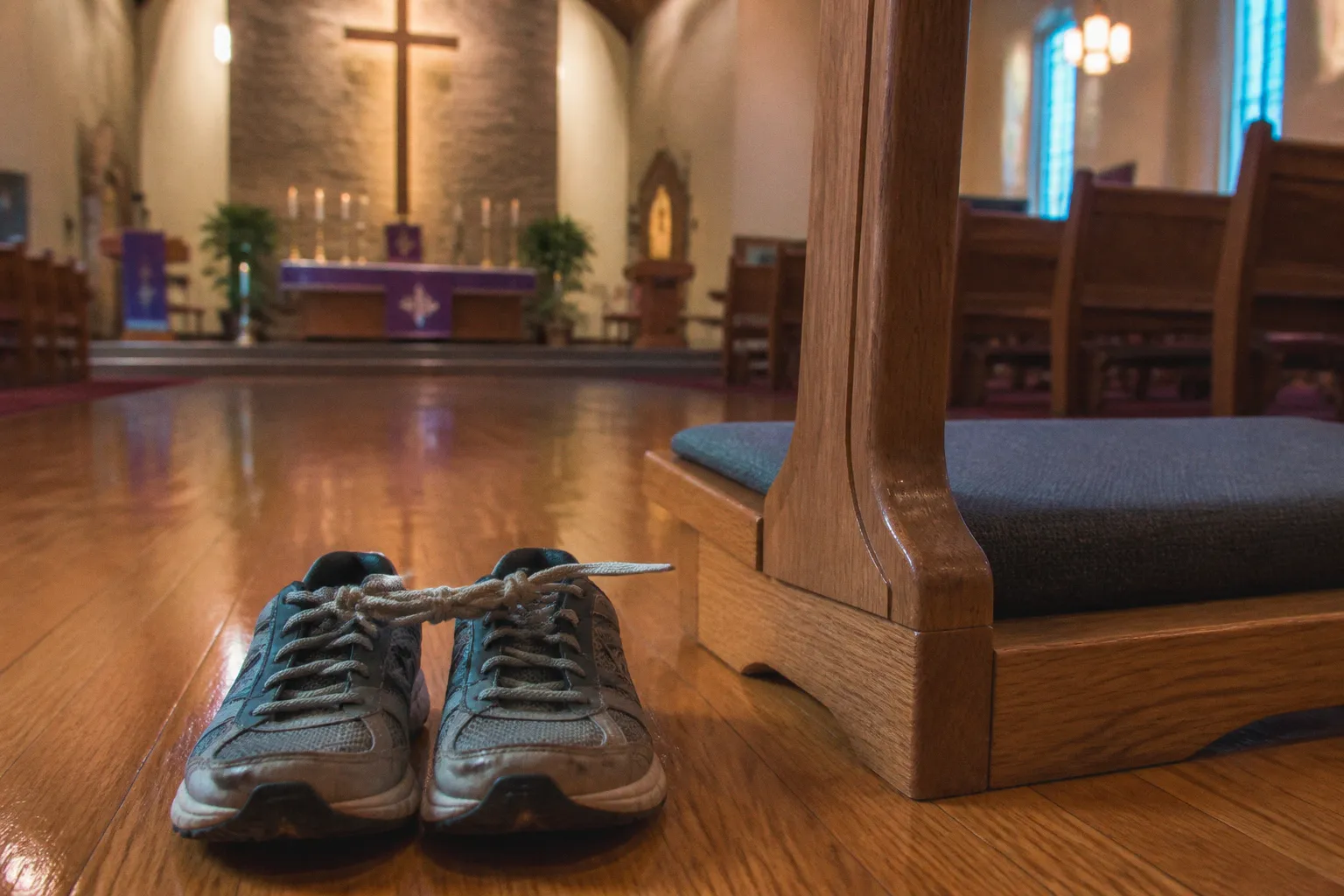
And then, somewhere between the launch Sunday and the following Lent, the energy thins. The bulletin board ages quietly. The committee, if there was one, drifts back into its other meetings. What looked like movement was, in fact, decoration. The pattern is recognizable enough that anyone who has served across a few parishes can describe the same arc in their own language.
This is a familiar pastoral phenomenon, and the mistake that produces it is not enthusiasm. The mistake is the quiet substitution of good intentions for a plan. Below we walk through the most common church fitness ministry mistakes — passive programming, theological imbalance, legal blindness, committee drift, unprepared leadership — and what sustainable, faithful practice looks like in their place.
A wellness ministry is not a poster on a wall. It is a stewardship decision a congregation makes together, slowly and on purpose.
Moving Beyond Passive Wellness: Why Intentional Strategy Matters
The earliest failure mode is also the most well-disguised, and the comfort it offers is part of why it persists: passive programming. A congregation installs a card table in the foyer with a bowl labeled "Prayer Requests for Health Concerns." A few members tape selected Psalm 23 verses to the water fountain. The worship pastor curates a fitness playlist of upbeat contemporary worship songs. Each of these gestures can carry genuine pastoral warmth. None of them, on its own, constitutes a ministry.
A wellness ministry, like any other, is the sustained work of forming a particular kind of communal life around a particular kind of practice. That requires intention written down, owners named, and goals observable enough to be honest about. Without those, the work relies on whoever happens to show up, and whoever happens to show up tends to be one or two already-overburdened people carrying more than they were asked to carry.
The temptation toward passive programming usually shows up when a church treats health as an adjacent concern rather than a primary one. The bulletin board and the playlist are symptoms of a deeper drift — the quiet assumption that because the gospel addresses the whole person, the gospel automatically produces the whole person's care. Theology is necessary, but theology without structure becomes sentiment, and sentiment does not survive a church budget cycle or a pastoral transition.
Practical fixes at this stage are unglamorous and usually look like paperwork:
- Write down, in a single page, what the ministry is for and what it is not for.
- Name the leader (or leaders) who carry it, with role clarity spelled out.
- Set a six-month marker and a twelve-month marker for an honest review.
- Decide what success looks like in terms that can actually be observed.
When those four elements are present, the wellness initiative has crossed from decoration into discipleship. The body of Christ is, after all, something we tend to — not something we post about.
The Theology of Stewardship: Balancing Physical Health and Spiritual Focus
Healthy ministry in this space requires a sustained theological reflection, and that reflection has a recognizable shape across the Lutheran and broader Christian tradition. Paul writes to the Corinthians that our bodies are temples of the Holy Spirit within us, given to us by God; that we are not our own, for we were bought at a price; and that we are to glorify God in our bodies (1 Corinthians 6:19–20). The body as temple. The body as something entrusted rather than owned. The body as a site where glory actually happens, in the slow unglamorous middle of an ordinary week.
This is the biblical frame around which a fitness ministry can be built honestly. It is not, however, a frame that settles the practical questions on its own. Ministry leaders in this space frequently drift into one of two opposite error extremes, and both deserve naming clearly. Holding space for the middle takes more work than either pole admits.
On one side sits physical neglect — the assumption that bodies do not really matter to God, that the spiritual life begins where the physical leaves off, that a Christian who sleeps poorly, eats without care, and rarely moves has somehow transcended the body's relevance. On the other side sits body obsession — the slide into measuring, displaying, and fine-tuning physical appearance under a thin spiritual vocabulary. Supplement stacks. Macro counts. Before-and-after photos in church hallways. Performance comparisons slipped into fellowship conversation.
Neither extreme honors the temple. The pastoral task is to hold the middle ground where bodies are honored as entrusted — neither despised nor worshipped. We learn this posture slowly, over years, alongside a pastor willing to teach it and a community willing to practice it together.
| Error Extreme | What It Sounds Like In Practice | Where It Leads Over Time |
|---|---|---|
| Physical neglect | The spirit is what matters; the body will follow | Fatigue, preventable illness, thin models of stewardship for younger members |
| Body obsession | Stewardship means optimization; let me show you my routine | Vanity, performance anxiety, members who feel surveilled rather than cared for |
| Embodied stewardship | We hold our bodies as gifts, tended in community, for the sake of neighbor | Resilience, longevity in ministry, a quiet culture of mutual care |
The third column is not a slogan. It is a posture a congregation learns with patience, and with attention to finitude — the honest acknowledgment that we are embodied, aging, and limited, and that grace meets us in that limitation rather than around it.
Navigating Legal and Tax Implications for Church-Operated Facilities
If a congregation is considering dedicating church-owned space to fitness — a room with free weights, a cardio area, a multi-use gymnasium that opens beyond the membership — the conversation needs to include legal counsel before the first piece of equipment arrives. This is not a step to defer, and it is not a sign of weak faith. It is ordinary stewardship of property entrusted to a community for a particular purpose.
American courts have ruled, in a small but instructive series of cases, on whether church-operated fitness facilities qualify for the property-tax exemption traditionally extended to houses of worship. The Northmoreland Baptist Church gym tax exemption dispute of 2011 and the Vineyard Community Church gym property tax court ruling of 2014 are the two most cited examples. The general principle emerging from both is something like this: when a fitness facility is judged by a court to be primarily recreational, or to be in direct competition with a commercial health club operating in the surrounding market, the tax exemption becomes contestable.
Three operational realities follow from this precedent and are worth a committee's full attention:
- Defined clientele. Who is the gym actually for? Members only? The surrounding neighborhood? Both? The answer shapes every other legal and missional question, and a vague answer is a fragile one if it ever ends up in a courtroom.
- Primary use. Is the space used primarily for worship, formation, and fellowship — with fitness as one expression of those — or primarily as a recreational facility that happens to be located on church property? Documentation over time matters here: calendars, sign-in sheets, programming descriptions, partnership agreements, and the rhythm of who uses the room and for what.
- Market impact. A commercial gym within a reasonable distance may have standing to raise a competitive-displacement claim, whether or not it chooses to do so. Anticipating that question on paper is wiser than reacting to it in deposition.
None of these questions is hostile to the gospel. They are stewardship questions, asked honestly of property and mission together. The wiser practice is not to avoid fitness ministry out of legal fear; it is to begin the conversation with clarity, to document the decisions made along the way, and to seek counsel from a lawyer who has worked specifically with religious-property questions rather than a generalist reading off a checklist.
Insurance questions belong here as well. High-intensity group fitness, youth programming, and senior mobility work each carry their own liability profile, and a single blanket church policy often will not cover them adequately. The committee's work is not finished when the equipment is delivered; it enters a new phase.
Building a Sustainable Foundation: Committees, Surveys, and Qualified Leadership
The single most common cause of a stalled wellness ministry is not enthusiasm that fades — it is a structure that was never built. Wellness handled as a side conversation in elders' meetings, appended to an already overstretched communications team, does not survive the first pastoral transition or the first budget crunch. It dies quietly, and no one can quite say when it stopped.
A sustainable foundation rests on three legs that bear weight together:
1. A dedicated fitness committee, not a footnote. Five to nine people representing the demographics the ministry hopes to serve — different ages, stages of fitness, and relationships to the church. A named chair, a monthly rhythm, and clear authority to bring recommendations to the council or board. Without this, the work diffuses into good intentions and never quite lands.
2. Pre-launch surveys of two distinct populations. The first is the congregation itself: what would people attend, what barriers exist (time, childcare, intimidation, accessibility), who would they come alongside? The second is the surrounding community: what is missing in the local fitness landscape that a church could serve well, without duplicating what is already there? Many of the most durable church fitness initiatives answer a question the neighborhood is already asking out loud. The survey is itself formation — when people are asked in writing what they think, they begin to take the upcoming ministry seriously before it opens its doors.
3. Qualified leadership for the physical work. This is the gap that catches committees off guard, and it deserves the same seriousness we bring to children's ministry. Not every spiritually mature volunteer is a safe leader for a high-intensity class, a youth fitness program, or a senior mobility group. Background checks where appropriate, certification checks where appropriate, and a clear chain of pastoral care wrapped around the leadership team. Members trust a fitness ministry in roughly the proportion they feel safe inside it.
Each leg alone is insufficient. Together they hold weight, and they also create the conditions under which a leadership transition can occur without the whole ministry quietly collapsing. Succession is part of sustainable design, not an afterthought.
Equipping Pastors to Model Holistic Health and Physical Stewardship
There is a quieter failure mode behind the louder ones, and it lives mostly in the seminaries.
Most seminary curricula — historically, and in many institutions still today — omit dedicated coursework on physical health, nutrition, anatomy, or the theology of embodied stewardship. Pastors graduate equipped to preach, counsel, preside, and lead, but rarely equipped to model what embodied faith looks like across a forty-year ministry. This is a structural gap, not a moral one. Many pastors are well-disciplined and physically active. Many are exhausted and quietly struggling. What they share, for the most part, is the absence of formal formation around the body as a primary site of pastoral vocation.
The practical response is twofold. First, clergy and lay leaders within a particular church can cultivate this formation together — reading together, attending conferences that take the body seriously, inviting a Christian physician, chaplain, or pastoral clinician into the conversation over a season. Second, the denomination and the seminary system need to hear this gap named plainly. Continuing-education budgets, conference offerings, and seminary electives can all be reshaped by the recognition that embodied formation is a pastoral competency we have not yet adequately named, much less taught.
A pastor who cannot speak honestly about fatigue, sleep, weight, grief's toll on the body, or the ordinary rhythms of rest and work is not failing the gospel. The gospel has always been larger than any pastor's comfort. But the congregation is missing a form of teaching that is difficult to find elsewhere — the integration of body and soul in the life of a real person across a real week. That teaching, when it comes, is rarely a program. It is a sustained presence, the kind of holding space where embodied faith becomes intelligible in ways that sermons alone cannot reach.
A Closing Word
There is no single blueprint for a faithful fitness ministry, and the absence of one is itself a quiet gift. The Spirit does not require one congregation to copy another's program letter by letter. What is required, across settings, is the willingness to think on purpose, to name the leaders, to honor the body as temple and not project, to seek counsel where counsel is owed, and to begin before the plans are perfectly drawn.
If your congregation is six months from launching, this article may have saved you a quiet collapse. If you are six years in and wondering why the rhythm has gone slack, the same fixes may rebuild the foundation under what is already there. We are not given blueprints. We are given each other, the labor of a body that ages, and grace sufficient for the slow work of tending it.
Hold the body as a gift. Tend it in community. Begin on purpose.