Church Blessing Boxes: What They Are and How They Work
A church blessing box ministry solves a specific access problem: a neighbor needs food, toiletries, or a basic household item now, but cannot—or does not want to—complete an application, prove…
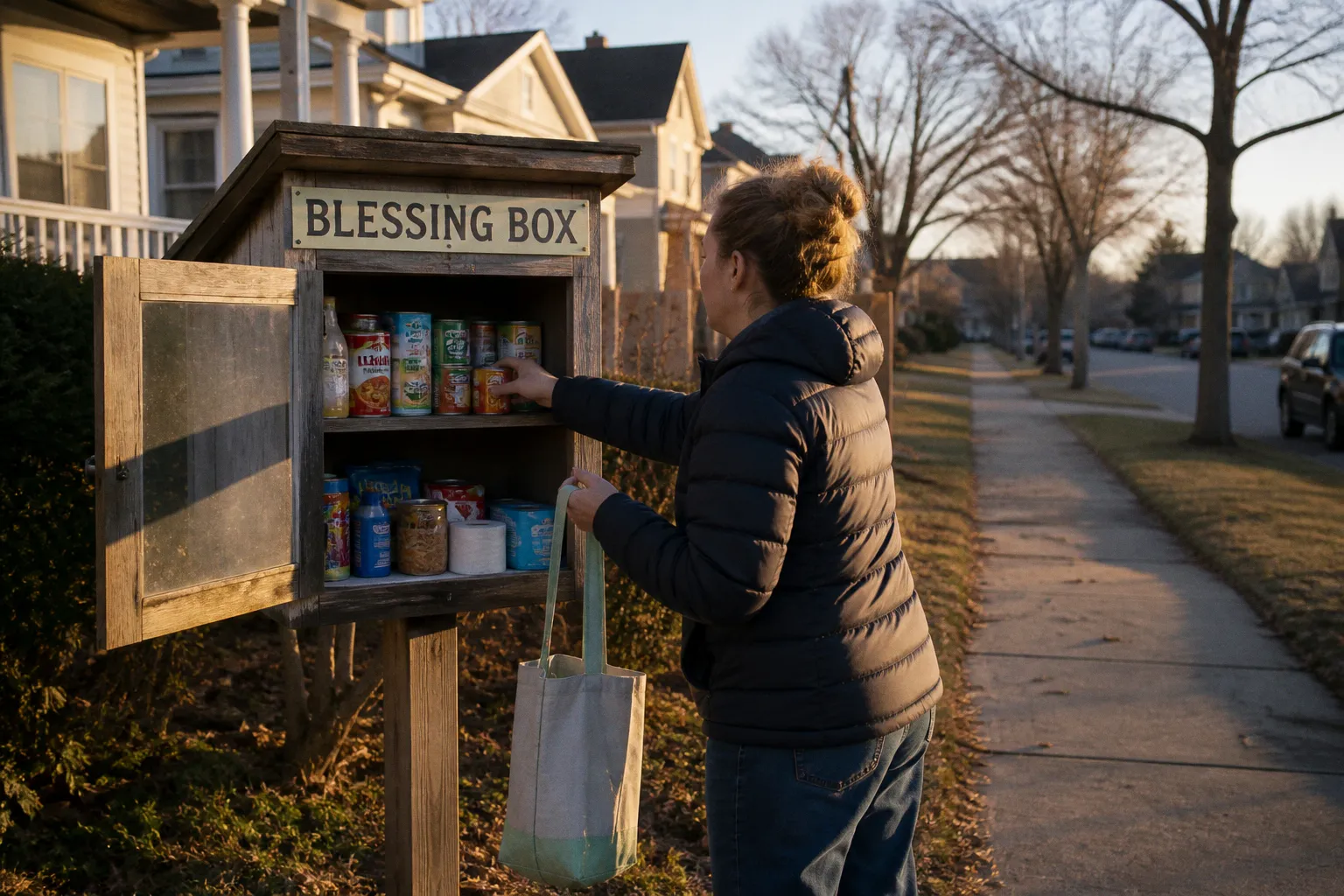
A church blessing box ministry solves a specific access problem: a neighbor needs food, toiletries, or a basic household item now, but cannot—or does not want to—complete an application, prove income, wait for pantry hours, or speak with a volunteer.
The model is simple. A small, weather-resistant cabinet sits on church property. People can take what they need and leave what they can. Access remains anonymous and available around the clock. The box does not replace a full food pantry or solve long-term food insecurity. It creates a fast, low-barrier response point that your congregation can manage with discipline.
That distinction matters. A blessing box community outreach project succeeds through reliable deployment, clear stocking rules, and consistent volunteer ownership. Put up a cabinet without an operating plan, and you have a neglected container. Build a small ministry system around it, and you create a tangible way for your congregation to serve its neighborhood every week.
The theology of mutual aid: understand the model before you build it
A church blessing box is a micro-pantry. It runs on mutual aid rather than a formal distribution process.
The operating principle is direct: take what you need, leave what you can. A person may take canned food, toothpaste, diapers, or gloves without filling out a form. Another person may contribute a box of pasta, a package of baby wipes, or several cans of tuna. The exchange does not require a public explanation from either side.
For a Lutheran congregation, this structure gives practical form to a ministry of neighbor-love. The theological language should not stay abstract. It should show up in the way your church removes unnecessary barriers, protects dignity, and takes responsibility for the resources it places in the neighborhood.
That requires a clear scope.
A blessing box can:
- Provide immediate access to non-perishable food.
- Offer basic personal hygiene supplies.
- Support neighbors who need household essentials between larger distributions.
- Give members a simple, recurring way to participate in local mission.
- Create a visible connection between the church building and the surrounding community.
A blessing box cannot:
- Function as a complete substitute for a full-scale food pantry.
- Guarantee a stable supply of food for every household.
- Address the structural causes of poverty by itself.
- Operate safely without regular inspection and restocking.
- Carry the entire burden of your congregation’s community ministry.
Treat the box as one deployment within a wider outreach strategy. It can connect with a food pantry ministry, homeless shelter support, disaster relief volunteering, church charity drives, and local social-service referrals. It should not become an isolated project that receives attention only when someone notices that the shelves are empty.
A blessing box is small infrastructure with a real ministry requirement: someone must own the schedule, the stock, the safety, and the follow-through.
Start with a neighborhood audit
Before choosing a location or ordering materials, conduct a basic neighborhood audit. You do not need a complex research package. You need usable information.
Walk the area around your church. Note:
- Where people already gather or pass on foot.
- Whether the proposed location remains visible after dark.
- How easily a person can approach the box without crossing unsafe traffic.
- Whether the site has enough clearance for people using mobility devices.
- Which nearby services already provide food, clothing, shelter, or hygiene supplies.
- Whether the church property has a practical place for a cabinet without blocking entrances, sidewalks, or maintenance access.
- Which seasons create the greatest demand for gloves, hats, diapers, or other essentials.
Then ask your congregation what it can actually sustain. A ministry plan based on enthusiasm alone will fail at the first busy month. Identify the people who can inspect the box, remove unsafe items, purchase supplies, communicate with donors, and escalate maintenance problems.
The goal is capacity building, not simply installation.
Designing for dignity: anonymous access is the core feature
The strongest feature of a blessing box is not its appearance. It is the absence of unnecessary screening.
A person can access the cabinet without an application, proof of income, or face-to-face interaction with a volunteer. That anonymity protects dignity. It also changes the volunteer role. Your team does not need to assess whether someone appears needy enough. It needs to keep the resource clean, stocked, safe, and available.
This is a major operational advantage, but it creates clear responsibilities. If the box is open 24/7, your congregation must plan for 24/7 availability. That does not mean a volunteer stands beside it at all hours. It means your inspection system must account for the fact that weather, donations, and demand continue outside worship-service schedules.
Choose the site as a service point
Your location should support access without creating confusion.
A practical church blessing box site should be:
- On property controlled by the congregation or used with clear permission.
- Visible enough to discourage damage and support safe access.
- Near a route that neighbors can reach without entering a restricted area.
- Protected from direct exposure to severe weather where possible.
- Close enough to the church for volunteers to inspect it efficiently.
- Separate from vehicle lanes, loading zones, and emergency access points.
Do not bury the cabinet behind the building because the location is convenient for the church. The ministry exists for the neighborhood. If a person cannot find it, approach it comfortably, or use it without unnecessary attention, the placement works against the mission.
At the same time, do not place it where church staff cannot monitor its condition. Visibility and service access must work together.
Design around use, not decoration
A blessing box does not need a universal standard size. Cabinets vary, from repurposed newspaper boxes to custom-built wooden structures. The design decision should follow the type and volume of items your congregation can maintain.
The cabinet needs to be:
- Weather-resistant.
- Easy to open and close.
- Large enough for the items you expect to stock.
- Stable and securely mounted.
- Simple for volunteers to clean and inspect.
- Accessible to people with different heights and mobility needs.
- Clearly identified as a community resource.
Avoid building a structure that looks impressive but cannot support routine operations. A beautiful cabinet with a warped door, poor drainage, or difficult shelving becomes a maintenance burden. Your first design review should ask practical questions:
1. Can one volunteer inspect every shelf quickly?
2. Can the door close securely in rain and wind?
3. Can a neighbor see the contents without removing everything?
4. Can volunteers remove damaged or unsafe items without dismantling the cabinet?
5. Can the church repair or replace the structure with available skills and funds?
This is where a church handyman ministry can add real value. A small team may handle construction, anchoring, weatherproofing, repainting, and seasonal repairs. Assign the work formally. Do not assume that the person who built the cabinet will maintain it forever.
Stocking the shelves: build a useful donation system
The contents determine whether the blessing box meets an actual need. Random donations create clutter. A clear donation list creates capacity.
Start with compact, shelf-stable products that people can use without specialized equipment. Common food donations include:
- Canned tuna or chicken.
- Dry pasta.
- Rice.
- Granola bars.
- Instant oatmeal.
- Peanut butter.
- Shelf-stable milk.
- Other non-perishable products in intact packaging.
Pop-top lids and ring-pulls make a practical difference. A person may not have a can opener available. If the item requires equipment that many neighbors may not carry, it becomes less useful as an immediate-response resource.
Non-food supplies can be equally important. Many households need products that traditional food drives overlook:
- Toilet paper.
- Toothbrushes.
- Toothpaste.
- Body wash.
- Diapers.
- Baby wipes.
- Feminine hygiene products.
- Gloves.
- Hats.
The list should reflect your neighborhood audit. Do not stock according to what happens to be cheapest or most convenient for donors. Stock according to use.
Create a donation standard before the first drive
Every church charity drive needs a receiving standard. Otherwise, volunteers spend their time sorting out items that cannot safely enter the box.
Publish a short list for members and community donors. Ask them to provide:
- Unopened, commercially packaged products.
- Items within their best-by or expiration dates.
- Products that can tolerate outdoor storage.
- Small packages that fit the cabinet and remain easy to carry.
- Hygiene products in their original packaging.
Tell donors what not to leave:
- Perishable food.
- Items packaged in glass.
- Damaged cans.
- Food past its best-by or expiration date.
- Sharps, including needles or razors.
- Harsh chemicals.
- Anything leaking, opened, or visibly contaminated.
The wording must be direct. A vague request for donations transfers the sorting burden to your volunteers and increases the chance that unsafe products reach the public.
Use a stocking rhythm, not occasional enthusiasm
Assign a recurring inspection schedule. The exact frequency should match demand, weather, and the capacity of your team. The key is consistency.
A simple rotation can include:
- A primary volunteer who checks the box and records needs.
- A backup volunteer who covers absences.
- A purchasing lead who replenishes priority items.
- A handyman or facilities contact for repairs.
- A ministry coordinator who reviews patterns and adjusts the plan.
Keep the tracking method simple. A shared paper log or digital sheet can record:
- Date and time of inspection.
- Items added.
- Items removed.
- Unsafe or damaged items discarded.
- Repairs needed.
- Repeated shortages.
- Seasonal demand.
This is not bureaucracy. It is deployment control. Without a record, your team relies on memory and responds only after a problem becomes visible.
Stocking is not a donation event. It is an ongoing service commitment with an inspection cycle.
Safety and stewardship: manage food, weather, and maintenance
Outdoor storage changes the risk profile. Food that would be acceptable indoors may become unsafe when exposed to heat, cold, moisture, or damage.
Commercially canned goods and sodas are generally considered safe for outdoor storage within a temperature range of 34°F to 85°F. Your congregation should still monitor local conditions, cabinet exposure, and product condition. A temperature range does not remove the need for inspection.
Establish a removal rule
Volunteers should remove any item that is:
- Past its best-by or expiration date.
- Swollen, leaking, rusted, or badly dented.
- Opened or missing its original packaging.
- Wet, moldy, contaminated, or damaged by pests.
- Unsafe to consume or use.
- Unsuitable for outdoor conditions.
When in doubt, discard it. The ministry cannot protect dignity while handing someone an item your own household would reject.
Do not place perishables in the box. Outdoor temperature changes make them difficult to manage safely, and a blessing box does not provide refrigeration. Do not use glass containers where breakage could injure someone or contaminate other supplies.
Sharps and harsh chemicals also have no place in the cabinet. The box is a community resource, not a general drop-off point.
Plan for weather before weather arrives
Weatherproofing is not a one-time construction detail. It is part of ministry stewardship.
Your inspection team should watch for:
- Water entering through the roof or door.
- Condensation inside the cabinet.
- Swelling or cracking in wooden surfaces.
- Loose hinges or damaged latches.
- Pest activity.
- Wind damage.
- Snow or ice blocking access.
- Excessive heat inside the cabinet.
Seasonal supplies require particular attention. Gloves and hats may be useful during winter, while other items may become impractical during periods of high heat or moisture. Adjust the stock rather than allowing the cabinet to become a storage site for whatever donors happen to bring.
Define escalation procedures
Every volunteer should know what to do when the situation exceeds routine restocking.
Create a basic escalation path for:
- Structural damage.
- Repeated vandalism.
- Unsafe dumping.
- Medical or personal emergencies reported to volunteers.
- Items that require special disposal.
- Complaints from neighbors or property users.
- Access problems caused by construction or severe weather.
Volunteers should not improvise beyond their role. If someone needs emergency assistance, direct them to appropriate emergency services. If the cabinet becomes unsafe, close access temporarily, notify the ministry lead, and repair the problem before reopening it.
A church blessing box ministry needs compassion and boundaries at the same time. Clear procedures protect both.
Build the volunteer operation around small, repeatable tasks
People often join service projects when the task is clear. They hesitate when the commitment sounds unlimited.
Break the ministry into assignments that one person can complete:
- Inspect the cabinet.
- Wipe shelves and surfaces.
- Check dates and packaging.
- Remove unsafe items.
- Refill priority products.
- Purchase missing supplies.
- Photograph damage for the facilities team.
- Update the donation list.
- Review the weekly log.
- Report recurring community needs.
This creates more entry points for congregational volunteering. A member who cannot lead a food pantry shift may be able to complete a short inspection. A youth group may organize a hygiene-supply drive. A church handyman ministry may handle seasonal repairs. A confirmation class or mission team may help design signage and learn how mutual aid works in practice.
Give every role a named owner and a backup. Avoid the common failure pattern in which one highly committed volunteer becomes the unofficial owner of everything. That model works until the person moves, becomes ill, or reaches exhaustion. Sustainable outreach distributes responsibility before the crisis arrives.
Train volunteers on dignity and language
Your team’s language matters. Do not frame the box as a test of deservingness. Do not ask volunteers to investigate who takes items or why. Do not invite donors to monitor recipients.
Train the team to focus on:
- Availability.
- Safety.
- Respect.
- Privacy.
- Accurate information.
- Consistent service.
The goal is not to create a visible hierarchy between people who give and people who receive. The mutual-aid model allows participation to move in both directions. Someone may take food this week and contribute supplies later. Someone else may never be able to donate material goods but may still belong fully in the community.
That is why anonymity is not a minor convenience. It is a ministry design choice.
Communicate the rules without turning the box into a barrier
A blessing box needs signage, but the sign should remain short and readable. State the purpose, the mutual-aid principle, and the basic safety rules.
A useful sign can communicate:
- Take what you need.
- Leave what you can.
- Non-perishable items only.
- No glass, perishables, damaged cans, sharps, or harsh chemicals.
- Please keep the area clean.
- Contact information for reporting damage or unsafe conditions.
The sign should not demand personal information. Avoid language that suggests surveillance, suspicion, or approval by the church.
You may also place the complete church blessing box guidelines on the congregation’s website, in a printed handout, or on a notice board near the church. Keep the public instructions aligned with what the volunteers enforce. If the sign permits an item that the inspection team removes, donors will receive mixed signals.
Connect the box to wider community outreach
The cabinet is most effective when it functions as an entry point rather than a dead end.
Your congregation can connect the blessing box to:
- A larger food pantry ministry.
- A seasonal church charity drive.
- Homeless shelter support.
- Disaster relief volunteering.
- Local mission projects.
- Youth mission trips.
- A church handyman ministry.
- Pastoral care and community referral work.
For example, repeated shortages of diapers may point to a need for a dedicated family-supply drive. Frequent requests for winter items may justify a seasonal clothing deployment. A pattern of empty food shelves may show that the box needs stronger purchasing support or a connection with a larger pantry.
Do not promise services your congregation cannot provide. Instead, map the resources that already exist nearby and give volunteers accurate referral information. The blessing box can offer immediate relief while your broader ministry helps people reach longer-term support.
Measure impact without reducing people to numbers
A small ministry still needs review. Measurement helps you direct effort where it matters.
Track operational indicators such as:
- How often the box needs restocking.
- Which categories disappear first.
- Which items remain untouched.
- How often volunteers remove unsafe donations.
- How frequently the cabinet needs repair.
- Which seasons change demand.
- Whether the current volunteer rotation covers inspections reliably.
These observations can guide purchasing and donor communication. They can also identify a capacity problem before the ministry fails.
Do not use the log to identify recipients. The model depends on anonymous access. Measure the service, not the private circumstances of the people using it.
Review the ministry after the first operating period and ask:
1. Is the location accessible and safe?
2. Are the shelves stocked with useful items rather than random excess?
3. Do volunteers understand their assignments?
4. Are donations arriving within the published guidelines?
5. Can the congregation sustain the purchasing and repair costs?
6. Does the box complement, rather than compete with, existing local services?
7. What needs appear consistently enough to require a larger response?
Then make a decision. Adjust the schedule. Change the stock list. Improve the cabinet. Add volunteers. Connect with another ministry. If the congregation cannot maintain the box safely, pause operations and solve the capacity problem instead of allowing the resource to deteriorate.
A practical launch sequence for your congregation
If your church is ready to begin, move in this order:
1. Name the ministry owner. Choose one coordinator with authority to assign volunteers, approve purchases, and pause operations when safety requires it.
2. Complete the neighborhood audit. Study access, nearby services, likely demand, and a suitable church-property location.
3. Set the operating scope. Decide which food, hygiene, household, and seasonal items the box will accept.
4. Confirm property and safety requirements. Secure permission for placement, anchoring, maintenance, signage, and access.
5. Select or build the cabinet. Prioritize weather resistance, stability, visibility, accessibility, and easy inspection.
6. Publish donation guidelines. Tell the congregation and community what belongs in the box and what must stay out.
7. Recruit the rotation. Assign inspection, purchasing, cleaning, repair, and communication responsibilities with backups.
8. Install the sign and contact method. Make the purpose clear and provide a way to report damage without requiring recipients to identify themselves.
9. Launch with a controlled stock. Begin with practical non-perishable food, hygiene supplies, and a limited number of seasonal items. Learn from actual use.
10. Review the operation. Use inspection notes to adjust the schedule, supplies, volunteer coverage, and wider ministry connections.
This sequence prevents a common mistake: treating the opening day as the finish line. Installation is only the first deployment. The ministry begins when the cabinet must remain useful next week, next month, and next season.
The box is small. The discipline cannot be.
A church blessing box works because it removes friction. No application. No proof of income. No appointment. No public explanation. A neighbor can access basic supplies anonymously and at any hour.
But low-barrier service still requires high-quality administration. Your congregation must choose the location carefully, stock useful items, remove unsafe donations, monitor weather, protect privacy, and maintain a volunteer rotation that can survive ordinary life.
That is the practical shape of faithful outreach. Not a grand gesture. A dependable resource, placed where it can be reached, maintained by people who know their assignments, and connected to a larger network of care.
Start small. Set the rules before the donations arrive. Build the inspection schedule before the cabinet goes outside. Then keep the promise your church makes through the box: the community will find a tangible response when it needs one.