Christian mindfulness: core concepts and daily practice
Christian mindfulness begins with a simple but demanding question: what, exactly, are we bringing our attention to when the mind is restless?
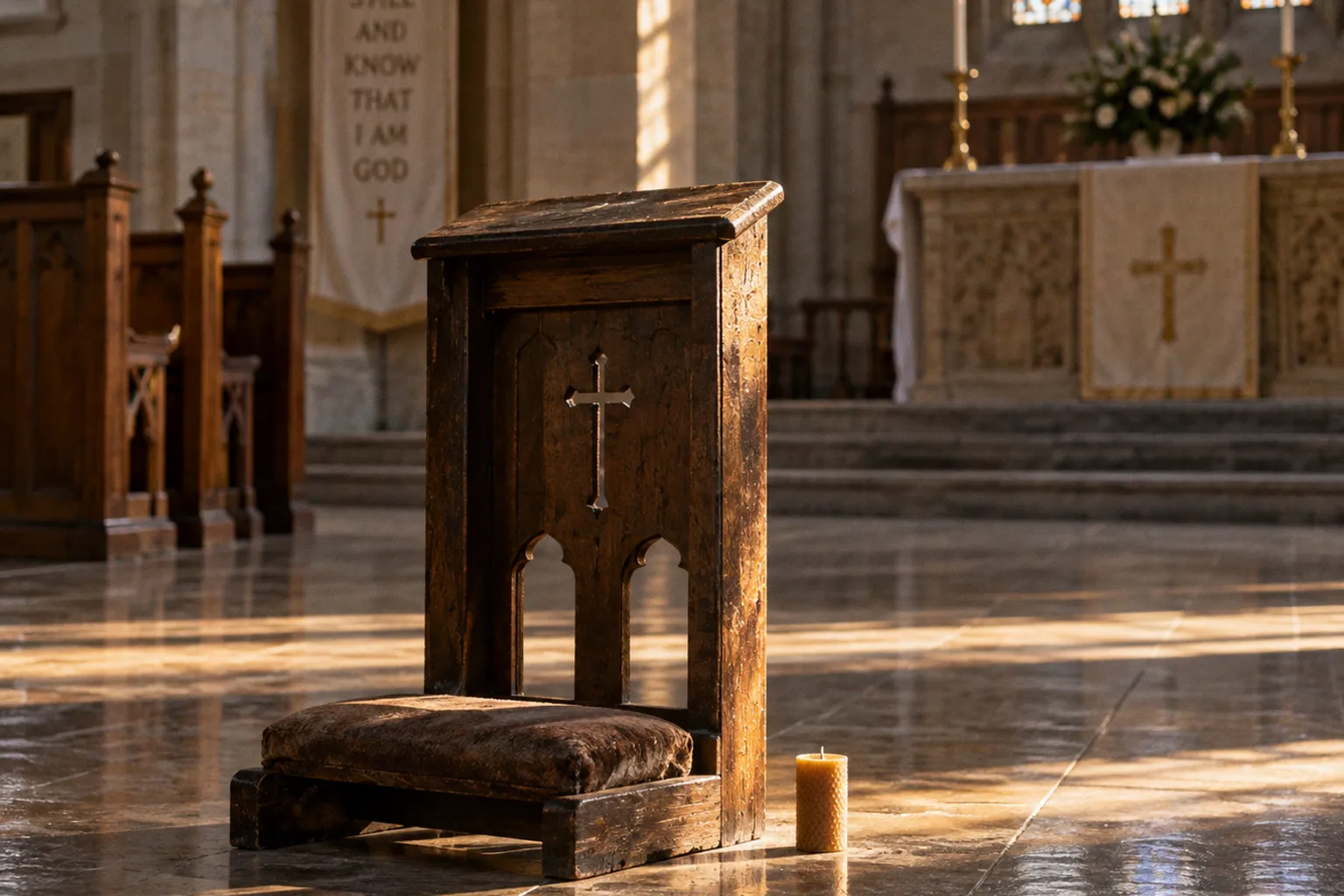
For many people, the answer is a crowded interior life—unfinished conversations, bodily tension, grief that returns without warning, the pressure of caregiving, or the quiet fear that we are not doing enough. Christian mindfulness does not ask us to become untouched by these realities. It offers a way of meeting them in the presence of God, with Scripture, prayer, the body, and the ordinary conditions of the present moment.
This is why Christian mindfulness meditation techniques for beginners should not be understood as a Christianized version of mental blankness. Biblical meditation is not an attempt to empty the mind of every thought. It is a practice of returning the mind and body toward God’s truth, God’s character, and God’s sustaining presence.
We do not practice in order to become spiritually impressive. We practice because human attention is finite, because anxiety can scatter us, and because grace often meets us through small, repeated acts of returning.
Christian mindfulness is less about controlling the mind than learning where to bring it when life becomes difficult.
What is Christian mindfulness?
Christian mindfulness is the intentional practice of paying attention to the present moment while remaining oriented toward God. It may include Scripture, silence, breath, bodily awareness, prayer, or the attentive noticing of creation. Its center is not self-mastery but relationship: receiving the moment as a place in which God is already present.
The word mindfulness can create uncertainty in Christian communities. Some hear it as a purely secular wellness technique. Others associate it with religious traditions whose assumptions about the self, ultimate reality, or liberation differ from historic Christian confession. That concern deserves a careful response rather than dismissal.
The practice itself is not automatically incompatible with Christian faith. The framework matters. In Christian meditation, our attention is not directed toward an abstract spirituality detached from the biblical story. We attend to God as revealed in Scripture and known through Christ, to the movement of prayer, to the life of the church, and to the embodied reality of loving our neighbors.
Biblical meditation versus secular mindfulness
There are places of genuine overlap. Both Christian and secular approaches may encourage present-moment awareness, slower breathing, the recognition of intrusive thoughts, and a compassionate response to human limitation. Both can help us notice the difference between what is happening now and the fearful stories the mind is adding to it.
The distinction usually lies in the purpose and object of attention.
| Dimension | Christian mindfulness | Secular mindfulness |
|---|---|---|
| Primary orientation | Awareness of God’s presence, Scripture, and truth | Present-moment awareness and psychological observation |
| Treatment of thoughts | Notice thoughts without being ruled by them, then return toward God | Notice thoughts without judgment or attachment |
| Use of silence | A space for receptive prayer and attentive presence | A space for observation, regulation, or nonreactivity |
| Understanding of the person | A finite, embodied creature held in relationship with God and neighbor | Often framed through psychological well-being and personal awareness |
| Desired fruit | Trust, repentance, compassion, hope, faithful action, and deeper communion | Reduced reactivity, increased awareness, and emotional regulation |
This table should not be used to create a false opposition. Secular mindfulness practices may offer helpful tools, particularly for recognizing stress and interrupting automatic reactions. At the same time, Christian practice gives those tools a theological home. We are not simply observing the self. We are learning to bring the self—body, memory, fear, desire, and hope—before God.
That distinction becomes especially important when someone is grieving, depressed, or living with chronic anxiety. The goal is not to force a religious interpretation onto pain. Lament remains part of faithful prayer. Sometimes the most honest form of mindfulness is to notice that we are hurting and to allow God’s presence to hold that truth without rushing to resolve it.
What Christian mindfulness is not
Christian mindfulness is not:
- A guarantee that anxiety, depression, or grief will disappear.
- A substitute for therapy, medical care, pastoral counseling, or medication when those forms of support are needed.
- A demand to feel peaceful in every prayer session.
- A method for earning God’s favor through disciplined concentration.
- A requirement to suppress anger, sorrow, doubt, or bodily discomfort.
- A promise that every quiet moment will produce a clear spiritual message.
Grace changes the posture of the practice. We do not sit down to persuade God to come near. We begin from the promise that God is already near, even when our awareness is clouded and our confidence is thin.
Beginning with Lectio Divina
One of the most grounded Christian mindfulness practices is Lectio Divina, a traditional way of praying with Scripture. It is not primarily a study method. Bible study asks questions about context, language, authorship, history, and interpretation. Those questions matter deeply. Lectio Divina has a different pace: it allows a brief passage to become prayerfully present within us.
The practice has four basic movements:
1. Read a short passage slowly, preferably aloud.
2. Meditate by noticing a word, phrase, image, or invitation that draws your attention.
3. Pray by responding honestly to God.
4. Contemplate by resting in God’s presence without needing to produce more words.
These movements are not a spiritual examination that we can fail. Some days, the reading may feel dry. Some days, a single phrase may remain with us for hours. The practice is not measured by how profound the experience seems. Its work is often quieter: it gives the mind a faithful place to return.
A beginner’s Lectio Divina practice
Set aside between five and fifteen minutes. Choose a short passage rather than a full chapter. A psalm, a brief Gospel scene, or a single paragraph from the New Testament can be enough.
1. Read slowly
Read the passage aloud once. Then read it again, allowing pauses between sentences. We are not trying to cover ground. We are allowing the words to be heard by the whole person.
Notice what happens internally. Do you feel resistance? Comfort? Boredom? A memory? A physical tightening in the chest? These responses do not need to be judged or explained immediately.
2. Meditate on what receives your attention
A word or phrase may seem to stand forward. Perhaps it is the idea of shelter, mercy, waiting, or release. Perhaps one sentence irritates you. That, too, can become material for prayer.
To meditate is not to force a hidden message from the text. It is to remain with the passage long enough to discover how it meets us in our current condition. We may ask:
- What word am I returning to?
- What does this passage reveal about God?
- What is happening in my body as I hear it?
- What part of my life feels addressed, comforted, or challenged?
3. Pray honestly
Prayer may be spoken, silent, grateful, angry, confused, or very brief. We can respond to God with the words that are actually available to us rather than the words we think a faithful person should have.
If the passage speaks of trust and we do not feel trust, we can say so. If we feel relief, we can receive it. If we feel nothing, we can remain there without manufacturing an emotional response.
4. Contemplate
The final movement is not an achievement of blankness. It is a willingness to stop managing the encounter. We sit quietly, aware that God’s presence does not depend on our ability to sense it.
For some people, this is the hardest movement. We are accustomed to filling silence with explanation, requests, or self-correction. Contemplation invites a gentler form of attention: resting as a finite person before an infinite God.
In Lutheran life, this practice can remain closely connected to the public ministry of Word and Sacrament. A passage heard in worship may be carried into the week. A sermon may be revisited slowly rather than evaluated only for its ideas. The congregation’s shared prayer can become a personal rhythm, not as private escape from community but as a way of being formed within it.
Scripture breathing and sacred words
When the mind is agitated, a long prayer can feel impossible. Scripture breathing provides a simpler entry point. It joins a physical rhythm—slow, attentive breathing—with a biblical phrase or sacred word.
The practice does not treat breathing as mystical power in itself. Breath is part of our embodied life, and embodied faith takes seriously the way physical states affect attention, fear, and prayer. Slowing the breath may help create enough spaciousness to notice what is happening and to respond rather than react.
A beginner can practice for five to twenty minutes, though even a few attentive breaths may be meaningful.
A simple Scripture breathing exercise
Choose a short phrase. One possible phrase comes from Psalm 46:10: “Be still and know that I am God.” Another traditional sacred word is Maranatha, meaning “Come, Lord Jesus.”
You may divide the phrase across the breath:
- Inhale gently: “Be still.”
- Exhale slowly: “And know that I am God.”
Or:
- Inhale: “Come, Lord.”
- Exhale: “Jesus.”
There is no need to make the breath deep or exaggerated. For some people, especially those with panic symptoms or respiratory conditions, deliberate deep breathing can feel uncomfortable. A natural, unforced breath is enough. If focusing on breathing increases distress, shift attention to the feet on the floor, the hands resting in the lap, or the sounds in the room.
The phrase is not a charm. We are not repeating it to control God or guarantee calm. We are allowing it to anchor attention in a truth we may need to receive repeatedly.
What to do when thoughts interrupt
Thoughts will come. A grocery list, an argument, a physical sensation, a memory, or a sudden fear may take over the field of attention. This does not mean the practice has failed.
Notice the interruption without scolding yourself. Name it gently if that helps: planning, remembering, worrying, hurting. Then return to the phrase.
The return is the practice.
We may need to return ten times in a few minutes. We may need to return to the same truth across many days. This is not evidence of weak faith. It is an honest recognition of human finitude. Attention wanders because we are embodied creatures with responsibilities, histories, nervous systems, and needs. Grace does not require us to transcend those conditions before we pray.
When sacred words become difficult
Sometimes a familiar phrase can feel inaccessible. “Be still” may sound cruel to someone whose life is in crisis. “Come, Lord Jesus” may bring grief to the surface. A word of comfort may touch a wound before it brings relief.
When that happens, choose a phrase that does not ask you to pretend. Possibilities include:
- “Lord, have mercy.”
- “You are with me.”
- “I am held.”
- “Into your hands.”
- “Give me today what I need.”
These are not formulas that must work. They are small vessels for attention. If even words feel too demanding, we can sit quietly and recognize the simple fact that we are here.
Body scans, the five senses, and prayer
Many Christians have learned to speak about spiritual life as though the body were merely an obstacle to overcome. Yet the body carries grief, fatigue, fear, joy, and memory. A person may say, “I am fine,” while the jaw is clenched, the shoulders are raised, and the stomach has been tight for hours.
A Christian body scan does not treat the body as a machine to optimize. It is an act of compassionate noticing. We bring the body into prayer because God’s care includes our physical existence.
A five-sense grounding practice
Begin by looking around the room or outdoor space. Let your attention rest on the senses without demanding that they produce a spiritual insight.
Notice:
- Something you can see: light, shape, color, movement.
- Something you can hear: a voice, a bird, traffic, the hum of a room.
- Something you can feel: the chair beneath you, clothing against the skin, the ground beneath your feet.
- Something you can smell.
- Something you can taste, even if only the ordinary taste remaining in the mouth.
This practice can be especially useful when worry has pulled attention into an imagined future or when grief has made the present feel unreal. The senses do not erase pain. They help us re-enter the room in which we are actually standing.
After noticing the senses, take three to five easy breaths. With each exhale, you might use the phrase, “I let go.” This does not mean letting go of the person you love, the problem you face, or the responsibilities you carry. It may simply mean releasing the demand to solve everything in this instant.
A prayerful body scan
Move slowly from the top of the head toward the feet. You can remain seated or lying down. At each area, notice sensation without labeling it good or bad.
You might pray:
- For the forehead and eyes: “Lord, meet me in what I have seen.”
- For the jaw and throat: “Give me grace for the words I cannot yet speak.”
- For the chest and heart: “Hold what is tender here.”
- For the hands: “Guide what I do today.”
- For the legs and feet: “Keep me present to the path before me.”
If you encounter pain, numbness, agitation, or strong emotion, do not force yourself to remain with it. Open your eyes, shift position, stand up, or return to a neutral sensation such as the feet on the floor. Psychological safety belongs inside Christian practice. There is no holiness in overwhelming yourself.
For some people, body awareness may bring up trauma. A trusted therapist, physician, or pastor can help you discern a form of prayer that does not intensify distress. Christian mindfulness should widen our capacity for truthful presence, not become another way to abandon ourselves.
The body is not a distraction from prayer. It is one of the places where our need for mercy becomes visible.
Listening prayer and the practice of presence
Spoken prayer has an honored place in Christian life. We ask, confess, intercede, give thanks, and lament. Listening prayer does not replace these forms. It creates a quieter space in which we stop treating prayer as a speech we must successfully deliver.
The practice has historical connections to Brother Lawrence, a seventeenth-century Carmelite lay brother associated with The Practice of the Presence of God. Its central insight is uncomplicated and difficult: God may be attended to in ordinary activities, not only in designated religious moments.
Listening prayer begins with silence and receptive attention. We may sit for five or ten minutes and become aware of God’s presence without trying to generate a message. If a thought arises, we ask whether it bears the character of Scripture and the fruits of love, humility, truth, and peace. We do not assume that every inner impression is divine guidance.
This discernment matters. People who are exhausted, grieving, anxious, or experiencing mental health symptoms may have intense thoughts or impressions. Listening prayer should never encourage someone to ignore medical care, abandon wise counsel, or treat every internal voice as a command from God.
A gentle practice of listening prayer
1. Begin with a clear Christian grounding.
Pray simply: “God of mercy, keep me in your truth and love.”
2. Become aware of the room.
Feel the chair, notice the light, hear the sounds around you. Let your attention settle without strain.
3. Rest in silence.
You do not need to produce a spiritual experience. If words come, receive them cautiously. If no words come, remain with the ordinary quiet.
4. Return to Scripture when uncertain.
A short passage can provide a steadier center than a strong feeling or sudden idea.
5. Test the fruit.
Does the impression move you toward compassion, honesty, patience, and faithful responsibility? Or does it produce panic, grandiosity, contempt, or coercion? The latter should not be treated as trustworthy guidance.
6. Bring significant decisions into community.
A pastor, spiritual director, therapist, family member, or mature friend may help you distinguish prayerful discernment from fear or impulse.
Listening prayer is not passive resignation. It can lead to action, but it begins by loosening our compulsion to act immediately. Sometimes God’s presence is encountered not through a new instruction but through the strength to remain faithful to what we already know: tell the truth, ask forgiveness, rest, seek help, care for the vulnerable, return to worship.
Bringing mindfulness into Lutheran worship and daily life
Christian mindfulness becomes most durable when it is woven into existing rhythms rather than treated as a private performance. Lutheran worship already gives the congregation practices of attention: gathering, confession, proclamation, silence, singing, receiving, and being sent. These movements can train us to become present to God and to one another.
Before worship, take a few breaths and notice the transition from whatever came before. During the reading of Scripture, listen for one phrase without trying to capture the whole passage at once. During confession, allow the words to be spoken as truth rather than as a ritual of self-contempt. During Communion, receive the sacrament as gift rather than as a reward for having achieved the right inner state.
Outside worship, a sustainable daily rhythm might look like this:
- Morning: read a short passage and sit with one phrase for five minutes.
- Midday: pause for three natural breaths before beginning the next task.
- During stress: feel both feet on the ground and name one thing you can see and one thing you can hear.
- Evening: review the day with gratitude, sorrow, and release rather than self-accusation.
- Weekly: join communal worship, a prayer group, a grief-support ministry, or another setting where faith is practiced with other people.
The community matters because solitary practices can become overly self-referential. We need other voices, shared songs, pastoral care, and the tangible reminder that no one is asked to carry human frailty alone. Spiritual resilience is not the same as emotional independence. Often, resilience grows through receiving care.
Common mistakes in beginning Christian mindfulness
A few patterns can quietly turn a gracious practice into another burden:
1. Expecting immediate calm.
Prayer may reveal agitation before it brings peace. Awareness is not always comfortable at first.
2. Treating distraction as failure.
Returning is more important than maintaining uninterrupted concentration.
3. Using Scripture to silence pain.
A biblical phrase should not be used to force someone out of lament before they are ready.
4. Confusing bodily relaxation with spiritual maturity.
A restless body does not mean a faithless heart.
5. Practicing in isolation during serious distress.
Meditation can support well-being, but it is not a universal treatment for severe anxiety, depression, trauma, or other mental health conditions.
6. Turning the practice into a performance.
Counting minutes, collecting techniques, or comparing experiences can distract us from the gift itself.
7. Assuming every inner impression is guidance.
Christian discernment requires Scripture, wisdom, community, and patience.
The gentlest practice is often the one we can return to without fear. Five quiet minutes may be more faithful than an ambitious routine that leaves us discouraged. A single breath prayed honestly may be more significant than a long session completed under pressure.
A simple seven-day beginning
If you would like a clear starting point, try this sequence for one week:
1. Day one: Sit quietly for five minutes and notice your surroundings through the five senses.
2. Day two: Repeat a short Scripture phrase with the natural rhythm of your breathing.
3. Day three: Read a brief psalm aloud twice and note one word that remains with you.
4. Day four: Practice a slow body scan, praying for areas of tension without trying to force them to relax.
5. Day five: Sit in listening prayer for five minutes, returning to a biblical phrase whenever the mind wanders.
6. Day six: Take a prayerful walk, noticing the ground, weather, sounds, and people around you while remaining aware of God’s presence.
7. Day seven: Bring the week into worship or conversation with a trusted member of your faith community.
At the end of the week, do not ask only whether you felt peaceful. Ask more spacious questions: Did I become more honest about my condition? Did I notice when I was reacting from fear? Did the practice help me receive care, offer patience, or return to God after distraction?
Those may be signs of formation even when the emotional weather remains difficult.
Christian mindfulness is not an escape from the limits of human life. It is a way of meeting those limits without pretending they are not there. We breathe because we are embodied. We pray because we are dependent. We return to Scripture because our attention is fragile. We worship with others because grace is not given only to isolated individuals.
The promise is not that we will become invulnerable. The promise is that our vulnerability can be held—in the presence of God, within the life of the church, and among the ordinary practices through which faith becomes inhabitable.