Altar guild communion setup: fixing common preparation errors
Guild Communion Setup: Fixing Common Preparation Errors…
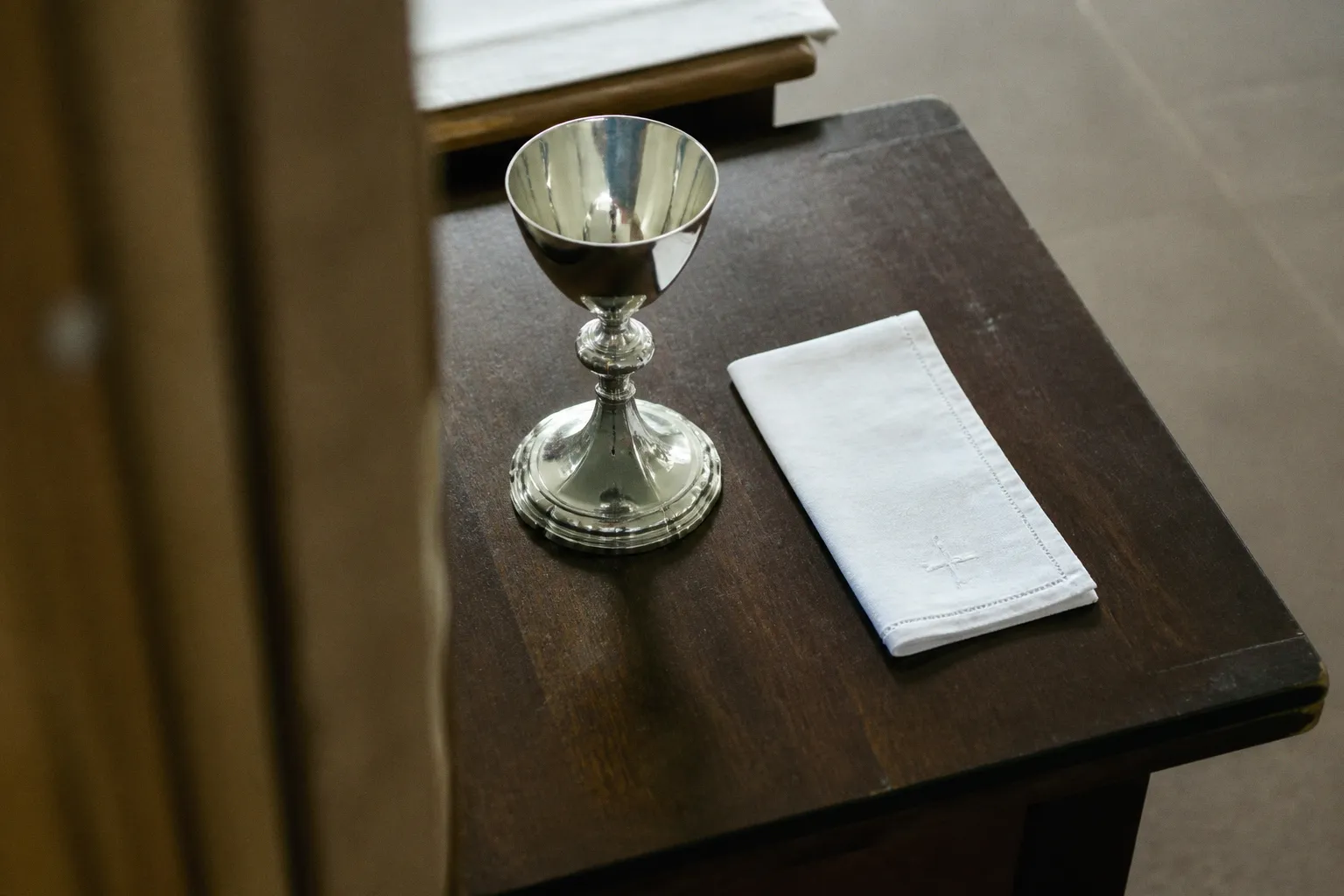
Anyone who has served on an altar guild knows the quiet weight of the role. You arrive before the sanctuary fills, while the building still holds the hush of empty pews, and you set out the bread and wine that will become, in the words our confessions reach for, the very means of grace for your neighbors. The work is repetitive in form, but never routine in meaning. And because it is repetitive, it is also deeply vulnerable to small lapses — a purificator folded the wrong direction, a host gone stale before the fraction, a cruet of wine left at room temperature too long on a summer morning.
The altar guild does not merely set a table. We prepare the place where the community meets its Lord, and the smallness of our hands is part of the prayer.
These are not failures of devotion. They are the predictable friction points of any embodied practice repeated week after week by human hands. The good news is that most of them are easy to diagnose, easier to prevent, and worth naming out loud — because the way we prepare the altar shapes, however quietly, the way a congregation receives the sacrament. Below is a walk through the altar guild communion preparation mistakes we see most often, and the gentle corrections that make them rarer.
The Theology of Preparation: Why Precision Matters in Lutheran Liturgy
To talk about linen folds and cruet placement without first naming why any of it matters would be to mistake the altar guild for a logistics committee. Lutheran sacramental theology confesses the real presence of Christ in, with, and under the bread and wine of Holy Communion. The exact philosophical language we use — sacramental union, consubstantiation in popular shorthand, the mysterious "is" of the Words of Institution — matters less in this context than the practical implication: the elements are not ordinary bread and drink after the words are spoken over them, and the vessels that hold them are not ordinary dishes.
This is where preparation becomes a form of embodied faith. The hands that wash a chalice, the eye that notices a cracked paten, the patience that folds a corporal square and true — these are acts of theology performed without words. When we treat the elements and vessels with care, we are confessing with our bodies what we confess with our lips. When we grow careless, the confession gets quieter, even if the words at the altar remain the same.
Precision, then, is not legalism. It is the slow work of letting our practice match our proclamation. We prepare with attention because we believe that what we are preparing is, in fact, holy. The mistakes that follow in this article are almost never the result of irreverence; they are the result of forgetfulness, of rushing, of an assumption that no one will notice. But people do notice, sometimes without being able to name what they noticed. A congregation absorbs the care or the carelessness of its preparation, and a seasoned altar guild learns to treat small things as significant.
Common Pitfalls in Chalice and Paten Arrangement
The arrangement of vessels on the corporal is the most visible part of altar guild work, and therefore the most prone to small missteps. Most of these mistakes do not invalidate the sacrament, but they do affect the reverence of the celebration and, over time, the habits of a congregation. The table below pairs the most common holy communion setup errors with the corrected practice, and is worth posting in your sacristy as a quiet checklist.
| Common Mistake | Corrected Practice |
|---|---|
| Purificator draped loosely over the chalice without a defined fold | Folded in thirds lengthwise, draped across the chalice bowl with the long edge facing the pastor's hand |
| Corporal rotated off-square from the altar's edge | Aligned so its edges run parallel to the front of the altar |
| Paten placed on the corporal without the host centered and covered | Host centered on the paten, covered with a small linen or the burse pall until the Words of Institution |
| Ciborium used interchangeably with paten without intention | Choose deliberately: a ciborium for intinction or large assemblies, a paten for a single loaf or smaller gathering |
| Cruets left on the credence table without labels | Clearly labeled (wine / water / grape juice) to prevent accidental substitution during fraction or ablutions |
| Pall placed askew on the chalice | Centered, slightly elevated, easy to lift without touching the host beneath |
A few of these deserve a longer word. The purificator, in particular, is the small linen that wipes the rim of the chalice after each communicant. Its fold is not decorative; it is functional, designed to give the minister a clean surface to grip without contaminating the bowl. A loose or bunched purificator is harder to use well, and harder still to launder without trapping residue.
The corporal — that square of starched linen on which the vessels sit — is its own kind of teaching. It catches any dropped crumb or spilled drop, and it becomes, after the service, a repository of the smallest fragments of the meal. For this reason it is treated differently from the fair linen that covers the altar itself, and it is folded and stored with the same care as a sacred text. If your altar guild treats the corporal as an interchangeable cloth, the correction is simple: give it its own drawer, its own washing cycle, and its own quiet respect.
Navigating the Reverent Disposal of Consecrated Elements
Of all the questions altar guild members bring to their pastors, the disposal of leftover consecrated elements is the one that tends to surface with the most hesitation. The hesitation is right and proper. We are not talking about leftovers in the ordinary sense; we are talking about what remains of the sacrament itself after the assembly has been fed.
Lutheran practice, drawing on long Christian tradition, treats the disposal of consecrated elements as an act that deserves intentionality. There is no single mandated method across every congregation, but there are recognized communion element disposal rules, and most altar guilds will recognize themselves somewhere in the following list of options:
- Consumption by the presiding minister or another communicant immediately following the postcommunion prayer.
- Reservation in the tabernacle or aumbry for later communion of the sick, with the consecrated host or wine transferred in clean, dedicated vessels.
- Ablution and pouring of any remaining wine into the earth — most often through a special sink called a sacrarium that drains directly into the ground rather than the municipal system.
- Burning of any remaining bread, either alone or mixed with other sacramental debris, with the ashes afterward buried or scattered in a respectful place.
The mistakes here are not abstract. They are the predictable results of not having a written policy in the sacristy.
| Disposal Error | Why It Matters | Gentle Correction |
|---|---|---|
| Pouring consecrated wine down a regular sink or drain | Treats the sacrament as ordinary liquid; can also violate local plumbing ordinances for larger quantities | Use the sacrarium, or designate an outdoor patch of bare earth for ablutions |
| Discarding leftover hosts in the regular trash | Treats the sacrament as ordinary food; risks the host being handled disrespectfully by waste collectors | Burn with other sacramental debris, or dissolve in water and pour into the earth |
| Returning unused, unconsecrated bread and wine to the parish pantry | Conflates what has been set aside with what was offered; invites confusion at future services | Keep consecrated elements apart until disposed of; ordinary leftovers can be returned with clear labeling |
| Leaving consecrated elements in the sacristy "for next week" without reservation protocol | Risks forgetfulness; risks the sacrament sitting unattended through the week | Either consume at the close of the liturgy, or formally reserve with a clear date and purpose |
| Using the same vessels for unconsecrated and consecrated elements without distinction | Undermines the visible theology of the altar | Dedicate specific vessels for sacramental use; clearly separate in storage |
If your congregation does not have a sacrarium, the conversation is worth having. A sacrarium is simply a sink that drains into the ground rather than the sewer, and many Lutheran parishes have installed one near the sacristy for exactly this purpose. Where installation is impractical, the practice of pouring consecrated wine onto bare earth in a quiet corner of the churchyard is ancient and entirely appropriate. Reverent disposal is not a footnote to communion. It is the last faithful gesture of the meal, and it deserves the same attention we give to setting the table.
Standardizing Linen Care and Vessel Handling Protocols
If the previous section was about reverence at the close of the meal, this one is about reverence in the ordinary week — the days between Sundays when the altar guild launders, folds, and stores what it has used. Most altar guild communion preparation mistakes that surface in worship are actually seeded in the middle of the week, in the way linens are washed, vessels are dried, or corporals are folded before they are put away.
Linen care is deceptively simple. White is the norm because it shows soil quickly, and showing soil is part of the point. A purificator that has been used well — that has wiped the rim of the chalice for two hundred communicants — looks unmistakably used by the end of the service, and that visible use is its own homily on what it means to be a vessel of grace. The temptation, of course, is to launder everything together with the parish kitchen towels, and the mistake is small but cumulative. A few protocols tend to hold up well in practice:
- Wash altar linens separately, in cool water, with a gentle detergent free of harsh optical brighteners.
- Inspect each linen after washing for stains that did not lift, for threadbare edges, and for buttons or ties that need replacing.
- Iron while slightly damp, folding along the same creases each time so the linen lies predictably on the altar.
- Retire linens that are fraying, stained beyond cleaning, or worn through; do not relegate them to secondary use in the kitchen or nursery.
- Store corporals and purificators in dedicated drawers or boxes, never stacked beneath vestments or general parish supplies.
Vessel handling follows a parallel rhythm. Chalices, patens, ciboria, and cruets are washed after every service in warm water with a mild soap, dried with lint-free cloths, and inspected for tarnish, dents, or loose solder. Silver and silver-plated pieces will need polishing on a schedule that depends on use, climate, and the alloy — there is no single right answer, only the practice of noticing. A common mistake is to allow polish residue to remain in the bowl of a chalice, where it can transfer to the wine or to the lips of a communicant. The correction is patience: rinse thoroughly, dry with a clean cloth, and only then return the vessel to the credence table.
Glass cruets are easier in some ways and more fragile in others. They crack under thermal shock, so pouring hot water over a cold cruet is a predictable way to lose one. They also stain from red wine in ways that white grape juice does not, and a stained cruet is not a ruined cruet, but it does deserve a longer soak. A simple rotation between two sets of cruets — one in use, one resting — extends their life considerably and gives the guild a buffer when something breaks on a Saturday night.
Communication Loops Between Altar Guild and Pastors
The fifth section of this article is the one most often left out of training manuals, and it is the one that, in my experience, prevents more Lutheran sacramental preparation errors than any single protocol. We are talking about the ordinary conversations between an altar guild and its presiding minister — the pastor, the supply preacher, the deacon, the lay worship leader — and how those conversations shape every other practice described above.
The most common pattern is the unspoken assumption. The pastor assumes the altar guild knows how many communicants to expect; the altar guild assumes the pastor has already considered whether grape juice or wine will be used; both assume the other has thought about the special feast coming up in three weeks. None of these assumptions are unreasonable, and most weeks they hold. The week they do not hold is the week someone arrives at the altar slightly off-balance, and the congregation senses it even if they cannot name what shifted.
A few communication habits have proven themselves across many parishes and tend to shorten the distance between intention and execution:
- A shared written schedule. Not a complicated spreadsheet — a simple sheet in the sacristy that names the Sunday, the presiding minister, the expected attendance range, the element preference, and any liturgical notes (color of the day, special feast, ecumenical visitors, baptisms).
- A standing check-in before the service. Five minutes between the altar guild and the pastor, either in the sacristy or at the credence table, to walk through the setup together. This is not a critique; it is a way of holding the space for shared attention before the liturgy begins.
- A clear handoff for sick calls. If consecrated elements are reserved for communion of the sick, who carries them, in what vessel, and on what timeline? When does the pastor need to know, and how?
- A feedback loop after large feasts. Christmas, Easter, Pentecost, and any day with an unusual number of communicants will surface patterns the regular schedule hides. A short retrospective — what ran out, what went unused, what surprised us — is the most useful planning tool a guild has.
What we cannot say to each other about the work will eventually show up in the work itself. The altar guild and the pastor are not two ministries; they are one vocation approached from two stations.
There is also a softer kind of communication worth naming. Altar guild work is largely invisible, and that invisibility is part of its vocation. But invisible work is not the same as unimportant work, and a parish that names the guild's contribution — in a welcome from the pulpit, in a note in the bulletin, in the budget conversation — builds the kind of trust that makes the small corrections easier to make. Pastoral leaders who treat the altar guild as partners in the liturgy rather than as support staff tend to have guilds that last for decades. The ones who treat them as a service arm tend to have guilds that turn over every few years, and the loss of institutional memory shows up in the setup, week after week, in ways the congregation absorbs without ever naming.
A Final Word on Patience with Ourselves
I want to close where we began, with the recognition that this work is repeated and embodied and therefore imperfect by design. The altar guild member who notices, after the dismissal, that the purificator was bunched all morning is not failing. They are practicing the kind of attention that, over years, becomes the parish's own form of reverence. The guild that catches a disposal error and corrects it quietly the next Sunday is not making up for a past mistake; it is growing into a more honest practice of what the meal means.
Lutheran theology has always resisted the idea that we get the sacrament right by getting every detail right. The grace comes from Christ, not from our procedures. And yet the procedures matter, because we are embodied creatures who learn what we believe by how we handle what we love. The chalice we polish this week, the corporal we fold along the same creases, the sacrarium we pour into with our own hands — these are the small sacraments of attention that train us for the larger one.
If you take one thing from this article, let it be permission to slow down. Not to be more anxious, but to be more present. The next time you arrive at the empty sanctuary and begin to set the table, you are not alone in the work. You are part of a long line of hands that have prepared this meal, and you are preparing it for the people you will kneel beside in an hour or two. The care you bring to the small things will be the care they receive in the large ones. That, finally, is the whole of it.