Why Deaf-Led Worship Videos Are Challenging Traditional Liturgical Norms
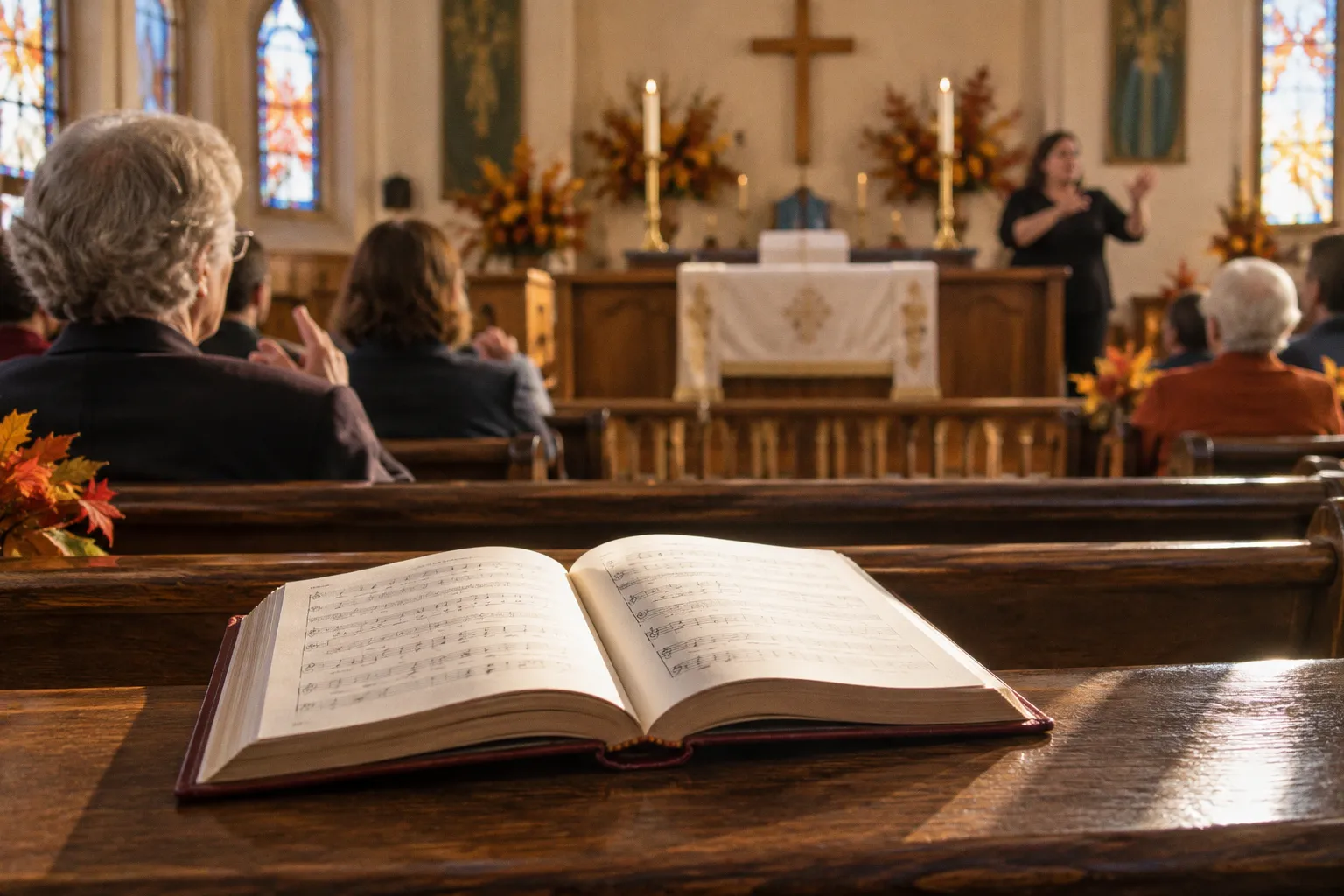
According to Briefly News, a circulating video depicting a Deaf congregation engaged in communal worship has drawn significant viewership, framed by the caption "a place to worship in our language."
The accessibility deficit as a liturgical problem
The circulation of the video is itself a measurable indicator. When a recording of sign-language worship propagates beyond its originating community, it typically signals that the represented form of liturgical access is exceptional rather than normative. The structural issue is not the existence of Deaf congregations, which have long maintained their own worship networks, but the absence of consistent provision within hearing-majority parishes. From a rubric standpoint, a worship service that cannot be received by every member of the assembly fails the criterion of full participation that governs historic Lutheran and broader evangelical liturgical norms. The practical question is therefore not whether to accommodate Deaf worshipers, but where the accommodation is built into the weekly framework: signed portions of the liturgy, interpreters present during the sermon and the Eucharistic rite, and printed or projected text in visible form.
Leadership supply and the stewardship of the assembly
A separate report from Baptist Press, drawing on a church survey, indicates that congregations anticipate a pressing need for worship leaders in the near term. The framing, urgency rather than abstract shortage, shifts the matter from demographic curiosity to operational risk. Liturgical leadership requires more than musical facility; it presupposes familiarity with the lectionary cycle, the church calendar, and the theological grammar of congregational song. When the pipeline of such leaders narrows, stewardship of the assembly's worship life becomes the responsibility of existing staff, who must distribute preparation tasks and document the rationale for recurring liturgical choices. A parish without a succession plan for its worship leaders is, in effect, a parish whose liturgical framework is held by temporary arrangement.
An audit checklist for the coming quarter
Congregations responding to both signals, the accessibility gap and the leadership gap, can proceed by cataloguing three categories of practice.
1. Inventory the sensory channels through which the liturgy currently reaches the assembly: spoken word, printed text, music, visual projection, and physical gesture. Identify which channels are single-modality and therefore exclude members with auditory or visual impairments.
2. Document the current worship leadership structure, noting which roles are filled by volunteers, part-time staff, or full-time clergy, and which positions would become vacant within twelve to twenty-four months.
3. Establish a rubric for evaluating any new worship resource, whether video, song, or devotional tool, against the criteria of accessibility, theological coherence with the congregation's confession, and sustainability under existing staffing constraints.
The video that prompted this examination is not the story itself; the story is the structural condition it makes visible. Worship in one's own language, in whatever sensory form that language takes, remains the baseline against which any liturgical framework must be measured.