Beyond Instruction: How Worship Songs Function as Prayer and Proclamation
Matt Redman, a songwriter and worship leader with decades of experience in congregational music, has offered a systematic framework for evaluating what worship songs are designed to accomplish, as reported by Relevant Magazine.
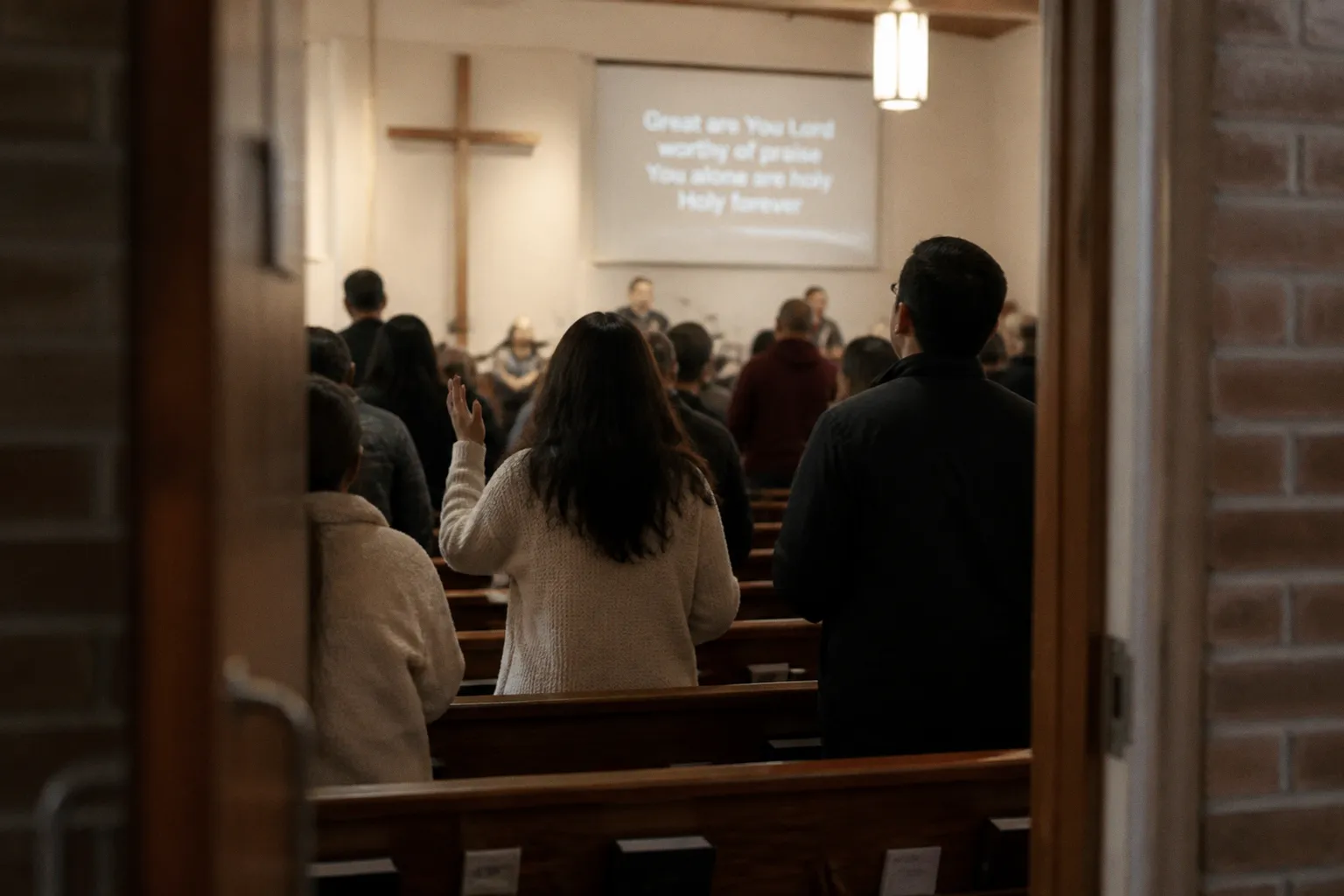
The distinction he draws between horizontal and vertical worship carries direct bearing on how worship planners approach song selection in Lutheran and broader liturgical contexts. What emerges is not a critique of any particular genre but a rubric for assessing theological function within a service order.
The Horizontal-Vertical Distinction
Redman frames the core problem as one of orientation. Horizontal worship describes God to each other; vertical worship speaks directly to Him. In his own formulation: "There's nothing inherently wrong with telling the story. But there is a beautiful dynamic that happens in worship where you tell the story — and then you respond to it." That transition from narration to address is, in his framework, the essential pivot. A song that remains entirely on the horizontal plane functions as theological instruction. A song that crosses into vertical address becomes prayer.
The consequence for corporate worship is structural. When a congregation sings only about God rather than to God, the liturgical act risks collapse into instruction or sentiment. Redman articulates this as a loss of what he terms the "chapel" function: "I don't want my songs to just be a classroom — I want them to be a chapel too." The implication is that songwriters carry a specific responsibility for whether the lyrics they produce ever turn the singer toward address rather than observation.
Three Movements Within the Song
Redman proposes a temporal framework layered on top of the horizontal-vertical distinction. The most effective worship songs move through three stages: reenactment (recounting what God has done), realization (drawing out present meaning), and anticipation (pointing toward eschatological fulfillment). He summarizes the pattern succinctly: "They remind you there was a Savior who was born. Then they say, He can actually be born in you. And then they look ahead: He's coming again."
Songs that arrest at the first stage remain didactic. Songs that move through all three carry the congregation from memory to confession to hope — the full arc of doxological response. The implication for planners is that song selection should account not only for lyrical content but for the trajectory the lyrics create when sung in sequence within a given service.
Implications for Liturgical Planning
For worship committees, the practical test is compositional. A service that contains only horizontal material — songs of identity, encouragement, or theological reflection — may instruct but does not necessarily invoke. The remedy Redman proposes is not exclusion but proportion. His articulation of this balance: "In worship, we need to sing both sides. Not just the peace of the Lord, but the power. Not just the mercy, but the majesty."
Lutheran liturgical traditions already incorporate structural elements that model this movement — the collect, the prayer of the day, the assurance of forgiveness — all of which function as vertical address by form. The question Redman's framework raises is whether the musical portions of the service maintain comparable theological traction or operate primarily as horizontal accompaniment to the spoken liturgy. Worship planners reviewing their rotation might assess each song for whether it eventually turns the congregation toward direct address to God.
The underlying concern Redman names is not stylistic but soteriological. Worship that fails to hold transcendence alongside immanence, he suggests, diminishes both: "If you only sing about the imminence without the transcendence, the imminence doesn't feel as special anyway." The full mystery of the Gospel requires songs capable of carrying it. Planners evaluating repertoire for the seasons ahead would do well to apply this compositional test — not as a stylistic filter, but as a measure of whether each song performs the work of pointing the singer toward the One being addressed.