Stewardship campaign planning: a step-by-step timeline
Every autumn, the same quiet anxiety settles over parish offices and church councils. How do we run a stewardship campaign that actually lands — and when should we have begun?
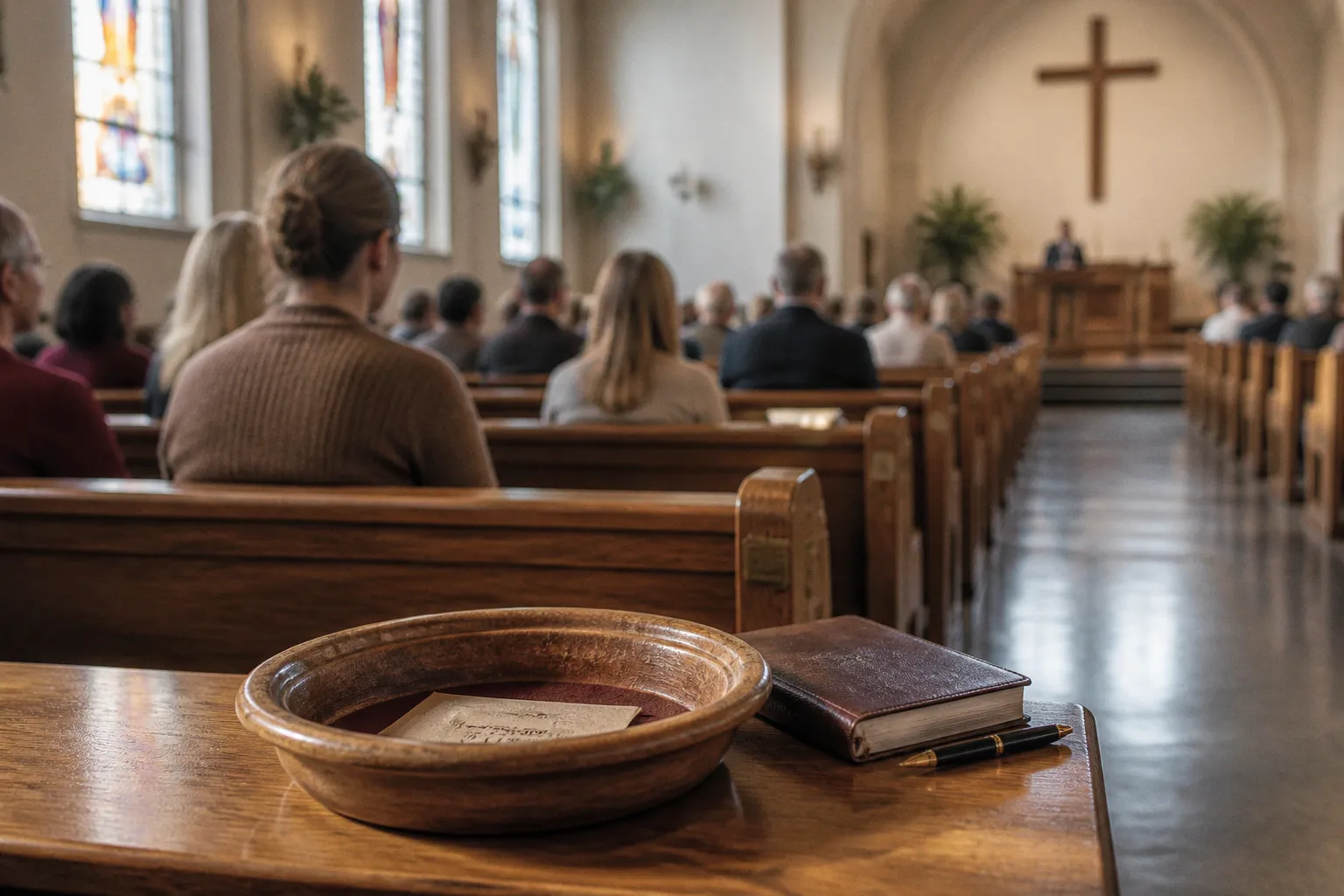
The honest answer, one most pastors arrive at only after a few seasons of trial and fatigue, is that stewardship work of any depth takes far longer than the calendar seems to allow. A well-paced annual campaign needs roughly five to six months from the first committee conversation to the Sunday when members bring forward their pledges. A compressed sprint can be done in about three months, but only with full alignment of leadership and a willingness to skip the slower rhythms that give a campaign its pastoral texture.
The temptation to wait, of course, is enormous. Summer is full of vacations and supply preachers; September feels like the moment things "really begin." By the time a council approves a theme in mid-October, however, the runway has effectively disappeared. What follows is the article's central conviction: stewardship is not a financial exercise bolted onto the parish year, but a formation in discipleship that follows a slow arc — and the arc, like the church calendar itself, has seasons.
Foundations of generosity: aligning theology with parish goals
Before any timeline matters, the pastoral work of stewardship begins with a question that is theological before it is financial: what do we mean when we ask our members to give? In the Lutheran tradition, stewardship is not a fundraising method dressed in biblical language; it is a way of naming the whole of life as a gift held in trust. The money that comes in through pledges is downstream of that confession, not the other way around.
This matters practically because congregations that frame stewardship primarily as "meeting the budget" tend to produce transactional, fatigue-prone campaigns. Members sense the ask is really about closing a gap, and the spiritual resonance drains out of the conversation. Congregations that frame it as a discipleship year — a season for discerning how one's time, talent, and treasure fit into the calling one has received in baptism — tend to hold attention longer and surface deeper conversations around kitchen tables.
Three theological anchors tend to do the heavy lifting in Lutheran parishes:
- Creation and vocation. All we have — including our income — comes from the hand of a generous God and is given back as a form of worship.
- Grace, not guilt. Generosity is a response to what has been received, not a transaction that earns God's favor. Any framing that drifts toward pressure or shame distorts the gospel.
- Community and communion. We give not only individually but as a body. The pledge is a way of joining our personal resources to the common life of the body of Christ.
LCMS Stewardship Ministry outlines five pillars that tend to anchor this work: intentional year-round education, an annual stewardship program, asset mapping and personal money management, lifetime planned giving, and over-and-above mission opportunities beyond the operating budget. None of these pillars stands alone. A campaign that touches only one or two of them will feel thin. A campaign that touches all five — even lightly — gives members a richer vocabulary for their own discernment.
A practical first step, then, is not to draft a budget letter but to gather the leadership team — pastor, council president, stewardship chair, finance officer — and ask: which of these five pillars is our parish already living? Which is missing? Where are we inviting members into generosity, and where are we simply asking them to underwrite operations? That conversation, held early and held honestly, becomes the soil into which the timeline will later be planted.
The six-month roadmap: from leadership alignment to Commitment Sunday
The cleanest way we have found to think about the arc of an annual campaign is as a sequence of six phases spread across roughly five to six months. Each phase has a recognizable pastoral texture, and each one prepares the way for the next. Compressing them is possible, but it tends to cost the congregation the slower rhythms that make generosity feel like formation rather than transaction.
| Phase | Approximate Timing | Primary Focus | Pastoral Tone |
|---|---|---|---|
| 1. Discernment & Alignment | Late spring / early summer | Theme selection, leadership alignment, theological framing | Quiet, listening |
| 2. Planning & Materials | Late summer | Pledge card design, letters, devotional guide, budget narrative | Drafting, preparing |
| 3. Preaching & Formation | September – October | Sermon series, small groups, daily devotionals, adult education | Teaching, dwelling |
| 4. Invitation & Response | Late October | Commitment Sunday, in-pew presentation, follow-up visits | Receiving, gratitude |
| 5. Celebration & Thanksgiving | November – early December | Reporting results, recognition, spiritual reflection | Joyful, gathered |
| 6. Analysis & Carryover | December – February | Evaluating outcomes, documenting lessons, seeding year-round education | Honest, hopeful |
Before walking through each phase, it is worth pausing to distinguish the annual pledge campaign from a capital campaign. The two are sometimes confused, but they run on different clocks. An annual campaign follows the five-to-six-month arc above. A capital campaign — funding a building project, a major repair, or a debt-reduction effort — usually requires at least twenty-three weeks of preparation before its own Commitment Sunday, followed by a giving period of one to three years. The principles overlap, but the timelines do not, and confusing them is one of the more common planning errors a parish can make.
Phase 1 — Discernment and alignment (late spring through early summer). This is the season when councils often feel the temptation to skip ahead. Resist it. The work of choosing a theme, forming a stewardship committee, and aligning the pastoral staff and council around a shared theological frame is what allows the rest of the timeline to move without panic. Many parishes set their campaign theme in May or early June, so that all subsequent communications can be drafted against a stable center.
Phase 2 — Planning and materials (late summer). By August the campaign should be quietly assembled: pledge cards drafted, congregational letters written, the budget narrative made intelligible, and the devotional or small-group guide selected. There is a pastoral discipline here — to have materials ready two months before they are needed — that prevents the September scramble.
Phase 3 — Preaching and formation (September through mid-October). This is the season most members actually experience. A generosity sermon series typically runs four to six weeks, weaving together Sunday preaching, midweek small-group conversation, and a daily devotional. The arc is not "raise more money" but "walk through Scripture's language of giving slowly enough that it lands in the heart." A common pastoral mistake is to compress this phase so that preaching becomes announcement rather than formation; the body of Christ usually notices.
Phase 4 — Invitation and response (late October). Commitment Sunday (sometimes called Celebration Sunday in more liturgical settings) usually lands in late October or mid-November, depending on the parish calendar. The mechanics of the day matter — clear in-pew presentation, accessible cards, a budget summary that members can actually read — but the pastoral tone matters more. This is a Sunday of receiving, not of selling. The congregation offers its pledges back to God as part of the worship, and the pastor's posture is gratitude rather than pressure.
Phase 5 — Celebration and thanksgiving (November into early December). Reporting back to the congregation — what was pledged, what trends are visible, what ministries the pledges will support — closes the loop. A brief letter, a presentation during worship, or a printed insert all serve the same function: the body sees that what was offered was received and will be stewarded.
Phase 6 — Analysis and carryover (December through February). This is where many parishes quietly stop, and where the more careful ones begin to build the next year. A short debrief with the stewardship committee, a note in the council minutes, and a "what did we learn?" document become the seedbed for the next year's theme.
A timeline is not a managerial artifact; it is a way of pacing the congregation's spiritual attention so that generosity can be taught rather than extracted.
Integrating the sermon series and small-group discernment
A generosity sermon series is the spine of any Lutheran annual campaign, and it works best when it is not a solo effort. The most effective patterns we have seen run the sermon arc across four to six weeks, with three supporting layers woven into the same rhythm.
First, the preaching itself. Each week tends to take a different facet of stewardship — creation and gratitude, call and vocation, the first-fruits principle, the communal nature of giving, the freedom of generosity — and pairs it with a Gospel or Epistle lesson that surfaces the same theme from another angle. The danger to avoid is the "ask" sermon. Even when the budget is mentioned, the pulpit is not the place to negotiate; it is the place to teach. Announcements about pledge cards and timelines belong to lay members who can answer questions, not to the preacher whose voice carries theological weight.
Second, midweek small groups. These are where the slower digestion happens. A four- or five-week small group study, meeting in homes or at the church, lets members wrestle with the texts personally. Honest questions surface here that would not surface in worship: how do I think about my debt? What does proportional giving look like for a family in transition? Why does it feel hard to talk about money in church? Facilitators should be trained not to push for pledges but to hold space for discernment. The aim is a member who has prayed about their giving, not a member who has been cornered.
Third, a daily or weekly devotional. A short written piece — sent by email, mailed to shut-ins, posted on the parish website — gives members something to carry between Sundays. Many parishes produce this in-house with the pastor and a few lay writers forming a small editorial team. The tone matters: devotionals on stewardship easily slip into moralism, and moralism is the death of Lutheran stewardship. Grace first, gratitude second, practice third.
The rhythm of these three layers — Sunday sermon, midweek small group, daily devotional — is what makes a four-to-six-week campaign feel like formation rather than a sales cycle. Compressed into two weeks, it becomes a fund drive. Stretched across eight weeks, it loses its center. The four-to-six-week window is, in our experience, the sweet spot.
Strategic communication: crafting the narrative of stewardship
Theology on one hand and timeline on the other; between them sits the quieter pastoral work of communication. Stewardship letters, pledge cards, and in-pew presentations are the visible surface of the campaign, and they tend to receive far more attention than they deserve. The deeper work is the narrative they carry — and that narrative is set long before any letter is mailed.
A few principles tend to hold across parishes.
Keep the financial ask and the volunteer ask separate. Stewardship consultants consistently advise that annual financial pledge campaigns should not be combined with volunteer time-and-talent recruitment fairs. The two asks pull against each other: members asked to commit money and sign up for nursery duty in the same week tend to do neither with full attention. Many parishes that have struggled with low pledge returns discover, on inspection, that they have been quietly competing with themselves for member attention. A clean separation — stewardship in October, ministry fair in January or February, perhaps — gives each ask its own pastoral weight.
Translate the budget into ministry. Members do not give to line items; they give to the work those line items make possible. A budget letter that lists salaries and utility costs invites members to think like accountants. A budget letter that begins with the children's ministry that happens because of those salaries, the community meal that runs because of those utilities, the pastoral visits that occur because of those hours — that letter invites members to think like disciples. The numbers still appear, but they appear in service to the story rather than the other way around.
Use lay voices. Pastoral letters matter, but letters from members — a parent writing about what Sunday school has meant to their family, a shut-in writing about receiving Holy Communion at home, a young adult writing about the cost of a year of seminary — carry a different resonance. A campaign that gathers three or four such voices, with permission, and weaves them into the printed and digital materials, lets the congregation hear itself.
Be honest about the gap. If the parish faces a structural shortfall, say so. Generous people can absorb hard truths; what they cannot absorb is the suspicion that the budget has been sanitized. A faithful campaign names what is needed, names what is at stake, and trusts the body to discern.
Members give to a story they trust, not to a budget they have been shown.
Post-campaign analysis and sustaining year-round engagement
The Sunday after Commitment Sunday is, in most parishes, a relief. The preaching is over, the cards are in, and the leadership team is tired. The temptation is to rest. And there should be rest — the body has done faithful work. But the quiet weeks that follow are when the next year's stewardship culture is either built or neglected.
Three practices tend to make the difference.
A simple debrief. Within three to four weeks of Commitment Sunday, the stewardship committee, finance officer, and pastor should sit down for an honest conversation. What percentage of active households returned cards? What was the trajectory of giving year over year? Where did the preaching land, and where did it fall flat? What questions did small-group facilitators hear repeatedly? What surprised us? This is not a performance review; it is a theological reflection on what the Spirit did through the campaign and what we, as stewards of the campaign, might do differently next time.
Reporting back to the congregation. Numbers, briefly, and ministry, at length. A short report — printed, emailed, or presented in worship — closes the loop. Members see that pledges received became ministry offered. The report is also an opportunity to surface what is missing: if only a portion of active households returned cards, the parish now knows where its formation work needs to go in the coming year.
Seeding year-round education. The annual campaign is one season in a longer formation. The five pillars we noted earlier — year-round education, asset mapping, lifetime planned giving, mission opportunities, the annual program itself — each has its own slow arc. Parishes that treat the campaign as a standalone event tend to cycle through the same conversations year after year. Parishes that treat the campaign as one node in a longer rhythm tend to deepen. A quarterly adult-education class on money and faith, a sermon every six months on vocation and work, a planned-giving seminar in the spring, a mission-gift emphasis in the summer — these are the small threads that, woven together, make the next October feel less like an interruption and more like a familiar gathering place.
Stewardship campaigns are seasonal liturgies of discernment; what happens between them is what makes the next season faithful.
A timeline, finally, is a pastoral instrument. It is the discipline by which a congregation agrees, year after year, to slow down enough for formation to happen. The temptation to compress — to begin in September, to preach for two weeks, to send letters and hope — is the temptation to skip the slow arc that stewardship actually requires. We understand that temptation. The parish year is full, the staff is small, and the budget needs to be balanced.
The witness of the Lutheran tradition, though, is that the slow arc is where grace shows up. A campaign that gives members six months to hear the theme, three months to sit with the devotionals, four to six weeks to preach and discuss, and a Sunday to bring forward their response — that campaign allows generosity to be taught rather than extracted. The numbers, when they arrive, will tend to reflect the formation that preceded them.
Start earlier than feels comfortable. Hold space longer than feels efficient. Trust the body's capacity to discern. The timeline is, in the end, an act of pastoral patience — and patience is one of the quietest forms of love a congregation can offer.