Lutheran Youth Mission Trip Planning: A Step-by-Step Guide
The phone call tends to come late on a Tuesday, after the youth committee meeting has run long and the coffee has gone cold.
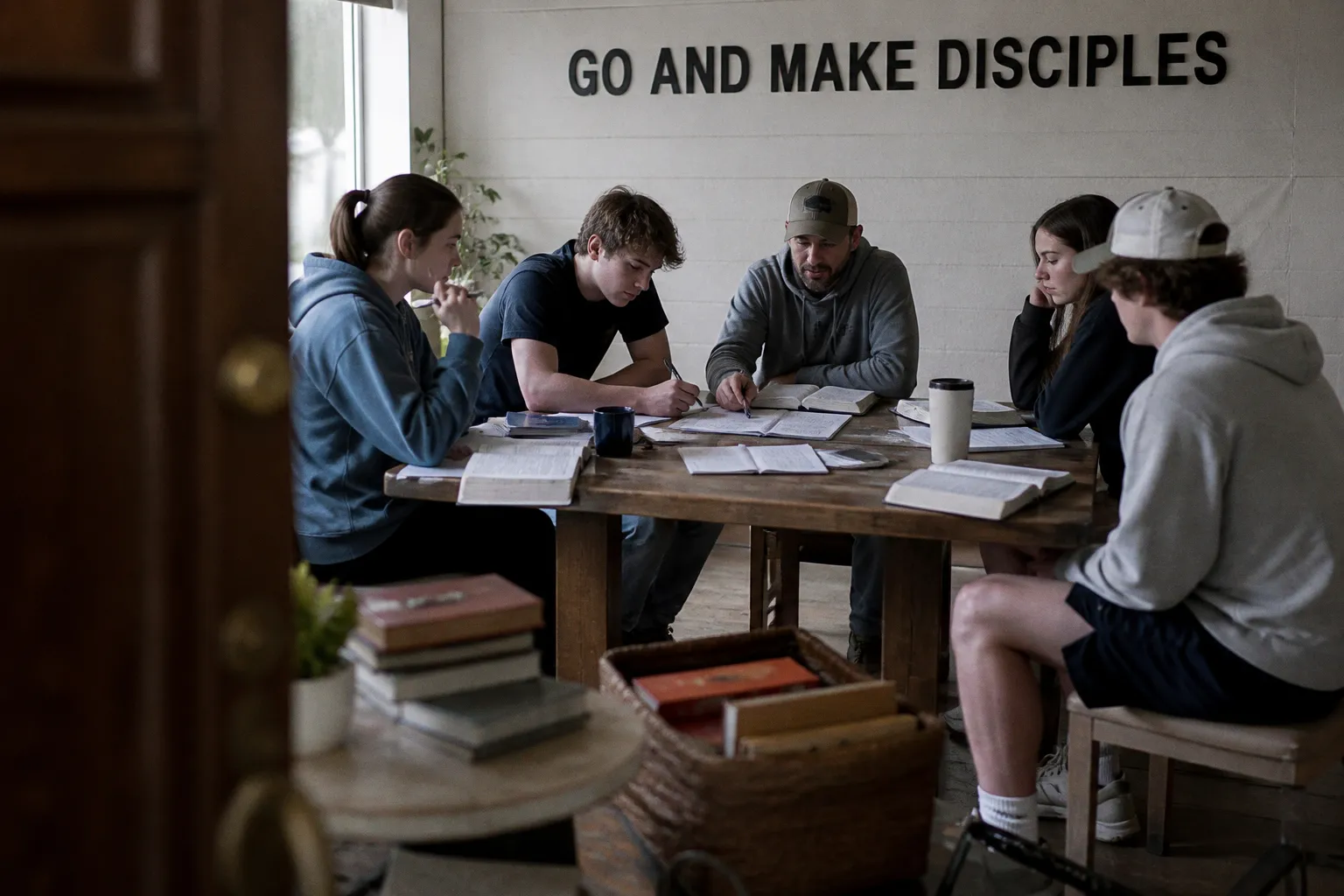
A parent is on the other end, asking, honestly, whether the months of forms and fundraising and pre-trip meetings are worth what a high schooler will actually experience on a worksite two states away. Or it comes from a confirmation leader, sitting alone in the church office, wondering whether the seven confirmands standing in front of them are ready for the weight of what they will encounter when they arrive. These are not rhetorical questions. They are the real texture of ministry with adolescents, and they are the reason a Lutheran youth mission trip, done well, takes nine to twelve months of patient preparation rather than a frantic summer scramble.
What follows is a working framework for that longer arc. It is not a universal checklist — LCMS, ELCA, and independent Lutheran congregations each operate with their own registration systems, insurance carriers, and gathering cycles, and those differences matter at the level of dollars, deadlines, and who signs which form. What the framework does offer is the shared spine: a planning committee that begins early, a host partner relationship that is cultivated rather than assumed, a budget that is realistic about what service actually costs, the legal and medical paperwork that protects both the youth and the congregation, a sequence of pre-trip meetings that form the team before they ever leave the driveway, and a post-trip rhythm that lets the experience take root in ordinary life. We will move through each of those in turn, with the documents and the deadlines you will actually need.
Establishing the 9–12 Month Planning Framework
A nine-to-twelve-month runway is not bureaucratic excess; it is the minimum space required for the trip to be safe, legal, and spiritually coherent. Within the first two to three months, a planning committee should be in place, a mission statement drafted, and initial contact made with the host partner. By month four or five, the budget should be set, fundraising tools chosen, and a draft itinerary in hand. Months six through eight are typically when deposits are due, the bulk of the paperwork is collected, and the first two or three pre-trip meetings are held. Months nine through twelve carry the final payments, the last forms, the final team meetings, and the packing lists. If you are working with a major denominational gathering — such as the triennial LCMS Youth Gathering, scheduled for July 3–7, 2028 in San Antonio, Texas — your timeline will be pushed even earlier by registration tiers and group housing deadlines.
A mission trip is less an event than a season of formation. The calendar is the curriculum.
The earliest task is to gather a planning committee of three to five adults who can carry distinct responsibilities: a trip leader, a treasurer, a medical and paperwork coordinator, a logistics coordinator, and a spiritual formation lead. These roles are usually filled by a mix of staff, parents, and older youth, and the division matters because the work is too heavy for any one person and too consequential to be informal. A written mission statement — one paragraph, drafted together — gives the committee a shared vocabulary for the decisions that follow. Was the trip conceived as a response to a specific local need, as a national gathering experience, or as a cross-cultural immersion? The answer shapes almost every subsequent choice, from the partner you contact to the language you use with parents.
The second early task is selecting a host partner. If the trip is to a national LCMS or ELCA gathering with built-in servant events, the host is essentially the denomination's youth office and its on-site service partners. If the trip is to an independent ministry — a food pantry network, a disaster relief organization, a homeless shelter, a rural church plant — the host relationship is cultivated through site visits, reference checks, and direct conversations about expectations, supervision, and the daily rhythm of work. In every case, written confirmation of the partnership, including dates, expected work, housing arrangements, and emergency contacts, should be in hand before any deposits change hands.
Navigating Legal Requirements and Essential Documentation
The paperwork is the part where many well-meaning committees quietly stall. It is also the part that protects both the young people in your care and the congregation that sends them. The standard set of documents, developed in consultation with legal counsel, includes four core instruments: parental consent forms, liability waivers, medical information and treatment authorization forms, and image release forms. Each of these should be drafted specifically for the trip rather than copied from a generic church event, because the language of risk and permission is shaped by the actual location, activities, and supervision arrangements.
Parental consent forms are straightforward in intent but worth doing carefully: they name the trip, the dates, the location, the supervising adults, and the modes of transportation. Liability waivers go further, acknowledging the inherent risks of the work and the travel, and releasing the congregation and its insurers within the bounds permitted by state law. Medical information forms should include not only insurance details and physician contacts but also a thorough medical history, current medications, allergies, and any ongoing mental health considerations — recognizing that adolescents are not always forthcoming about these, and that parents may need prompting to share what is relevant. Treatment authorization gives the supervising adults the right to consent to emergency medical care when parents cannot be reached, and it should specify who among the adults has that authority and how they can be contacted. Image release forms, increasingly important in a digital age, clarify whether and how photographs and video may be used for ministry communications, social media, and printed materials.
A few practical notes. First, set a single hard deadline for all forms — typically four to six weeks before departure — and do not grant exceptions. Late paperwork is the most common source of insurance disputes and last-minute exclusions. Second, store the originals in a single folder that travels with the trip leader, with copies kept at the church office and, where appropriate, shared with the host partner's medical contact. Third, revisit the language of each form annually; what was adequate last summer may need updating after a change in state law, insurance carrier, or denominational policy.
Budgeting Strategies for National and Local Service Initiatives
Money is one of the most concrete expressions of congregational formation, and a mission trip budget reveals what the community actually values. The baseline categories are familiar: registration fees, transportation, lodging, meals, materials and supplies for the service work, insurance, and a contingency line of roughly ten percent. What varies widely, and what planners consistently underestimate, is the total per-student cost, which depends on whether the trip is local (van-accessible), regional (charter bus or short flights), or national (flights, convention housing, multi-day gathering fees). There is no single standard threshold that fits every congregation, and anyone claiming one is oversimplifying.
For trips that connect to a major denominational gathering, the registration tier structure itself is part of the budget. The 2028 LCMS Youth Gathering in San Antonio illustrates the pattern: a priority registration fee of $435 per participant is available through November 3, 2027; a standard fee of $465 applies from November 4, 2027 through March 1, 2028; and a late registration fee of $495 applies after March 1, 2028. The deadline structure is not a fundraising gimmick; it is the host's way of managing group housing, meal counts, and servant-event assignments, and missing a tier is rarely recoverable.
| Registration Tier | Deadline | Fee (per participant) |
|---|---|---|
| Priority | By November 3, 2027 | $435 |
| Standard | November 4, 2027 – March 1, 2028 | $465 |
| Late | After March 1, 2028 | $495 |
Registration fees for major gatherings typically do not cover travel, lodging, or meals unless explicitly stated by the event host; budget those as separate lines.
Fundraising for the trip is itself a formation opportunity, and the best congregations treat it that way. Rather than relying on a single car wash or a once-off bake sale, a more sustainable approach is to spread the work across the year: a fall letter to the congregation with a clear per-student cost, a winter giving appeal that invites families to sponsor a specific youth, a spring service project whose proceeds go to the trip, and individual youth-led fundraising through babysitting, odd jobs, or church dinners. The youth who earn part of their own way tend to arrive at the worksite differently than those whose entire cost is underwritten by the congregation — and they often leave differently, too.
A short list of common budget errors, worth naming because they appear in nearly every congregation:
- Underestimating transportation costs, especially fuel, mileage reimbursement, or charter bus quotes that change seasonally.
- Forgetting to budget for adult chaperone expenses, which are real and should not be quietly absorbed by the leaders' own pockets.
- Omitting insurance, both for the trip itself and for any rented vehicles.
- Skipping the contingency line, which is what pays for the van repair, the extra night of lodging, or the medical co-pay that always seems to appear in the final week.
Structuring Pre-Trip Training and Team Development
The meetings before the trip are not logistics briefings dressed up with prayer; they are the actual formation of the team. The widely cited guideline of five to six scheduled gatherings before departure is not arbitrary — it reflects the real arc of what a group of adolescents needs to internalize before they arrive in an unfamiliar place. A reasonable shape for those meetings is: an opening team-builder and expectation-setting session, a host-site orientation that walks through the partner's mission and the daily work schedule, a logistics meeting that covers transportation, packing, and emergency procedures, a cultural and contextual awareness session, a spiritual preparation meeting that engages Scripture and the theological meaning of service, and a final commissioning gathering that includes parents and the congregation.
The spiritual preparation meeting deserves particular attention, because it is the one most often compressed into the last thirty minutes of a logistics session. Given its own evening, it can hold honest conversation about what service actually is and is not. It can name that we are going not to fix anyone, not to perform goodness for a transcript, but to participate in the neighbor's life for a short time, to learn what it means to be useful in someone else's daily labor, and to bring back questions rather than answers. The language of grace, lament, and embodied faith has room here — particularly the recognition that the youth themselves may be carrying grief, family stress, or quiet anxiety, and that a week of service is not a substitute for the pastoral care they may actually need.
Cultural and contextual awareness is not optional, even for trips that stay within the same country. The host community will have its own rhythms, its own vocabulary of need, and its own complicated relationship with the people who arrive to help. A session that reads at least one piece of writing by someone from the host community — a journalist, a pastor, a memoirist — and that discusses what it means to be a guest rather than a savior will serve the youth better than another round of icebreakers. For cross-cultural trips, basic language phrases, etiquette around food and dress, and an honest conversation about the limits of short-term missions all belong in the preparation.
The logistics meeting, unglamorous as it sounds, is the one that prevents the trip from becoming a pastoral crisis on wheels. Packing lists with actual weights. Phone and charging policies. Buddy systems for every outing. An explicit chain of communication if someone is injured, sick, or simply overwhelmed. The address and phone number of the nearest urgent care, written down. A printed copy of every participant's medical form and emergency contact, carried by the trip leader and by at least one other adult.
Post-Trip Debriefing: Connecting Service to Daily Faith
The week after the team returns is the most formationally fertile moment of the entire trip, and it is the one most often wasted. Youth come home emotionally full — sometimes elated, sometimes flattened, sometimes quietly confused about why a place they left a week ago is still living in their chest — and the congregation's response in the days that follow shapes whether the experience becomes a line item on a spiritual résumé or the beginning of a different way of seeing. A structured debrief is not a one-session obligation; it is a season, typically spanning four to six weeks, of intentional conversation, written reflection, and shared storytelling.
The first conversation should happen within forty-eight hours of returning, while the details are still warm. It does not need to be long. It can be as simple as gathering the team and a few trusted adults, lighting a candle, and asking each youth to name one moment that is still with them and one question they are still carrying. The goal is not evaluation but listening — the pastoral practice of holding space for what the youth are actually processing rather than what we hope they processed. A second gathering, a week or two later, can revisit those moments and questions with more distance, often with a Scripture reading that connects the experience to the wider story of the people of God.
A third layer is the public testimony. Within a month or two of the trip, the youth should be invited — gently, and with the option to decline — to share their experience with the congregation, perhaps during the Sunday service, perhaps in a written piece for the church newsletter, perhaps in a slide show at the youth group's spring kickoff. Testimony is formation: it requires the youth to articulate what happened in their own words, to hear themselves say it, and to receive the response of a community that takes their experience seriously. It also gives the rest of the congregation a window into what their support made possible, which matters for the next trip's fundraising.
The final layer, and the one that tends to be skipped, is the long integration. Service, understood Christianly, is not a project but a posture. The months after the trip are when the youth are asking, often without knowing they are asking, whether the way they saw a stranger in Houston or Detroit or rural Appalachia can survive the return to their own school hallway. This is the work of a youth ministry that is paying attention: small group conversations about how to apply what was learned, ongoing relationships with the host partner through letter writing or video calls, invitations to local service opportunities that carry the same posture of humility. A church that sends its youth out and then returns them to exactly the same Sunday school classroom has not yet done the work of formation.
The trip is the seed; the debrief is the soil; ordinary life is where it either takes root or does not.
Final Word
There is no shortcut through any of this. The 9-to-12-month timeline, the legal paperwork, the budget conversations, the pre-trip meetings, the slow work of debriefing — none of it can be compressed without losing the thing that makes a mission trip worth the name in the first place. Lutheran congregations that do this well are not the ones with the most resources or the largest youth groups. They are the ones that treat the trip as a season of formation rather than a summer event, that hold space for the difficulty as well as the joy, and that trust the slow work of grace to do what a week of service alone cannot. The framework above is meant to serve that kind of ministry — to give planners a reliable spine so that the energy of the congregation can be spent on what only the congregation can do, which is to form young people whose hands and hearts are learning, together, what it means to be useful to the neighbor.