How St. Mark’s Lutheran Church Is Refining Its Communion Practices
According to reports from Morning Sentinel, the Bonner County Daily Bee, St. Mark’s Lutheran Church, and the Prescott Daily Courier, local churches are continuing to organize worship, fellowship, and community outreach.
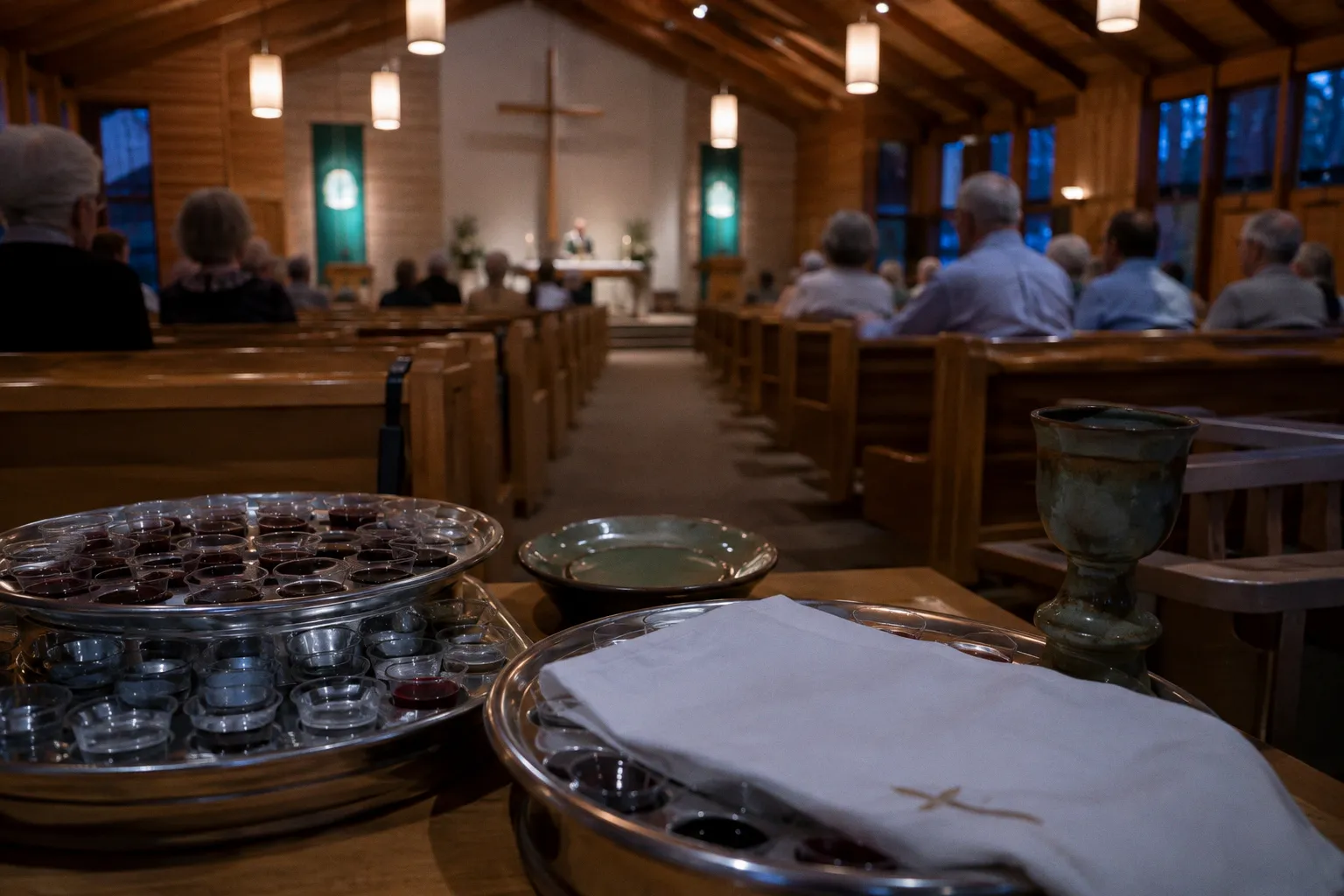
The clearest specific development concerns St. Mark’s Lutheran Church, whose Board of Worship decided to restore the use of both wine and grape juice with individual Communion cups after reviewing congregational feedback. The board discussed the revision at its September 1 meeting.
For readers concerned with Lutheran worship practice, the report illustrates a basic administrative principle: liturgical arrangements are not merely logistical details. They establish how a congregation applies its stated worship framework in a concrete setting.
The confirmed change at St. Mark’s
St. Mark’s has decided to use both wine and grape juice for Holy Communion, served in individual cups. The decision followed feedback from the congregation and was discussed by the church’s Board of Worship.
The available report does not specify:
1. What the previous Communion practice was.
2. The precise content or scope of the congregational feedback.
3. When the revised practice will begin.
4. Whether the change applies to every service or only to particular occasions.
5. Whether the board issued additional guidance concerning distribution, preparation, or pastoral instruction.
Those omissions matter. A short public notice can establish that a policy was revised, but it cannot establish the full liturgical rubric under which the revision will operate. Members should therefore distinguish between the decision itself and the practical instructions that may follow.
Why the administrative framework matters
The wider reports describe churches as places of worship, fellowship, and community outreach, while another notice says that local churches are inviting all to worship in faith. These summaries identify the public role of congregations, but they provide no detailed schedule, program, or ministry description. It would be inaccurate to infer more specific activities from the headlines alone.
The St. Mark’s notice supplies a more defined example of how church life is administered. A congregation receives feedback, a worship board reviews the matter, and the board adopts a revised practice. This sequence places responsibility within a recognizable structure of stewardship: congregational experience is considered, an authorized body evaluates the issue, and the resulting practice must then be communicated clearly enough for worshipers to understand it.
For Lutheran communities, clarity is especially important where sacramental practice intersects with pastoral care and congregational order. The report confirms the available elements—wine, grape juice, individual cups, congregational feedback, and board discussion—but does not establish a broader theological rationale. That rationale should not be supplied by outside commentary when the church itself has not stated it in the available material.
What readers should verify locally
Members or visitors using these reports as a practical guide should check three matters before attending a service:
1. The current Communion arrangement. Confirm whether both wine and grape juice are available and whether individual cups are being used at the service in question.
2. The effective date. The decision was discussed on September 1, but the report does not state when implementation begins.
3. The congregation’s current worship information. General notices about worship and fellowship do not provide service-specific details, so the local church remains the controlling source for times, procedures, and participation guidance.
The broader news is therefore limited but useful. Churches continue to present worship, fellowship, and outreach as central aspects of community life, while St. Mark’s offers a specific case of liturgical administration responding to congregational feedback. The practical conclusion is straightforward: treat general headlines as indicators of activity, and consult the congregation directly for the operative worship rubric.