Grief support ministry setup: 5 steps for local churches
Most congregations encounter death with predictable regularity but address it with improvised pastoral response.
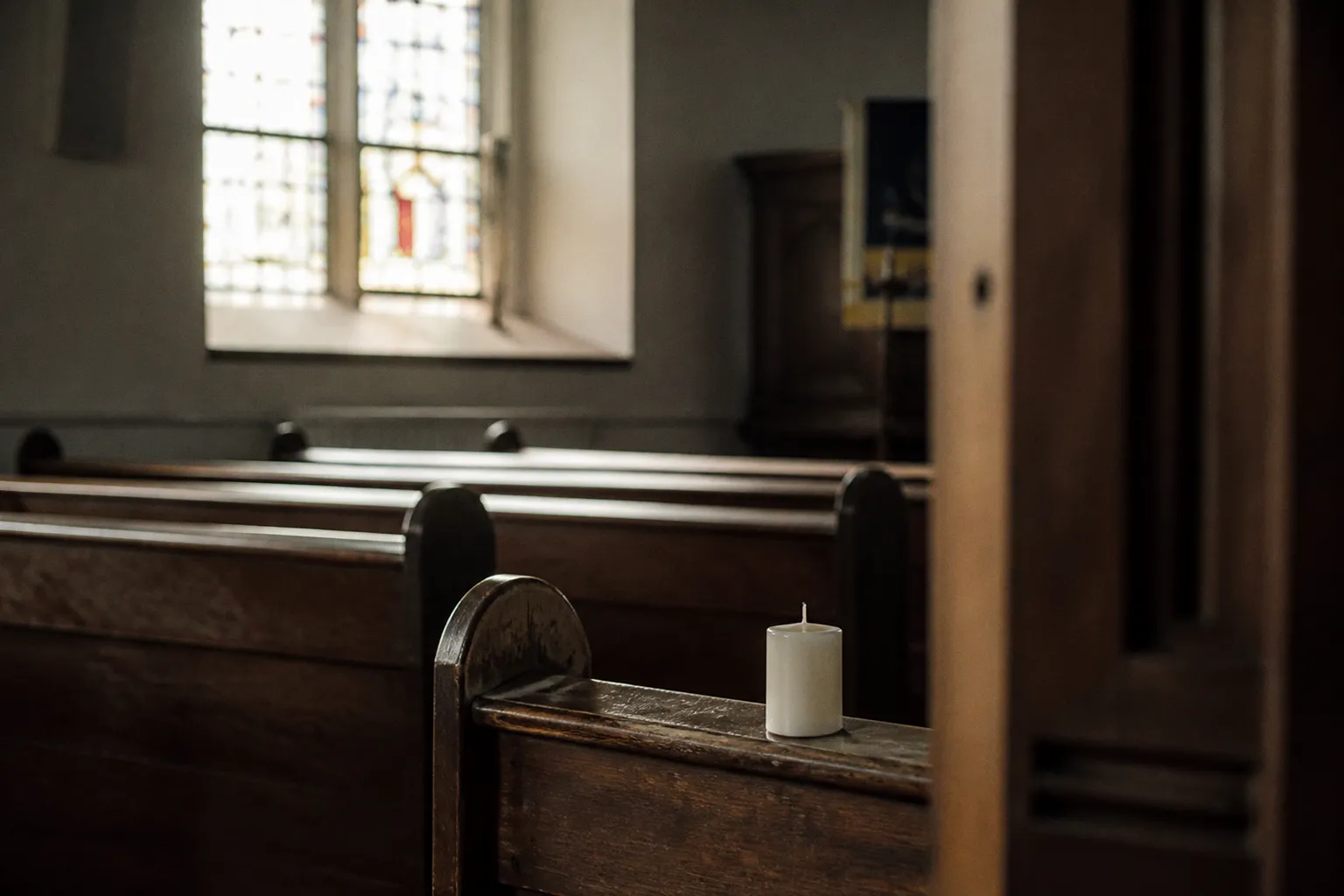
A formalized grief support ministry closes that administrative gap, transforming episodic crisis care into a sustained framework of communal witness. For Lutheran parishes specifically, where confession and consolation belong to the gathered body and not solely to the ordained office, structured lay ministry extends the church's sacramental and pastoral reach into months-long seasons of mourning.
The architecture of such a ministry is not complex in design, but its efficacy depends on sequencing: pastoral endorsement precedes recruitment, recruitment precedes curriculum selection, and curriculum selection precedes public launch. Local churches that attempt to reverse that order typically find themselves coordinating meals without trained facilitators or promoting meetings that have no set curriculum. The following five-step process preserves that sequence and produces a launch-ready ministry within a single ministry-year.
Step 1: Establishing Pastoral Oversight and Team Leadership
The first step in any church grief support ministry setup is the formal designation of a pastoral point person. This is ordinarily the parish pastor, a vicar, or a commissioned lay minister who holds standing oversight for the program. Without a named supervisor, the ministry loses its ecclesial anchor and becomes a generic support circle — administratively viable but pastorally unattached to the congregation's confession and sacramental life.
The pastoral lead performs four identifiable functions within the structure:
- Theological quality control over the curriculum's doctrinal alignment with the congregation's confession
- Liaison with grieving families for intake, initial contact, and ongoing follow-up
- Supervision and spiritual care of the lay facilitators themselves, who absorb significant secondary trauma over multi-cycle service
- Annual review of the program's efficacy, resourcing, and curricular fit
Once oversight is established, a small leadership team of two to three members is assembled. This group typically includes the pastoral lead plus one or two laypersons with administrative aptitude, prior grief ministry experience, or vocational gift for discreet coordination. The team functions as a governance body rather than a facilitation team; its task is to set policy, schedule, recruit, and troubleshoot — separating administration from direct ministry to the bereaved.
One structural distinction worth naming early: governance and facilitation are not the same skill set, and conflating them produces predictable dysfunction. A leadership team member who is also the primary facilitator for a cohort will inevitably prioritize one role over the other when conflict arises. Keeping the two layers separate — a governance team that oversees and a facilitation team that walks alongside — insulates both functions from compromise.
Step 2: Selecting a Christ-Centered Curriculum Framework
The second step is the choice of curriculum. A congregation should not improvise its content week to week; sustained grief work requires a structured arc that participants can trust and facilitators can teach without specialized clinical training. Christ-centered curricula typically pair video teaching, group discussion, and a personal workbook, producing a predictable rhythm that lowers anxiety for both leaders and attendees.
The GriefShare model is the most widely deployed in evangelical and confessional contexts. Its design runs on a 13-week cycle that repeats roughly three times per calendar year. Each session generally runs 90 minutes and combines a 30-to-40-minute video segment with guided discussion and workbook reflection. The 13-week structure is GriefShare's own program architecture rather than a reflection of any universal clinical timeline for grief; its particular strength is the open-entry format, which allows a participant to join at any session and, within roughly one cycle, move through the full sequence of topics. That rolling enrollment model removes a common barrier — the reluctance to join mid-series — and keeps the group accessible to newcomers even as returning participants continue their second or third pass through the material.
When evaluating alternative curricula, a stewardship-minded parish will weigh several parameters side by side:
| Parameter | Structured Program (e.g., GriefShare) | Ad-Hoc Sermon Series | Licensed Counsel |
|---|---|---|---|
| Facilitator training required | Minimal, provided by publisher | Significant, pastor-built | Extensive, clinical |
| Doctrinal alignment | Configurable, often customizable | Full control, high ongoing burden | Variable, secular default |
| Participant cost | Low to moderate, workbook only | None | High, recurring |
| Sustainability across years | High, repeatable cycle | Low, rebuild each round | Low, dependent on clinician availability |
| Confidentiality infrastructure | Built-in group norms | Must be designed from scratch | Built-in |
The table illustrates why structured curricular programs have largely displaced ad hoc approaches in midsize and smaller congregations: the marginal cost of running the second and third cycle approaches zero, while the marginal cost of rebuilding original material each year is substantial.
Pastors should examine the theological content of any proposed curriculum for alignment with the congregation's liturgical and doctrinal commitments. Lutheran parishes will specifically evaluate the treatment of the means of grace, the doctrine of the resurrection of the body, the pastoral tone taken toward funeral practices, and the handling of divine hiddenness in prolonged grief. A curriculum that contradicts the congregation's confession should be modified or replaced before launch, not after the first cohort has begun.
Step 3: Recruiting and Equipping Lay Facilitators for Small Groups
The third step addresses the human capital of the program. Grief support ministries succeed or fail on the consistency and empathy of their facilitators, not on the sophistication of their materials. A workable configuration deploys two to three facilitators per group, with one designated as primary and the others serving as co-leaders who share attendance, prayer, and administrative duties across the cycle.
Lay facilitators for these groups do not require formal counseling credentials or seminary degrees. The competencies that matter are different from professional credentials: emotional maturity, the capacity to hold silence without filling it, discretion regarding confidential disclosures, and the willingness to commit to consistent attendance for the full duration of a cycle. Recruiting for these traits produces better outcomes than recruiting for professional title, and it opens the role to a much larger pool of qualified congregants — including retired teachers, nurses, social workers, and longtime members whose own seasons of loss have yielded a practiced gentleness that no workshop can replicate.
Equipping follows a defined process rather than an informal one. Most structured programs provide a facilitator training track — typically a short video series or weekend workshop — that covers group dynamics, confidentiality, suicide risk recognition, and referral protocols. After training, facilitators should shadow an experienced leader for at least one full cycle before leading independently. Rushing a facilitator into a primary role without this apprenticeship period is a predictable source of group dysfunction: untrained leaders tend either to fill silence with advice or to avoid difficult disclosures entirely, both of which erode participant trust.
A governance safeguard worth establishing from the outset: facilitators are not expected to function as therapists. The role is pastoral presence, structured listening, and prayerful accompaniment. When a participant presents symptoms suggestive of severe trauma, clinical depression, or suicidality, the facilitator's task is to make a warm hand-off to a qualified professional, not to absorb the case. This boundary preserves both the participant's wellbeing and the facilitator's longevity in ministry, and it should be articulated in writing before the first cohort meets. A written referral protocol — listing local Christian counselors, crisis hotlines, and the pastoral lead's contact information — gives facilitators a concrete action step rather than leaving them to navigate high-stakes moments by instinct alone.
A grief ministry is pastoral infrastructure, not a spontaneous response. It functions because it was prepared before it was needed.
Step 4: Managing Immediate Crisis Logistics and Meal Coordination
The fourth step addresses the practical front edge of any loss. While the ongoing curriculum serves the long arc of mourning, the first 72 hours after a death generate a specific cluster of logistical needs that, if unmanaged, quickly consume a congregation's pastoral bandwidth and leave the bereaved family sorting through coordination questions they are least equipped to answer.
Central to this phase is meal coordination. Well-meaning members will deliver casseroles in abundance, often duplicating entrees and overwhelming the bereaved household with more food than it can store or consume. A designated coordinator — ordinarily a member of the ministry leadership team — centralizes sign-ups using a digital tool: a shared spreadsheet, a meal-train platform, or a church-management module. The coordinator then communicates a single schedule to the household and a single request list to the meal providers, reducing redundancy and relieving the family of logistical decision-making during the most acute window of grief.
Beyond meals, the 72-hour window typically requires coordination of:
- Childcare logistics during visitation, funeral events, and the first week of mourning
- Visitation scheduling at the funeral home or parish hall, including any clergy travel
- Communication of service times across the congregation's bulletin, email list, and social channels
- Lodging arrangements for out-of-town family members arriving for the service
- Follow-up visitation in the first week after the funeral, which is often the loneliest interval for the bereaved
A grief ministry that has prepared a written protocol for these items before it is needed operates with a very different posture than one that improvises them under emotional pressure. The protocol itself can be a one-page document listing the coordinator's contact information, the digital sign-up link, the visitation schedule template, and the standard communication language for funeral announcements. Updating the document annually costs almost nothing; relying on memory during an active funeral costs measurable pastoral capacity and produces inconsistent family care.
A practical note on scope: the crisis logistics arm of the ministry and the ongoing curriculum arm serve different phases of grief and should be understood as complementary, not redundant. The meal train and visitation schedule address the immediate aftermath — the days when the household is receiving guests, planning services, and absorbing the first shock of absence. The small-group curriculum addresses what follows: the months of adjustment when the casseroles have stopped arriving and the silence settles in. A well-designed grief support ministry covers both arcs, and the leadership team should staff each one accordingly rather than assuming the same people will carry both loads.
The first 72 hours determine whether a congregation's care is perceived as organized or as anxious. Preparation, not intention, is the variable.
Step 5: Promoting the Ministry Through Congregational Outreach
The fifth step moves the ministry from internal infrastructure to public availability. A grief support program that exists only on paper serves no one. Promotion must occur before the first cohort begins and continue on a quarterly cycle thereafter, because awareness among the bereaved decays predictably between cycles and must be refreshed for each new entry window.
Promotion typically proceeds along four channels. The first is the Sunday bulletin: a recurring blurb in the weekly announcement sheet, replaced each quarter with the new cycle's start date. The second is the parish newsletter or email blast: a longer-form announcement that names the curriculum, the meeting cadence, the location, and the registration contact. The third is physical signage: bulletin-board flyers near the narthex, fellowship hall, and parish office, refreshed quarterly. The fourth is digital: social media graphics sized for the church's existing platforms, with copy that matches the congregation's established voice rather than adopting the tone of generic wellness advertising.
Organizations that produce grief curricula typically supply promotional kits containing fillable bulletin blurbs, flyer templates, bulletin inserts, and social media graphics. Local churches should adapt these materials to their visual identity rather than using them verbatim, since participants decide whether to attend partly based on whether the invitation reads as coming from their own congregation. Generic publisher-branded material, while administratively easy, signals distance rather than welcome.
A practical observation from sustained ministries: promotion is most effective when the announcement names a specific entry point. Phrases such as "Registration closes March 8" or "Walk-ins welcome January 14" outperform "Ongoing registration" because they convert an abstract invitation into a scheduled commitment. The bereaved, like most people, respond more readily to a defined next step than to an open door, and the act of registering itself functions as a first small movement toward the group.
One additional channel deserves mention, though it operates informally: word of mouth among those who have already completed a cycle. Former participants who can speak to the ministry's character from direct experience are the most credible promoters a congregation has. A leadership team that maintains respectful contact with alumni — a brief quarterly email, an invitation to serve on the next cycle's hospitality rotation — keeps that channel active without pressuring anyone to share more than they wish.
Implementation Sequence and Long-Term Stewardship
A complete church grief support ministry setup, executed in the correct sequence, requires approximately three to four months of lead time before the first cohort begins. Months one and two focus on pastoral designation, team assembly, and curriculum review. Month three is dedicated to facilitator recruitment, training, and shadow scheduling. Month four is promotion, registration, and final logistics, with the first cohort meeting at the end of that month or the start of month five. Cycles then run quarterly thereafter, with the leadership team reconvening between cycles for debrief and adjustment.
Stewardship of the program over time requires two ongoing practices. First, an annual review of curriculum alignment and facilitator roster, ensuring that doctrinal and personnel drift are caught early rather than discovered mid-cycle. Second, a quarterly review of promotion efficacy, measured in registrations per cycle rather than flyers distributed. A ministry that distributes one hundred flyers per cycle and enrolls three participants has a promotion problem; a ministry that distributes thirty flyers and enrolls twelve has a strong funnel and an under-resourced promotion budget. The numbers themselves matter less than the habit of looking at them honestly and adjusting course.
One administrative point belongs in any honest assessment of scope: a grief support ministry is not a substitute for professional clinical care when severe trauma, complicated grief, or major depressive episodes are present. Its efficacy lies in the sustained pastoral and communal accompaniment of ordinary grief trajectories — the long middle months when pastoral visits have tapered but mourning has not. Where clinical intervention is indicated, the parish functions as the connector and not the provider. Establishing this boundary clearly at the program's launch protects the ministry from scope creep and protects participants from receiving care below the threshold their condition requires.
A congregation that builds this infrastructure in advance — pastoral oversight, chosen curriculum, trained facilitators, prepared logistics, and active promotion — transforms its response to death from improvised emergency into rehearsed witness. The mechanics are unglamorous. The consolation they deliver, sustained across many cycles and many households, is not.