Faith and fitness trail: what it is and how it works
A faith and fitness trail turns church property into active ministry infrastructure. It combines a walking route or exercise loop with prayer stations, Scripture panels, reflection points, benches, and—when the site allows—outdoor fitness equipment.
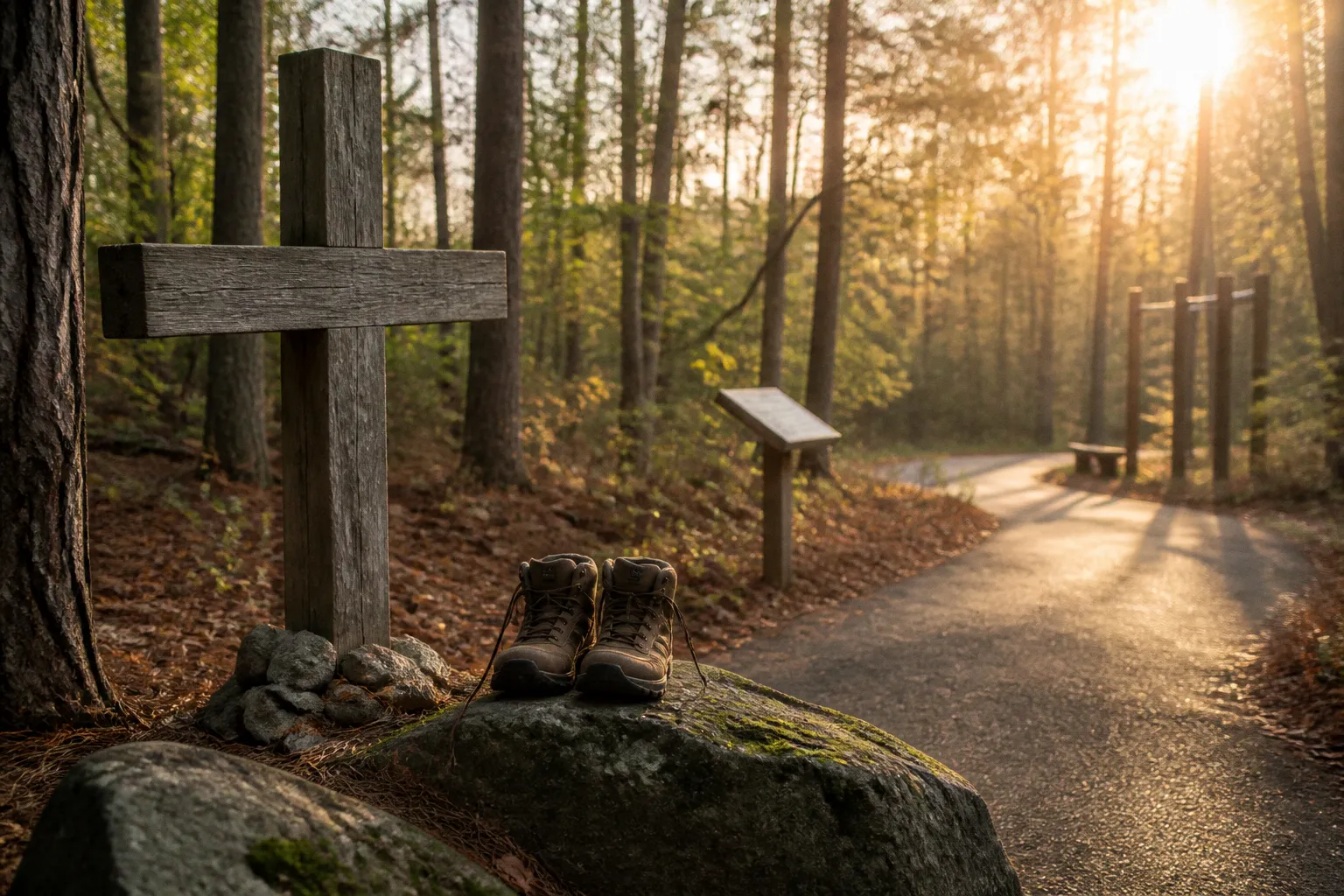
The result is not simply a path with Bible verses attached. It is a practical system that helps people move, pause, pray, recover, and connect.
That distinction matters. A church faith and fitness trail concept succeeds when the physical route, spiritual content, safety plan, and ministry operation work together. If one layer fails, the whole deployment becomes harder to use. A beautiful path without shade or seating excludes older adults. A strong exercise loop without a clear operating plan becomes difficult to maintain. A Scripture sign that asks for deep reflection while standing beside a noisy road will not serve the people you intended to reach.
The goal is tangible: create an outdoor church fitness path that welcomes members, neighbors, families, seniors, people carrying grief, and visitors who may never enter the sanctuary on their first visit.
The faith and fitness trail definition: four systems, not one amenity
A useful faith and fitness trail definition starts with infrastructure. The trail needs more than a route and a theme. It needs four connected systems.
1. Movement infrastructure
This is the part people see first:
- A paved or compacted walking loop.
- Exercise stations or stretching rails.
- Clear route markers.
- Benches at useful intervals.
- Shade, lighting, and rest areas where the site requires them.
- A surface that supports walkers with different levels of balance and mobility.
The route does not need to be large. Lisa’s Faith and Fitness Trail at Immanuel United Church of Christ in Lafayette, Indiana, uses a 0.41-mile paved path. It includes fitness stations and reflection spaces and remains open from dawn to dusk. That scale is instructive. A church does not need a sprawling campus to create a meaningful experience. It needs a route people can actually use.
Movement infrastructure should support several levels of participation. One visitor may walk the full loop. Another may complete only a short section between benches. A child may use a family fitness station while a parent reads a prayer prompt. A person recovering from illness may come only to sit outdoors for ten minutes.
Design for the full range. Do not build only for the fastest or fittest user.
2. Spiritual engagement points
A Christian fitness trail needs a clear spiritual purpose, but the content must remain usable. Each station should tell the visitor what to do next.
A strong station usually includes:
1. A short Scripture passage or phrase.
2. A physical instruction, such as slowing the pace, stretching, breathing, or walking quietly.
3. A prayer prompt connected to ordinary life.
4. A simple next step.
For example, a station may invite visitors to walk slowly for one minute while noticing their breathing, then pray for a person who feels overwhelmed. Another may pair a gentle shoulder stretch with a prompt about releasing anxiety. A family station may ask children to name three things for which they are thankful.
This is Christian mindfulness with direction. It does not require abstract explanation. It gives the body and mind a manageable action, then opens space for prayer.
3. Safety and accessibility systems
Safety is ministry infrastructure. It determines whether people return.
The basic deployment questions include:
- Can visitors identify the route from the entrance?
- Does the path have stable, even surfaces?
- Are benches available before fatigue becomes a problem?
- Can emergency services locate the site quickly?
- Are signs readable from a standing or seated position?
- Does the route work for people with limited mobility?
- Can a visitor understand the rules without speaking to a staff member?
- Does the trail remain usable in different weather conditions?
Accessibility must shape the first site map, not appear as an adjustment after construction. Seniors and people with limited mobility may need paved paths, stretching rails, low-impact stations, frequent benches, and clear turning areas. These features also help parents with strollers, people managing chronic pain, and anyone who needs a slower pace.
4. A ministry operating plan
The operating plan answers the questions that a ribbon-cutting ceremony cannot solve:
- Who opens and closes the trail?
- Who inspects the path and equipment?
- Who replaces damaged panels?
- Who responds to a safety concern?
- Who coordinates prayer walks or group programs?
- What happens when a station becomes unsafe?
- How will the congregation know whether the trail is serving the neighborhood?
Assign names, not vague responsibilities. “The church will maintain the trail” is not an operating plan. “The facilities lead inspects equipment every Monday, the outreach coordinator logs community feedback, and the pastor or care team reviews prayer requests monthly” is a starting structure.
A faith and fitness trail is successful when people can use it safely, understand its purpose, and return without needing a personal introduction.
How faith and fitness trails work in daily ministry
The trail works through repeated, low-pressure contact. It offers a physical activity that can begin before a person is ready for a formal church program. That makes it valuable for outreach and wellness work.
A visitor may first arrive for the walking loop. A member may use the path during a difficult week. A grieving person may sit at a reflection station without joining a support group. A family may discover a church through a public fitness area rather than a worship invitation.
That is why the trail should not function as a decorative extension of the church sign. It needs programming that connects the site to real congregational care.
Possible uses include:
- Weekly prayer walks led by a trained volunteer.
- Low-impact walking hours for seniors.
- Family movement mornings.
- Outdoor grief-support gatherings.
- Quiet hours for individual reflection.
- Youth service projects focused on trail care.
- Seasonal Scripture walks.
- Partnerships with local wellness or recreation organizations.
- Short devotion-and-stretch sessions before or after worship.
- Mental health awareness events that include prayer and referral information.
The trail does not replace medical care, physical therapy, or professional mental health services. It creates a setting where healthy routines, social connection, spiritual practice, and appropriate referrals can meet.
That boundary protects the ministry. Volunteers should know how to welcome, listen, and direct people to qualified help. They should not diagnose injuries, promise healing, or present prayer as a substitute for treatment.
Case studies in community wellness: what the examples reveal
Existing projects show how different a faith and fitness trail can look when the same core model adapts to local needs.
Lisa’s Faith and Fitness Trail in Lafayette, Indiana, is a 0.41-mile paved path dedicated in 2022 in memory of Lisa Strueh, who died in April 2016. The trail combines movement stations with places for reflection and remains open from dawn to dusk. Its memorial purpose gives the project emotional depth, but the route still operates as a public wellness resource.
The lesson is operational: a memorial trail should serve people through use, not through branding alone. The dedication may explain why the trail exists. The design must explain how people can benefit from it today.
A larger model appears in Coeur d’Alene, Idaho. The Faith Walk Community Fitness Park opened on May 29, 2026, as a 10-acre community park with a 0.5-mile asphalt perimeter loop, 15 family fitness stations, 16 gazebos displaying the King of Glory Bible panorama, and 70 artistic story panels highlighting Christ-like character qualities.
That project demonstrates the value of layered engagement. Visitors can walk, exercise, rest, view visual storytelling, or use the gazebos for reflection. Not every user needs the same experience. The site offers multiple entry points without forcing every visitor into a single program.
A third useful reference comes from a senior-oriented setting: a 0.6-mile shaded route at Gulf Coast Village. Shade and route length are not minor details. They determine whether older adults can participate comfortably and consistently.
| Project feature | Smaller church trail | Community fitness park | Senior-focused route |
|---|---|---|---|
| Primary strength | Manageable local deployment | Multiple activities and broad public access | Comfort, shade, and sustained walking |
| Typical route approach | Short paved loop | Asphalt perimeter loop with stations | Shaded route with rest opportunities |
| Spiritual engagement | Prayer prompts and reflection points | Gazebos, story panels, and visual teaching | Quiet spaces and accessible reflection |
| Key planning demand | Clear volunteer ownership | High-capacity maintenance and public-use policies | Mobility support, seating, and heat management |
| Best ministry use | Neighborhood welcome and small groups | Family engagement and community programming | Senior wellness, pastoral care, and gentle exercise |
Do not copy the largest example because it looks impressive. Start with the need your congregation can serve reliably. A modest route that stays clean, legible, and welcoming will create more ministry value than an ambitious installation that loses capacity after launch.
Designing the route: begin with a neighborhood audit
Before choosing equipment, conduct a neighborhood audit. You need to understand who might use the trail, when they might arrive, and what barriers could prevent participation.
Review:
- The age profile of nearby residents.
- Existing sidewalks and walking routes.
- Public parks and recreation gaps.
- Heat, shade, drainage, and seasonal weather.
- Traffic patterns around the church.
- Visibility from nearby streets.
- Parking and transit access.
- Safety concerns during early morning or evening hours.
- Nearby schools, senior communities, apartment complexes, and care facilities.
- The congregation’s existing strengths in health, pastoral care, youth work, or outreach.
Then walk the property with different users in mind. Do not complete only a fast adult walk-through. Ask a senior, a parent with a stroller, a person using a cane, and a volunteer responsible for maintenance to review the proposed route.
Record the practical obstacles:
- A slope that becomes difficult after several minutes.
- A narrow turn that limits mobility devices.
- A low branch that blocks visibility.
- A bench placed too far from the next station.
- A sign that can be read only while standing directly in front of it.
- A section with no shade during the hottest part of the day.
- A route that crosses vehicle traffic.
- A quiet area that becomes inaccessible after worship events.
This audit converts an attractive idea into a deployment plan.
Choose a pilot scope
Your first version should answer one question: can the congregation operate this well?
A pilot might include:
- One clearly marked walking loop.
- Four to six prayer and movement stations.
- Benches at selected points.
- One accessible entrance.
- A simple printed guide.
- A volunteer inspection schedule.
- A small opening program.
Do not install every possible feature before learning how people use the site. Track where visitors stop, which stations create confusion, what equipment receives the most use, and which times generate the greatest demand. The pilot gives your team evidence for the next build phase.
Crafting prayer and Scripture stations that people will actually use
Spiritual engagement fails when the station reads like a sermon manuscript. Outdoor stations compete with weather, noise, children, exercise, conversation, and short attention spans. Write for the environment.
Use large type. Keep the passage short. Give one action. Ask one question.
A reliable station format looks like this:
Read: one brief Scripture line or paraphrase.
Move: walk slowly, stretch, pause, or breathe naturally.
Pray: name a person, need, or gratitude.
Continue: take the next section of the route.
The movement instruction should remain safe and uncomplicated. Avoid demanding balance exercises, intense exertion, or instructions that require a leader. If a station uses breathing, tell visitors to breathe comfortably. Never suggest breath-holding or strenuous movement for a general public audience.
Prayer prompts should connect to tangible concerns:
- “Pray for a neighbor who needs support this week.”
- “As you walk, name one burden you are carrying.”
- “Pause and give thanks for one person who has helped you.”
- “Pray for strength to take the next honest step.”
- “Ask God to help you notice someone who feels alone.”
These prompts support spiritual wellness without turning the path into a theological exam. Visitors do not need prior church knowledge to participate.
Create several levels of engagement
Every station should work for at least three kinds of users:
1. The passerby: needs a prompt that takes less than a minute.
2. The regular walker: wants a deeper sequence across the full route.
3. The group participant: needs material that supports conversation or guided prayer.
You can place a short version on the sign and offer an expanded paper guide at the entrance. QR codes may add audio prayers, accessible text, or seasonal content. They should remain optional. The physical trail must carry its own meaning for visitors who do not use a phone.
Consider rotating content by season, but protect the core experience. A visitor should not encounter an empty panel because a temporary series ended. Build a replacement calendar into the operating plan.
Accessibility is a ministry commitment
A trail that welcomes only athletic adults has a narrow ministry range. Build capacity for people who move slowly, tire easily, live with pain, or need support.
Prioritize:
- Firm, stable paving.
- Minimal abrupt changes in level.
- Rest benches placed before—not after—long stretches.
- Armrests and seat heights that support standing.
- Stretching rails that can be used without complex balance.
- Clear sightlines.
- Signs with strong contrast and readable type.
- Quiet seating areas away from exercise equipment.
- Shade or weather protection where possible.
- Accessible parking and route entry.
- Space for a mobility device beside benches and stations.
Use plain language. “Pause here and pray for someone who needs peace” works better than a dense paragraph explaining contemplative spirituality.
Also consider sensory and mental health needs. Some users will seek quiet. Others will feel more comfortable in a social group. Designate quiet periods or quiet sections if the site can support them. Train volunteers to welcome without hovering. A person who comes alone may want companionship, or may need privacy. Let the visitor set the pace.
Accessibility is not an extra feature added after the spiritual design. It is part of the congregation’s answer to the question, “Who is this ministry for?”
Building the volunteer and operations system
Volunteer enthusiasm can launch a trail. It cannot maintain one without defined roles.
Form a cross-functional team with representation from:
- Outreach and community engagement.
- Facilities and property care.
- Pastoral care or mental health ministry.
- Worship or Christian education.
- Youth and family ministry.
- Older adult ministry.
- Risk and safety leadership.
- Communications.
Give each role a decision boundary. The facilities lead should be able to close a damaged station without waiting for a committee meeting. The outreach lead should collect feedback and identify community partnerships. The pastoral care lead should train volunteers on listening, confidentiality, and referral boundaries.
A basic operating rhythm might include:
- Weekly: inspect surfaces, benches, signs, and equipment; remove litter; record concerns.
- Monthly: review usage patterns, prayer requests, volunteer coverage, and maintenance needs.
- Seasonally: inspect shade, drainage, lighting, vegetation, and weather-related wear.
- After incidents: document what happened, respond promptly, and adjust the route or guidance if necessary.
- Annually: reassess whether the trail still matches neighborhood needs.
Keep a simple log. Record the date, person responsible, condition of each area, and action taken. This creates accountability and helps the congregation budget for repairs before small problems become expensive disruptions.
Launching the trail with the 30-60-90 day cycle
The opening event matters, but the first three months matter more. Use the launch to collect attention, then use the review cycle to build a durable ministry.
Before launch
Complete these actions:
1. Form the operating team. Assign facilities, programming, volunteer, and pastoral-care ownership.
2. Map the site. Mark the proposed route, access points, rest areas, equipment, and emergency locations.
3. Run the neighborhood audit. Speak with nearby residents and community organizations.
4. Set the pilot scope. Define what will open now and what can wait.
5. Write the station content. Test every prompt for clarity, length, safety, and accessibility.
6. Create the maintenance schedule. Put inspection dates on calendars before the opening.
7. Train volunteers. Cover welcome, safety reporting, privacy, and referral boundaries.
8. Prepare printed material. Include a route map, participation guidance, and contact information.
9. Communicate access clearly. Publish opening hours, expected conduct, and weather guidance.
10. Run a full practice day. Walk the route as a visitor, a volunteer, and a person with limited mobility.
At 30 days
Ask whether people can use the trail without assistance. Review:
- Confusing signs.
- Damaged or underused stations.
- Times when the site feels unsafe or overcrowded.
- Volunteer coverage gaps.
- Feedback from seniors, families, and first-time visitors.
- Prayer content that feels too long, unclear, or disconnected from the route.
Make small corrections quickly. A changed sign or relocated bench can improve the whole experience.
At 60 days
Evaluate participation and ministry connection:
- Which groups use the trail?
- Are neighbors participating, or only church members?
- Do visitors understand that the site is open to them?
- Are walking groups forming?
- Are people requesting pastoral care or wellness referrals?
- Does the congregation have enough volunteers for the current schedule?
- Is equipment receiving appropriate use?
Avoid measuring success only by attendance at organized events. Individual use is also ministry use. A quiet visitor may never sign a register but still find the trail valuable.
At 90 days
Decide what the next deployment should be:
- Keep the pilot at its current scale.
- Add stations or benches.
- Improve accessibility.
- Expand group programming.
- Adjust hours.
- Develop partnerships.
- Pause a feature that creates maintenance or safety problems.
- Build a budget for the next phase.
The 30-60-90 review cycle prevents the trail from becoming a one-season project. It gives your congregation a disciplined way to learn and adapt.
Common implementation failures
Several mistakes appear repeatedly in outdoor church fitness projects.
Building before listening
A committee may select equipment before asking what the neighborhood needs. The result can be a route that serves the congregation’s assumptions rather than the community.
Correction: complete the neighborhood audit and user walk-through first.
Overloading the signs
Long text turns a movement station into a reading assignment. Visitors skip it.
Correction: use one short passage, one action, and one prayer prompt. Offer additional material separately.
Treating accessibility as a compliance task
A route can technically include a bench and still feel unusable to someone with limited mobility.
Correction: test the route with actual users and measure comfort, distance, visibility, and rest opportunities.
Depending on technology
QR codes can add flexibility, but they cannot carry the entire experience.
Correction: make every physical station complete without a phone.
Launching without ownership
When everyone supports the trail in principle, no one may respond when a sign breaks.
Correction: name the responsible person for every operating function.
Confusing spiritual care with clinical care
Volunteers may want to help but lack training for mental health crises, injury, or complex grief.
Correction: establish referral pathways and teach volunteers when to listen, when to pray, and when to involve qualified professionals.
Measuring only the opening event
A crowded dedication does not prove that the trail works.
Correction: review repeat use, accessibility, maintenance, volunteer capacity, and community reach over the first 90 days.
The practical ministry payoff
A well-designed faith and fitness trail creates several points of contact at once. It supports physical movement. It gives people a structured way to pray. It makes church property more accessible to neighbors. It creates opportunities for intergenerational service. It can strengthen grief support, senior ministry, family programming, and mental health outreach without forcing every person into the same format.
The strongest projects remain simple at the point of use and disciplined behind the scenes. Visitors see a clear path, a safe station, a readable prompt, and a place to rest. The congregation manages the less visible work: inspections, volunteer coverage, content updates, community listening, and responsible referrals.
That is the church faith and fitness trail concept at its best. Not a decorative amenity. Not a substitute for professional care. A maintained, accessible ministry environment where body, attention, prayer, and community can meet.
Start with the route your congregation can operate. Design for the people who are easiest to overlook. Write spiritual prompts that lead to action. Review the deployment at 30, 60, and 90 days. Then expand only where the evidence—and the ministry capacity—supports it.