Dolly Parton’s Faith: Lessons for Lutheran Worship and Community Ministry
A structural question in contemporary worship planning — how to evaluate the doctrinal coherence of public Christian witness rendered outside confessional boundaries — receives a documented case in…
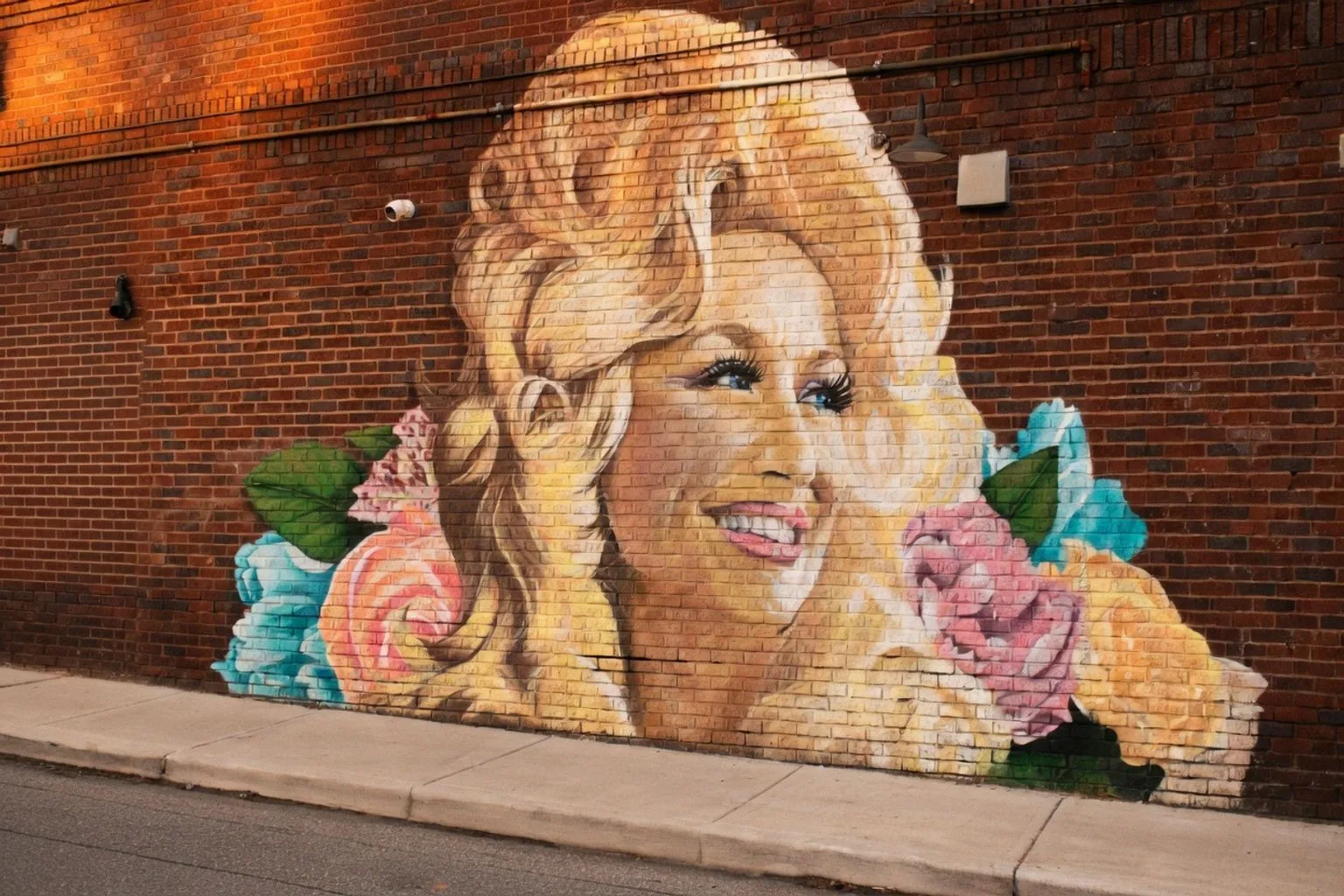
A structural question in contemporary worship planning — how to evaluate the doctrinal coherence of public Christian witness rendered outside confessional boundaries — receives a documented case in the death of Dolly Parton at 80, according to Word&Way's August 26, 2026 report. The Gospel Music Association subsequently organized a public tribute process, gathering statements from across the Christian music community. For Lutheran planners, the documented record offers a measurable framework for evaluating patterns of liturgical expression, philanthropic stewardship, and intergenerational faith transmission.
The structural framework of her public witness
According to Word&Way's biographical account, Parton's faith articulation rested on three identifiable pillars: familial transmission, explicit public confession, and consistent application across professional contexts. Her grandfather was a Pentecostal preacher, and she sang with her family from an early age, composing a first song at 5 and debuting at the Grand Ole Opry at 13. The biographical record establishes a pattern in which worship functioned as a continuous household practice rather than a discrete event — a framework with direct parallels to Lutheran household catechesis.
Her explicit public statements, as documented by Word&Way, consistently returned to theological ground. In an interview with KCRA, she described the family as maintaining "good communication with God," which she identified as the stabilizing factor behind their professional durability. Such recurring references functioned less as isolated profession than as a liturgical discipline of confession — a pattern Lutheran planners may recognize as analogous to the daily office rendered in compressed, popular form.
Her nephew Bryan Seaver, in a video released by the family, stated that "Dolly has lived in the light and is in the arms of Jesus, surely met by Carl (her husband), her parents and countless others who have watched her and longed for her to meet them in the heavens." The statement is noteworthy for its liturgical register: a death notice framed as transition into a known community of saints. Lutheran funeral planners evaluating the rhetorical structure of obituary and pastoral announcement may find this formulation a useful case for the theological framing of death notices.
Music as a continuous liturgical artifact
Parton's catalog included explicit gospel material embedded within a secular performance career: the 1971 album "The Golden Streets of Glory," the 2019 collaboration "God Only Knows" with the Christian duo For King & Country, and a hand-clapping medley featured on her 2022 NBC special "Dolly Parton's Mountain Magic Christmas." From a liturgical rubric perspective, these works represent a hybrid model — congregational musical forms preserved within a commercial framework — rather than a compartmentalized one.
Her 2009 induction into the Gospel Music Association's Gospel Music Hall of Fame confirms institutional recognition of this hybridity. The Association's subsequent tribute process, gathering statements from across the Christian music community, frames Parton's work as a continuous thread of faith expression spanning decades.
Stewardship grounded in explicit doctrinal warrant
Parton's philanthropic program, the Imagination Library, has distributed more than 300 million books globally. In a 2018 interview, she cited the biblical commandment to honor father and mother as the doctrinal foundation of the program, stating that the commandment "means to bring honor to their name." This pattern of grounding secular service in explicit theological warrant offers Lutheran stewardship committees a comparable template: the identification of a scriptural rubric beneath each charitable initiative before its launch.
Her other documented acts of philanthropy — including a reported $1 million contribution toward COVID-19 research, partly used to fund the Moderna vaccine, and a subsequent donation for Hurricane Helene relief in Tennessee and six adjacent states in 2024 — followed the same structural pattern of doctrinal grounding, per Word&Way's reporting.
Operational observations for congregational review
Three points follow from the documented record:
1. The integration of household worship and professional life functioned as a single continuum rather than two separate domains. Lutheran planners reviewing faith-formation curricula may evaluate whether their own congregational pathways maintain comparable continuity between domestic and assembly-based practice.
2. The selection of musical repertoire across secular and explicitly gospel contexts demonstrated an underlying confessional consistency. Worship committees assembling programs that incorporate popular musical elements may apply a similar test — whether the selection affirms or fragments the congregation's confessional coherence.
3. The pairing of public philanthropy with public scriptural citation produced a transparent logic of stewardship. Stewardship boards evaluating mission partnerships may document the doctrinal rationale of each initiative as a standing procedural practice.
The precedent for treating public witness as catechetical material within the liturgical calendar is documented. The Church of the Three Crosses in Chicago, according to a 2022 Religion News Service report cited by Word&Way, built a five-part sermon series around Parton's biography, using it as a vehicle for communal theological reflection. Lutheran preaching teams may evaluate whether analogous figures — those whose public articulation of faith lends itself to structured exposition — merit comparable liturgical integration.