Church grief support groups: a step-by-step launch guide
A church grief support group begins with a simple pastoral reality: people often return to worship before they know how to live inside the silence left by loss.
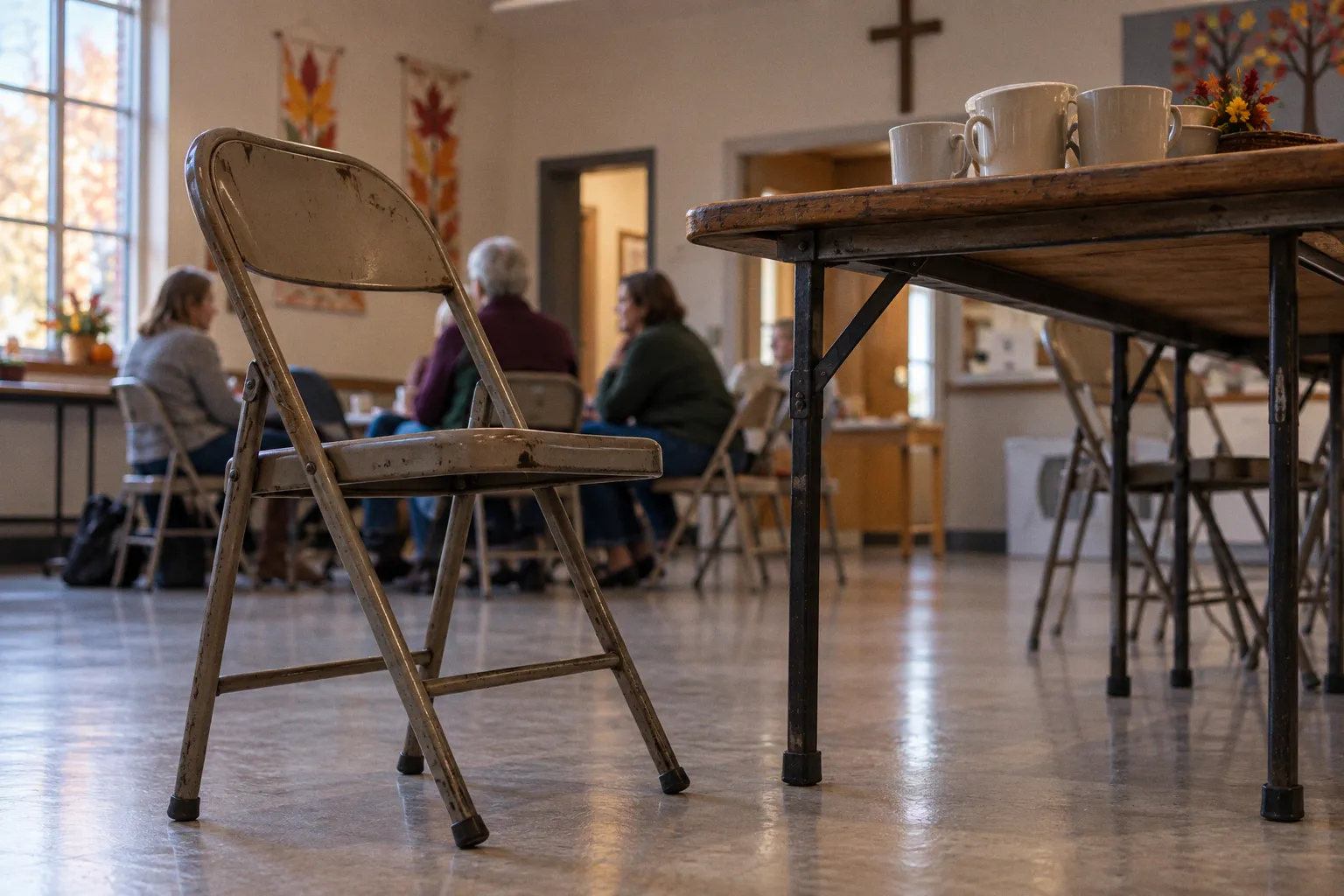
They may be present in the sanctuary, answering familiar questions, carrying casseroles, or helping with Sunday routines, while their bodies remain exhausted and their inner lives feel unrecognizable.
The ministry, then, is not simply a meeting about grief. It is a carefully held space where lament can be spoken without embarrassment, where faith is not used to hurry sorrow toward resolution, and where people can discover that Christian community is capable of staying near human finitude. A sound church grief support group structure gives that space enough shape to be safe without making it rigid or impersonal.
The most reliable way to begin is to decide what kind of group your congregation can actually sustain, appoint facilitators who understand the limits of peer care, and build each gathering around a clear beginning, middle, and end. Pastoral oversight should remain present throughout, even when the group is led by trained lay volunteers.
Choosing the ministry framework: closed cohort or open drop-in?
The first decision is not which curriculum to purchase. It is whether the group will be a consistent short-term cohort or an ongoing gathering that people may enter and leave as needed.
A closed cohort meets for a defined number of weeks with the same participants. A new group might run for six to ten weeks and include approximately six to ten people. This format gives participants time to learn one another’s names, notice patterns of trust, and gradually decide how much of their story they are ready to share.
An open drop-in group operates more like a standing ministry. New participants can attend when they need support, and returning members may continue for as long as the gathering remains useful. Some congregations meet in this format twice a month, especially after an initial series has established the ministry.
Neither model is universally superior. They serve different pastoral needs.
| Ministry framework | Strengths | Pressures to plan for |
|---|---|---|
| Closed cohort | Builds continuity, trust, and a shared rhythm; easier to plan a progressive curriculum | New participants may need to wait for the next series; absences can affect the group |
| Open drop-in | Offers immediate access and flexibility; suitable for an established ongoing ministry | Repeated introductions may limit depth; facilitators must orient newcomers without disrupting the group |
| Short educational series | Gives the congregation a clear first step; useful for testing capacity and interest | May feel too brief for complicated grief or long-term accompaniment |
| Ongoing pastoral gathering | Creates a durable place of belonging and remembrance | Requires a stable volunteer team, continuing oversight, and thoughtful boundaries |
For a congregation launching its first grief ministry, a closed cohort is often the more dependable starting point. A defined series helps the church communicate what it is offering, helps facilitators prepare, and gives participants a shared promise: we will enter this room together, and we will not be asked to perform recovery for one another.
That promise matters. Grief is already disorienting. An undefined group can unintentionally increase that disorientation, particularly when participants do not know whether the gathering is educational, devotional, therapeutic, or simply social. Clarity is not bureaucracy here. It is a form of care.
A grief group does not need to make sorrow disappear. It needs to make sorrow less lonely and less unsafe to name.
Before announcing the ministry, write a short description that answers four questions:
- Who is the group for: adults grieving a spouse, parent, child, friend, or another significant relationship?
- Is the group open to all forms of bereavement, or will it focus on a particular kind of loss?
- How long will the first series last, and how often will participants meet?
- What can the group offer, and what does it not offer?
The final question should be stated with gentleness rather than defensiveness. A church grief support group is a peer-support ministry, not a substitute for licensed mental health care or clinical grief therapy. Saying this clearly does not diminish the ministry. It protects participants, facilitators, and the congregation from asking one setting to carry responsibilities it cannot safely hold.
Appointing and preparing lay facilitators
Many church grief groups are led by lay facilitators or pastoral care volunteers rather than licensed clinicians. That can be a profound strength. People who have lived through loss often bring a form of embodied understanding that cannot be learned from a handbook alone.
But personal experience is not the same as readiness to facilitate.
A facilitator’s task is not to tell the most moving story in the room, provide an explanation for another person’s suffering, or guide participants toward a particular spiritual conclusion. The task is to help create conditions in which people can speak, listen, pause, and leave with enough emotional steadiness to return to ordinary life.
When choosing facilitators, look for people who can:
- listen without interrupting or immediately comparing stories;
- tolerate silence without rushing to fill it;
- receive strong emotion without treating it as a problem to solve;
- respect differences in faith, family history, and grieving style;
- recognize when a participant may need professional or urgent support;
- maintain confidentiality while understanding its practical limits;
- work as part of a team rather than carrying the ministry alone.
A facilitator should also have enough distance from their own loss to remain available to the group. Grief does not follow a universal calendar, and there is no moral failure in serving before one feels entirely finished with sorrow. Still, grief-support organizations commonly recommend waiting approximately 12 to 18 months after a major personal loss before volunteering to launch or facilitate a peer group. The wisdom behind that guidance is pastoral: a facilitator needs room to accompany another person’s grief without making the group responsible for their own unresolved crisis.
This is not a judgment about the depth of anyone’s faith. It is an acknowledgment of human limits.
Training should include more than the curriculum
A facilitator orientation might cover the following areas:
1. The difference between peer support and therapy.
Volunteers need language for describing the group accurately and for referring participants to qualified professionals when needed.
2. The many forms grief can take.
Grief may involve anger, numbness, relief, guilt, physical exhaustion, spiritual confusion, or changes in memory and concentration. None of these automatically indicates a lack of faith.
3. Listening and response.
Facilitators should practice responses that acknowledge what has been said without taking control of the story. A simple recognition of pain is often more helpful than an interpretation.
4. Crisis awareness.
The church should establish a clear process for responding when someone expresses immediate danger, severe disorientation, or an inability to remain safe. Volunteers should know whom to contact before the first meeting begins.
5. Theology of lament.
In Lutheran practice, lament is not an interruption of faith. The Psalms, the passion narratives, and the testimony of the church all make room for protest, bewilderment, and waiting. Facilitators should not feel compelled to defend God from a grieving person’s honest questions.
6. Facilitator self-care and supervision.
A group that holds space for grief must also hold space for the people doing the holding. Regular check-ins with a pastor or supervising care leader can help volunteers notice compassion fatigue, blurred boundaries, or the temptation to rescue.
The best training is not a performance of expertise. It is an exercise in humility. Facilitators learn what they can offer, what they cannot offer, and how to remain present without pretending to possess answers that grief itself does not provide.
Designing the session flow: a beginning, middle, and end
Grief can make time feel uneven. A participant may speak calmly for twenty minutes and then be overwhelmed by a small detail—a song, a birthday, a familiar phrase. Because the emotional current of the group can change quickly, each meeting needs a dependable structure.
A useful session plan has three movements.
1. Begin by creating orientation
The opening should help people arrive in the room, both physically and emotionally. It can include a welcome, a brief reminder of the group’s purpose, and a check-in that does not require a long explanation.
A facilitator might invite each person to share one word for how they are arriving, or to name what has been most present for them during the week. Participants should always be allowed to pass. Requiring disclosure at the beginning can make the group feel like an examination rather than a refuge.
The opening is also the right time to repeat the essential ground rules, especially during the first several meetings:
- what is shared in the group is treated as confidential;
- participants speak from their own experience rather than diagnosing or correcting others;
- advice is not offered unless someone clearly requests it;
- physical touch requires explicit consent;
- passing is always permitted;
- no one is expected to explain or defend their relationship with God.
The rules should not be delivered as a legal statement. Their purpose is to reduce uncertainty. In grief, psychological safety is not an abstract ideal; it is part of the ministry’s practical foundation.
2. Use the middle for reflection, learning, and connection
The central portion of the meeting can draw from a structured curriculum, a short teaching, a Scripture passage, guided reflection, journaling, or a simple embodied practice such as breath awareness or a quiet walk. The activity should serve the group rather than compete with it.
A packaged program such as the standard GriefShare format uses a 13-week cycle that combines instructional videos, participant workbooks, and small-group discussion. That kind of curriculum can be helpful because it reduces the burden on volunteers to create every session from nothing. It also gives participants a visible progression through recurring themes.
At the same time, not every congregation needs to follow a 13-week program, and no curriculum can account for every local context. A church may prefer a shorter series with its own sequence of themes, perhaps moving through:
- the first weeks after loss and the disruption of ordinary routines;
- the physical experience of grief;
- relationships, family differences, and loneliness;
- anger, guilt, and spiritual struggle;
- anniversaries, holidays, and practical transitions;
- memory, continuing bonds, and life after the initial crisis.
The middle of the meeting should alternate between speaking and listening. If every session becomes a round of personal testimony, participants may feel exposed or emotionally depleted. If every session becomes instruction, the group may feel impersonal. The art lies in allowing teaching and relationship to illuminate one another.
A brief Scripture reflection can be offered without forcing a single interpretation. The question need not be, What does this passage teach us to believe about suffering? It may be more spacious: What word or image gives language to your experience today? What feels difficult to receive? Where do you notice absence, protest, promise, or companionship?
This approach respects the conscience of the grieving person. Faith is invited, not imposed.
3. Close deliberately so no one leaves emotionally uncontained
The closing is not an afterthought. A participant who has opened a painful memory may need several minutes to return to the present before walking into a parking lot, driving home, or re-entering family responsibilities.
End with a predictable practice. This might include a final word from each participant, a short prayer, silence, a grounding exercise, or information about available pastoral and professional resources. The facilitator can remind the group of the next meeting and invite participants to speak privately if they need additional support.
Do not end the most intense conversation in the final minute. If a difficult disclosure arises late in the meeting, the facilitator may need to acknowledge it, assess immediate safety, and arrange a separate conversation rather than attempting to resolve everything before the room must close.
The goal is not emotional neatness. Grief rarely offers that. The goal is enough containment for people to leave with dignity and a sense that the story has not been abandoned halfway through.
Establishing boundaries, confidentiality, and consent
The word confidentiality can sound simple until a group begins. Then its limits become real.
Participants should understand that the group will protect personal sharing within the ministry, but facilitators cannot promise secrecy in situations involving immediate danger, abuse, or another serious safeguarding concern. The congregation should decide in advance how these situations will be handled and who carries responsibility for responding.
It is also wise to distinguish confidentiality from anonymity. A participant may choose not to share identifying details about a family member or the circumstances of a death. Facilitators can model restraint by avoiding unnecessary questions and by discouraging the retelling of another person’s story outside the group.
Advice requires similar care. Grieving people are often offered practical suggestions, theological explanations, and personal comparisons before they have been given the dignity of being heard. In the group, advice should not become the default form of kindness. A facilitator can ask whether someone wants listening, practical ideas, prayer, or help finding a resource.
Physical touch deserves explicit attention. A hand on the shoulder may comfort one person and alarm another, particularly when grief is accompanied by trauma, cultural differences, or bodily vulnerability. Consent should be requested rather than assumed.
Several common habits can quietly damage a grief ministry:
- Spiritual bypassing: moving too quickly to God’s plan, heaven, or a lesson that supposedly explains the loss;
- Competing grief: implying that one kind of loss is more legitimate than another;
- Forced optimism: treating resilience as a requirement to appear better;
- Uninvited comparison: answering someone’s pain with a longer story about one’s own;
- Premature meaning-making: insisting that the death must have happened for a reason;
- Overpromising: suggesting that the group will heal, fix, or complete a person’s grief.
These patterns usually arise from discomfort rather than cruelty. We want to protect one another from pain, and so we reach for explanations. Yet grief often needs companionship before interpretation. A congregation’s ministry becomes safer when it can admit that some questions remain open.
The church does not serve grieving people by explaining away the wound. It serves by refusing to leave them alone beside it.
Choosing a curriculum and involving pastoral oversight
A curriculum can provide language, sequence, and confidence. It can also become too dominant if the group begins serving the workbook rather than the people in the room.
When reviewing a grief support group curriculum for churches, consider whether it:
- recognizes grief as emotional, physical, relational, and spiritual;
- leaves room for different family structures and forms of loss;
- distinguishes support from clinical treatment;
- includes discussion prompts that do not pressure participants to disclose;
- offers guidance for facilitators when a conversation becomes intense;
- fits the congregation’s theological setting without requiring uniform belief;
- provides a clear beginning and ending rather than an indefinite promise.
The church’s own resources matter as much as the printed material. A pastor, deacon, parish nurse, or trained pastoral care leader should be available for consultation. This person does not need to attend every discussion, and constant pastoral presence may inhibit some forms of sharing. But facilitators should not be left alone with difficult decisions.
Pastoral oversight can include a monthly facilitator meeting, a review of referrals, a process for welcoming new participants, and a conversation after each series about what the ministry learned. It can also help connect the group with other congregational ministries: worship, visitation, memorial practices, mental health resources, and practical care for isolated members.
In a Lutheran congregation, grief ministry may be woven into the wider life of Word and sacrament without turning every meeting into a worship service. Participants may be invited to bring their sorrow into prayer, to receive the promise that their worth does not depend on emotional progress, and to encounter a community where grace is not measured by productivity. The ministry can honor both the spiritual body and the physical body: fatigue, appetite, sleep, movement, and the ordinary needs that grief can make difficult to notice.
That is also why referral relationships matter. A church should know local counselors, crisis resources, bereavement organizations, and medical providers before the group begins. When a participant needs care beyond peer support, referring them is not a failure of the ministry. It is an act of faithful stewardship.
A practical launch sequence for the congregation
Once the framework and leadership are clear, the launch can proceed in a modest, deliberate order:
1. Name the pastoral need.
Listen to pastors, visitation teams, funeral volunteers, and congregational members. Determine whether the ministry is responding to a recurring need or to a single recent loss.
2. Choose the first format.
For a new ministry, consider a closed series of six to ten weeks with six to ten participants. State the start and end dates plainly.
3. Appoint at least two facilitators.
Pair volunteers so that no one must carry the emotional and practical responsibilities alone.
4. Set the boundaries in writing.
Prepare a brief participant agreement covering confidentiality, consent, advice, passing, and the distinction between peer support and therapy.
5. Select or build the session plan.
Use a recognized curriculum if it fits the congregation, or create a sequence with pastoral review. Every meeting should have a beginning, middle, and end.
6. Establish referral pathways.
Gather contact information for counseling, crisis response, medical support, and specialized bereavement care.
7. Invite participants without overselling the outcome.
Describe the group as a place for companionship, reflection, and support. Avoid promises of closure or recovery on a fixed timetable.
8. Review the ministry after the first series.
Ask what helped participants feel safe, where the structure was too loose or too demanding, and whether the congregation is ready for another cohort or an ongoing format.
This sequence may look administrative, but each step protects the human heart of the ministry. Good structure makes room for tenderness. It prevents the group from depending on one unusually gifted volunteer or one pastor’s constant availability.
Making room for grief within the life of the church
A church grief support group should not become a separate island where the bereaved are sent while the rest of the congregation returns to normal. Grief belongs to the life of the whole body, even when privacy and specialized care are necessary.
That does not mean publicly naming someone’s loss without permission or expecting grieving members to participate in every church activity. It means cultivating a congregational culture in which absence is noticed, lament is not embarrassing, and care continues after the funeral flowers have faded.
The first group may be small. Its ministry may not look dramatic. There may be no visible moment when grief resolves. Instead, there may be a participant who speaks for the first time, another who learns to ask for practical help, and another who discovers that prayer can include silence as well as words.
These are not minor outcomes. They are signs of resilience growing slowly, often beneath the surface.
The church cannot remove the finitude that belongs to human life. It cannot promise that every loss will become understandable. But it can offer a faithful presence: disciplined enough to be safe, humble enough not to overreach, and compassionate enough to remain when easy answers fail.
To launch a grief ministry well is to say, in concrete form, that sorrow has a place here—and that no one must carry it entirely alone.