Sunday Worship: Reclaiming the Weekly Easter in Lutheran Liturgical Life
The remarks, reported by the Archdiocese of Miami and the Diocese of Tucson, came as part of a continuing catechetical series on the documents of the Second Vatican Council — specifically…
Sunday as Liturgical Foundation: A Papal Framework Worth Examining
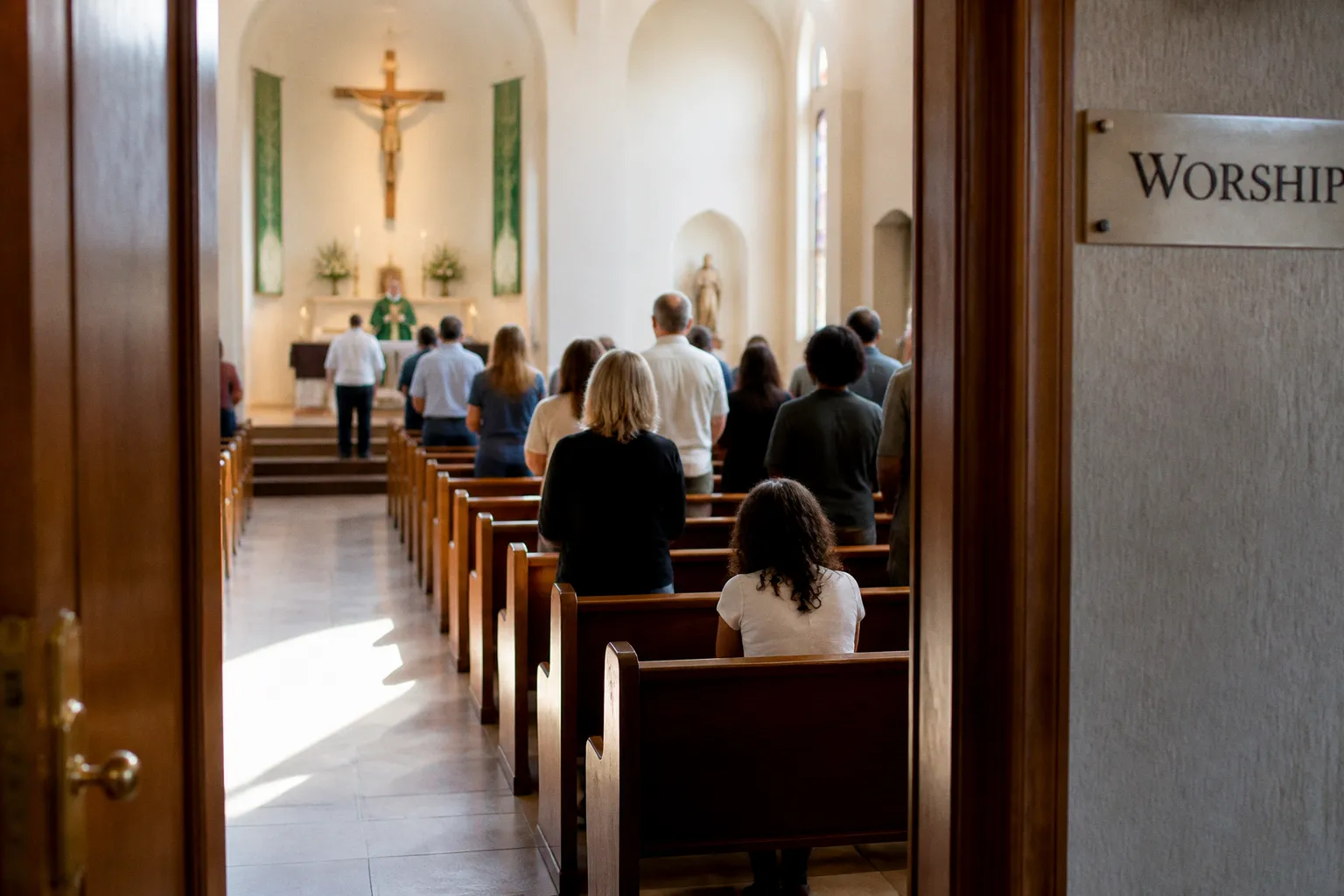
Pope Leo XIV, speaking at his August 12 general audience in St. Peter's Basilica, described Sunday as "the foundation and kernel of the whole liturgical year," urging Catholics to attend Mass in person and calling for working conditions that permit Sunday worship. The remarks, reported by the Archdiocese of Miami and the Diocese of Tucson, came as part of a continuing catechetical series on the documents of the Second Vatican Council — specifically, Sacrosanctum Concilium, the Constitution on the Sacred Liturgy. For Lutheran congregations stewarding their own worship life, the substance of this address raises a structural question worth close attention: how consistently does our own practice treat Sunday as the organizing principle of the church year?
The Framework: Sunday as Weekly Easter
Pope Leo's argument rests on a specific theological architecture. He described the liturgical year not as a static commemoration of past events but as an ongoing encounter with Christ, with Easter — the Resurrection — positioned at its center. From that center, Sunday functions as what he termed, recalling St. John Paul II, the "weekly Easter": the day of the Lord, the day of the Church, the day of man. He further noted that even in languages where the name for Sunday derives from the sun (English, German), Christians may discern a reference to Christ as "the true 'sun of righteousness' who enlightens every person."
This framework is not foreign to Lutheran confessional theology. The Augsburg Confession, Article XV, affirms that "our churches teach that the customary services should be observed" and that festivals are maintained for the sake of good order in the church. The Lutheran tradition has historically treated Sunday — the Lord's Day, the day of Resurrection — as the principal occasion for the proclamation of Word and Sacrament. What the papal address does, however, is articulate a systematic rationale for that primacy: Sunday is not merely a convenient weekly slot but the liturgical year's generative cell.
Active Presence and the Limits of Virtual Assembly
A second structural point in the address deserves Lutheran scrutiny. Pope Leo stated that the Sunday assembly "cannot be substituted by a solely virtual presence, nor can it be reduced to a merely passive gathering." The liturgical assembly, he argued, is fulfilled only through the active participation of the faithful — listening to the Word of God, receiving the body of Christ, and gathering together so that the Christian community makes "visible its communion with the Lord."
For congregations that have maintained or expanded livestream offerings since 2020, this is a rubric-level question, not a rhetorical one. The Lutheran understanding of the Real Presence in the Lord's Supper already establishes a theological boundary: the Sacrament is received bodily, in the gathered assembly, through the hands of the one administering it. Virtual participation, however pastorally necessary in cases of illness or infirmity, does not constitute a full liturgical act. The papal framing reinforces what Lutheran sacramental theology already implies — that physical, gathered presence on Sunday is normative, not optional.
Practical Stewardship for Congregations
The address also carried an administrative dimension. Pope Leo urged that "even those who are unable to take time off work on Sundays may take part in Holy Mass," calling for conditions that permit Sunday attendance. This is a matter of stewardship — not only of time but of the communal structures that make worship possible. Lutheran congregations may consider how their own scheduling, communication, and catechesis reflect a conviction that Sunday is the week's theological center of gravity rather than one option among several.
Three points for congregational review:
1. Calendar coherence. Does the parish's liturgical calendar treat Sunday as the generative unit from which the church year unfolds, or has it become a container for competing programming?
2. Catechesis on presence. Is the theological rationale for gathered, bodily worship on Sunday taught explicitly, or is it assumed?
3. Structural accommodation. Are there practical barriers — scheduling conflicts, lack of transportation, employment pressures — that the congregation could address through advocacy or creative arrangement?
The pope's remarks, while addressed to a Catholic audience, articulate a liturgical principle with deep roots in the broader Western Christian tradition. For Lutheran communities committed to the stewardship of Word and Sacrament, they offer a useful external benchmark against which to measure the coherence of one's own Sunday practice.