New ELCA Stewardship Resource Aims to Streamline Annual Financial Appeals
According to materials published through ELCA Resources, the program is titled "The Joy of Generosity" and is offered free of charge to congregations preparing their annual financial response appeals.
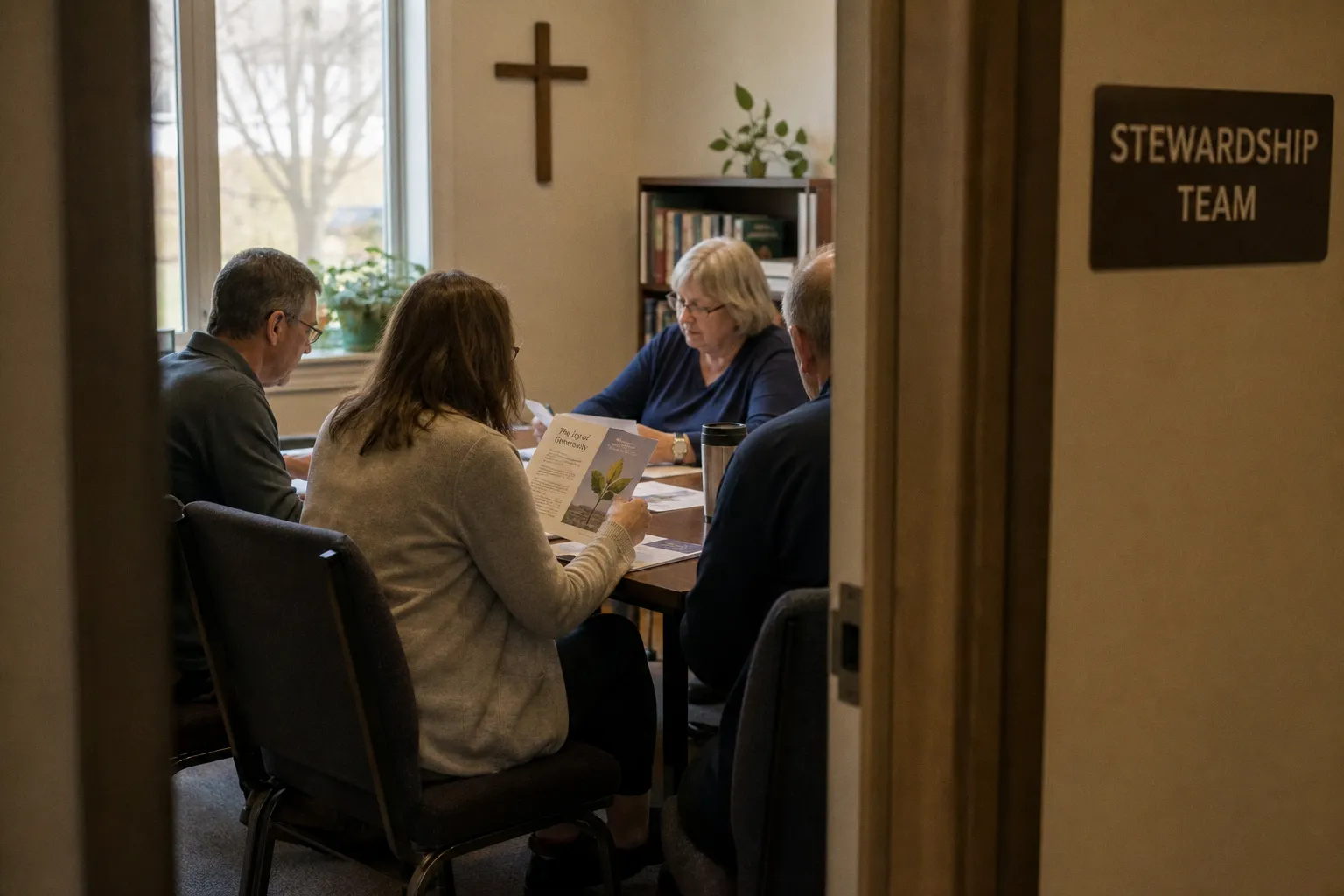
The Stewardship Calendar Problem
Most congregations encounter the same administrative bottleneck each autumn: the annual financial appeal arrives before the planning framework does. The Evangelical Lutheran Church in America Stewardship office has released a new resource intended to reverse that sequence. According to materials published through ELCA Resources, the program is titled "The Joy of Generosity" and is offered free of charge to congregations preparing their annual financial response appeals.
Structure and Intended Use
The program is organized as a four-week curriculum. That structure maps directly onto the typical four-week preaching rotation a parish uses leading into a pledge Sunday or commitment Sunday, giving the stewardship committee, the pastor, and the worship planning team a shared scaffolding rather than three separate timelines.
Three operational points clarify its scope:
1. The resource addresses the annual financial appeal specifically, not capital campaigns or endowment appeals. Congregations planning a building project should treat the two tracks as parallel rather than interchangeable.
2. It is published by the ELCA Stewardship office, which places it within the denomination's broader formation materials rather than as a third-party curriculum. Lutheran congregations in full communion with the ELCA may adopt it; congregations in other Lutheran bodies should review the theological and procedural framing against their own synod's expectations.
3. The four-week design presupposes a lead-in period of four to six weeks for committee orientation, bulletin inserts, and coordination with the congregational council.
Adjacent Movements in the Wider Lutheran Communion
The release sits alongside two other recent items of note from Lutheran institutions. The Lutheran Church—Missouri Synod published its August 2026 "Life Together" newsletter, which features coverage of the 2026 LCMS convention, an evaluation of artificial intelligence in the church, and a report on a LCMS mission congregation in Germany. Separately, the World Council of Churches has sent greetings to the 35th General Council of the Evangelical Church of the Lutheran Confession in Brazil, convening in Florianópolis through August 30.
None of these items alters the immediate task facing a stewardship committee, but each signals the denominational and ecumenical environment in which the appeal will be framed.
What a Congregation Should Confirm Before Adoption
A short checklist reduces implementation friction:
- Calendar alignment. Identify the target commitment Sunday, count back four weeks for the curriculum, then add four to six weeks for committee preparation. Total lead time typically runs eight to ten weeks.
- Liturgical coherence. Review the program's lectionary references against the parish's own lectionary calendar to ensure the stewardship content reinforces rather than competes with the appointed readings.
- Role assignment. Designate a single point of contact between the stewardship committee and the pastor to maintain a unified liturgical rubric across the four Sundays.
- Reporting plan. Confirm how the results of the appeal will be communicated back to the congregation after commitment Sunday closes the cycle.
The efficacy of any stewardship program depends less on the curriculum itself than on the administrative discipline a congregation applies around it. "The Joy of Generosity" provides a tested four-week framework; the parish supplies the stewardship.