How Artificial Intelligence Is Reshaping Modern Church Ministry and Liturgy
An ecumenical summit convened in Nashville from August 24 through 27 has placed artificial intelligence inside the working vocabulary of church leaders, with reported implications for liturgy…
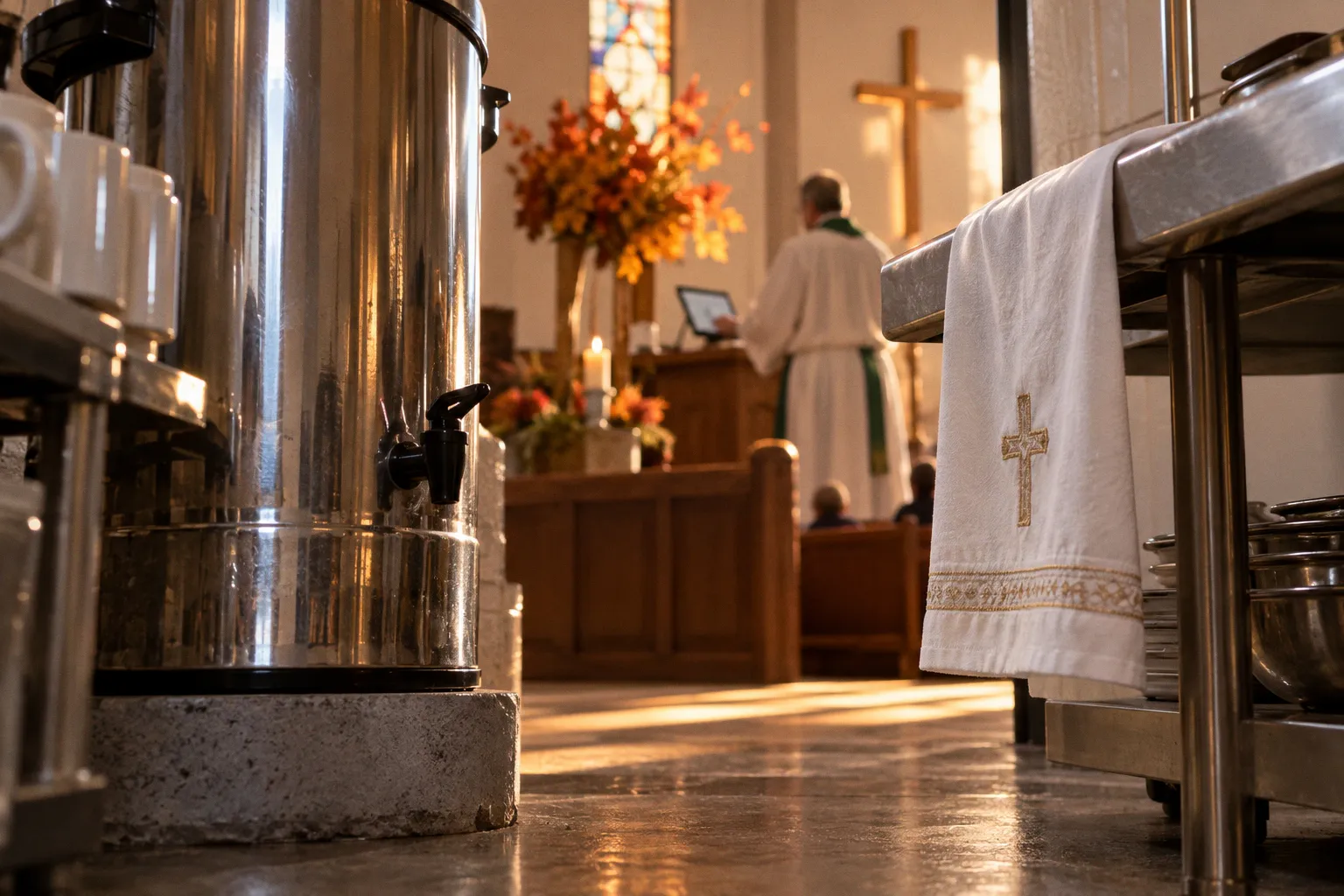
An ecumenical summit convened in Nashville from August 24 through 27 has placed artificial intelligence inside the working vocabulary of church leaders, with reported implications for liturgy planning, sermon preparation, and the administrative stewardship that underwrites parish life. According to the Episcopal Diocese of Washington, the gathering drew Episcopalians, Lutherans, Presbyterians, and United Methodists — the largest cohort yet for the third annual convening on this topic.
The Summit's Scope and Threshold Questions
The agenda spanned three concentric domains. On the ethical perimeter, presenters addressed corporate siting of data centers on Native American lands, low-wage labor pools training AI systems, and the mineral extraction underlying the infrastructure. On the technical perimeter, summit speakers discussed recursive self-improvement — the prospect of an AI system refining its own capabilities — alongside the emerging field of interpretability, which seeks to map how complex models reach their conclusions. On the ministerial perimeter, ten-minute "AI Quick Talks" demonstrated uses ranging across sermon preparation, liturgy planning, evangelism, administration, communications, and Christian education.
The diagnostic question the summit returned to was whether AI supports human creativity in worship preparation or begins to displace the discernment that belongs to the called minister. Adjacent concerns clustered around confidentiality of pastoral information, accuracy of generated material, disclosure norms when AI contributes to published work, and the irreducible domains — sacramental presence, pastoral counsel, face-to-face formation — where human agency cannot be delegated. Within the Episcopal Diocese of Washington, Bishop Mariann has subsequently established three diocesan working groups covering Appropriate Use, Education and Policy, and Advocacy.
Audit Points for Congregational Practice
Lutheran pastors and worship committees preparing the coming liturgical calendar — the Seventeenth Sunday of Pentecost falls inside this window, with seasonal formation milestones such as Second Grade Bible presentation and the return of program-year Sunday School — can apply the summit's framework as a working self-audit:
1. Inventory existing AI use. Identify where drafting, research, and communication tools already enter the workflow, whether acknowledged or not.
2. Map disclosure thresholds. Specify which outputs — sermon manuscripts, newsletters, liturgy drafts — require notation that AI assisted their production.
3. Segregate confidential inputs. Restrict pastoral communications, counseling records, and identifying member information from systems lacking contractual data-protection guarantees.
4. Reserve inalienable functions. Sacraments, absolution, and in-person formation remain outside the delegation envelope by theological definition, not preference.
5. Track interpretability resources. As models evolve, periodic re-evaluation of how conclusions are generated is necessary; the interpretability field remains immature and unsettled.
What to Watch Next
The summit's session recordings remain accessible through the Episcopal Diocese of Washington's resource page. Lutheran participation was present at the table; whether any LCMS, WELS, or ELCA body now convenes a parallel working group on appropriate use and education will indicate whether the ecumenical precedent translates into confessional policy. Until such a body acts, congregational leaders retain both the latitude and the obligation to set their own thresholds before the tool defaults set themselves.